
Skip to content
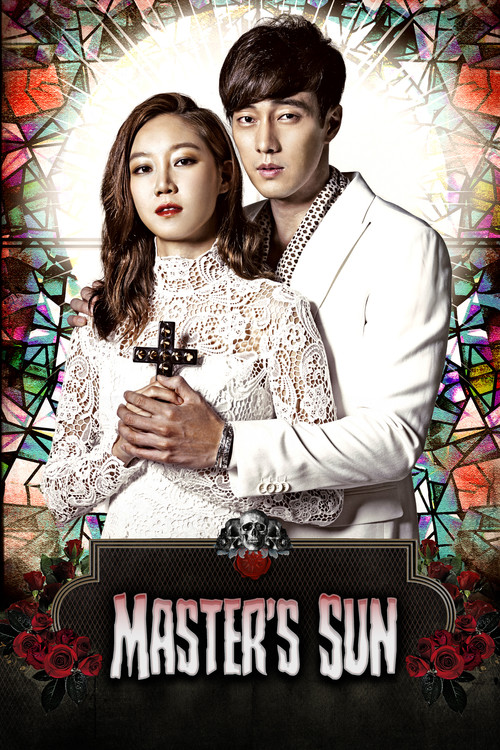
Master's Sun
Enveloped in supernatural mist and eccentric romance, a terrified soul wandering through shadows finds refuge in a fortress before learning to ignite her own blazing light.
Master's Sun

Master's Sun

주군의 태양

07 August 2013 — 03 October 2013 South Korea 1 season 17 episode Ended 8.0 (188)

Cast: So Ji-sub, Kong Hyo-jin, Seo In-guk, Kim Yoo-ri, Hwang Sun-hee

Drama Sci-Fi & Fantasy Comedy Trauma, Grief, and Emotional Scarring Co-dependency vs. Mutual Empowerment The Voices of the Marginalized and Unfinished Business Materialism vs. Genuine Human Value Perception and Deception

Overview

Master's Sun is a 17-episode supernatural romantic-comedy drama written by the Hong Sisters and directed by Jin Hyuk. The narrative centers on Tae Gong-shil, a woman whose life is derailed after waking from a three-year coma with the distressing ability to see and communicate with restless spirits. Haunted by apparitions, sleep-deprived, and ostracized from normal life, she exists in constant fear on the fringes of society.

Her circumstances change upon crossing paths with Joo Joong-won, the cold, calculating CEO of the luxury retail conglomerate Kingdom. Through an accidental physical touch, Gong-shil discovers that whenever she makes physical contact with him, the apparitions around her vanish instantly. Desperate for rest, she clings to him, prompting Joong-won to negotiate a transactional pact: he serves as her protective bomb shelter while she acts as his spiritual radar to unravel the 15-year-old kidnapping mystery that claimed his first love and left him with post-traumatic dyslexia.

As their partnership develops through aiding various wandering souls with their earthly regrets, Kingdom Mall security head Kang Woo and fashion model Tae Yi-ryung become intertwined in their lives. The episodic ghost encounters gradually peel back the protagonists' guarded emotional trauma, evolving a ghost story into a narrative of healing, emotional growth, and love between equals.
Core Meaning

At its core, Master's Sun asserts that unresolved emotional pain, guilt, and unsaid truths create living ghosts far more destructive than apparitions of the dead. The Hong Sisters use the supernatural realm as an allegory for human grief and emotional isolation.

Through the journeys of Joong-won and Gong-shil, the series demonstrates that genuine healing cannot be achieved through avoidance, transactional self-defense, or emotional fortresses. Ultimately, the story presents an empowering perspective on autonomy: true love is not an unhealthy reliance on another person to make inner monsters disappear, but finding the courage to face one's burdens independently so partners can stand together as whole, self-sustaining equals.

Thematic DNA

Trauma, Grief, and Emotional Scarring 30%
Co-dependency vs. Mutual Empowerment 25%
The Voices of the Marginalized and Unfinished Business 20%
Materialism vs. Genuine Human Value 15%
Perception and Deception 10%

Trauma, Grief, and Emotional Scarring

Trauma serves as the narrative engine of the drama. Joong-won's psychological entrapment—manifested in psychosomatic dyslexia following a teenage kidnapping—highlights how betrayal halts personal development, while Gong-shil's supernatural affliction represents chronic distress. The series demonstrates that unaddressed emotional wounds linger destructively until confronted directly.

Co-dependency vs. Mutual Empowerment

Beginning as an asymmetrical arrangement where Joong-won acts as a bomb shelter and Gong-shil functions as a radar, the narrative progressively examines and dismantles this co-dependency. For their bond to thrive, both characters must learn self-reliance: Gong-shil embraces her supernatural gifts independently, while Joong-won opens his heart without demanding safety guarantees.

The Voices of the Marginalized and Unfinished Business

Using a ghost-of-the-week procedural format, the narrative illustrates how spirits embody society's silenced outcasts and unresolved regrets. Gong-shil acts as an empathetic intermediary, revealing that listening to and advocating for those unable to speak brings peace to the departed and closure to the living.

Materialism vs. Genuine Human Value

Joong-won initially assesses all relationships through financial profit and loss, treating emotions as bad investments. Through Gong-shil and the ghost encounters, he discovers that the most essential elements of human experience—peace of mind, trust, sacrifice, and affection—defy monetary valuation.

Perception and Deception

The series consistently underscores that appearances are deceptive: monstrous, terrifying apparitions frequently harbor benign intentions, whereas virtuous-looking living individuals mask deceit and cruelty. This dynamic is epitomized in the central kidnapping mystery, where swapped identities and secrets obscured the truth for over a decade.

Character Analysis

Joo Joong-won

So Ji-sub

Archetype: Arrogant Cynic / Wounded Sovereign Key Trait: Arrogant pragmatism masking deep vulnerability.

Motivation

Initially driven to protect his wealth and locate his missing 10 billion won ransom necklace; later evolves to protect Gong-shil from fear and earn a place by her side as an equal partner.

Character Arc

Transforms from a cold, money-driven chaebol crippled by trauma-induced illiteracy into a selfless protector who sacrifices his life for Gong-shil, reclaims his lost past, and embraces an emotionally open existence.

Tae Gong-shil (Tae-yang)

Kong Hyo-jin

Archetype: The Reluctant Mystic / The Outcast Key Trait: Boundless empathy paired with eccentric resilience.

Motivation

Initially seeks uninterrupted sleep and sanctuary from terrifying spirits; evolves toward using her spiritual gifts to help trapped souls while pursuing love without burdening others.

Character Arc

Develops from an exhausted, terrified wreck using Joong-won as an emotional crutch into a courageous, independent medium who embraces her abilities with dignity and reclaims her self-worth.

All 5 characters and cast

Symbols & Motifs

The Sun (Taeyang) and the Sun Pendant Necklace

Meaning:

Signifies Tae Gong-shil's nickname and her function as an illuminating force bringing dawn and clarity into Joong-won's dark, closed world. The silver necklace serves as a tangible token of affection and later acts as the memory anchor that pierces Joong-won's amnesia.

Context:

Worn by Gong-shil throughout the series after being gifted by Joong-won, and held by Joong-won to trigger his suppressed memories of her in Episode 15.

The 'Bomb Shelter' and 'Radar'

Meaning:

Represents their initial defensive, transactional co-dependency before evolving into an authentic partnership. Joong-won's physical frame shields Gong-shil from supernatural onslaughts, while her spiritual sight acts as his tool to uncover the missing ransom.

Context:

Used as recurring verbal and physical metaphors in pivotal moments, such as Joong-won pulling Gong-shil to his chest during spirit encounters in Episodes 4 and 12.

The Children's Book 'One Stormy Night'

Meaning:

Symbolizes an improbable, inherently dangerous bond between natural opposites where predatory instinct yields to genuine, protective, and self-sacrificing affection.

Context:

Featured in Episodes 10 and 11 as Joong-won reads and references the Japanese fable of the wolf Gabu and goat Mei to frame his escalating romantic dilemma.

The Catchphrase and Hand Gesture 'Kkeojyeo'

Meaning:

Embodies Joong-won's emotional defense mechanisms and desire to keep people at bay, gradually transforming into an affectionate, ironic tic signaling vulnerability.

Context:

Accompanied by a sharp, dismissive swatting motion of his hand throughout the drama, softening in tone in later episodes.

Kingdom Shopping Complex

Meaning:

Monuments the cold allure of consumerism and hollow social prestige, proving that affluent societal spheres are just as haunted by unresolved grief and pain as marginalized communities.

Context:

Serves as the corporate empire Joong-won oversees, functioning as the primary setting for both high-society dealings and supernatural hauntings.

Dark Circles and Pale Complexion

Meaning:

Visually manifests the debilitating physical and psychological toll of chronic terror, insomnia, and unresolved trauma.

Context:

Defines Gong-shil's initial appearance in early episodes, gradually fading into a healthy, radiant styling as she gains inner confidence and peace.

Memorable Quotes

꺼져.
— Joo Joong-won

Context

Repeated across the series, starting from Episode 1, punctuated by a sharp swatting hand motion whenever people encroach on his personal space.

Meaning

Serves as his trademark catchphrase, initially reflecting his defensive arrogance and emotional barriers before turning into a fond, affectionate term of endearment.

방공호 왔어. 숨어.
— Joo Joong-won

Context

Delivered in Episode 4 and echoed in Episode 12 as he pulls a terrified Gong-shil into his arms to shield her from oncoming spirits.

Meaning

Marks his official acceptance of acting as her refuge, signaling his transition from calculating selfishness to protective emotional commitment.

All 5 quotes

Episode Highlights

Season 1, Episode 1

S1E1

On a dark, stormy night, Gong-shil hitches a ride with Joong-won and discovers by accident that physical contact with him causes the spirits terrifying her to instantly vanish.

Significance:

Establishes the supernatural premise, Joong-won's traumatic reading disability, and the background mystery of his teenage kidnapping.

Season 1, Episode 4

S1E4

After Gong-shil becomes intoxicated and is possessed by various spirits, Joong-won stays up watching over her and later shields her publicly from an apparition.

Significance:

Formalizes their physical and emotional dynamic as Joong-won embraces her and explicitly declares himself her protective bomb shelter.

Season 1, Episode 8

S1E8

During a haunting at Kingdom's luxury hotel pool, Joong-won sabotages his own arranged chaebol marriage setup due to mounting jealousy over Gong-shil.

Significance:

Signals the decisive shift from an exploitative, transactional agreement to undeniable personal and romantic feelings.

Season 1, Episode 11

S1E11

Referencing the children's fable One Stormy Night, Joong-won confronts his escalating vulnerability and shares a passionate kiss with Gong-shil.

Significance:

Breaks down Joong-won's emotional fortifications, abandoning his pragmatic calculations to confess his romantic feelings.

Season 1, Episode 12

S1E12

Joong-won rushes to save Gong-shil from a killer at an auto-repair shop and is critically stabbed, appearing to her as a radiant wandering spirit to confess his love as he flatlines.

Significance:

Acts as the central turning point of the series, demonstrating Joong-won's willingness to sacrifice his life and triggering the supernatural crisis.

Season 1, Episode 13

S1E13

Gong-shil contracts her spiritual servitude to Madam Go to resurrect Joong-won, resulting in his survival but stripping him of all conscious memories of her.

Significance:

Launches the amnesia storyline as Gong-shil endures separation to protect him from further supernatural harm.

Season 1, Episode 15

S1E15

Joong-won regains his memories via the sun necklace and confronts the living culprit Hanna Brown, exposing the truth behind the 15-year kidnapping.

Significance:

Resolves the central mystery, exposes the twin deception, and liberates Joong-won from his long-standing reading trauma.

Season 1, Episode 17

S1E17

After a year of traveling abroad to master her abilities, Gong-shil returns and reunites with Joong-won, purchasing her own building and meeting him as an autonomous partner.

Significance:

Concludes the narrative arc by replacing asymmetric dependency with an enduring relationship built between self-sufficient equals.

Philosophical Questions

Are the living truly more terrifying than the dead?

The narrative contrasts horrific-looking apparitions harboring harmless, tragic grievances against living individuals who commit calculated betrayals, greed, and violence, challenging conventional notions of where true malevolence resides.

Can love exist without mutual vulnerability?

Through Joong-won's transactional emotional barriers and Gong-shil's protective clinging, the series investigates whether genuine human connection is attainable when the primary concern is self-preservation.

What constitutes genuine closure for grief?

By highlighting spirits bound to Earth by unfinished business, the story examines whether peace comes from external restitution or from an internal decision to forgive, reveal hidden truths, and let go.

Does true devotion require self-erasure?

Explored through Gong-shil's decision to break away from Joong-won, questioning whether a relationship remains virtuous if maintaining it requires sacrificing personal autonomy and becoming an endless burden.

Alternative Interpretations

Several lenses offer alternative perspectives on the drama's narrative structure:

Full ending explanation

Cultural Impact

Airing in late summer 2013, Master's Sun transformed Korean primetime network programming by bridging traditional seasonal horror programming with network romantic-comedy tropes. Broadcast during a transitional golden era for terrestrial television, the series achieved remarkable ratings dominance, climbing from 13% to a peak of 21.8% nationwide according to AGB Nielsen.

The production solidified Kong Hyo-jin's status as the Queen of Rom-Com and demonstrated So Ji-sub's comedic breadth, proving that prime-time heroines could be disheveled, traumatized, and eccentric without losing mainstream appeal. Culturally, the drama established a successful formula for the supernatural romantic-comedy genre within the Hallyu wave, paving the path for subsequent landmark series such as Oh My Ghost, Goblin, and the Hong Sisters' spiritual successor Hotel Del Luna.

Audience Reception

Master's Sun was widely praised for the electric on-screen chemistry and comedic timing between So Ji-sub and Kong Hyo-jin, which critics noted elevated the series beyond standard genre formulas. The tonal balance between genuine horror in early cold opens and warm mid-episode comedy, as well as the poignant emotional depth of individual ghost vignettes, frequently garnered acclaim from reviewers and viewers alike.

Conversely, the late-season narrative faced criticism for relying on conventional K-drama devices, specifically Joong-won's amnesia arc, noble idiocy tropes, and the mandatory one-year separation across Episodes 13 through 16. Some viewers also found the twin-switch resolution convoluted and noted that early-2010s ghost CGI occasionally bordered on campy despite effective practical makeup. Nevertheless, the series remains celebrated as a quintessential 2013 classic and a high point in the Hong Sisters' catalog.

Interesting Facts

  • The Hong Sisters and director Jin Hyuk developed the series under an experimental genre label they coined 'Romantic-Comedy-Horror' (로코호러).
  • Actor So Ji-sub, primarily renowned throughout the 2000s for tragic melodramas, took on his first major eccentric romantic comedy role and dropped weight to soften his character's image.
  • The distinctive swatting hand gesture accompanying the catchphrase 'Kkeojyeo!' was improvised and refined by So Ji-sub himself.
  • Originally planned for 16 episodes, the production was extended to 17 episodes by SBS due to strong viewership ratings and a Chuseok holiday broadcast preemption.
  • The drama's original soundtrack was a massive chart hit, with Yoon Mi-rae's ballad 'Touch Love' achieving an 'All-Kill' across major Korean digital charts for nearly a month.
  • The circular silver sun pendant manufactured by J.ESTINA and worn by Gong Hyo-jin became an international fashion sensation, repeatedly selling out across East Asia in 2013.

Easter Eggs

Kim Myung-soo (INFINITE's L) Cameo

The popular K-pop idol portrays the teenage Joo Joong-won in traumatic kidnapping flashbacks, capturing his youthful helplessness and emotional shock.

Girl's Day's Bang Min-ah Appearance

Minah guest-stars in the early episodes as a high school student tormented by a dead classmate, blending idol cross-promotion into the procedural horror vignettes.

Literary Reference to 'One Stormy Night'

The picture book featured in Episodes 10 and 11 is an authentic Japanese story by Yuichi Kimura, serving as a direct allegory for the dangerous bond between wolf Gabu and goat Mei.

Wordplay in the Drama Title

The Korean title 주군의 태양 contains a double entendre where Joo-gun means both 'The Lord/Master' and Joo Joong-won, while Taeyang means 'The Sun' and Gong-shil's nickname, reading simultaneously as 'The Lord's Sun' and 'Joong-won's Gong-shil'.

Cameo by Seo Hyo-rim

Appears in Episode 9 as Joong-won's prospective chaebol fiancée, serving as a narrative device that forces Joong-won to confront his growing jealousy and feelings for Gong-shil.

Frequently Asked Questions

Explore More About This Movie

Dive deeper into specific aspects of the movie with our detailed analysis pages

Comments (0)

Leave a comment

No comments yet. Be the first to share your thoughts!

Similar Movies