Skip to content
Mayday
A Cold War buddy picture with jet fuel in its veins and a lump in its throat: two enemies stranded in the snow, discovering that the border between them was only ever drawn on a map.
Mayday

Mayday

"A friendship with major red flags."

03 September 2026 United States of America 111 min 8.0 (288)

Director: Jonathan Goldstein, John Francis Daley

Cast: Ryan Reynolds, Kenneth Branagh, Marcin Dorociński, Maria Bakalova, David Morse

Action Comedy Blind patriotism and its unlearning The unlikely alliance Fatherhood and chosen family The futility of geopolitical rivalry Culture as a smuggled language
Budget: $25,000,000

Overview

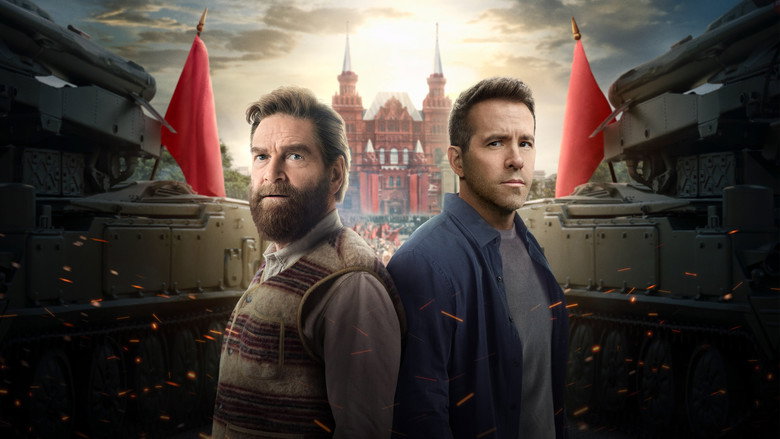
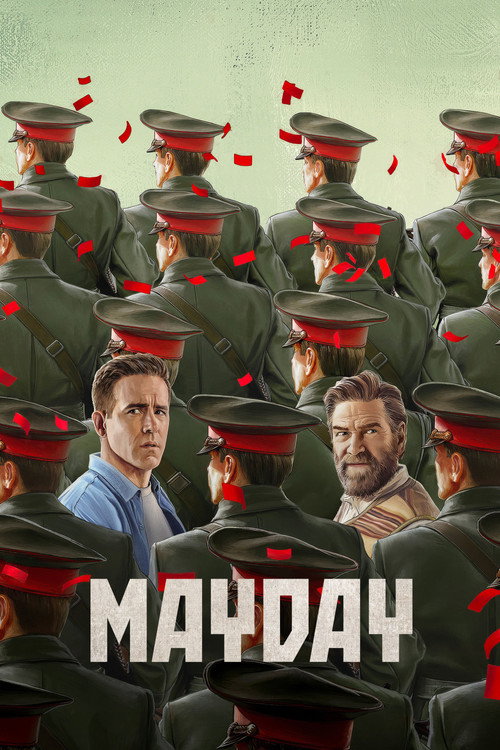
Mayday is a 2026 American action comedy written and directed by John Francis Daley and Jonathan Goldstein for Apple Original Films, Skydance Media and Ryan Reynolds' Maximum Effort. Set at the height of the Cold War, it follows hotshot U.S. Navy pilot Lieutenant Troy "Assassin" Kelly (Reynolds), who is sent on a top-secret reconnaissance mission deep into Russian territory. The operation implodes, and Troy finds himself stranded behind enemy lines with no extraction, no cover story and no idea who — if anyone — is coming for him.

Discovered by Nikolai Ustinov (Kenneth Branagh), a gruff ex-KGB agent with an unashamed appetite for American culture, Troy assumes he is finished. Instead, the two men strike an uneasy bargain, and the film becomes a chase across hostile territory in which the biggest obstacle is not the pursuing Soviet apparatus but the two travellers' own convictions about each other. Marcin Dorociński, Maria Bakalova and David Morse fill out the ensemble on both sides of the Iron Curtain.

Daley and Goldstein play the material as a genuine action picture rather than a spoof: the aerial sequences were built on research with real SR-71 Blackbird pilots and shot in part with live aerial photography, while the comedy comes from character friction rather than winking at the audience. Mayday began streaming on Apple TV on September 4, 2026.
Core Meaning

At its centre, Mayday is an argument against inherited enmity. Troy begins the film as a true believer — certain which side of the war is the right one, certain that Soviets are backward and evil — and the story's real engine is the slow erosion of that certainty by the inconvenient humanity of the man keeping him alive.

Crucially, the film refuses the standard Cold War payoff. It ends in a warm place emotionally while landing in a skeptical one politically: there is no triumph of the good guys over the reds, and the heroism the film ultimately endorses is not the kind that shoots down a MiG. Daley and Goldstein use the most flag-waving genre available — the jet-jockey adventure — to suggest that geopolitical rivalry is both superficial and futile, and that loyalty to a specific human being is a sturdier value than loyalty to a narrative you were handed.

Running underneath is a story about fatherhood and the men we choose as fathers, which is where the film's sentiment lives and where its comedy finally gives way to something quieter.

Thematic DNA

Blind patriotism and its unlearning 30%
The unlikely alliance 25%
Fatherhood and chosen family 20%
The futility of geopolitical rivalry 15%
Culture as a smuggled language 10%

Blind patriotism and its unlearning

Troy enters the film fluent in the certainties of his era — good guys, bad guys, and a clear line between them. The plot systematically strands him in situations where that map stops working, and his arc is less about surviving Russian territory than about noticing how eagerly he believed what he was told. The film's refusal to end with an American victory over Soviet adversaries is the thesis stated structurally rather than in dialogue.

The unlikely alliance

The Troy/Nikolai partnership is the film's whole architecture: a hotshot Navy pilot and an ex-KGB man with a weakness for American culture, each of whom is the other's only route out. The comedy comes from the friction of two professionals who were trained to consider each other targets; the emotion comes from how quickly professional necessity curdles into actual affection.

Fatherhood and chosen family

Beneath the dogfights, the film keeps circling questions of who raises whom. Branagh's Nikolai functions as a rough, exasperated paternal figure to a younger man whose entire identity is built on a callsign, and Reynolds is allowed to play the neediness under the swagger. It is the strand critics singled out as the film's most sincere register.

The futility of geopolitical rivalry

Mayday treats the Cold War less as a moral contest than as a machine that consumes the people running it. Both intelligence apparatuses are shown as institutions willing to spend individuals; the joke and the tragedy are the same — that the enormous ideological stakes look absurd from ground level, where two cold men are just trying to get to a treeline.

Culture as a smuggled language

Nikolai's affection for American culture gives the two men a common tongue that neither government sanctioned. Pop songs, movies and consumer trivia become the bridge that politics could not build, arguing that culture crosses borders that armies cannot.

Character Analysis

Lieutenant Troy "Assassin" Kelly

Ryan Reynolds

Archetype: Cocky hero / reluctant apprentice Key Trait: Deflective wit masking a deep need for approval

Motivation

Initially survival and extraction; increasingly, loyalty to the one person who actually showed up for him, which puts him at odds with the institution that sent him.

Character Arc

Begins as a hotshot U.S. Navy pilot with total confidence in his mission and his side of the war, viewing Soviets as backward and evil. Stranded behind enemy lines when the operation implodes, he is forced into dependence on the very enemy he was trained to dehumanise. By the close he has learned he was too eager to believe the story he was given, and the film's ending has him embracing a very different definition of heroism than the one he flew in with.

Nikolai Ustinov

Kenneth Branagh

Archetype: Mentor / gruff paternal antihero Key Trait: Weary humanity dressed as menace

Motivation

Something between opportunism and a second chance — a man discarded by his own service finding a use for himself, and a person worth protecting.

Character Arc

A gruff ex-KGB agent with an open affection for American culture who discovers Troy and could easily turn him in. Instead he becomes guide, tormentor and eventual father figure. Branagh's performance was singled out for its swing between capable violence and startling softness — Reynolds described his co-star's ability to move from brutality to being "incredibly soft, kind and vulnerable" as a refreshing inversion of the genre's usual tropes.

All 3 characters and cast

Symbols & Motifs

The SR-71 Blackbird

Meaning:

The ultimate expression of Cold War technological pride — an aircraft built to fly above everything, untouchable and alone. It stands for the American self-image Troy carries into the film: superior, fast, and entirely dependent on nobody.

Context:

The filmmakers researched the aircraft with real Blackbird pilots and recreated it for the film's reconnaissance sequences. The moment that certainty comes down to earth is the moment the actual story begins.

The mayday call

Meaning:

The title is the film's whole argument compressed into one word: a universal distress signal, understood in every language, that belongs to no nation. It is the admission of need that the hyper-competent hero has been trained never to make.

Context:

Framed first as an emergency-radio procedure and gradually as an emotional one — the film's climax turns on a man finally asking for help rather than transmitting it.

The callsign 'Assassin'

Meaning:

A name given to Troy by an institution, describing a function rather than a person. It symbolises the identity the Cold War issued him along with his flight suit.

Context:

Used throughout as a running joke about swagger, it becomes quietly poignant as Troy's arc reveals how little of him the name actually covers.

Contraband American pop culture

Meaning:

Desire that ideology cannot legislate away. Nikolai's smuggled enthusiasms show that the enemy has been quietly loving the enemy the whole time.

Context:

Branagh's character is defined by his penchant for American culture; the film uses those references both for its biggest laughs and as the first genuine handshake between the two men.

The border

Meaning:

An arbitrary line that determines who is a person and who is a target — the film's clearest image of a distinction that exists only because everyone agrees to see it.

Context:

The entire narrative is a journey toward a frontier, and the ending's skepticism reframes what crossing it actually costs.

Philosophical Questions

How do you tell a conviction from a story you were handed?

Troy's certainty about who is on the right side of the war is presented as knowledge and revealed as inheritance. The film explores this by removing every institutional confirmation — no radio, no command, no allies — until the only evidence available to him is a man his training says cannot exist.

Can enmity survive proximity?

The premise forces two designated enemies into total mutual dependence, testing whether hatred is a stable state or something that requires distance to maintain. The film's answer is emphatic, and its comedy is largely the sound of a worldview failing under close contact.

What is heroism when there is no side worth winning for?

By declining the standard victory, the film has to define courage without a scoreboard. It arrives at something small and personal — showing up for one specific human being — and argues that this is harder than combat, not lesser than it.

Who has the right to make a father of you?

Troy's most formative relationship in the film belongs to no institution and no bloodline. The story tests whether the bonds we choose can carry the same weight as the ones assigned to us, and whether a man can be raised twice.

Alternative Interpretations

The optimistic reading. The ending is straightforwardly feel-good: two men from opposite sides prove that friendship outranks ideology, and Troy's final decision is a moral graduation. Under this view the film is a humanist fable, and its refusal of a triumphalist victory is simply the price of a more grown-up warmth.

Full ending explanation

Cultural Impact

Mayday arrives as a streaming-era test case: a big, glossy, practically-shot action comedy made for Apple TV rather than theatres, and critics repeatedly framed it in those terms — one reviewer noted that while the film is not the most narratively audacious, it is a strong reminder that a streaming comedy can look as good as any blockbuster. Deadline's review pitched Reynolds and Branagh as being in "Top Gun form," making explicit the lineage the film is both honouring and arguing with.

That argument is the culturally interesting part. The Cold War jet movie is one of American cinema's most reliably jingoistic forms, and Mayday borrows its whole vocabulary — callsigns, recon missions, dogfights — while declining its politics. Rather than closing with the good guys beating the Soviets, it lands somewhere more skeptical and advocates a different kind of heroism, positioning itself against the Top Gun tradition even as it competes with it on spectacle.

It also functions as a genre repositioning for both leads: Branagh, the Shakespearean actor-director, doing his own stunts as a gone-to-seed KGB man, and Reynolds using his Maximum Effort banner to place his familiar comic persona inside a sincere period adventure with an emotional core about fatherhood.

Audience Reception

Reception was mixed to positive. The broad consensus tracked by aggregators credits the film's humour and its two leads more than its script: coverage of the Rotten Tomatoes reviews framed it as a case of comedy rescuing the material, and reviewers in Variety, Deadline and The Hollywood Reporter largely treated the Reynolds–Branagh chemistry as the reason to watch.

Praised: Branagh's performance and his physical commitment, including his own stunt work; the Reynolds–Branagh double act; the aerial sequences and overall production polish, with the film held up as proof that a streaming comedy can look as good as any theatrical blockbuster; and the unexpectedly sincere fatherhood material.

Criticised: narrative conventionality — even sympathetic reviewers conceded it is not narratively audacious — and, from the rotten side of the ledger, the period comedy. One critic dismissed it as "a mirthless mess," and another wrote that for all its retro jokes about the '80s, the film "still hasn't figured out how to make the era funny."

Divisive: the ending. Viewers expecting a conventional Cold War victory found the skeptical, non-triumphalist resolution either the film's most interesting choice or a deflating anticlimax after two hours of jet-fuelled spectacle.

Verdict: a handsome, likeable, star-driven action comedy that overperforms emotionally and underperforms structurally — carried across the line by Branagh.

Interesting Facts

  • The film was written and directed by John Francis Daley and Jonathan Goldstein as a directing-writing duo, working from their own screenplay.
  • It was produced by Apple Original Films together with Skydance Media and Ryan Reynolds' company Maximum Effort, and began streaming on Apple TV on September 4, 2026.
  • Production was based across Canada and Hungary, with Montreal and Budapest serving as the principal filming bases.
  • For the fighter-jet sequences, the filmmakers used real aerial photography, with that unit shooting in southern France.
  • Daley and Goldstein consulted actual SR-71 Blackbird pilots to get the aircraft and its procedures right, telling Naval History magazine that they "did the homework" when recreating the Blackbird and staging the dogfights.
  • Kenneth Branagh — better known as a director and Shakespearean — performed stunt work on the film and spoke publicly about the experience alongside his on-set bonding with Reynolds.
  • Ryan Reynolds praised Branagh's ability to pivot from depicting violence to being "incredibly soft, kind, and vulnerable," calling it "a refreshing take on the action tropes that you'd normally see in these kinds of films."
  • One sequence was reportedly so intense to shoot that it cleared nearly everyone off the set, with Reynolds himself describing the moment as "scary."

Frequently Asked Questions

Explore More About This Movie

Dive deeper into specific aspects of the movie with our detailed analysis pages

Comments (0)

Leave a comment

No comments yet. Be the first to share your thoughts!

Similar Movies