Million Dollar Baby
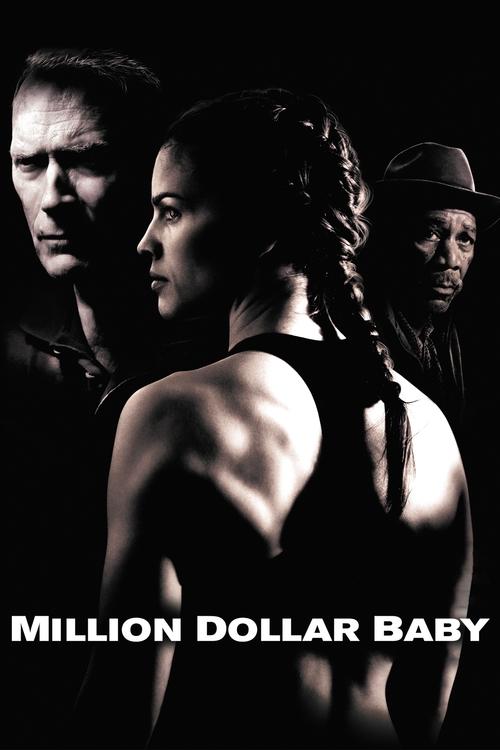
A somber drama, steeped in chiaroscuro, that paints a poignant and ultimately tragic portrait of found family and the brutal cost of a dream.
Million Dollar Baby

Million Dollar Baby

"Beyond his silence, there is a past. Beyond her dreams, there is a feeling. Beyond hope, there is a memory. Beyond their journey, there is a love."

05 December 2004 Switzerland 132 min ⭐ 8.0 (10,008)
Director: Clint Eastwood
Cast: Clint Eastwood, Hilary Swank, Morgan Freeman, Jay Baruchel, Mike Colter
Drama
The Search for Family Perseverance and The American Dream Redemption and Guilt The Right to Die and Human Dignity
Budget: $30,000,000
Box Office: $216,763,646

Overview

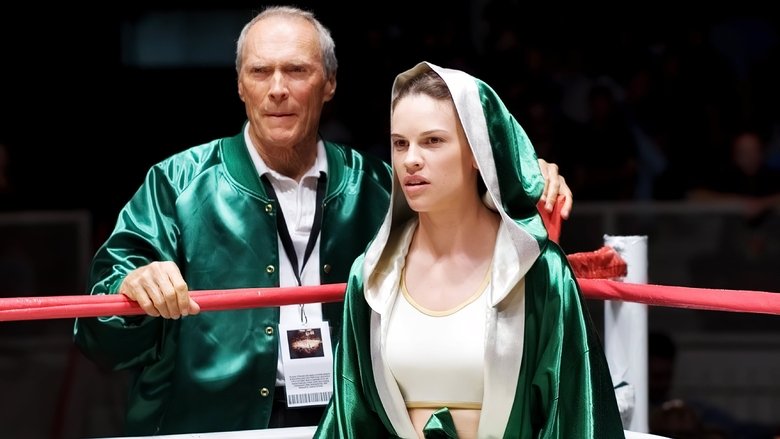
"Million Dollar Baby" tells the story of Maggie Fitzgerald (Hilary Swank), a determined waitress from a deeply impoverished background who dreams of becoming a professional boxer. She seeks out the reluctant and grizzled trainer Frankie Dunn (Clint Eastwood), who runs a dilapidated gym and is emotionally closed off, haunted by his estrangement from his own daughter. Initially refusing to train a woman, Frankie is eventually persuaded by Maggie's unwavering persistence and the encouragement of his friend and gym caretaker, Eddie 'Scrap-Iron' Dupris (Morgan Freeman), who also serves as the film's narrator.

Under Frankie's tutelage, Maggie's raw talent is honed, and she rises rapidly through the ranks of women's boxing, forming a deep, daughter-father bond with her trainer along the way. Their journey takes them from small-time fights to a shot at the world championship. The film, which initially appears to be a classic underdog sports story, takes a dramatic and unexpected turn, shifting its focus from the boxing ring to profound questions of life, love, and sacrifice.

Core Meaning

The core meaning of "Million Dollar Baby" transcends the sports drama genre to explore profound themes of redemption, the nature of family, and the pursuit of dignity in the face of suffering. The director, Clint Eastwood, crafts a narrative that questions the very definition of winning and losing. It suggests that a life, however brief, lived with passion and purpose, is more valuable than a long life of unfulfilled dreams. The film's central message revolves around the idea of a chosen family providing the love and support that a biological family may not, and the immense responsibility that comes with such a deep bond. Ultimately, it is a meditation on the complexities of love and the harrowing ethical choices it can force upon individuals when confronted with immense suffering.

Thematic DNA

The Search for Family 35%
Perseverance and The American Dream 30%
Redemption and Guilt 20%
The Right to Die and Human Dignity 15%

The Search for Family

A central theme is the formation of a non-traditional family unit. Both Maggie and Frankie are estranged from their biological families. Maggie's family is portrayed as greedy and unsupportive, while Frankie is haunted by his separation from his daughter. Together, with Scrap, they form a surrogate family at the Hit Pit gym, providing each other with the love, loyalty, and support they desperately lack. This chosen family becomes the emotional core of the film, demonstrating that familial bonds are forged through shared experience and mutual respect, not just blood ties.

Perseverance and The American Dream

Maggie's journey embodies the theme of perseverance against all odds. Starting with nothing but grit and determination, she relentlessly pursues her dream of becoming a boxer despite her age, gender, and Frankie's initial rejection. The film explores the idea of the American Dream, not as the attainment of wealth, but as the chance to prove one's worth and achieve a moment of greatness. Scrap's narration often reflects on this, noting that Maggie got her "shot," which is more than many people ever get.

Redemption and Guilt

Frankie Dunn's character arc is a journey of seeking redemption. He is burdened by guilt from two key events: the loss of his eye that ended Scrap's boxing career and his estrangement from his daughter. His overcautious nature with his fighters stems from this guilt. Training Maggie becomes his path to redemption, allowing him to open himself up to a loving, paternal relationship. However, the film's tragic turn forces him into an even greater moral and spiritual conflict, testing the very nature of his redemption.

The Right to Die and Human Dignity

The film's controversial final act introduces the profound and divisive theme of euthanasia and the right to a dignified death. After her catastrophic injury, Maggie is left a quadriplegic, completely dependent on others. She believes her life has been lived to its fullest and wishes to die on her own terms, preserving the memory of her success. This forces Frankie to confront a devastating ethical dilemma, weighing his Catholic faith against his love for Maggie and her plea for mercy.

Character Analysis

Maggie Fitzgerald

Hilary Swank

Archetype: The Underdog Hero
Key Trait: Unyielding Perseverance

Motivation

Maggie is motivated by a deep-seated desire to escape her impoverished, trailer-park life and to make something of herself. She tells Frankie, "this is the only thing I ever felt good doing." She seeks not just financial success, but the respect and sense of self-worth that have always eluded her. Her primary drive is to prove to herself and the world that she is not the "trash" her family makes her feel she is.

Character Arc

Maggie begins as a determined but unskilled waitress with an seemingly impossible dream. Fueled by sheer willpower, she transforms from a raw amateur into a formidable professional boxer under Frankie's guidance. Her arc is one of rapid ascent and self-actualization, where she finds not only success but also the loving father figure she never had. Her journey tragically pivots from a story of triumph to one of immense suffering, culminating in her resolute decision to control her own destiny and die with dignity, having achieved her life's goal.

Frankie Dunn

Clint Eastwood

Archetype: The Reluctant Mentor
Key Trait: Guilt-Ridden and Cautious

Motivation

Frankie is primarily motivated by a need for redemption and a deep-seated fear of failure and loss. His estrangement from his daughter is a constant source of pain, and he writes her letters every week that are always returned unopened. He is overly cautious with his fighters because he blames himself for the injury that ended Scrap's career. Maggie becomes his chance to atone for these past failures and to experience the paternal love he has been denied.

Character Arc

Frankie starts as a gruff, cynical, and emotionally guarded trainer, crippled by guilt and regret. His mantra is "always protect yourself," a rule he applies as much to his emotions as to his fighters. Initially refusing to train Maggie, he slowly lets his guard down, and she breaks through his hardened exterior. His arc is one of emotional rebirth; he rediscovers his capacity for love and vulnerability, becoming a devoted father figure. This transformation leads him to an agonizing moral crossroads where he must perform the ultimate act of love, one that will cost him his soul.

Eddie 'Scrap-Iron' Dupris

Morgan Freeman

Archetype: The Wise Observer (Narrator)
Key Trait: Wise and Perceptive

Motivation

Scrap is motivated by loyalty and a desire to see those he cares about find peace. He sees the good in both Frankie and Maggie and wants to help them heal each other. He harbors no resentment towards Frankie for his injury and understands his friend's deep-seated guilt. His narration is motivated by a final act of friendship: to ensure that Frankie's daughter understands the kind of man her father truly was, especially after he disappears.

Character Arc

Scrap is the gym's caretaker and the film's moral center. A former boxer who lost an eye in his last fight with Frankie as his cutman, he has a quiet wisdom forged from experience. He sees the potential in Maggie and the need in Frankie, acting as the catalyst that brings them together. His arc is less about personal transformation and more about bearing witness and providing perspective. As the narrator, his story is the letter he writes to Frankie's daughter, attempting to explain the true character of the father she never knew, thus completing a circle of redemption for his friend.

Symbols & Motifs

Mo Cuishle

Meaning:

The Gaelic phrase Frankie bestows upon Maggie, which he embroiders on her boxing robe, translates to "My darling, my blood". It symbolizes the deep, familial bond that develops between them, signifying that he has accepted her as his own daughter. The chanting of the crowd, who are unaware of its meaning, adds a layer of poignant intimacy to their shared journey.

Context:

Frankie gives Maggie the nickname and the robe as her career begins to take off. He refuses to tell her its meaning for a long time. The name becomes her public persona in the ring. He only reveals the translation to her in the film's final, heartbreaking moments, cementing their father-daughter relationship before he helps her die.

Light and Shadow (Chiaroscuro)

Meaning:

The film's visual style makes extensive use of deep shadows and stark, high-contrast lighting, a technique known as chiaroscuro. This symbolizes the moral ambiguity and the bleak realities the characters face. The darkness represents their lonely, broken lives and the tragic elements of the story, while the light often isolates the characters, emphasizing their intimacy and the hope they find in each other.

Context:

Throughout the film, characters are often half-lit, moving in and out of darkness, which visually represents their internal struggles and their guarded nature. The gym is a place of shadows, a haven for these broken souls. The lighting becomes progressively darker in the film's second half, mirroring the story's tragic turn and culminating in the dimly lit hospital room where Frankie makes his final, devastating decision.

The Boxing Ring

Meaning:

The boxing ring serves as a metaphor for the larger struggles of life. It's a space where characters confront their fears, prove their worth, and fight for their dreams. For Maggie, it represents an escape from poverty and a chance to be someone. For Frankie, it is a place of both past failure (with Scrap) and potential redemption (with Maggie).

Context:

The film features numerous training and fight sequences within the ring. Scrap's opening narration explicitly connects boxing to life: "Boxing is an unnatural act... Instead of running from the pain... you step into it." This sets up the ring as the primary stage for the film's central conflicts and themes of perseverance and sacrifice.

Memorable Quotes

It's the magic of risking everything for a dream that nobody sees but you.

— Eddie 'Scrap-Iron' Dupris

Context:

This line is part of Scrap's opening narration, setting the tone for the film. It's spoken over images of the gym and the solitary life of a fighter, establishing the world Maggie is about to enter and the inherent nobility in her quest.

Meaning:

This quote, delivered in Scrap's narration, encapsulates the film's central theme of perseverance. It elevates boxing from a mere sport to a metaphor for the lonely, often unseen, pursuit of one's deepest ambitions. It speaks to the courage required to chase a dream that others may not understand or support.

The rule is to protect yourself at all times.

— Frankie Dunn

Context:

Frankie drills this rule into Maggie repeatedly during their training sessions. It's a constant refrain that defines their early relationship. The line gains a tragic irony at the end of the film, as Maggie is injured by a sucker punch when her guard is down, and Frankie is ultimately unable to protect her from her fate.

Meaning:

This is Frankie's primary rule in boxing, but it's also his philosophy for life. It reflects his emotional guardedness and his fear of getting hurt or seeing others hurt. The repetition of this line underscores his cautious nature and the internal conflict he faces as he grows to care for Maggie, which requires him to break his own rule and become vulnerable.

People die every day, Frankie – mopping floors, washing dishes. And you know what their last thought is? 'I never got my shot.' Because of you, Maggie got her shot.

— Eddie 'Scrap-Iron' Dupris

Context:

This conversation takes place in the gym after Maggie has been hospitalized. Frankie is blaming himself for her injury, and Scrap offers this powerful perspective to absolve him of his guilt and to honor what Maggie achieved.

Meaning:

Scrap says this to comfort a guilt-ridden Frankie after Maggie's injury. It serves as the film's ultimate justification for the risks they took. It argues that a life lived in pursuit of a dream, even if it ends tragically, is more meaningful than a life of quiet regret. It re-frames Maggie's story not as a tragedy of loss, but as a triumph of having lived fully.

Mo cuishle means my darling, my blood.

— Frankie Dunn

Context:

Frankie whispers these words to Maggie in her hospital bed, just moments before he administers the fatal injection of adrenaline. It is his final, loving confession to her, the culmination of their journey together, and his reason for granting her final wish.

Meaning:

This is the emotional climax of Frankie and Maggie's relationship. The revelation of the phrase's meaning confirms what the audience has felt throughout the film: that Frankie has come to love Maggie as his own daughter. The words "my blood" solidify their bond as being as deep and profound as any biological connection.

Philosophical Questions

What constitutes a 'life worth living'?

The film delves deeply into this question through Maggie's plight. After her accident, she is physically helpless but mentally sharp. For her, the quality of life was intrinsically tied to her ability to pursue her passion. Having achieved her dream, she sees no value in a continued existence of total dependency, stating she "got what she needed". The film forces the audience to confront differing perspectives on life's value: is it the duration that matters, or the richness of experience and the dignity of self-determination?

Is there a moral justification for euthanasia (mercy killing)?

"Million Dollar Baby" presents a powerful and emotionally charged case for euthanasia. It frames the debate not as a political or abstract issue, but as a deeply personal and painful decision born of love and compassion. Frankie, a devout Catholic, consults his priest, who warns him that he will be lost forever if he goes through with it. Yet, Frankie ultimately decides that keeping Maggie alive against her will is the greater sin. The film doesn't offer an easy answer but instead immerses the viewer in the profound ethical conflict, leaving them to grapple with the morality of Frankie's actions.

Can a chosen family be more profound than a biological one?

The film strongly argues that the bonds of a chosen family can be stronger and more meaningful than those of blood relatives. Maggie's biological family is shown to be selfish, cruel, and exploitative. In contrast, the family she builds at the gym with Frankie and Scrap is founded on mutual respect, loyalty, and unconditional love. This relationship provides Maggie with the support to achieve her dreams and gives Frankie a chance at the paternal love he lost. The film posits that true family is defined by actions and emotional connection, not genetics.

Alternative Interpretations

The film's ending is the primary subject of alternative interpretations. The central debate revolves around Frankie's final act.

  • An Act of Love and Mercy: The most common interpretation is that Frankie's decision to help Maggie die is a selfless act of love. He overcomes his own profound religious beliefs and the fear of damning his soul to grant the wish of the person he loves most, freeing her from a life she considers an unbearable torment. From this perspective, it is the ultimate act of a loving father.
  • A Nihilistic Tragedy: Some critics and viewers interpret the ending as deeply pessimistic and nihilistic. This view suggests the film portrays a disabled life as not worth living and presents euthanasia as the only logical solution to severe disability. Frankie's subsequent disappearance is seen not as a quiet retirement but as a man who has lost his soul and any hope for the future.
  • Frankie's Fate: There are multiple interpretations of what happens to Frankie after he leaves the hospital. The final shot of him in a diner (the one he and Maggie visited) can be seen as him finding a small measure of peace, perhaps even buying the diner as a tribute to her. Another, darker interpretation suggests he may have taken his own life, unable to live with what he had done. Scrap's narration leaves this deliberately ambiguous, stating he hopes Frankie found peace but that it is just wishful thinking.

Cultural Impact

"Million Dollar Baby" was a critical and commercial success, grossing over $216 million worldwide against a $30 million budget. It received widespread acclaim, culminating in four major Academy Awards, including Best Picture. The film had a significant impact on cinema, subverting the traditional underdog sports movie narrative with its tragic and unexpected third act. This narrative shift sparked considerable debate and controversy, particularly among disability rights advocates and religious groups who criticized its depiction of euthanasia. Some critics, like Roger Ebert, defended the film, arguing that a movie is not defined by its content but by how it handles it, calling it a "masterpiece, pure and simple." Others felt the marketing was misleading, selling it as a female "Rocky" story while hiding its much darker themes. Despite the controversy, the film cemented Clint Eastwood's reputation as a master filmmaker of spare, poignant, and emotionally powerful dramas. It also challenged audiences with profound ethical questions, leaving a lasting impact on discussions about end-of-life choices and the definition of a life worth living.

Audience Reception

Audience reception for "Million Dollar Baby" was overwhelmingly positive, with the film earning an "A" grade from audiences polled by CinemaScore. Viewers praised the powerful, emotionally resonant story and the stellar performances by the three leads, with many considering it one of Clint Eastwood's best works as a director and actor. The father-daughter relationship between Frankie and Maggie was a frequently lauded aspect, touching many viewers deeply. However, the film was also highly controversial and polarizing due to its final act. The sudden, tragic turn surprised and devastated many viewers who were expecting a more conventional, uplifting sports movie. This led to significant criticism from some who found the ending emotionally manipulative, overly bleak, or exploitative. The film's treatment of euthanasia was a major point of contention, drawing criticism from disability rights advocates and religious groups, while others saw it as a brave and compassionate exploration of a difficult subject.

Interesting Facts

  • Hilary Swank underwent intense physical training for the role, gaining 19 pounds of muscle. She trained for nearly five hours every day and developed a potentially life-threatening staph infection, which she initially hid from Clint Eastwood.
  • Clint Eastwood reportedly shot the film in just 37 days, showcasing his famously efficient and streamlined filmmaking style.
  • The actress who played Maggie's formidable opponent, Billie 'The Blue Bear' Osterman, is Lucia Rijker, a real-life professional boxer and kickboxer, widely regarded as one of the best female fighters in the world.
  • The film is based on a collection of short stories titled "Rope Burns: Stories from the Corner" by F.X. Toole, the pen name of boxing trainer and cutman Jerry Boyd.
  • Sandra Bullock and Ashley Judd were considered for the role of Maggie before Hilary Swank was cast.
  • At 74 years old, Clint Eastwood became the oldest person to win the Academy Award for Best Director for this film.
  • Clint Eastwood not only directed and starred in the film, but he also composed the film's poignant musical score.
  • The film won four major Academy Awards: Best Picture, Best Director (Eastwood), Best Actress (Swank), and Best Supporting Actor (Morgan Freeman).

⚠️ Spoiler Analysis

Click to reveal detailed analysis with spoilers

Frequently Asked Questions

Explore More About This Movie

Dive deeper into specific aspects of the movie with our detailed analysis pages

Comments (0)

Leave a comment

No comments yet. Be the first to share your thoughts!