Skip to content
Miss Kobayashi's Dragon Maid
A warm, sunlit fantasy comedy where a lonely office worker's cramped flat fills with mythic dragons in aprons, and chaos softens into the glow of a kitchen light at dusk.
Miss Kobayashi's Dragon Maid

Miss Kobayashi's Dragon Maid

小林さんちのメイドラゴン

12 January 2017 — 23 September 2021 Japan 2 season 25 episode Ended 8.3 (892)

Cast: Mutsumi Tamura, Yuuki Kuwahara, Maria Naganawa, Yuuki Takada, Daisuke Ono

Animation Sci-Fi & Fantasy Comedy Found Family Fitting in and difference Loneliness and work-life drift Love, devotion and gratitude

Overview

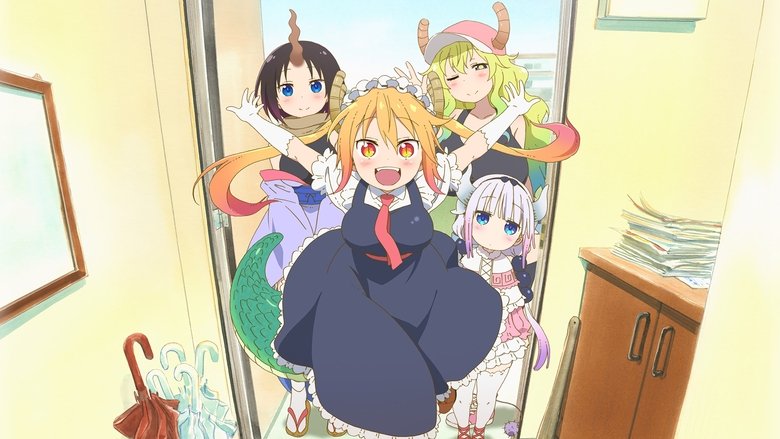
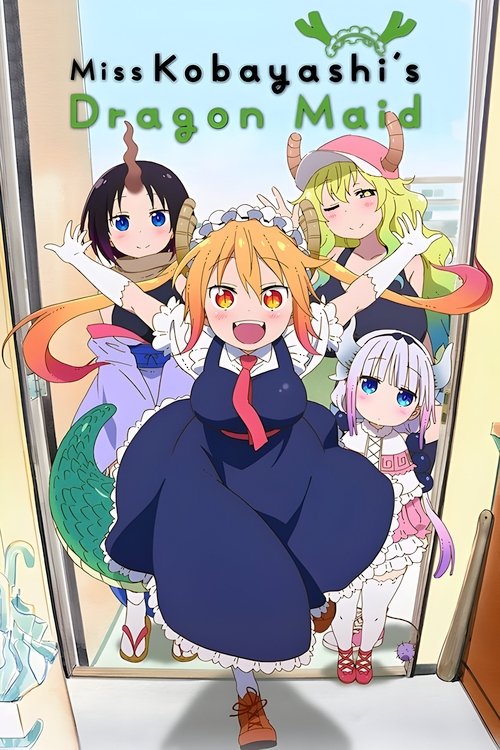
Kobayashi is a burnt-out programmer who lives alone and works long hours. One drunken night in the mountains, she meets a wounded dragon, and the dragon turns up at her door the next morning as a maid. The dragon is Tohru, who has come from another world. Kobayashi's flat becomes a home to a growing group of dragons and other beings. These include the small, stoic Kanna, the flirtatious Quetzalcoatl (Lucoa), the reclusive Fafnir, and the warrior-turned-office-worker Elma. Each of them has followed Tohru to the human world for their own reasons.

The series is a slice-of-life comedy from Kyoto Animation, adapted from Coolkyousinnjya's manga. It runs for two seasons: 13 episodes in 2017, plus an OVA, and the second season, Miss Kobayashi's Dragon Maid S, in 2021. Episodes are self-contained. They follow the group through everyday situations such as learning maid work, starting school, attending Comiket, and taking trips. Reviewers describe how each escapade ends in a joke or a small moment that brings the group closer.

Across both seasons the story builds a household out of mismatched creatures. Season two adds a new dragon, Ilulu. The focus stays on adjusting to each other's differences, not on large plot twists.


Core Meaning

The series argues that a family can be built from choice, patience and mutual respect. It does not need to come from blood or from shared species. Kobayashi's own lines point the same way: accepting differences, compromising and respecting each other are what produce trust and closeness.

The dragons are outsiders who must fit into human society, which gives the comedy a gentle point about belonging. Kobayashi is also a lonely adult who is slowly opened up by her new household. Warmth, not spectacle, is the show's main concern.

Thematic DNA

Found family 35%
Fitting in and difference 25%
Loneliness and work-life drift 20%
Love, devotion and gratitude 20%

Found family

Kobayashi starts out living alone, and she comes to think of Tohru and Kanna as family. Season two extends this to Ilulu and the wider group, so the household keeps growing.

Fitting in and difference

The dragons struggle with human customs, such as school, work and the neighbours. The show treats these struggles with humor and patience. Fear of what is different is a recurring point.

Loneliness and work-life drift

Kobayashi is an overworked office employee who has few close friends. Her new household gives her warmth and routine, and it helps her open up to others.

Love, devotion and gratitude

Tohru's devotion to Kobayashi, who saved her, drives much of the comedy. It also drives the show's most sincere moments, and it changes Tohru over time.

Character Analysis

Kobayashi

Mutsumi Tamura

Archetype: Reluctant caretaker Key Trait: Deadpan, practical kindness

Motivation

At first she wants only a quiet life. She comes to want the people around her to be safe and happy.

Character Arc

She begins as a solitary, tired office worker. Over the course of both seasons she comes to see Tohru and Kanna as family. She also grows more open and more comfortable with her unconventional household.

Tohru

Yuuki Kuwahara

Archetype: Devoted dragon maid Key Trait: Fiery, overeager devotion

Motivation

Gratitude and love toward Kobayashi, who saved her.

Character Arc

She arrives from the dragon world and tries to serve Kobayashi as a maid. Over time she learns about human life and adapts to it. Her love for Kobayashi changes her, and in season two Kanna notes that it has changed her power.
All 4 characters and cast

Symbols & Motifs

The maid outfit

Meaning: Service, devotion and the awkward negotiation of roles between Tohru and Kobayashi.
Context: Tohru's maid role is the premise of the show. Kobayashi's high standards for maid work are a running gag, and her rant about taking the service industry seriously is one example.

The shared flat

Meaning: A home gradually assembled from unlikely people.
Context: Nearly every episode returns to Kobayashi's apartment. Its crowding stands for the household growing across both seasons.

Dragon form versus human form

Meaning: Hidden nature and the effort to adapt to human society.
Context: The dragons shapeshift to blend in, and they sometimes return to full dragon form when protecting Kobayashi. One example is scaring off burglars.

Food and shared meals

Meaning: Care, belonging and cultural exchange.
Context: Tohru's cooking, including offering her own roasted tail, and Kanna's odd eating habits keep returning as comic and tender moments.

Memorable Quotes

What I like most is you, Miss Kobayashi!
— Tohru

Context

This is a line from the manga's first chapter, and it is listed on the fan wiki. The anime's opening arc follows the same setup.

Meaning

It sums up Tohru's devotion, which is the emotional core of the series.
Everyone is afraid of things that are different.
— Kobayashi

Context

This is a commonly circulated Kobayashi line. The source does not say which episode it comes from.

Meaning

It states the show's attitude toward difference and acceptance.
All 3 quotes

Episode Highlights

Season 1 premiere (Tohru becomes the maid)

S1E1
Kobayashi meets a dragon while drunk, and the dragon turns up as her maid the next day.
Significance: It establishes the premise and Tohru's devotion.

Comiket episode

S1E7
Fafnir attends Comiket with Takiya. The credits show Comiket cooperated with the production on this episode.
Significance: It is a showcase of the show's otaku comedy and Fafnir's integration into human culture.

New Dragon, Ilulu! (Please Be Nice to Her Again)

S2E1
Season two opens by introducing the new dragon Ilulu.
Significance: It extends the household and sets season two's themes.

Common Sense (It's Different for Everyone)

S2E4
Ilulu confides in Tohru about Kobayashi's mental fortitude.
Significance: It develops Ilulu's place in the group.

Kanna's Summer Vacation (Two-Language Edition)

S2E10
Kanna takes a solo trip to New York.
Significance: It shows Kanna's independence.

Premium Seat (No Extra Charge)

S2E11
Kanna observes how Tohru's love for Kobayashi has changed her power.
Significance: It marks Tohru's growth.

Philosophical Questions

What makes a family?

Kobayashi, Tohru and Kanna share no blood or species, but over two seasons they become a household through care and daily routine.

How should we treat what is different from us?

The dragons must hide their nature and learn human customs. The show repeatedly answers fear with patience, compromise and mutual respect.

How It Ends

Alternative Interpretations

Some viewers read the show as a wholesome found-family story. Others read Tohru's feelings as a romance. The sources note that Kobayashi at first does not reciprocate Tohru's feelings. One review described Kobayashi as almost a genderless lead, whose gender has no impact on the story. The dragons can also be read as metaphors for immigrants or other outsiders adapting to a new society.

Full ending explanation

Cultural Impact

The series is a prominent example of Kyoto Animation's slice-of-life comedy tradition, in the lineage of Lucky Star, K-On! and Nichijou. It spawned several manga spin-offs, a second season, a video game and a 2025 film. Reviewers praised its handling of family and friendship themes within an unusual premise. Some critics found its fan-service elements distracting or uncomfortable.

Audience Reception

Reviewers and viewers consistently praised the charming characters, the comedic timing and Kyoto Animation's soft, watercolor-like visuals. One review called it an entertaining slice-of-life with a fantastic cast that plays off each other well. Another found it not Kyoto Animation's best-looking work but still lovingly animated. Criticism focused on the sexualized elements and fan-service jokes, which some reviewers found uncomfortable or distracting, and on some recurring gags that fell flat. The overall verdict is a funny, relaxing and heartwarming show.

Interesting Facts

  • The anime was produced by Kyoto Animation and directed by Yasuhiro Takemoto, who also directed The Disappearance of Haruhi Suzumiya.
  • It is adapted from the manga by Coolkyousinnjya, which began in 2013 in Futabasha's Monthly Action magazine.
  • The first season aired in Japan from January to April 2017, and season two, Dragon Maid S, aired from July to September 2021.
  • The opening theme is 'Aozora no Rhapsody' by fhána, and the ending 'Ishukan Communication' is sung by the main cast.
  • An anime film, A Lonely Dragon Wants to Be Loved, premiered on June 27, 2025.
  • A video game titled Burst Forth!! was also released.

Frequently Asked Questions

Explore More About This Series

Dive deeper into specific aspects of the series with our detailed analysis pages

Comments (0)

Leave a comment

No comments yet. Be the first to share your thoughts!

Similar Movies