Skip to content
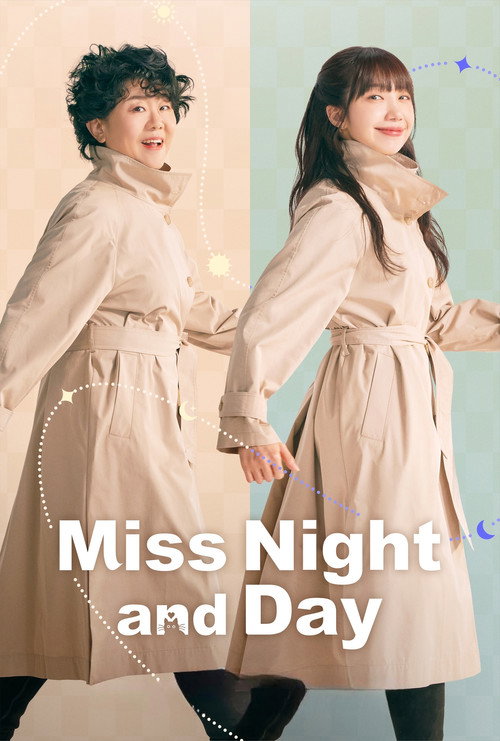
Miss Night and Day
A sun-drenched, bittersweet urban fairytale where the fleeting anxieties of youth collide with the melancholic wisdom of age; two souls inhabit a single shadow that lengthens at dawn and retreats at dusk.
Miss Night and Day

Miss Night and Day

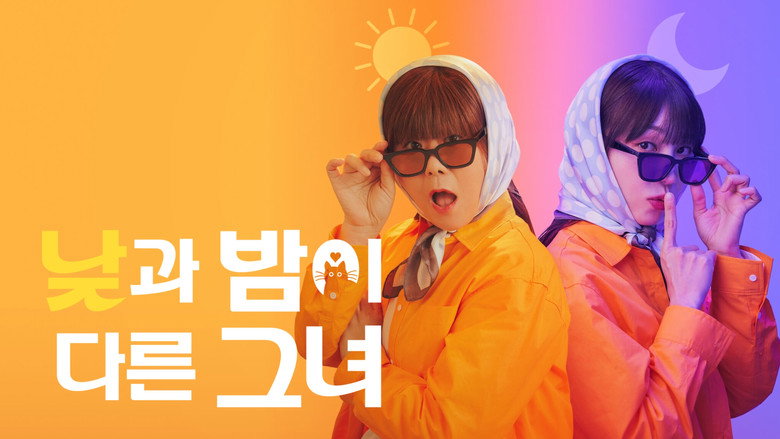
낮과 밤이 다른 그녀

15 June 2024 — 04 August 2024 South Korea 1 season 16 episode Ended 8.5 (154)

Cast: Lee Jung-eun, Jung Eun-ji, Choi Jin-hyuk, Yoon Byung-hee, Jeong Seok-yong

Sci-Fi & Fantasy Comedy Mystery Youth, Ageism, and the Reality of Employment Dual Identity and Authentic Self-Worth Unresolved Grief and Seeking Closure Intergenerational Empathy and Connection

Overview

Miss Night and Day centers on Lee Mi-jin, a resilient twenty-something who has spent eight exhausting years preparing for civil service exams while working dead-end, part-time jobs. After hitting rock bottom following a job-fraud scam and an encounter with an enigmatic stray cat, she awakens to a surreal supernatural curse: with every sunrise, she ages into a woman in her fifties, only returning to her twenty-year-old body once night falls. Rather than succumbing to despair, Mi-jin seizes her daytime persona—taking the name of her long-lost maternal aunt, Lim Sun—and leverages her acquired skills and age to land a coveted senior intern position at the Seohan District Public Prosecutors’ Office.

At the prosecutor’s office, Lim Sun becomes the indispensable right hand to Gye Ji-ung, a workaholic, uncompromising prosecutor dedicated to solving complex narcotics cases and an unresolved serial disappearance cold case from twenty years prior. As daytime intern Lim Sun and nighttime civilian Lee Mi-jin, she becomes deeply entwined in Ji-ung’s professional investigations and his personal life. The narrative weaves workplace comedy, budding romance, and high-stakes mystery as Mi-jin juggles a double life, navigates romantic entanglements with Ji-ung and idol Ko Won, and pursues the truth behind the historic crimes that tore both her and Ji-ung’s families apart.


Core Meaning

The central thesis of the series is that time, self-worth, and human potential are not dictated by the ticking of a biological clock or rigid societal milestones. By physically splitting a young woman's journey into day (middle age) and night (youth), the drama illustrates how South Korea's ultra-competitive job culture leads young people to feel obsolete before their careers even begin, while simultaneously marginalizing older generations as culturally invisible. Through Lim Sun's vitality and Mi-jin's ultimate self-acceptance, the drama asserts that genuine value comes from embracing one's experiences, acknowledging failure as growth, and realizing that every stage of life carries its own unique power.

Thematic DNA

Youth, Ageism, and the Reality of Employment 35%
Dual Identity and Authentic Self-Worth 25%
Unresolved Grief and Seeking Closure 20%
Intergenerational Empathy and Connection 20%

Youth, Ageism, and the Reality of Employment

The series critiques the harsh realities facing young job seekers in modern South Korea. As a twenty-something, Mi-jin is deemed under-qualified despite her certifications; as a fifty-year-old intern, her exact same skills are celebrated as extraordinary. The storyline questions why society devalues both inexperienced youth and aging seniors.

Dual Identity and Authentic Self-Worth

Living as Lim Sun forces Mi-jin to strip away her insecurities. Ironically, she discovers confidence, assertiveness, and courage only when disguised as an older woman, ultimately realizing that her true strength was inside her all along.

Unresolved Grief and Seeking Closure

Both Mi-jin’s family and Gye Ji-ung harbor deep trauma rooted in the unsolved disappearances of Lim Sun and Ji-ung’s mother. The mystery narrative represents the emotional baggage of unfinished grief and the necessity of confronting the past to move forward.

Intergenerational Empathy and Connection

By placing a young mind inside a mature body within an office of senior interns, the show highlights how mutual understanding bridges generational divides, humanizing the challenges faced by both younger and older demographics.

Character Analysis

Lee Mi-jin

Jung Eun-ji

Archetype: The Reluctant Hero / Everywoman Key Trait: Perseverance and empathy.

Motivation

Secure stable employment and restore her self-respect.

Character Arc

Begins as an anxious, demoralized test-taker crushed by repeated failures. Through her daytime trials, she discovers her inner resilience, solves her family's greatest tragedy, and finally pursues civil service with authentic confidence.

Lim Sun (Day Persona)

Lee Jung-eun

Archetype: The Trickster Mentor / Chameleon Key Trait: Boundless energy and wit.

Motivation

Conceal her identity while succeeding at work and catching the killer.

Character Arc

Mi-jin's daytime physical manifestation. Starts as a clumsy disguise to survive the workday, but evolves into a legendary all-rounder workplace figure who bridges generational gaps and breaks office prejudices.

All 5 characters and cast

Symbols & Motifs

The Sunlight and Sunset (The Transformation Trigger)

Meaning:

Acts as a visual metaphor for the fleeting nature of time. Daylight represents responsibility, public service, and societal utility, while nighttime represents vulnerability, privacy, and true emotional expression.

Context:

Dictates Mi-jin's physical metamorphosis every dawn and dusk, framing the boundary between her public utility as Lim Sun and her private life as Mi-jin.

The Calico Stray Cat

Meaning:

Symbolizes the spiritual presence of Mi-jin's deceased aunt Lim Sun, serving as a guardian spirit pushing Mi-jin toward unearthing the truth and finding closure for her grieving mother.

Context:

Appears at Mi-jin's lowest point when the curse is triggered and lingers around key moments of spiritual guidance.

Lim Sun’s ID Card and Résumé

Meaning:

Represents the modern obsession with external validation and highlights how societal labels define how one is treated.

Context:

Used by Mi-jin to secure the senior internship at the Seohan District Public Prosecutors' Office.

The Poppy/Opioid Scent

Meaning:

Signifies hidden toxicity lurking beneath everyday surfaces, representing unresolved past cold cases and active present danger.

Context:

A recurring medicinal and floral scent associated with the serial killer that drives Ji-ung's forensic investigation.

Memorable Quotes

내가 실패한 시간이 길었다고 해서, 내 모든 시간이 헛된 건 아니었다.
— Lee Mi-jin

Context

Mi-jin’s reflective monologue during the series finale where she comes to terms with her eight years of struggle.

Meaning

Expresses Mi-jin's realization that her years of hardship and study were not wasted, but served as the foundation for her personal growth and resilience.

나이 들었다고 일 못 한다는 법 있습니까? 기회만 주시면 제대로 보여드리겠습니다.
— Lim Sun

Context

Lim Sun asserting herself during the senior internship job interview at the prosecutor's office.

Meaning

Asserts the dignity, capability, and value of older workers in the face of workplace ageism.

All 4 quotes

Episode Highlights

The Strange Awakening

S1E1

Lee Mi-jin falls victim to a job scam and makes a desperate wish to a stray cat after hitting rock bottom, awakening the next morning transformed into a 50-year-old woman.

Significance:

Establishes the core premise and sets the tonal contrast between real-world youth job anxiety and magical realism.

The Legendary Intern

S1E2

Mi-jin takes her daytime persona to the Seohan District Prosecutors’ Office for a senior intern interview, stunning the hiring panel with her exceptional typing speed, computer literacy, and MZ-generation agility.

Significance:

Lands Lim Sun a placement under Gye Ji-ung and establishes the workplace comedy dynamic.

The Company Dinner & The Secret Close Call

S1E7

At a rowdy office after-party, Lim Sun bursts out dancing to Apink's Mr. Chu, showcasing youthful energy that stuns her colleagues while racing against sunset to avoid transforming in front of Ji-ung.

Significance:

Deepens the comedic tone and raises the stakes regarding the concealment of her dual identity.

The Idol’s Discovery

S1E10

Ko Won discovers Mi-jin’s supernatural secret after witnessing her transform at twilight and chooses to become her protector and confidant rather than exposing her.

Significance:

Adds emotional depth to the second-lead dynamic and provides Mi-jin with a trusted daytime ally.

Closing In on the Scent

S1E14

The investigation into the 20-year-old cold case narrows as Lim Sun notices the distinct poppy/opioid aroma linked to senior intern Na Ok-hui.

Significance:

Propels the narrative toward its climax by revealing that the serial killer is embedded inside the prosecutor's office.

The Lion’s Den & The True Killer Revealed

S1E15

The real identity of Na Ok-hui is revealed as serial killer Gong Eun-sim. Mi-jin is captured and engages in a life-or-death confrontation using a syringe of fentanyl to defend herself.

Significance:

Unearths the truth behind the historic murders of Mi-jin's aunt and Ji-ung’s mother.

Two Lives Made Whole (Series Finale)

S1E16

Gong Eun-sim is brought to justice, Mi-jin says an emotional farewell to Lim Sun in a dream, and the curse lifts. Mi-jin passes the civil service exam as her true self and relocates to Seoul.

Significance:

Concludes the overarching mystery, resolves character arcs, and reunites Mi-jin and Ji-ung in Seoul.

Philosophical Questions

What defines the value of time?

The series asks whether years spent failing at a singular goal represent wasted time or latent experience that will pay off when the right opportunity arrives.

How much of human identity is governed by physical appearance?

Through the contrasting treatment Mi-jin receives as an attractive 20-something versus a 50-year-old woman, the narrative interrogates how society’s gaze dictates opportunity and dignity.

Can grief be inherited across generations?

The drama explores how cold cases leave generational scars on families, showing that healing requires uncovering uncomfortable truths.

Alternative Interpretations

Critics and audiences have proposed multiple analytical readings of the series:

Full ending explanation

Cultural Impact

Miss Night and Day was produced during a period of heightened social anxiety in South Korea regarding youth job market stagnation and an aging demographic shift. By blending the senior intern initiative with youth despair, the show functioned as social satire alongside its romance and procedural beats.

The series demonstrated JTBC's strength in weekend programming, proving that combining mismatched genres—brutal serial murder cold cases with lighthearted body-swap rom-com—could yield high ratings and top Netflix non-English global charts.

Audience Reception

The audience and critical reception for the series highlighted several distinct strengths and weaknesses:

  • Praise: Critics and general viewers widely celebrated Lee Jung-eun's standout performance, highlighting her comic timing, youthful mannerisms, and emotional delivery. The dynamic between her, Choi Jin-hyuk, and Yoon Byung-hee provided consistent entertainment.
  • Criticism: Several reviews noted that the serial killer subplot felt generic, predictable, and occasionally tonally jarring against the lighthearted rom-com tone. Audiences also expressed frustration with the late-series separation trope in Episode 16 before the final reunion.
  • Verdict: A charming, highly rating-successful genre-hybrid drama carried by top-tier acting, even if its procedural crime elements relied on familiar K-drama tropes.

Interesting Facts

  • The series was co-directed by Lee Hyeong-min (known for cult hits Strong Woman Do Bong Soon and I'm Sorry, I Love You) and Choi Sun-min, aiming to craft a cross-generational comedy that addressed social issues without being overly dark.
  • Screenwriter Park Ji-ha revealed that the concept stemmed from observing youth unemployment in Korea, deliberately choosing a senior internship setting because it is a position a 20-something could never obtain under normal circumstances.
  • Lee Jung-eun and Jung Eun-ji spent hours aligning their micro-expressions, speech patterns, walking style, and vocal inflections so viewers would believe they were the exact same human being.
  • The drama began with modest viewership ratings in the 3–4% range on cable network JTBC and steadily climbed due to word-of-mouth, peaking at 11.7% nationwide for its series finale.

Easter Eggs

Apink 'Mr. Chu' Karaoke Scene

In Episode 7, Lee Jung-eun’s character Lim Sun executes the choreography of Apink’s hit pop track Mr. Chu. This is a meta reference to co-star Jung Eun-ji, who is a member and main vocalist of Apink.

Parasite and K-Drama Cameo Allusions

Lee Jung-eun's presence references her role in Bong Joon-ho's Oscar-winning film Parasite, with subtle visual framing in the prosecutor's basement and secret rooms nodding to classic Korean suspense cinema.

MZ-Generation Workplace Slang

The series utilizes contemporary Korean generational contrast as the older-looking Lim Sun casually drops Gen-Z slang, digital shortcuts, and rapid typing skills in front of senior executives expecting traditional deference.

Frequently Asked Questions

Explore More About This Movie

Dive deeper into specific aspects of the movie with our detailed analysis pages

Comments (0)

Leave a comment

No comments yet. Be the first to share your thoughts!

Similar Movies