Skip to content
Modern Family
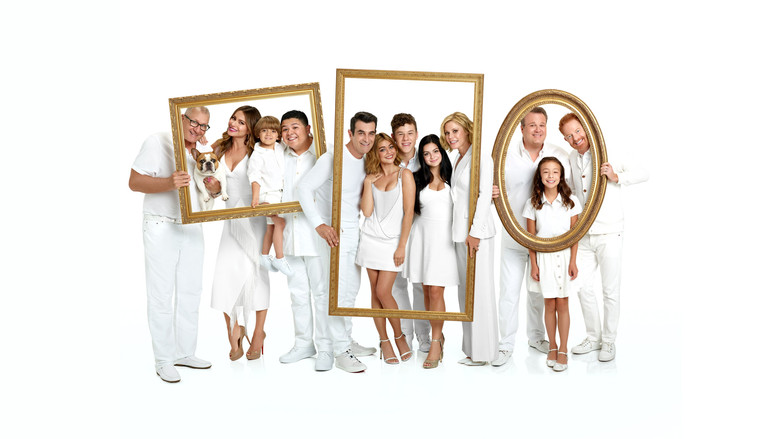
This vibrant mockumentary sitcom paints a kaleidoscope of domestic chaos, where razor-sharp laughter bleeds into genuine warmth like golden sunset hues illuminating a crowded, lived-in suburban living room.
Modern Family

Modern Family

"One big (straight, gay, multi-cultural, traditional) happy family."

23 September 2009 — 08 April 2020 United States of America 11 season 250 episode Ended 7.9 (3,462)

Cast: Ed O'Neill, Sofía Vergara, Julie Bowen, Ty Burrell, Jesse Tyler Ferguson

Comedy Acceptance and Inclusivity across Diversity Generational Growth, Aging, and Legacy Idealism vs. Pragmatism / The Dreamer-Realist Dynamic The Illusion of Perfection vs. Embracing Chaos Parent-Child Dynamics and the Art of Letting Go

Overview

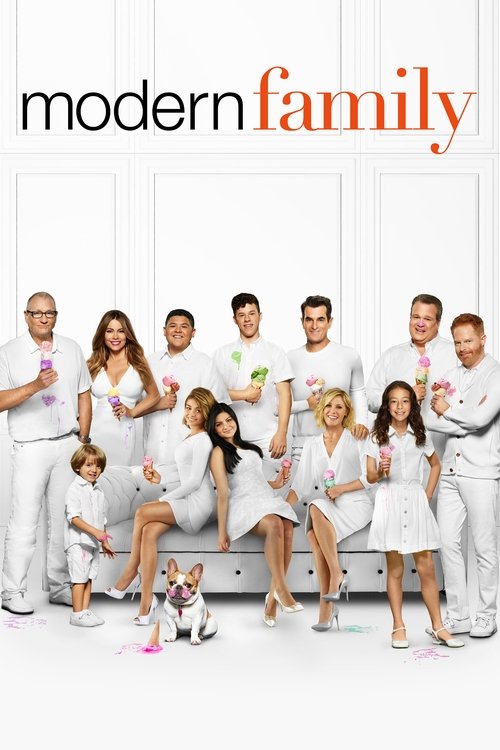
Modern Family (2009–2020) is an acclaimed single-camera mockumentary sitcom created by Steven Levitan and Christopher Lloyd. Set in suburban Los Angeles, the series centers on three interconnected branches of the extended Pritchett family. Patriarch Jay Pritchett anchors the clan alongside his younger Colombian wife, Gloria, and her romantic son, Manny, later expanding to include their young son, Joe. Jay’s adult children lead their own distinct households: daughter Claire, an organized matriarch married to the wildly enthusiastic real estate agent Phil Dunphy, raises three wildly different children—rebellious Haley, brainy Alex, and quirky Luke. Meanwhile, Jay’s neurotic lawyer son, Mitchell, and his flamboyant, farm-bred husband, Cameron Tucker, navigate parenthood after adopting their daughter, Lily.

Across its eleven-season run, the series captures the sprawling, multi-generational evolution of a contemporary American family. Rather than relying on static domestic tropes, Modern Family allows its characters to age organically: children grow from rambunctious adolescents into young adults facing college, careers, and independent relationships, while parents navigate mid-life career transitions, empty-nest anxieties, and shifting marital dynamics. The show balances farcical miscommunications and physical comedy with authentic emotional milestones, continuously examining how a diverse group of personalities stays tied together despite conflicting ideals and generational divides.

Told through a mockumentary lens complete with handheld camera work, rapid whip-pans, and direct-to-camera confessional interviews, the series creates an intimate, fly-on-the-wall atmosphere. By highlighting non-traditional family structures—blended marriages, cross-cultural unions, and same-sex parenting—Modern Family presents a joyful, empathetic slice of modern life. Throughout its 250 episodes, the overarching narrative serves as a celebration of unconditional love, forgiveness, and the chaotic beauty of belonging to a family that accepts you for who you are.

Core Meaning

The core thesis of Modern Family is that family is defined not by rigid tradition, perfection, or biological templates, but by unconditional acceptance, adaptability, and the shared commitment to support one another through life's absurdities.

Creators Steven Levitan and Christopher Lloyd aimed to broaden the landscape of American television by demonstrating that 'modern' family setups face the exact same mundane, heart-wrenching, and hilarious human challenges as traditional households. Across eleven seasons, the series repeatedly proves that despite generational friction, cultural differences, and neuroses, love requires stepping outside of one's comfort zone and embracing messiness over the illusion of perfection.

Thematic DNA

Acceptance and Inclusivity across Diversity 30%
Generational Growth, Aging, and Legacy 25%
Idealism vs. Pragmatism / The Dreamer-Realist Dynamic 20%
The Illusion of Perfection vs. Embracing Chaos 15%
Parent-Child Dynamics and the Art of Letting Go 10%

Acceptance and Inclusivity across Diversity

The central theme explores bridging divides—cultural (Gloria’s Colombian heritage in suburban LA), generational (Jay vs. his younger wife and children), and sexual orientation (Mitchell and Cam’s relationship). Over the show's run, initial discomfort or traditional biases dissolve into deep mutual respect and pride, demonstrating how exposure and love dissolve prejudice.

Generational Growth, Aging, and Legacy

The series tracks the inevitable march of time across three generations. Jay transitions from a rigid, old-school businessman to a soft-hearted grandfather willing to learn Spanish and retire. Claire and Phil move from overwhelmed parents of young children to empty nesters encouraging their adult children's independence. The kids evolve from child archetypes into complex adults charting their own paths.

Idealism vs. Pragmatism / The Dreamer-Realist Dynamic

Every primary couple balances a dreamer and a realist: Phil’s childlike optimism balances Claire’s grounded anxiety; Cam’s dramatic flair balances Mitchell’s neurotic pragmatism; Gloria’s passionate spirit balances Jay’s gruff realism. Throughout eleven seasons, the show illustrates that relationships thrive because dreamers keep realists from staying grounded forever, while realists prevent dreamers from soaring too close to the sun.

The Illusion of Perfection vs. Embracing Chaos

Characters frequently attempt to stage 'perfect' events—holiday photos, weddings, birthday parties, or school presentations—only for them to collapse into utter chaos due to misunderstandings or accidents. The recurring lesson is that the flawed, unpredictable reality of family life holds far more value and genuine love than any polished facade.

Parent-Child Dynamics and the Art of Letting Go

Parenting is depicted not as a set of fixed answers, but as a continuous learning process. Phil and Claire continually learn when to step in and when to let Haley, Alex, and Luke fail and learn on their own terms, establishing that good parenting ultimately means preparing children to leave the nest.

Character Analysis

Jay Pritchett

Ed O'Neill

Archetype: The Grumpy Patriarch / Stoic Mentor Key Trait: Pragmatic, tough exterior masking a tender, fierce loyalty.

Motivation

To maintain control, provide financial security, and protect his family; evolves into wanting to build warm emotional bonds and leave a lasting family legacy.

Character Arc

Begins as a traditional, old-school guy who struggles with his son's sexuality and his new multicultural family. Over 11 seasons, he softens, learns to embrace emotional vulnerability, accepts same-sex marriage wholeheartedly, learns Spanish for Gloria, and happily hands down his business empire to his daughter.

Phil Dunphy

Ty Burrell

Archetype: The Loving Fool / Enthusiastic Everyman Key Trait: Boundless optimism, goofiness, and child-like wonder.

Motivation

To bring joy, laughter, and magic to his family while earning Jay's approval; evolves into providing unconditional support for his growing children as they venture into adulthood.

Character Arc

Evolves from a desperate 'cool dad' trying too hard to impress his children and father-in-law into a deeply respected family anchor, successful real estate entrepreneur, and pillar of emotional wisdom.

All 5 characters and cast

Symbols & Motifs

The Broken Front Step (Dunphy House)

Meaning:

The minor, persistent flaws in everyday domestic life that are repeatedly stumbled over, acknowledged, yet lived with rather than easily eliminated. It represents the beauty of an imperfect household.

Context:

Located at the entrance of the Dunphy home, where family members continuously trip over it while acknowledging 'Gotta fix that step!'

Family Portraits & Group Photographs

Meaning:

The futile pursuit of picture-perfect domestic harmony. It symbolizes that real family connection lies in shared chaos rather than immaculate staging.

Context:

Featured in episodes like 'Family Portrait' (S01E24), where clean white outfits end up covered in mud.

Fizbo the Clown

Meaning:

Cameron’s alter ego symbolizes unabashed self-expression, rural heritage, and staying true to one's authentic eccentricities despite societal embarrassment or a spouse's skepticism.

Context:

Appears during birthday parties and dramatic events as Cameron's deeply cherished persona.

Phil’s-osophies

Meaning:

Phil’s handwritten book of silly, earnest life advice represents well-meaning, unorthodox fatherly love and an unshakeable determination to find joy in a cynical world.

Context:

Given by Phil to Haley as she leaves for college in Season 4.

The Mockumentary Camera / Direct Confessionals

Meaning:

Serves as a psychological mirror. The characters speak directly to the camera to reveal their hidden insecurities, hypocrisies, and true affection that they are often too proud or embarrassed to express aloud in the main scene.

Context:

Used continuously throughout all 11 seasons across all three households.

Memorable Quotes

There are dreamers and there are realists in this world. You'd think the dreamers would find the dreamers, and the realists would find the realists, but more often than not, the opposite is true. See, the dreamers need the realists to keep them from soaring too close to the sun. And the realists? Well, without the dreamers, they might not ever get off the ground.
— Cameron Tucker

Context

Season 3, Episode 9 ('Punkin Chunkin').

Meaning

Spoken in the closing confessional, this quote encapsulates the core philosophy of the show's romantic dynamics and human relationships.

I'm a cool dad, that's my thang. I'm hip, I surf the web, I text. LOL: laugh out loud. OMG: oh my god. WTF: why the face?
— Phil Dunphy

Context

Season 1, Episode 1 ('Pilot').

Meaning

Instantly established Phil’s character, setting the comedic standard for his entire 11-season arc.

All 5 quotes

Episode Highlights

Pilot

S1E1

Introduces the three sub-families and concludes with the iconic reveal that they are all one big extended family arriving to meet Cam and Mitch's newly adopted baby, Lily.

Significance:

Established the groundbreaking mockumentary structure and set the foundation for the entire series.

Fizbo

S1E9

Brings the entire ensemble together for Luke's birthday party and introduces Cam's clown alter-ego, Fizbo.

Significance:

Sets the template for chaotic family events ending in physical comedy and heartfelt reconciliation.

Family Portrait

S1E24

Claire's frantic attempt to take a pristine, perfectly dressed family photo devolves into a massive mud fight.

Significance:

Serves as a crucial turning point proving that perfection is unnecessary for family happiness.

Election Day

S3E19

Claire runs for city council while every family member tries (and hilariously fails) to help her campaign.

Significance:

Showcases and reinforces their collective family loyalty despite individual incompetence.

The Wedding

S5E23

Mitch and Cam's wedding faces constant disasters, including wildfires and venue changes, leading Jay to step up and host it at his country club.

Significance:

Jay walks Mitchell down the aisle, marking a monumental emotional milestone for Jay's character arc and a landmark moment for LGBTQ+ TV.

Connection Lost

S6E16

The entire episode unfolds on Claire's laptop screen via FaceTime, Messages, and browser windows as she searches for Haley.

Significance:

Hailed as a masterclass in modern visual storytelling and technical innovation.

The Party

S7E18

Phil and Mitchell accidentally consume marijuana edibles thinking they are sleeping pills while trying to catch Luke and Manny throwing a secret party.

Significance:

Widely cited by fans as one of the funniest comedic episodes of the late seasons.

Finale

S11E17

The younger generation moves out, Cam and Mitch relocate to Missouri, and Phil and Claire turn off the porch light.

Significance:

Concludes eleven years of character growth and marks the end of an era for the extended family.

Philosophical Questions

What truly defines a family structure?

The show explores whether family is defined by biology and traditional legal definitions or by mutual care, daily commitment, and shared love.

How does one balance individuality with group harmony?

It examines the continuous tension between expressing personal eccentricities and compromising for the sake of household unity.

Can generational patterns and upbringing be overcome?

Through Jay and Mitchell's relationship, the show questions whether adults can unlearn deeply ingrained stoicism or emotional guardedness passed down from past generations.

Alternative Interpretations

The series can be analyzed through multiple analytical lenses:

Full ending explanation

Cultural Impact

Modern Family debuted in September 2009 during a transformative period for American television, applying single-camera mockumentary techniques to domestic family life rather than workplace environments.

The show played a historic role in shifting public attitudes toward same-sex marriage and LGBT adoption in mainstream America. By depicting Mitchell and Cameron's relationship with warmth, humor, and domestic normalcy, it humanized same-sex parenting for millions of network viewers in the years preceding the Supreme Court’s legalization of same-sex marriage in 2015.

Winning 22 Primetime Emmy Awards—including five consecutive wins for Outstanding Comedy Series (tying Frasier)—it revitalized ABC’s comedy brand and paved the way for sitcoms like Black-ish, Fresh Off the Boat, and The Goldbergs.

Audience Reception

Modern Family received wide-ranging critical and audience responses across its run:

  • Praised Aspects: Universal acclaim for the early seasons' razor-sharp comedic timing, brilliant ensemble cast chemistry, innovative mockumentary pacing, and balance of laugh-out-loud farce with emotional heart.
  • Points of Criticism: Critics and audiences noted a decline in writing quality from Season 6 onward, citing character flattenings (e.g., Manny becoming overly pompous, Luke losing his innocent childhood humor), repetitive miscommunication tropes, and unresolved career direction for Haley.
  • Overall Verdict: Regarded as one of the greatest and most influential American sitcoms of the 21st century, whose legacy as a comforting, rewatchable classic remains intact despite late-season fatigue.

Interesting Facts

  • The exterior shots of the Dunphy residence belong to an actual home in Los Angeles; the owners resided inside during all 11 years of production.
  • ABC executives initially rejected Ty Burrell for the role of Phil Dunphy; co-creator Steven Levitan filmed a home test video in his own backyard to prove Burrell's genius.
  • During the filming of the Pilot episode, Julie Bowen was heavily pregnant with twin boys, requiring cereal boxes and laundry baskets to hide her stomach.
  • Jay Pritchett reads the exact same prop newspaper on Modern Family that Ed O'Neill's previous character, Al Bundy, read on Married... with Children.
  • Before Season 4, the primary adult cast members filed a unified lawsuit against 20th Century Fox Television over salary disputes, securing equal pay per episode rising to over $500,000 in final seasons.
  • An Iranian state broadcaster produced an unauthorized scene-by-scene remake titled Haft Sang in 2014, but erased the gay couple (Mitch and Cam) due to state censorship laws.

Easter Eggs

Connection Lost Screen Details

Haley’s Facebook friends list includes real crew members like director Jim Bagdonas and editor Christian Miglio, while Claire’s search bookmarks reference earlier plotlines like 'Croctopus 4'.

Season 9 Homage to Pilot

The opening scene of Season 9, Episode 1 directly replicates the opening scene of the Pilot episode, with Claire yelling 'Kids, breakfast!' down the stairs in identical fashion.

Phil’s Branding

Throughout the series, Phil Dunphy puts his own face on custom water bottles, notebooks, and pens at open houses—a subtle background detail across various scenes.

Celebrity Cameos

Features guest appearances by Edward Norton (as a former Spandau Ballet bassist), Kobe Bryant, Matthew Broderick, Lin-Manuel Miranda, Bryan Cranston (who also directed episodes), and Kevin Hart.

Frequently Asked Questions

Explore More About This Movie

Dive deeper into specific aspects of the movie with our detailed analysis pages

Comments (0)

Leave a comment

No comments yet. Be the first to share your thoughts!

Similar Movies