
Skip to content
My Dearest Assassin
A storm of gun-fu violence drenched in crimson shadow, where captive souls clash against destiny like caged birds turning razor wire into wings of defiant love.
My Dearest Assassin
My Dearest Assassin

เลือดรักนักฆ่า

"Love, Sacrifice and Vengeance."

06 May 2026 Thailand 128 min 8.6 (282)

Director: Taweewat Wantha

Cast: Pimchanok Luevisadpaibul, Thanapob Leeratanakachorn, Sivakorn Adulsuttikul, Chartayodom Hiranyasthiti, Theerachai Wimolchaireuk

Drama Action Romance Autonomy vs. Commodification Found Family and Protective Loyalty Love as Defiance and Mutual Sacrifice The Cycle of Vengeance and Bloodshed

My Dearest Assassin — Ending Explained

⚠️ Spoiler Analysis

The narrative unfolds several major twists leading to an explosive resolution:

  • The Secret of House 89: Lhan discovers that Po did not rescue her out of pure altruism; House 89 secured her as an irreplaceable biological asset and ultimate bargaining chip against rival syndicates and underworld bosses.
  • Pran’s True Loyalty: Originally ordered by Po to keep Lhan compliant and contained, Pran’s genuine love leads him to break the syndicate's mercenary code and resolve to help her escape.
  • The Compound Siege: Pruek and his mercenaries raid House 89, causing massive casualties among the assassins and cornering Po, M, Pran, and Lhan.
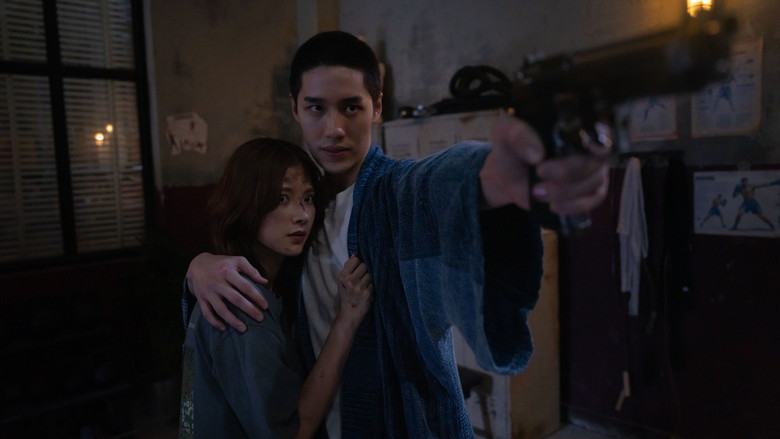
  • Lhan Takes the Gun: Refusing to remain hidden in a panic room, Lhan demands combat training from Pran and M and joins the frontline battle.
  • The Climax & Resolution: In a bloody warehouse confrontation, Pran and M dispatch Pruek’s inner circle in lethal close-quarters combat. Lhan directly confronts Pruek—the murderer of her parents—and works in tandem with Pran to deliver the fatal blow.
  • Ending: With Pruek eliminated and House 89 fractured, Lhan and Pran sever ties with the underworld hierarchy, stepping into the open world as free individuals.

Alternative Interpretations

The film can be analyzed through several distinct thematic lenses:

  • Class Allegory (Proletariat as Fuel for Elites): Lhan’s 'Aurum' blood can be read as a metaphor for the exploitation of the lower classes, whose life-force and labor are literally and figuratively drained to sustain the longevity and luxury of the ruling syndicate elites.
  • Critique of Paternalistic Control: House 89 presents itself as a loving sanctuary, yet Po's strict confinement of Lhan highlights how benevolent paternalism can be another form of imprisonment, masking self-interested containment under the guise of protection.
  • The Transcendence of Identity: Lhan’s refusal to let her blood type define her destiny represents existential self-determination—choosing to define oneself by one's actions, weapons, and loves rather than one's biological origins.

Explore More About This Movie

Dive deeper into specific aspects of the movie with our detailed analysis pages

Similar Movies