Skip to content
My Happy Marriage
A gentle historical fantasy steeped in melancholy and blooming tenderness, where scarred, trembling souls learn that genuine love is a restorative spring melting the harshest winter frost.
My Happy Marriage

My Happy Marriage

わたしの幸せな結婚

"Is this marriage a blessing? Or a curse?"

05 July 2023 — 09 April 2025 Japan 1 season 25 episode Returning Series 8.3 (247)

Cast: Reina Ueda, Kaito Ishikawa, Hiro Shimono, Ryohei Kimura, Houko Kuwashima

Drama Animation Sci-Fi & Fantasy Trauma, Psychological Recovery, and Reclaiming Self-Worth Familial Abuse, Envy, and Generational Oppression Love as an Equitable, Vulnerable Partnership Identity, Heritage, and Latent Potential Tradition, Societal Hierarchy, and Supernatural Exploitation

Overview

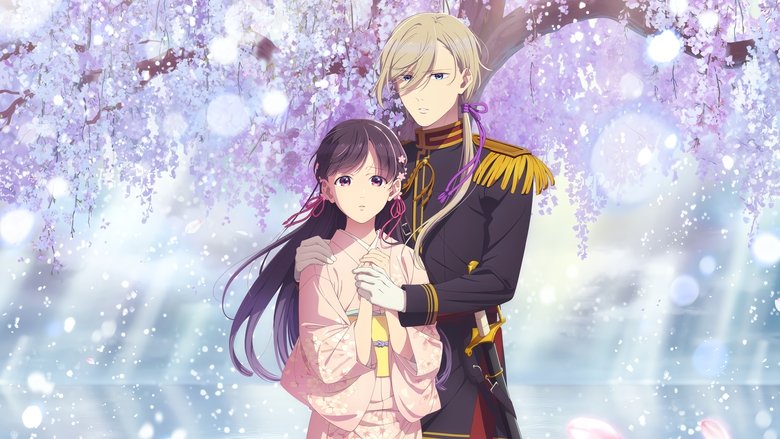
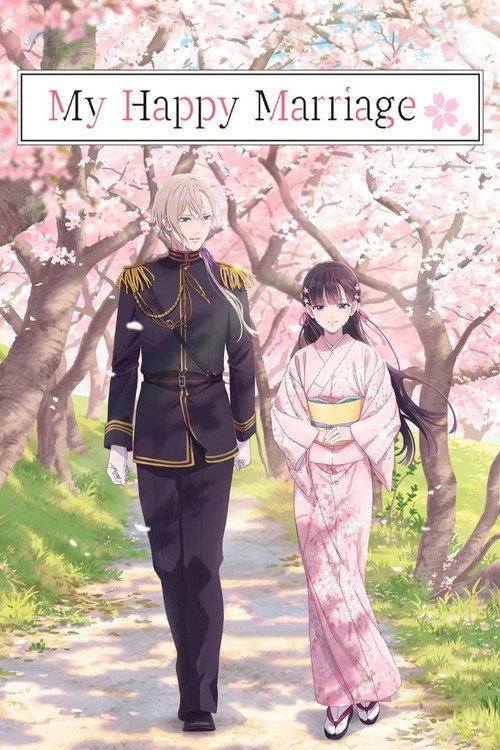
My Happy Marriage (Watashi no Shiawase na Kekkon) is set in an alternate historical fantasy universe modeled after Japan's late 19th-to-early 20th-century Meiji–Taishō eras, where aristocratic clans wield ancestral supernatural Gifts (Inō) to combat demonic entities known as Grotesqueries (Igyō). The narrative follows Miyo Saimori, a nobleborn daughter born without apparent supernatural powers, who suffered years of psychological torment, neglect, and domestic subjugation following the death of her mother and her father's remarriage. Regarded as worthless by her own family, she is unceremoniously betrothed to Kiyoka Kudou, a decorated military commander reputed for an icy, ruthless temperament that drove away all previous suitors.

Expecting further degradation, Miyo instead finds a sanctuary where quiet empathy and mutual respect dismantle her conditioned self-loathing. Kiyoka quickly recognizes Miyo's broken spirit and provides the security she needs to regain her voice. Concurrently, political intrigue among competing bloodlines, ancient family rivalries, and the awakening of sealed psychic lineages pull the couple into wider territorial and military conflicts.

As the story progresses across its seasons, the focus evolves from intimate domestic healing to navigating societal expectations, political cabals, and insurgent factions seeking to exploit rare hereditary abilities. Rather than framing marriage as an escapist resolution, the series charts a shared journey of emotional rehabilitation, mutual devotion, and the deliberate construction of individual self-worth.
Core Meaning

The central message of My Happy Marriage is that trauma and societal devaluation do not define a person's intrinsic worth, and genuine love is an active, collaborative process of emotional restoration. The narrative deconstructs the traditional fairy-tale trope of passive rescue: while Kiyoka offers a safe haven, Miyo's true liberation begins only when she confronts her deeply internalized shame, embraces her maternal heritage, and actively decides to fight for her own happiness and the person she loves. Kindness, mutual communication, and vulnerability are framed as strengths capable of breaking generational cycles of abuse and political exploitation.

Thematic DNA

Trauma, Psychological Recovery, and Reclaiming Self-Worth 30%
Familial Abuse, Envy, and Generational Oppression 25%
Love as an Equitable, Vulnerable Partnership 20%
Identity, Heritage, and Latent Potential 15%
Tradition, Societal Hierarchy, and Supernatural Exploitation 10%

Trauma, Psychological Recovery, and Reclaiming Self-Worth

The narrative tracks Miyo's complex post-traumatic stress—her chronic apologetic reflexes, inability to articulate desires, and deep-seated impostor syndrome. Healing is depicted not as an instantaneous realization, but as an incremental, often painful rehabilitation where Miyo slowly learns to accept compliments, speak without permission, and recognize her right to exist happily.

Familial Abuse, Envy, and Generational Oppression

The Saimori family demonstrates how aristocratic vanity and obsession with bloodline status can warp familial bonds into cruelty. The generational contrast between the abusive Saimori/Tatsuishi patriarchs and the younger generation illustrates how unchecked status-seeking destroys households from within.

Love as an Equitable, Vulnerable Partnership

The bond between Miyo and Kiyoka counters arranged marriage conventions. Kiyoka's aloof exterior conceals his wariness of transactional courtships, while Miyo expects abandonment. Their relationship matures through small everyday courtesies, honest conversations, and reciprocal emotional support.

Identity, Heritage, and Latent Potential

Miyo's journey explores how family heritage can be both an anchor and a catalyst. The revelation of her Usuba lineage and the Dream-Sight ability reinforces that external metrics, such as visible spirit-sight, do not measure a person's real value.

Tradition, Societal Hierarchy, and Supernatural Exploitation

Set against Japan's transitional modernization, the series critiques caste-like structures where human beings are reduced to political collateral or genetic assets for their supernatural gifts.

Character Analysis

Miyo Saimori

Reina Ueda

Archetype: Wounded Heroine / Awakening Healer Key Trait: Quiet resilience and profound empathy.

Motivation

Initially seeks merely to avoid being discarded; evolves into a determined desire to become worthy of Kiyoka and protect the sanctuary they build together.

Character Arc

Begins as a silent, traumatized shell of a person resigned to mistreatment. Through Kiyoka's support and her own resolve, she unlearns learned helplessness, accepts her suppressed Usuba bloodline, masters her Dream-Sight abilities, and steps into her role as an active partner standing equal beside her fiancé.

Kiyoka Kudou

Kaito Ishikawa

Archetype: Stoic Protector / Noble Commander Key Trait: Uncompromising integrity and unwavering loyalty.

Motivation

Protecting national peace and his military unit; evolves to prioritize Miyo's safety, autonomy, and happiness above all aristocratic protocol.

Character Arc

Reputed to be a cold, untouchable military commander, his standoffish nature masks deep distrust of shallow social climbers. Encountering Miyo softens his guarded exterior, prompting him to become fiercely protective, emotionally expressive, and patient in helping her heal.

All 5 characters and cast

Symbols & Motifs

The Cherry Blossom Tree (Sakura)

Meaning:

Represents the memory of maternal warmth, sealed destiny, and emotional rebirth.

Context:

The withered tree in the Saimori garden represents Miyo's mother, Sumi, and Miyo's suppressed potential; its blooming marks her spiritual awakening.

Braided Silk Cord (Kumihimo)

Meaning:

Signifies devotion, physical connection, and reciprocal commitment.

Context:

Hand-braided by Miyo using her meager savings as a gift for Kiyoka; he wears it continuously to tie his hair, visibly signaling his bond and fidelity.

Tattered Kimono vs. Fine Silk Attire

Meaning:

Represents subjugation, identity stripping, and restored dignity.

Context:

Miyo arrives in faded, patched hand-me-downs reflecting her servant status; Kiyoka ordering bespoke kimonos visually restores her social and personal standing.

Home-Cooked Breakfast & Tea

Meaning:

Symbolizes everyday intimacy, quiet trust, and domestic sanctuary.

Context:

Miyo's cooking is the initial medium through which she communicates sincerity and where Kiyoka proves he will not discard or mistreat her.

Nightmares and Dream Landscapes

Meaning:

Represents subconscious trauma, repressed power, and psychological battlegrounds.

Context:

Nightmarish visions manifest Miyo's trauma and the awakening of the Usuba Dream-Sight, serving as the literal realm where she rescues Kiyoka.

Ashes and Burning Mansions

Meaning:

Represents catharsis, the structural collapse of cruelty, and karmic justice.

Context:

The destruction of the Saimori estate burns away the site of Miyo's lifelong abuse, marking a permanent break from past oppression.

Memorable Quotes

「旦那様のおそばにいさせてください。」 (Danna-sama no osoba ni isasete kudasai.)
— Miyo Saimori

Context

Spoken to Kiyoka during Season 1, Episode 4.

Meaning

Miyo's pivotal declaration of will, marking the first time she speaks a genuine personal desire instead of bowing in meek surrender.

「君は何も恥じることはない。君はそのままで十分に価値がある。」 (Kimi wa nani mo hajiru koto wa nai. Kimi wa sono mama de jūbun ni kachi ga aru.)
— Kiyoka Kudou

Context

Delivered by Kiyoka to reassure Miyo in Season 1, Episode 4 / Episode 6.

Meaning

Directly refutes years of abuse, dismantling Miyo's conditioning that she is an undesirable burden.

All 5 quotes

Episode Highlights

The Meeting (Deai)

S1E1

Introduces Miyo's domestic abuse and her transfer to the Kudou manor, setting the somber tone and contrasting the oppressive Saimori residence with Kiyoka's secluded estate.

Significance:

Establishes the psychological stakes and the foundational premise of Miyo's exile-turned-refuge.

Our First Date (Hajimete no Dēto)

S1E3

Kiyoka takes Miyo into the city, notices her scarred hands, buys her a cosmetic box, and observes her terror of spending his money.

Significance:

Proves Kiyoka's genuine empathy and inspires Miyo to create her first handmade gift for him.

The Gift (Okurimono)

S1E4

Miyo reunites with Hana and tearfully confesses her lack of supernatural abilities to Kiyoka, presenting him with the handmade braided cord (Kumihimo), which Kiyoka accepts unconditionally.

Significance:

The major emotional breakthrough of the early narrative, establishing mutual trust and authentic engagement.

Determination and Thunder (Ketsui to Raimei)

S1E6

Miyo is kidnapped by the Tatsuishi and Saimori families demanding she renounce the engagement. Miyo refuses, displaying inner fortitude, while Kiyoka assaults the estate with elemental lightning and incinerates the manor.

Significance:

Closes the Saimori chapter; the abusers face legal ruin, and Miyo explicitly chooses her future with Kiyoka.

My Mother's Legacy (Haha ga Nokoshita Mono)

S1E11

Miyo learns the truth of her mother Sumi's Usuba heritage and why her Dream-Sight powers were sealed, while Kiyoka falls comatose under a spiritual attack while investigating the Grave.

Significance:

Transitions Miyo from a protected heroine to an active savior as she prepares to enter the supernatural realm.

An Ongoing Light (Kurayami no Naka no Hikari)

S1E12

Miyo dives into the subconscious realm, confronts her internalized self-doubt, unseals the Dream-Sight, and pulls Kiyoka back to consciousness before attending an imperial soiree hand-in-hand.

Significance:

Culmination of Miyo's first major character arc, validating her inner strength, identity, and standing as Kiyoka's true partner.

New Strife and Brewing Shadows

S2E1

Features the introduction of the Gifted Communion cult led by Naoshi Usui alongside deeper political intrigue within the Imperial Court.

Significance:

Expands the scale of conflict beyond domestic drama to nationwide supernatural threats targeting Miyo's lineage.

Philosophical Questions

Is human worth inherent, or is it defined by societal utility and talent?

Explored through Miyo's transition from an outcast deemed 'useless' to discovering dignity irrespective of her abilities.

Can love exist without vulnerability and reciprocal equality?

Demonstrated through Kiyoka and Miyo realizing that unconditional devotion requires opening up about their respective fears.

How can an individual break free from generational cycles of abuse?

Examined through the contrasting paths of Miyo (healing through kindness), Kaya (perpetuating spite), and Kouji (striving for moral autonomy).

Alternative Interpretations

The series offers multiple interpretive layers:

Full ending explanation

Cultural Impact

My Happy Marriage operates in an alternate Meiji/Taishō era—a defining epoch in Japanese history marked by swift Western modernization, military restructuring, and shifting gender norms colliding with conservative feudal aristocracies. The series consciously subverts 'Japanese Cinderella' and 'Beauty and the Beast' archetypes: rather than featuring an aggressive savior and a cheerful victim, both leads are emotionally guarded individuals learning vulnerability. Season 1 became an international hit on Netflix, charting in the Global Top 10 across multiple weeks while garnering praise for its delicate treatment of psychological recovery and atmospheric blend of shōjo romance with supernatural action.

Audience Reception

My Happy Marriage received critical and audience acclaim, earning high praise for Kinema Citrus's visual execution, fluid lighting, detailed textile animations, Evan Call's evocative soundtrack, and the empathetic, unhurried pacing of Miyo's emotional growth. Minor points of criticism noted that some viewers found Miyo's prolonged timidity frustrating in early episodes, along with occasional tonal shifts between quiet domestic romance and supernatural action sequences. Overall, it is regarded as a standout modern historical romance anime praised for balancing tender character studies with high-stakes supernatural intrigue.

Interesting Facts

  • Directed by Takehiro Kubota (Made in Abyss episode director) with storyboards supervised by Takao Abo, character design by Shōko Yasuda, and Masayuki Kojima joining as co-director for Season 2 at Kinema Citrus.
  • Evan Call scored the series, blending traditional Japanese instruments like the shakuhachi and koto with Western orchestral strings to mirror the historical Meiji–Taishō cultural fusion.
  • The production employed dedicated textile designer HALKA to craft period-appropriate, hand-drawn kimono patterns reflecting character emotions and status progression.
  • Director Kubota revealed that animators deliberately prolonged Miyo's hesitations, lowered head tilts, and minute eye shifts to realistically mirror the slow recovery process of abuse trauma.
  • Author Akumi Agitogi's story achieved top rankings across web novels, light novels, manga (illustrated by Rito Kohsaka), a #1 box office live-action feature film, and the anime series simultaneously.

Easter Eggs

Evolution of Miyo’s Eyes (Light Reflections)

In initial episodes, Miyo's eyes are drawn dull, matte, and devoid of light highlights (kakusei) to signify psychological dissociation; subtle circular catchlights return to her irises as she experiences warmth.

Kimono Color Symbology

Miyo's early clothing is drab faded grey and mud-brown, whereas the cherry-blossom pink kimono gifted by Kiyoka foreshadows the unsealing of her dormant Usuba powers under the sacred sakura tree.

The Meaning of the Ending Theme

The Season 1 ending theme 'Vita Philosophica' by Kashitarō Itō directly references the philosophical search for existential meaning and dignity amidst suffering.

Shikigami Paper Birds

Paper talismans deployed by the Tatsuishi and Kudou families mimic traditional Onmyōdō occult practices, foreshadowing imperial intelligence operations across the capital.

Frequently Asked Questions

Explore More About This Movie

Dive deeper into specific aspects of the movie with our detailed analysis pages

Comments (0)

Leave a comment

No comments yet. Be the first to share your thoughts!

Similar Movies