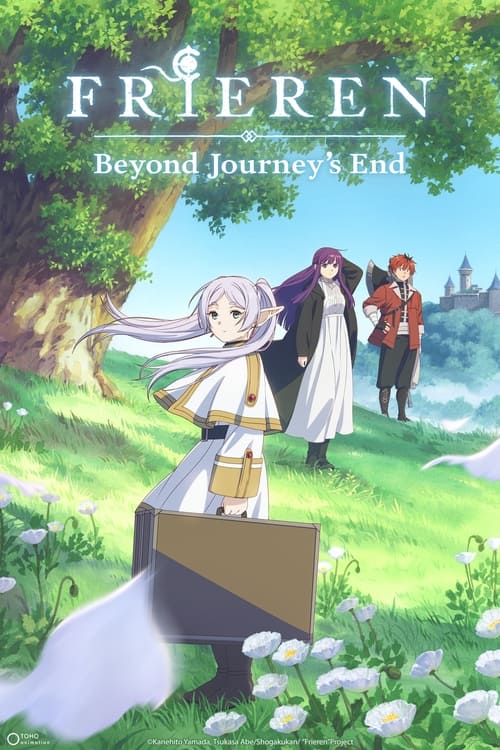
Frieren: Beyond Journey's End
葬送のフリーレン
Overview
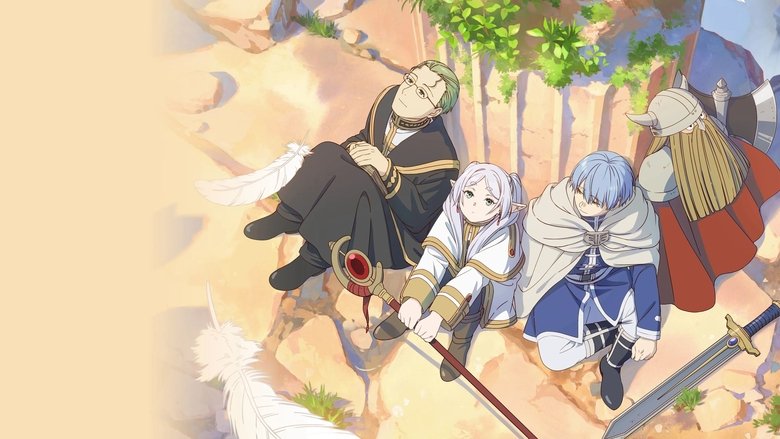
"Frieren: Beyond Journey's End" follows Frieren, an elven mage who was part of a heroic party that defeated the Demon King. Because of her long lifespan, the ten-year quest felt like a brief moment. Decades later, she reunites with her companions, only to be confronted by their mortality as the hero, Himmel, passes away from old age. Stricken with regret for not having truly tried to know her friends during their adventure, Frieren embarks on a new journey to the far north, to a place where souls are said to rest, hoping to see Himmel again and properly say goodbye.
Accompanied by her young human apprentice, Fern, and later joined by the warrior Stark, Frieren retraces the path of her original quest. This new pilgrimage is one of memory and discovery, where each town and landscape triggers flashbacks to her time with Himmel, Heiter, and Eisen. Through these memories and her new relationships with Fern and Stark, Frieren slowly begins to understand the human emotions, connections, and the perception of time that she had previously overlooked. The series is a quiet, introspective exploration of life after the grand adventure, focusing on the subtle moments that define relationships and the enduring impact of shared experiences.
Core Meaning
The core meaning of "Frieren: Beyond Journey's End" is an exploration of time's passage, mortality, and the profound value of human connection. It posits that the true significance of a journey isn't the grand finale, but the small, seemingly insignificant moments shared along the way. Through Frieren's immortal perspective, the series contrasts the fleeting nature of human life with the enduring power of memory and relationships. Her quest to understand humanity is a journey inward, revealing that connections, even those severed by death, continue to shape and define us. The creators convey a message about cherishing the present and making an effort to understand those around us before time makes it impossible, transforming regret into a catalyst for emotional growth.
Thematic DNA
The Passage of Time and Mortality
This is the central theme, explored through the stark contrast between Frieren's elven longevity and the short lifespans of her human companions. Himmel's death from old age at the start of the series is the catalyst, forcing Frieren to confront the reality of time's effect on humans. The narrative constantly juxtaposes the past and present; vibrant flashbacks of the ten-year adventure with the hero's party are set against Frieren's current, slower journey. We see villages change, people grow old and die, and Frieren remain the same, highlighting the bittersweet and ephemeral nature of life. Her journey is a slow-burn realization of the preciousness of the fleeting moments she once dismissed.
Memory, Regret, and Connection
Frieren's journey is fundamentally driven by regret—the sorrow of not having connected more deeply with Himmel when he was alive. Her new quest is an attempt to process this grief and understand the bonds she took for granted. The series uses frequent flashbacks not just for exposition, but as an active process of Frieren re-examining her memories to find new meaning. Through her interactions with Fern and Stark, she begins to apply the lessons learned from her past, showing that connection is an active, ongoing effort. The story suggests that memories are not static; they can be re-interpreted and used to foster future growth and relationships.
The Nature of a 'Hero'
The series subverts the typical fantasy narrative by starting after the Demon King is defeated. It examines what being a hero truly means beyond epic battles. Himmel, seen mostly in flashbacks, is portrayed not just as a powerful warrior but as someone who cherished small acts of kindness, remembered people's names, and commissioned statues of his party not for glory, but so they wouldn't be forgotten. His heroism lies in his profound humanity and his impact on individuals. Frieren's journey becomes a discovery of this quieter, more enduring form of heroism, which lies in touching people's lives in small, meaningful ways.
Master-Apprentice Relationships and Found Family
The dynamic between Frieren and her apprentice Fern is a cornerstone of the series. Frieren, initially a detached and sometimes neglectful mentor, grows into a protective maternal figure. This relationship is mirrored by Eisen's mentorship of Stark and Heiter's care for Fern. The new party—Frieren, Fern, and Stark—forms a found family, learning to live with each other's quirks and support one another. This theme highlights the passing of knowledge and values from one generation to the next and how these new bonds help heal the wounds of past losses.
Character Analysis
Frieren
Atsumi Tanezaki
Motivation
Her primary motivation is to reach Aureole, the resting place of souls, to speak with Himmel again and convey the feelings she never expressed. This overarching goal is the catalyst for a deeper, more intrinsic motivation: to understand humanity, process her grief and regret, and learn how to form meaningful bonds with others before it's too late.
Character Arc
Frieren begins as an emotionally detached elf who perceives time in centuries, making human connections seem fleeting and insignificant. Himmel's death forces her to confront a profound regret, sparking a long-term arc of emotional awakening. Initially stoic and socially awkward, her journey retracing her past adventures allows her to re-contextualize her memories and understand the emotions she previously ignored. Through mentoring Fern and traveling with Stark, she slowly learns empathy, responsibility, and the value of the present moment. Her development is a gradual thawing, moving from a passive observer of life to an active participant in it, driven by a newfound desire to connect.
Fern
Kana Ichinose
Motivation
Initially, her motivation is to fulfill her promise to her late guardian, Heiter, to take care of Frieren. As the series progresses, her motivation becomes more personal. She travels with Frieren out of genuine affection and a sense of belonging, and her journey becomes about experiencing the world and growing as both a mage and a person.
Character Arc
As a war orphan adopted by Heiter, Fern starts as a diligent and serious child who learns magic as a means of survival and to repay Heiter's kindness. Under Frieren's tutelage, she matures into a powerful and pragmatic mage. Her arc is one of finding her own identity beyond her role as an apprentice. She often acts as the responsible, grounding force for the party, managing their finances and keeping the often-distracted Frieren on task. Over the journey, she learns to open up, express frustration (especially with Stark), and appreciate Frieren's eccentricities, developing a deep, familial bond that mirrors that of a mother and daughter.
Stark
Chiaki Kobayashi
Motivation
His main motivation is to become a warrior worthy of his master Eisen's praise and to be able to return to his hometown as a hero. He seeks validation and wants to live up to the legacy of the heroes he admires, including his master and Himmel. He is driven by a desire to protect his friends and prove that he is not the coward he believes himself to be.
Character Arc
Stark is introduced as a prodigious warrior but also a debilitating coward, having fled a battle and his village in shame. His arc is a journey to overcome his deep-seated fear and insecurity. Mentored by Eisen, he possesses immense strength but lacks the confidence to use it. Traveling with Frieren and Fern, he is consistently pushed out of his comfort zone. Each battle he faces, particularly the dragon in his introductory episode, serves as a step towards building self-worth. He evolves from a trembling boy into a reliable protector of the group, learning that true courage isn't the absence of fear, but acting in spite of it.
Himmel
Nobuhiko Okamoto
Motivation
His motivation, as revealed through flashbacks, was twofold: to bring peace to the world by defeating the Demon King, and on a more personal level, to live a life full of meaningful moments with his companions. A significant, underlying motivation was his desire to connect with Frieren and leave a lasting, positive impact on her, hoping that she would one day come to appreciate the short but vibrant lives of humans.
Character Arc
Though deceased at the beginning of the story, Himmel's character is developed entirely through flashbacks, making his arc a posthumous revelation. Initially presented as the archetypal, handsome hero, his true depth is unveiled through Frieren's memories. He is shown to be slightly narcissistic but profoundly kind, empathetic, and forward-thinking. His arc is about understanding the true nature of his heroism—it wasn't just about slaying the Demon King, but about the small, consistent acts of kindness and his deep, unrequited love for Frieren. He commissioned statues and went on seemingly pointless side-quests to create lasting memories for Frieren, revealing his actions were all part of a long-term plan to impact her life even after his death.
Symbols & Motifs
Era Meteors
Symbolizes the vast, cyclical nature of time and the promise of reunion. For Frieren, the 50-year interval between showers is a short period, but for her human friends, it represents a lifetime.
The series opens with the hero's party observing the meteor shower, promising to see it together again in 50 years. When they reunite, Himmel is an old man on the verge of death. This event frames Frieren's initial ignorance of human mortality and serves as the inciting incident for her journey of understanding.
Grimoires and Magic Spells
Represent connection to the past, memory, and the small, personal joys of life. Frieren's obsession with collecting mundane spells (like a spell to clean clothes or remove rust) is initially seen as a quirky hobby. However, it comes to symbolize her attempt to find tangible pieces of her past and the value in simple, everyday moments, a lesson Himmel tried to impart.
Throughout her journey, Frieren constantly seeks out grimoires. Many of the spells she finds are connected to memories of her former master, Flamme, or her adventures with Himmel's party. Her dedication to finding these spells, no matter how trivial, shows her new appreciation for life's small details.
Statues of the Hero's Party
These statues represent legacy, memory, and Himmel's quiet desire to ensure his companions, especially Frieren, would not feel lonely in the future. They are physical anchors of memory in a changing world.
In many towns they visit, the party finds statues commissioned by Himmel decades ago. Frieren often reflects on why he had so many made, slowly realizing they were his way of leaving a permanent mark of their shared journey and friendship for her to find long after he was gone.
Memorable Quotes
勇者ヒンメルならそうした。 (Yūsha Himmeru nara sō shita.)
— Frieren
Context:
This becomes a recurring mantra for Frieren throughout the series when faced with a choice, especially when it involves helping people in need, even if it causes a detour. The phrase has also become a popular meme in Japanese culture, referred to as "Himmel Logic," used to describe doing the right or noble thing.
Meaning:
Translated as "It's what Hero Himmel would have done." This phrase becomes Frieren's moral compass. It signifies her conscious effort to adopt Himmel's empathetic and heroic worldview, using her memory of him to guide her actions toward kindness and selflessness. It shows how deeply his character has influenced her, even long after his death.
死んだ人間と話すための旅だ。くだらなくなんかない。 (Shinda ningen to hanasu tame no tabi da. Kudaranaku nanka nai.)
— Frieren
Context:
Frieren says this when the importance of her journey to Aureole is questioned. It's a moment of quiet but powerful emotional conviction, showing that her motivation goes beyond mere curiosity and is deeply rooted in her personal need for closure with Himmel.
Meaning:
Translated as "It's a journey to speak with the dead. It's not pointless at all." This quote encapsulates the emotional core of Frieren's quest. It's her firm declaration of her journey's purpose against any who might dismiss it. It affirms the value of processing grief, seeking closure, and honoring past relationships.
別れ際に悲しい顔をされたら、今後の思い出が全部悲しいものになっちゃうだろ。 (Wakaregiwa ni kanashii kao o saretara, kongo no omoide ga zenbu kanashii mono ni nacchau daro.)
— Himmel
Context:
Himmel says this in a flashback, explaining to Frieren why he prefers quick, cheerful goodbyes. This philosophy is directly referenced in the title of the final episode of the first season, "It Would Be Embarrassing When We Meet Again," showing its thematic importance to the series.
Meaning:
Translated as "If you make a sad face when we part, all the memories I have of you from now on will be sad ones." This reflects Himmel's optimistic and forward-looking philosophy on life and relationships. He believes goodbyes shouldn't taint good memories, but be hopeful moments before a future reunion.
Episode Highlights
The Journey's End
The feature-length premiere establishes the entire premise of the series. It masterfully condenses 50 years, showing the hero's party disbanding after defeating the Demon King, their brief reunion 50 years later, Himmel's death from old age, and his funeral. Frieren's sudden, overwhelming grief at the funeral is the emotional lynchpin of the entire story.
This episode sets the melancholic and reflective tone of the series. It subverts the fantasy genre by starting where most stories end and establishes the central themes of time, mortality, and Frieren's regret, which will drive the narrative for the entire series.
It Was't A Big Deal
This episode follows Frieren's visit to Heiter 20 years after Himmel's death, where she meets the orphaned Fern. At Heiter's request, she takes Fern on as an apprentice. The episode beautifully portrays the passage of years as Frieren trains Fern, culminating in Heiter's peaceful death.
It establishes the crucial master-apprentice and mother-daughter dynamic between Frieren and Fern, which becomes the new emotional core of the series. It demonstrates Frieren's first real, long-term commitment to another person, marking the beginning of her emotional growth.
Fearsome Slayers
Frieren confronts Aura the Guillotine, one of the Seven Sages of Destruction. The episode features a stunning magical battle that culminates in a chilling psychological showdown. Frieren uses Aura's own spell, the Scales of Obedience, against her, leveraging her own immense, hidden magical power and thousand-plus years of life to force Aura to take her own life.
This episode reveals a darker, more ruthless side to Frieren's past, earning her the moniker "Frieren the Slayer." It showcases the vastness of her magical power, which she usually keeps suppressed, and provides a stark reminder of the true nature of demons in this world: emotionless monsters that cannot be reasoned with.
A Powerful Mage
This episode is a quiet, character-focused story that follows the aftermath of the battle with Aura's forces. A key moment is Frieren searching tirelessly for a specific birthday present for Fern, paralleled with a flashback of Himmel doing the same for her. The episode ends with Frieren giving Fern a beautiful butterfly-adorned hairpin.
It is a pivotal episode for Frieren's character development. Her actions show she is beginning to internalize Himmel's lessons about treasuring small moments and showing affection through thoughtful acts. It solidifies the familial bond between her and Fern and is a fan-favorite for its emotional resonance.
It Would Be Embarrassing When We Meet Again
The season finale concludes the First-Class Mage Exam arc. Fern chooses her "privilege" from the great mage Serie: a simple spell to magically clean clothes. Frieren praises her humble choice. As the trio leaves the city to continue their journey north, Frieren reflects on Himmel's philosophy of quick goodbyes.
This episode brings the first major arc to a satisfying close while reaffirming the series' core themes. Fern's choice of spell shows how much Frieren's values have influenced her. The final scene, referencing Himmel's words, brings the season full circle, emphasizing that the journey to understand connections is far from over.
Philosophical Questions
What is the true value of a moment in the face of an infinite lifespan?
The series constantly explores this question through Frieren's perspective. Initially, individual years, let alone moments, are meaningless to her. Her thousand-year existence has rendered them insignificant blips. However, after Himmel's death, she is forced to re-evaluate. Her journey becomes a process of learning that the value of a moment is not defined by its duration relative to one's lifespan, but by the connection and emotion experienced within it. The flashbacks show that Himmel, aware of his short life, consciously filled his journey with these valuable moments, a lesson Frieren only begins to understand in retrospect.
How do we find meaning after our primary purpose is fulfilled?
The story begins after the heroes have already achieved their life's defining goal: defeating the Demon King. The series delves into the existential question of what comes next. For Himmel, Heiter, and Eisen, it was living out their lives in peace. For the immortal Frieren, it is a much more complex problem. Her new journey, born from regret, suggests that meaning is not found in a single, grand purpose but is continuously created through new experiences, new relationships, and the ongoing effort to understand oneself and others. The "end of the journey" is merely the beginning of another.
Alternative Interpretations
While the primary reading of the series is a heartfelt exploration of grief and connection, some viewers interpret Frieren's journey through a more philosophical lens, seeing it as an allegory for the human condition. Frieren's immortality makes her an outside observer, allowing the series to dissect what it means to be human—to live, love, and lose within a finite span of time. Her journey to understand emotions can be seen as a metaphor for anyone feeling disconnected or struggling to find meaning in their relationships and experiences.
Another interpretation focuses on the nature of the demons. While the story presents them as irredeemably evil beings who mimic human emotion to deceive, some analyses view this as a subversion of the trope of the "sympathetic monster." The series deliberately rejects the idea that these antagonists have a complex, tragic backstory, instead portraying them as fundamentally alien predators. This can be interpreted as a commentary on the nature of absolute evil or a deliberate narrative choice to keep the focus squarely on the human (and elven) emotional journey without being sidetracked by morally gray villains.
Cultural Impact
"Frieren: Beyond Journey's End" achieved massive critical and commercial success upon its release, becoming a cultural phenomenon. It topped MyAnimeList's rankings, surpassing long-standing titans like "Fullmetal Alchemist: Brotherhood," and significantly boosted manga sales. The series resonated deeply for its subversion of the traditional fantasy genre, focusing on the quiet aftermath of adventure rather than the adventure itself. This introspective, melancholic approach was seen as a breath of fresh air, appealing to audiences seeking more mature, character-driven storytelling.
Its influence is seen in its promotion of "slow media"—content that values depth and contemplation over fast-paced action. The series has also been praised for its positive depiction of a female mentorship between Frieren and Fern, a dynamic that is relatively rare in the anime landscape. In Japan, the phrase "It's what Hero Himmel would have done" became a popular meme, entering the mainstream as a way to describe doing the right thing. The show's success has demonstrated a significant audience appetite for thoughtful, emotionally nuanced fantasy, potentially influencing the direction of future anime productions away from conventional action-heavy tropes.
Audience Reception
"Frieren: Beyond Journey's End" received overwhelmingly positive reception from audiences and critics worldwide. It became the top-rated anime series on MyAnimeList shortly after its debut, praised for its unique premise, stunning animation by Studio Madhouse, and beautiful score by Evan Call. Audiences lauded its mature, emotional storytelling and its departure from typical fantasy and shonen tropes. The slow, deliberate pacing and focus on character introspection were highlights for most, who found it a refreshing and deeply moving experience.
Points of criticism, though minor, are typically directed at this same slow pacing, which some viewers found boring or uneventful, particularly those expecting a more action-oriented fantasy series. A few critics also found the characterization of the demons to be simplistic, viewing them as one-dimensionally evil. However, the vast majority of viewers connected with the melancholic tone and heartfelt character dynamics, particularly the found-family relationship between Frieren, Fern, and Stark. Overall, it is regarded as a modern classic and a masterpiece of adaptation.
Interesting Facts
- The original manga creator, Kanehito Yamada, initially pitched the series as a gag or comedy manga about a hero and a demon king. The editor was surprised when the first storyboards turned out to be a deeply emotional story, and they decided to proceed with that version.
- The anime's first broadcast in Japan was a two-hour special on NTV's "Kin'yō Road Show" programming block, which is usually reserved for feature films. It was the first anime series ever to receive this honor.
- The director of the first season, Keiichirō Saitō (known for "Bocchi the Rock!"), experienced significant creative burnout after the series ended due to the pressure of adapting a beloved manga into a commercially successful anime.
- The manga has won numerous prestigious awards, including the 14th Manga Taishō in 2021 and the Tezuka Osamu Cultural Prize's New Creator Prize.
- The anime's composer, Evan Call, also composed the music for the acclaimed series "Violet Evergarden," another series known for its emotional depth and character-driven storytelling.
- In an official character popularity poll held in Japan with over 14 million votes, Frieren herself placed 5th. The winner was Himmel, followed by the demon Aura the Guillotine.
⚠️ Spoiler Analysis
Click to reveal detailed analysis with spoilers
Frequently Asked Questions
Explore More About This Movie
Dive deeper into specific aspects of the movie with our detailed analysis pages
Comments (0)
No comments yet. Be the first to share your thoughts!