Cyberpunk: Edgerunners
サイバーパンク: エッジランナーズ
"Just keep running."
Overview
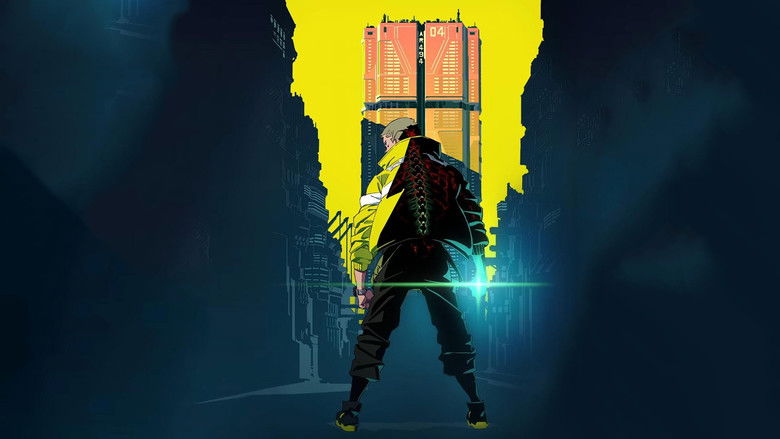
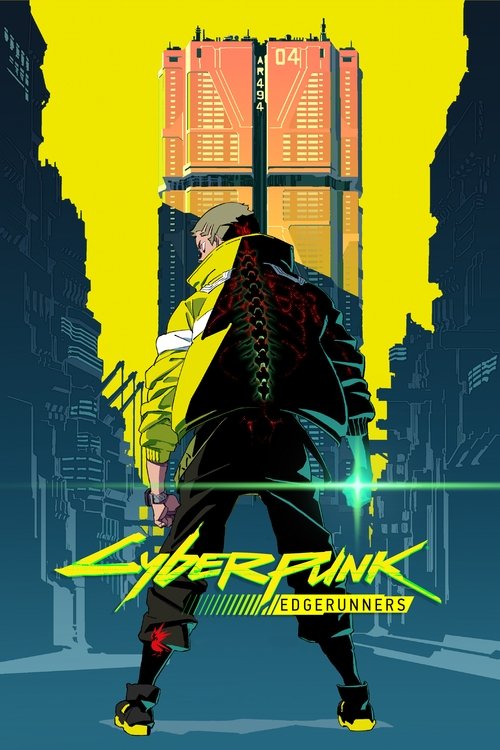
"Cyberpunk: Edgerunners" tells the story of David Martinez, a brilliant but impoverished street kid navigating the dangerous, futuristic metropolis of Night City. After a personal tragedy shatters his life, David abandons his education at the prestigious Arasaka Academy and chooses survival by becoming an "edgerunner"—a high-tech mercenary outlaw. He has a powerful cybernetic implant, the Sandevistan, installed, which grants him superhuman speed and a path into the criminal underworld.
David falls in with a crew of experienced edgerunners led by the veteran solo, Maine. He is introduced to this world by the enigmatic netrunner, Lucy, with whom he forms a deep, romantic bond. As David sinks deeper into the world of cybernetic enhancement and dangerous jobs, he proves to have an unusually high tolerance for "chrome." However, this perceived strength pushes him down a perilous path toward cyberpsychosis, a state of losing one's humanity to their augmentations. The series chronicles his meteoric rise and tragic fall, exploring themes of love, sacrifice, and the dehumanizing cost of survival in a city ruled by corporate greed and body modification.
Core Meaning
The core message of "Cyberpunk: Edgerunners" is a tragic critique of the illusion of upward mobility within a ruthless capitalist system. It posits that in a world like Night City, the promise that you can be "special" or "built different" is a lie designed to exploit ambition until there is nothing left. David's entire journey is a frantic attempt to fulfill the dreams of others—his mother's dream for him to reach the top of Arasaka Tower, Maine's dream of leading a legendary crew, and Lucy's dream of escaping to the Moon. In doing so, he loses himself, sacrificing his body and mind for goals that were never his own. The series argues that the system is rigged; it chews up and spits out even the most promising individuals, turning them into legends only by how they die, not how they live. Ultimately, it's a cautionary tale about the loss of self and humanity in a society that commodifies dreams and bodies, suggesting that the only true rebellion is to find personal connection and meaning, even if it's fleeting.
Thematic DNA
The Corrupting Nature of Capitalism
Night City is the ultimate hyper-capitalist dystopia, where megacorporations like Arasaka and Militech hold absolute power and human life is cheap. The series relentlessly shows how this system crushes individuals. David's mother works herself to death for a corporation that offers no support. David is forced into the life of a mercenary because legitimate paths to success are closed to him due to his socioeconomic status. The edgerunners themselves are trapped in a cycle of debt and dangerous gigs, constantly needing to upgrade their cyberware to survive, which only pushes them closer to insanity and death. The narrative demonstrates that personal ambition and talent are ultimately meaningless against a system designed to exploit and discard people.
Transhumanism and the Loss of Humanity
Cybernetic enhancement is ubiquitous in Night City, but it comes at a great cost. The series explores the theme of "cyberpsychosis," where individuals who install too much chrome lose their minds and become violent machines. David's journey is a case study in this process. Initially, his high tolerance for implants makes him feel special and powerful. However, as he continues to add more cyberware, he gradually loses his grip on his own identity, becoming more violent and detached. The show questions where the line between human and machine lies, suggesting that sacrificing one's physical and mental self for power is a Faustian bargain that inevitably leads to destruction.
Love and Sacrifice in a Dystopian World
At its core, "Cyberpunk: Edgerunners" is a tragic love story between David and Lucy. Their relationship is the emotional anchor of the series, a small flicker of warmth and genuine connection in a cold, indifferent city. Both characters are driven by a fierce desire to protect each other. Lucy secretly eliminates threats from David's past, while David pushes his body to the absolute limit to make her dream of going to the moon a reality. Their sacrifices for one another are both beautiful and ultimately tragic, as their efforts to save each other are what drive them apart and lead to their doom. The series poignantly illustrates that even in the most brutal of worlds, love is a powerful motivator, but it cannot always conquer the overwhelming forces of a dystopian society.
Dreams vs. Reality
The pursuit of dreams is a central theme, often with devastating consequences. Lucy's dream of escaping to the moon symbolizes a desire for freedom and peace, a stark contrast to the oppressive reality of Night City. David adopts this dream as his own, promising to take her there. However, the series cynically portrays dreams as another commodity to be exploited. David's mother's dream for him to succeed at Arasaka is a conformist fantasy that ignores the corporation's predatory nature. Ultimately, Lucy reaches the moon, but the reality is hollow and tragic without David, demonstrating that the destination is meaningless without the person you were meant to share it with.
Character Analysis
David Martinez
Zach Aguilar (English) / KENN (Japanese)
Motivation
Initially, David is motivated by a desire to make his mother proud and escape poverty. After her death, his motivation shifts to survival and finding a new place to belong. As the series progresses, his primary motivation becomes protecting Lucy and fulfilling her dream of going to the moon. He also shoulders the legacy of his former crew leader, Maine, attempting to live up to his example. This externalization of his goals is his fatal flaw; he is driven by fulfilling the dreams of others rather than finding his own.
Character Arc
David begins as a bright but disenfranchised teenager trying to fulfill his mother's ambitions for him in the corporate world. Following her death, grief and desperation drive him to abandon that path and implant the Sandevistan, embracing the violent freedom of an edgerunner. Initially, he finds a new family and purpose, but he also develops a savior complex, taking on the dreams and burdens of those he cares about, particularly his mentor Maine and his love, Lucy. He constantly pushes his body's limits with more cyberware, believing his unique tolerance makes him special. This belief spirals into a self-destructive obsession, culminating in him donning the experimental cyberskeleton and succumbing to cyberpsychosis in a final, sacrificial act to save Lucy. He transforms from a hopeful kid into a tragic Night City legend, a martyr who achieved his goals for others but lost himself completely in the process.
Lucyna "Lucy" Kushinada
Emi Lo (English) / Aoi Yuuki (Japanese)
Motivation
Lucy's core motivation is escape. Her ultimate dream is to go to the moon, which represents a final, clean break from her traumatic past and the oppressive grip of Arasaka and Night City. After falling in love with David, her motivation becomes twofold: achieve her dream with him, and more urgently, protect him from the dangers of the edgerunner life and the clutches of Arasaka. She sees his potential and vulnerability and fears he will be consumed by the city just as she almost was.
Character Arc
Lucy is introduced as a mysterious and skilled netrunner, initially appearing aloof and cynical, shaped by a traumatic past. She was raised in an Arasaka facility as a child netrunner, forced to delve into the dangerous Old Net, which explains her deep-seated hatred for the corporation and her desire for escape. Her relationship with David breaks down her emotional walls, revealing a vulnerable person capable of deep love. As David becomes more powerful and reckless, her focus shifts entirely to protecting him from Arasaka, the corporation she knows will exploit him just as they did her. She tries to handle this threat alone, which creates distance between them. In the end, she is the sole survivor of the core crew, achieving her dream of reaching the moon, but her arc concludes tragically as she is left completely alone with the memory of the man who sacrificed everything for her.
Maine
William C. Stephens (English) / Hiroki Tōchi (Japanese)
Motivation
Maine is motivated by the desire to be a successful and respected crew leader. He wants to provide for his team and carve out a name for himself in the brutal landscape of Night City. He believes that more chrome equals more power and a greater chance of survival, a common but flawed philosophy among edgerunners that ultimately leads to his demise.
Character Arc
Maine is the veteran leader of the edgerunner crew who takes David under his wing. He is a powerful, charismatic figure who serves as a father figure to David, teaching him the ropes of the mercenary life. However, Maine's arc is a grim foreshadowing of David's own. He continually adds cybernetics to his body, ignoring the warning signs of encroaching cyberpsychosis. His gradual descent into madness culminates in a violent, tragic rampage where he loses control completely, leading to his and his partner Dorio's deaths. His fall serves as a stark warning about the inevitable price of chasing power through chrome in Night City.
Symbols & Motifs
The Moon
The Moon represents an unattainable paradise, a symbol of escape, freedom, and a life beyond the suffocating confines of Night City. It is a dream of peace and purity, a direct contrast to the grime, violence, and corruption on Earth. For Lucy, it is her ultimate life goal and personal heaven.
Lucy frequently shares her dream of visiting the moon with David, showing him a braindance of a lunar tour. This dream becomes David's primary motivation; his promise to take her there drives him to take on increasingly dangerous jobs. The series ends with Lucy finally on the moon, but her dream is rendered tragic and empty by David's absence, symbolizing that the dream was not about the place itself, but about the hope of sharing a future with him.
Arasaka Tower
Arasaka Tower symbolizes the pinnacle of corporate power and the corrupt, unattainable dream of success within the capitalist system. It represents a social and economic peak that characters from the street, like David, are meant to aspire to but are ultimately excluded from.
David's mother, Gloria, sacrifices everything in the hope that David will one day climb the corporate ladder and reach the top of Arasaka Tower. Poetically and tragically, David does reach the top of the tower, but not as a corporate employee as his mother dreamed, but as a cyberpsycho in a final, doomed assault against the corporation. His arrival is a violent perversion of his mother's dream, symbolizing the impossibility of succeeding within the system on its own terms.
The Sandevistan
The Sandevistan, a piece of military-grade cyberware that grants superhuman speed, symbolizes David's perceived "specialness" and his potential, but also the dangerous and addictive nature of power in Night City. It is the catalyst for his entire journey as an edgerunner.
After his mother's death, David has the stolen Sandevistan implanted, discovering he can handle it better than anyone. This sets him on his path, giving him the power to survive and thrive in the underworld. However, his reliance on it and other cyberware grows, representing his increasing departure from his own humanity. It is both the source of his strength and the instrument of his downfall.
Memorable Quotes
You don't make a name as a cyberpunk by how you live... You make a name by how you die.
— Lucy
Context:
Lucy says this to David in Episode 4 as he becomes more ingrained in Maine's crew. She is trying to caution him against fully embracing the cyberpunk life, fearing that he will end up as just another tragic legend consumed by the city.
Meaning:
This quote encapsulates the tragic and fatalistic philosophy of the edgerunner lifestyle. It suggests that in Night City, a mercenary's legacy is defined not by their accomplishments or survival, but by the spectacular and often violent nature of their death. It's a grim warning to David about the path he is choosing.
I'll take you to the moon! I promise!
— David Martinez
Context:
David makes this heartfelt promise to Lucy during a quiet, intimate moment, solidifying his love for her and his dedication to her happiness. It's a recurring motif that underscores the tragic ending of the series.
Meaning:
This quote represents David's ultimate promise and commitment to Lucy. The moon symbolizes their shared dream of escape and a better life. The line becomes the driving force behind all of David's actions in the latter half of the series, showing that his motivations have shifted entirely to fulfilling her dream.
Sorry, wish we could go to the moon together.
— David Martinez
Context:
David says these last words to Lucy over a comm link in Episode 10, just before his final confrontation with Adam Smasher. He has saved her, but he knows he is about to die, making his earlier promise impossible to fulfill in the way he intended.
Meaning:
This is David's heartbreaking final acknowledgment that he has failed in his promise to share a future with Lucy, even though he succeeds in giving her the means to escape. It's a moment of tragic resignation, accepting his own death while expressing his deepest regret—not that he is dying, but that he is leaving her alone.
Episode Highlights
Let You Down
This episode masterfully establishes the brutal reality of Night City and David's desperate circumstances. We see him as a bright student at the mercy of a classist system, trying to live up to his mother Gloria's dreams. The episode culminates in a devastating tragedy that completely upends his life and sets him on a new, violent path.
This episode is the catalyst for the entire series. Gloria's death not only provides David's initial motivation for change but also leaves him with the military-grade Sandevistan implant, the piece of tech that defines his journey as an edgerunner. It perfectly sets the tone of loss and desperation that permeates the show.
Like A Boy
This episode deepens the relationship between David and Lucy. They share an intimate braindance experience where Lucy reveals her dream of going to the moon. It's a rare moment of vulnerability and peace amidst the chaos of their lives, solidifying their romantic bond and establishing the central promise that will drive the rest of the plot.
This episode marks a crucial turning point, shifting David's motivation from mere survival to a selfless desire to fulfill Lucy's dream. The moon becomes a key symbol for the series, representing hope and escape. It also features Lucy's iconic line about how cyberpunks make a name for themselves, foreshadowing the tragic events to come.
All Eyez On Me
This episode is the tragic climax of the first half of the series. Maine, the crew's leader and David's mentor, fully succumbs to cyberpsychosis during a mission. His violent, uncontrollable rampage leads to his own death and that of his partner, Dorio. David is forced to step up and take charge of the remnants of the crew.
Maine's death is a pivotal moment that serves as a grim foreshadowing of David's own fate. It forces David into a leadership role and pushes him to further augment his own body, believing he can handle the chrome better than his mentor. This episode marks the point of no return for David's descent into self-destruction.
My Moon, My Man
The series finale is a brutal and emotionally devastating conclusion. David, now equipped with the unstable cyberskeleton, launches a full-scale assault on Arasaka to rescue Lucy. He battles his way through corporate forces, his mind deteriorating from cyberpsychosis, culminating in a final, hopeless battle against the legendary Adam Smasher.
This episode brings all the show's themes to their tragic conclusion. David sacrifices himself completely, saving Lucy but losing his life and humanity in the process. He becomes a Night City legend, just as Lucy feared, defined by his spectacular death. The final scene of Lucy on the moon, alone, is a poignant and heartbreaking image that solidifies the series' powerful, tragic message.
Philosophical Questions
What does it mean to be human in a world where the body is infinitely upgradeable?
The series constantly explores the boundary between humanity and technology. Characters replace their organic parts with powerful chrome, gaining strength at the cost of their sanity and empathy. The concept of "cyberpsychosis" is the ultimate expression of this conflict, where the mind can no longer handle the disconnect from its original, biological form. David's journey is a microcosm of this question. He feels "better in metal than in his own skin," but this pursuit of a post-human existence leads directly to his dehumanization and death. The show suggests that humanity may not be defined by the physical form, but by connections, dreams, and love, all of which are threatened by the very technology characters use to survive.
Can true love and connection exist in a completely commodified, hyper-capitalist world?
"Edgerunners" sets the genuine, heartfelt love between David and Lucy against the backdrop of Night City, a place where everything and everyone has a price. Their relationship is a rebellion against the city's inherent cynicism. However, the world constantly seeks to corrupt or destroy their bond. Lucy's past trauma and David's dangerous job create secrets and distance between them. Ultimately, the very system they live in is what tears them apart. David dies to save Lucy from a corporate plot, and Lucy is left alone in her dream world. The series seems to ask whether their love was a true victory or just a beautiful, fleeting tragedy, suggesting that while such connections are possible, the system is designed to make them unsustainable.
Is it nobler to die a legend or survive as a nobody?
This is a central dilemma of the edgerunner ethos. Lucy warns David that cyberpunks are remembered for how they die. David ultimately chooses the path of the legend, sacrificing himself in a blaze of glory to save the person he loves, and he is immortalized with a drink at the Afterlife bar. In contrast, characters like Lucy and Falco choose survival, fading back into the anonymity of Night City. The series doesn't provide a clear answer on which path is better. David's death is both tragic and meaningful, while Lucy's survival is tinged with the profound sadness of loss. It leaves the viewer to contemplate whether a short, impactful life is worth more than a long one lived in the shadows of a brutal world.
Alternative Interpretations
One of the main alternative interpretations of "Cyberpunk: Edgerunners" centers on the idea of David's supposed "specialness." While the surface narrative presents him as uniquely capable of handling immense amounts of cyberware, a deeper reading suggests this is a tragic delusion. From this perspective, David is not special at all; he is simply another victim of Night City's meat grinder, and his high tolerance is merely a slightly prolonged path to the same inevitable end: death or cyberpsychosis. Arasaka's interest in him is not because he is a prodigy, but because he is a useful, temporarily durable lab rat for their cyberskeleton project. This interpretation makes the story even more cynical, suggesting that the very idea of being "built different" is a capitalist myth used to encourage self-destruction for corporate gain.
Another point of discussion is the nature of David's motivations. While he presents his actions as selfless sacrifices for others, particularly Lucy, an alternative reading frames his journey as one driven by a profound lack of self-worth and a desperate need for validation. Traumatized by his mother's death and feeling like an outcast, he adopts the dreams of others (his mother, Maine, Lucy) because he has no dream of his own. His relentless pursuit of more chrome is not just to protect Lucy, but also to prove his own value in the only way Night City recognizes: through power and legend status. In this light, his final act is less a pure sacrifice and more the culmination of a tragic inability to define his own identity outside of what he can do for other people.
Cultural Impact
"Cyberpunk: Edgerunners" premiered in September 2022 to widespread critical acclaim, achieving a rare 100% on Rotten Tomatoes from critics and an exceptionally high audience score. It was hailed as one of the best video game adaptations of all time and a standout anime series on Netflix. The show's most significant and immediate impact was on its source material, the video game "Cyberpunk 2077." The game had a notoriously troubled launch in 2020 but had been significantly improved through updates. The success and emotional resonance of "Edgerunners" drove a massive wave of new and returning players to the game, causing its sales and concurrent player numbers to skyrocket. This synergy created a positive feedback loop, with the anime enriching the game's world and the game providing a deeper context for the anime.
The series was praised for its mature storytelling, breathtaking animation by Studio Trigger, and its powerful emotional core. It successfully translated the deep lore and core themes of the cyberpunk genre—corporate dystopia, transhumanism, and the loss of identity—to a mainstream audience. The tragic love story of David and Lucy became a cultural touchstone for many viewers, with the song "I Really Want to Stay at Your House" becoming an anthem for the characters and the show's heartbreaking conclusion. The series has been credited with revitalizing the "Cyberpunk" franchise and setting a new standard for how video game lore can be expanded through other media. Following its success, CD Projekt Red confirmed a second, standalone story was in production, solidifying the series' legacy as a major animation and franchise success.
Audience Reception
"Cyberpunk: Edgerunners" was met with overwhelmingly positive reception from audiences upon its release in September 2022. It quickly garnered exceptionally high user scores on review aggregation sites like Rotten Tomatoes and IMDb, with many viewers hailing it as a masterpiece and one of the best anime of the year. The primary points of praise were Studio Trigger's stunning, hyper-stylized animation, the compelling and emotional character-driven story, and the faithful yet expansive depiction of Night City's world. The tragic romance between David and Lucy was a particular highlight for many, with the show's devastating ending leaving a lasting impact on viewers.
Criticism of the series was minimal but tended to focus on its pacing. Some viewers felt that the 10-episode format led to a rushed plot, particularly in the early episodes, where character developments and a time skip occurred very quickly. However, even those who pointed this out often conceded that the series' emotional climax and powerful conclusion made up for any earlier narrative compression. Overall, the audience verdict was that "Edgerunners" was a spectacular success that not only stood on its own as a great work of science fiction but also significantly enhanced and redeemed its source material, the game "Cyberpunk 2077."
Interesting Facts
- The anime was produced by the acclaimed Japanese animation house Studio Trigger, known for its distinct, high-energy visual style seen in works like "Kill la Kill" and "Promare".
- The series' creation was supervised by CD Projekt Red, the developers of the "Cyberpunk 2077" video game, and they had been working on the project since 2018.
- The original creator of the Cyberpunk tabletop RPG, Mike Pondsmith, gave the series his enthusiastic approval, stating on Reddit, "They f***ing nailed it."
- The show's immense popularity led to a massive resurgence in sales and player counts for the "Cyberpunk 2077" video game, a rare feat for a video game adaptation.
- The song "I Really Want to Stay at Your House" by Rosa Walton, which was part of the "Cyberpunk 2077" game soundtrack, gained massive popularity and became inextricably linked with David and Lucy's relationship after being featured heavily in the anime.
- Akira Yamaoka, the celebrated composer best known for his work on the "Silent Hill" series of video games, composed the original score for the series.
- The English voice cast features several well-known actors, including Giancarlo Esposito ("Breaking Bad") as the fixer Faraday and Matthew Mercer ("Critical Role") as Falco.
Easter Eggs
Many locations from the "Cyberpunk 2077" game appear in the anime, including the Afterlife bar, Lizzie's Bar, and Tom's Diner. David's apartment also has a layout nearly identical to V's starting apartment in the game.
These faithful recreations serve to deeply connect the anime to the game's world, making Night City feel like a consistent, lived-in universe. For players of the game, it's a series of rewarding nods to familiar locales.
Minor characters from the game make cameo appearances, such as the Afterlife's owner Rogue and bartender Claire Russell, as well as the fixer Wakako Okada.
These cameos reinforce the idea that the anime's story is happening within the same world and timeline as the game, just prior to its main events. They help to flesh out the ecosystem of Night City's underworld.
In the "Cyberpunk 2077" game (after a patch inspired by the anime), players can find David Martinez's iconic yellow jacket and a drink named "The David Martinez" can be ordered at the Afterlife bar.
This is an example of the anime's success directly influencing the game's content. It canonizes David's status as a Night City legend within the game's lore, allowing players to pay tribute to the character.
Adam Smasher, the final antagonist of the anime, is a major, legendary antagonist in the "Cyberpunk 2077" game and the original tabletop RPG.
His appearance serves as a terrifying bridge between the show and the game. For game players, his arrival signals an unwinnable fight for David, as they are already aware of Smasher's immense power and plot armor. It solidifies the anime's tragic trajectory.
The Delamain taxi service, a key feature in a major side quest in "Cyberpunk 2077," makes an appearance to transport David's crew.
This is another direct reference to the game, showcasing one of the more memorable and distinct elements of Night City's technology and daily life, further integrating the anime into the established world.
⚠️ Spoiler Analysis
Click to reveal detailed analysis with spoilers
Frequently Asked Questions
Explore More About This Movie
Dive deeper into specific aspects of the movie with our detailed analysis pages
Comments (0)
No comments yet. Be the first to share your thoughts!