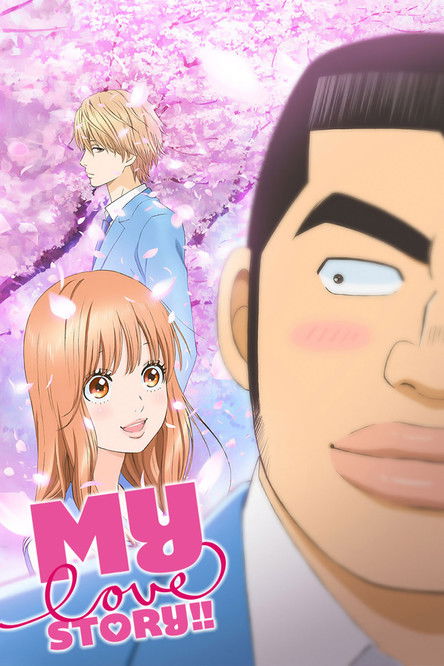
My Love Story!!
俺物語!!
Overview
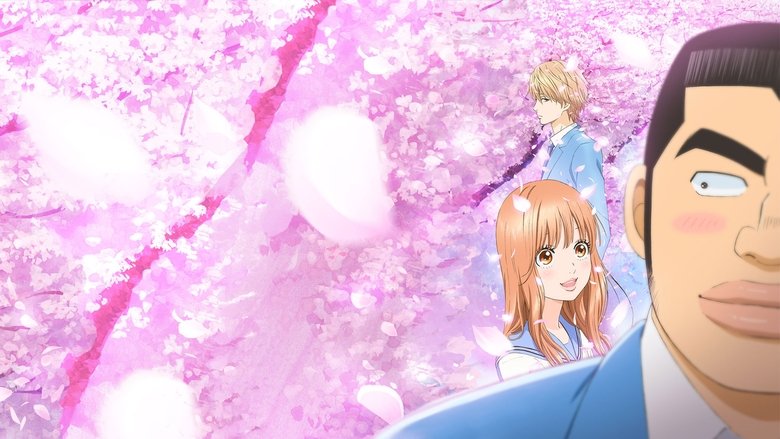
My Love Story!! (Ore Monogatari!!) is a refreshing departure from typical shojo tropes, following the life of Takeo Gōda, a towering high schooler with a heart as massive as his physique. Despite his intimidating appearance, Takeo is the epitome of kindness, though his love life is a string of disappointments as every girl he likes eventually falls for his handsome, aloof best friend, Makoto Sunakawa. The status quo shifts dramatically when Takeo rescues the petite and sweet Rinko Yamato from a groper on a train, leading to an earnest and unconventional romance.
The series tracks the development of Takeo and Yamato's relationship, focusing on the hurdles of first love and the awkwardness of navigating new emotions. Unlike many romances that center on the 'will-they-won't-they' tension, the couple gets together early, allowing the show to explore the dynamics of a healthy, communicative relationship. Throughout its 24-episode run, the narrative emphasizes personal growth, the importance of looking beyond surface-level beauty, and the profound depth of platonic loyalty.
Core Meaning
The core message of My Love Story!! is that authentic love is rooted in character and kindness rather than aesthetic perfection. By centering the story on a protagonist who defies the traditional 'pretty boy' archetype, the creators champion the idea that being 'cool' is defined by one's actions and selflessness. The series also highlights the symbiotic relationship between romantic love and deep friendship, suggesting that a support system of honest, caring people is the foundation for individual happiness. Ultimately, it is a celebration of the 'unconventional' and a reminder that everyone is worthy of affection regardless of societal beauty standards.
Thematic DNA
Inner Beauty vs. Outer Appearance
The series consistently contrasts Takeo's 'ogre-like' exterior with his 'heroic' interior. While strangers fear him, those who know him see his boundless compassion. This theme is reinforced by Yamato's immediate attraction to his strength and bravery, proving that genuine connection transcends physical traits.
The Sanctity of Friendship
The bond between Takeo and Sunakawa (Suna) is as central as the romance. Suna's selfless support and his rejection of girls who badmouth Takeo highlight a loyalty that remains unwavering even when romantic interests enter the picture. Their friendship acts as the emotional anchor for the entire series.
Honesty and Communication
A hallmark of the show is how conflicts are resolved through open dialogue rather than prolonged misunderstandings. Takeo and Yamato learn to vocalize their insecurities—be it Takeo's disbelief that someone could love him or Yamato's desire for physical affection—demonstrating that transparency is the key to a lasting bond.
Selflessness and Sacrifice
Takeo frequently puts the needs of others above his own, often to a fault. This trait is explored as both a virtue and a hurdle, as he must learn that his own happiness is also valuable and that those who love him want him to prioritize himself occasionally.
The Purity of First Love
The atmosphere is intentionally 'sparkly' and innocent, capturing the fluttering heart of adolescence. The series avoids cynical tropes, instead focusing on the small, monumental milestones of a first relationship, such as holding hands or sharing a first kiss.
Character Analysis
Takeo Gōda
Takuya Eguchi
Motivation
Initially motivated by a desire to see everyone else happy (especially Suna and Yamato), his motivation evolves into sustaining a healthy, mutual relationship while protecting those he loves.
Character Arc
Takeo begins the series with deep-seated insecurities, assuming no girl could ever find him attractive. Over 24 episodes, he transitions from a boy who tries to 'give away' his crushes to Suna, to a confident young man who understands his own worth and learns to fight for his own happiness without losing his innate kindness.
Rinko Yamato
Megumi Han
Motivation
To be the best partner for Takeo and to make him realize how incredible he is through her baking and support.
Character Arc
While she starts as a seemingly 'perfect' and shy shojo heroine, Rinko develops a proactive streak. She learns to communicate her deeper, more 'selfish' desires (like wanting more physical intimacy) and stands up for Takeo when others judge him by his looks.
Makoto Sunakawa
Nobunaga Shimazaki
Motivation
To ensure Takeo—the only person who truly understands him—finds the happiness he deserves. He values true character over the shallow attention he receives from others.
Character Arc
Suna remains the observant pillar of the group. While he appears detached, his arc reveals a deeply empathetic side, particularly during his father's health crisis. He learns to lean on Takeo as much as Takeo leans on him, softening his stoic exterior.
Symbols & Motifs
The Blue Ogre (Naita Aka-Oni)
Symbolizes selfless sacrifice in friendship. It represents Suna’s role in Takeo’s life—the one who stays in the background to ensure his friend’s happiness.
Referenced directly in Episode 3, where Takeo compares his relationship with Suna to the Japanese folktale. Suna 'hides' his own efforts to help Takeo and Yamato get together, much like the Blue Ogre sacrificed his reputation for the Red Ogre.
Baking and Sweets
Acts as a love language and a medium for affection. It represents Yamato's nurturing personality and her efforts to express her feelings when she is too shy to speak.
Yamato is constantly baking elaborate cakes, cookies, and bread for Takeo. Each recipe is tailored to his tastes, symbolizing her deep attentiveness to his happiness.
The Beach Umbrella
A comedic yet poignant symbol of Takeo’s literal and figurative 'larger-than-life' presence.
Used in Episode 7 when Takeo uses a beach umbrella in the rain because normal umbrellas are too small for him. It visually underscores how he doesn't fit into standard boxes but adapts with good humor.
Shojo Sparkles/Background Flowers
Represents the subjective 'filter' of love and the idealization of the beloved.
The screen often erupts into sparkles and floral patterns whenever Takeo looks at Yamato or vice versa, signaling to the audience that they are seeing each other through eyes of pure adoration.
Memorable Quotes
Suki da!
— Takeo Gōda
Context:
Repeated throughout the series, most notably in the early episodes when he realizes Yamato actually likes him back.
Meaning:
An iconic exclamation of 'I love you!' or 'I like you!' that punctuates his internal and external realization of his feelings for Yamato.
Who'd want to date girls that talk smack about your friends?
— Makoto Sunakawa
Context:
Episode 3, explaining to Takeo why he never dated any of the girls who confessed to him in the past.
Meaning:
Defines Suna's moral compass. It explains why he rejects the 'popular' girls: they lack the internal goodness that he values in Takeo.
Suna, maybe people all have a hot, molten core inside their hearts...
— Takeo Gōda
Context:
A philosophical moment where Takeo muses about the intensity of human emotion that people often hide behind a calm exterior.
Meaning:
Reflects Takeo's profound, albeit simple, understanding of human complexity and the hidden depths of the people around him.
Episode Highlights
My Story (Ore no Monogatari)
Introduces Takeo's world, his heroic rescue of Yamato, and the tragic-comic cycle of girls falling for Suna. It sets the visual and emotional tone of the series.
Establishes the catalyst for the entire series: the first time a girl sees Takeo as a hero rather than a monster.
My Blue Ogre (Ore no Aoi Oni)
The massive misunderstanding is cleared up. Suna hides Takeo under the bed while Yamato confesses her love to Suna, but specifically for Takeo. The two finally start dating.
One of the most pivotal episodes, as it breaks the typical shojo 'slow burn' by establishing the couple early and cementing the Takeo-Suna bond.
My Strength (Ore no Tsuyosa)
Takeo joins the Judo club to help them win. The episode explores the pressure of balancing a new relationship with other responsibilities.
Shows that Yamato loves Takeo for his dedication and strength, and that their relationship can withstand external pressures.
My Friend and I (Ore to Tomodachi)
Explores Suna's family life when his father undergoes surgery on Yamato's birthday. Takeo is torn between his date and supporting his friend.
Humanizes Suna and highlights the reciprocal nature of his and Takeo's friendship.
My Heart (Ore no Kokoro)
The finale involves a rivalry with the talented patissier Ichinose. Takeo almost sacrifices his happiness thinking Ichinose is a 'better fit' for Yamato, only to be corrected by her unwavering choice.
Concludes the series by reinforcing the theme that love is an active choice and that communication is the only way to overcome insecurity.
Philosophical Questions
Is true altruism possible in friendship?
Through Suna's constant rejection of personal gain to support Takeo, the series asks if one can truly find fulfillment solely through the happiness of others, or if such selflessness is a form of social withdrawal.
Does perception dictate reality in love?
The show explores how Takeo's self-perception as 'unlovable' almost ruins his chances at happiness, suggesting that we only accept the love we think we deserve.
Alternative Interpretations
Some critics interpret the series not just as a romance, but as a deconstruction of the 'Best Friend' archetype. In this view, Sunakawa is the actual protagonist of an internal struggle regarding social isolation and asexual coding, with Takeo serving as his only tether to the world. Another reading suggests the series is a satire of shojo aesthetics, using the exaggerated 'sparkle' and 'flower' effects to point out the absurdity of romantic idealization while simultaneously embracing its emotional truth. A more critical perspective suggests that Yamato's character is occasionally reduced to a 'reward' for Takeo's goodness, though her proactive development in the later episodes largely counters this.
Cultural Impact
My Love Story!! significantly impacted the shojo landscape by proving that a series can be successful without a traditionally 'bishonen' (pretty boy) lead. It challenged the beauty standards of the genre and garnered a large male viewership, which is uncommon for shojo. Critics praised it for its 'wholesome' energy and realistic portrayal of a healthy relationship, as opposed to the toxic or manipulative dynamics often found in high school dramas. Its legacy lies in its subversion of tropes, emphasizing that 'manliness' is synonymous with kindness and emotional intelligence. The series won multiple awards and was adapted into a successful live-action film in 2015.
Audience Reception
The series was overwhelmingly praised for its 'heart-warming' and 'feel-good' vibes. On platforms like MyAnimeList, it maintains high scores, with fans frequently citing it as the 'cure for a bad day.' Most praise was directed at the chemistry between the three leads and the fast pace of the romantic progression. The main point of criticism usually involved the 'monster of the week' style of the middle-arc drama, which some viewers felt was repetitive or lacked the high stakes of the opening and closing arcs. However, the overall verdict remains that it is a 'modern classic' of the romance genre.
Interesting Facts
- The mangaka Kazune Kawahara got the inspiration for Takeo's design while thinking about a scene where a man saves someone by supporting a falling steel beam.
- Aruko, the illustrator, admitted she gave Takeo a limited wardrobe (mostly school uniforms and T-shirts) because she felt she wasn't very good at drawing fashionable clothes.
- The series won the 37th Kodansha Manga Award in the shojo category in 2013, a rare feat for a story with such an unconventional male lead.
- The character 'Aruko' is a pen name; her real name is Ryoko. The transition was: Ryoko → RYOKO → Riko → ARCO → Aruko.
- Madhouse animated the series, and director Morio Asaka is considered a master of shojo adaptations, having directed 'Cardcaptor Sakura' and 'Nana'.
Easter Eggs
Sunakawa hiding Takeo under the bed in Episode 3.
A comedic subversion of the 'secret listener' trope. Usually, it's used for drama, but here it's used to forcefully clear up a misunderstanding for the benefit of all characters.
The 'Naita Aka-Oni' (The Red Ogre Who Cried) storybook.
The literal presence of the book in Suna's room serves as a metatextual commentary on his role as the 'Blue Ogre' who ensures the 'Red Ogre' (Takeo) can befriend the humans (get the girl).
⚠️ Spoiler Analysis
Click to reveal detailed analysis with spoilers
Frequently Asked Questions
Explore More About This Movie
Dive deeper into specific aspects of the movie with our detailed analysis pages
Comments (0)
No comments yet. Be the first to share your thoughts!