Skip to content
My Royal Nemesis
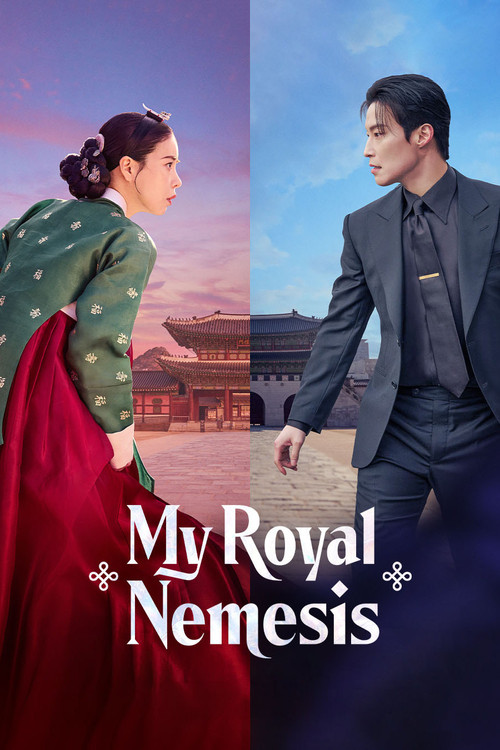
A clash of silk and steel, caustic wit, and ancient yearning, My Royal Nemesis is a shattered porcelain hairpin cast into Seoul's neon labyrinth, slowly mended by the burning ember of an enduring, cross-century love.
My Royal Nemesis

My Royal Nemesis

멋진 신세계

"The Villainess Meets a New World."

08 May 2026 — 20 June 2026 South Korea 1 season 14 episode Ended 8.9 (100)

Cast: Lim Ji-yeon, Heo Nam-jun, Jang Seung-jo, Kim Min-seok, Lee Se-hee

Drama Sci-Fi & Fantasy Comedy The Subversion of the 'Villainess' and Female Agency Karmic Continuity and Predestination vs. Free Will Public Persona vs. Private Truth Solidarity and Found Family in the Margins Class, Power, and Modern Feudalism

Overview

My Royal Nemesis (멋진 신세계) is a 14-episode South Korean fantasy romantic comedy drama directed by Han Tae-seop and Kim Hyun-woo, written by Kang Hyun-joo. The series follows Kang Dan-shim, a shrewd Joseon-era royal consort branded by history as a manipulative femme fatale. Sentenced to death by forced ingestion of poison (sayak) during the reign of King Anjong, Dan-shim's execution triggers an otherworldly event under a celestial eclipse and a passing red comet, transmigrating her soul 300 years into modern Seoul inside the body of Shin Seo-ri, an impoverished bit-part actress filming an execution scene.

Refusing to surrender to victimhood, Dan-shim utilizes her formidable courtly instincts, caustic tongue, and survival skills to navigate 21st-century Korea. Her unfiltered persona propels Seo-ri's acting career from obscurity to fame while colliding aggressively with Cha Se-gye, an abrasive, arrogant third-generation chaebol heir and Chail Group executive smeared in the press as an unfeeling monster of capitalism.

As their volatile love-hate dynamic blooms into genuine romance, both uncover that the bitter rivalries and fatal betrayals of the Joseon court are directly reincarnated in modern boardrooms and family dynasties, bound by a shared cycle of karma.


Core Meaning

Across its complete run, My Royal Nemesis deconstructs the historical and modern practice of scapegoating ambitious, self-reliant outsiders. The creative team uses Dan-shim's dual existence to challenge the simplistic label of the 'villainess' (aknyeo), demonstrating that survival in patriarchal and cutthroat structures often requires a calculated exterior.

The series ultimately asserts that destiny is not a rigid decree dictated by historical records or corporate birthrights, but an ethical choice that can be fundamentally rewritten through selflessness, mutual vulnerability, and courage.

Thematic DNA

The Subversion of the 'Villainess' and Female Agency 30%
Karmic Continuity and Predestination vs. Free Will 25%
Public Persona vs. Private Truth 20%
Solidarity and Found Family in the Margins 15%
Class, Power, and Modern Feudalism 10%

The Subversion of the 'Villainess' and Female Agency

Dan-shim's historical reputation as a toxic schemer mirrors modern society's vilification of assertive women. Over 14 episodes, her 'wickedness' is re-contextualized as tactical resilience against systemic hostility, transforming Seo-ri into an empowered artist who refuses exploitation.

Karmic Continuity and Predestination vs. Free Will

The parallel histories of Joseon royalty and modern chaebol corporate warfare illustrate how unresolved betrayal and jealousy recur across lifetimes. The narrative arc proves that generational curses and fate can only be severed when individuals actively choose sacrifice over selfish survival.

Public Persona vs. Private Truth

Both Dan-shim (labeled a venomous consort) and Se-gye (maligned as a ruthless corporate parasite) wear armor manufactured from rumor and public slander. Their relationship develops through peeling away these external caricatures to find empathy beneath.

Solidarity and Found Family in the Margins

Juxtaposed against the treacherous court and corporate Chail Group is Seo-ri's eclectic goshiwon/boarding-house community. The shared meals and protective warmth of working-class peers provide the genuine emotional sanctuary that power and prestige never offered.

Class, Power, and Modern Feudalism

The series highlights how modern chaebol conglomerates wield power in manners that replicate dynastic monarchies, proving that while centuries pass, unchecked greed and corporate succession struggles remain essentially feudal.

Character Analysis

Kang Dan-shim / Shin Seo-ri

Lim Ji-yeon

Archetype: Antiheroine / Defiant Survivor Key Trait: Unapologetic ferocity paired with razor-sharp tactical intelligence

Motivation

Initially focused on raw survival and personal vindication; later transforms into protecting her chosen partner and rewriting historical fate.

Character Arc

Begins as a pragmatic royal consort consumed by self-preservation and grievance, transmigrating into an overlooked, downtrodden extra. She evolves from using sharp aggression as a shield to finding genuine human connection and willingly risking her own existence to rescue those she loves.

Cha Se-gye / Grand Prince Cheongheon Yi Heon

Heo Nam-jun

Archetype: Brooding Romantic Hero / Reformed Cynic Key Trait: Gruff, nostalgic vulnerability masked under high-handed aristocratic posturing

Motivation

Guarding Chail Group from internal betrayal, which shifts to unconditional devotion toward Dan-shim.

Character Arc

Plagued by nightmares of a bloodstained past, he operates in modern Seoul behind an aloof, abrasive corporate facade. As Dan-shim disrupts his calculated life, he dismantles his emotional walls, exposes his cousin's corruption, and recovers the devoted, protective spirit of Prince Yi Heon.

All 5 characters and cast

Symbols & Motifs

The Poison Bowl (Sayak, 사약)

Meaning:

Symbolizes state and corporate betrayal as well as the bitter price of rising without institutional backing.

Context:

Introduced as the tragic instrument of Dan-shim's state execution in Joseon, recurring in modern prop departments and metaphors throughout the series.

The Red Comet and Lunar Eclipse

Meaning:

Embody fate's deadline, cosmic timing, and the physical bridge connecting separated timelines.

Context:

Celestial phenomena that align during Dan-shim's execution in Joseon and reappear in the skies of 2026 Seoul to open the metaphysical portal.

The Hairpin / Masked Warrior's Blade

Meaning:

Reflect sworn promises of protection, fidelity, and sacrifice that echo across centuries.

Context:

Physical objects connecting Dan-shim and Prince Yi Heon in the past, mirroring modern protective encounters between Seo-ri and Se-gye.

The Goshiwon / Boarding House

Meaning:

Symbolizes humility, unadorned humanity, and genuine kinship devoid of transactional motives.

Context:

The cramped modern living space that stands in sharp visual and emotional contrast to expansive royal palaces and cold penthouses.

Historical Drama Scripts

Meaning:

Meta-cinematic motifs used to examine narrative control and distorted historical legacy.

Context:

Utilized by Dan-shim on modern sets to decipher her own recorded history and actively manipulate her modern public image.

Memorable Quotes

내가 악녀라 하였느냐? 그렇다면 똑똑히 보아라, 진짜 악녀가 어떻게 살아남는지.
— Kang Dan-shim

Context

Uttered in Episode 1 as Dan-shim awakens on the historical drama set, channeling her Joseon defiance into modern Seoul.

Meaning

Encapsulates Dan-shim's refusal to succumb to victimization, weaponizing the negative labels imposed on her to command power.

돈과 성공을 위해 악마에게 영혼이라도 팔겠다던 놈이, 고작 네 눈빛 하나에 무너졌어.
— Cha Se-gye

Context

Spoken in Episode 8 when Se-gye acknowledges his feelings to Dan-shim after defending her from industry predators.

Meaning

Marks the complete dismantling of Se-gye's calculated, cynical corporate persona in the face of genuine romantic vulnerability.

All 6 quotes

Episode Highlights

The Poison and the Prop

S1E1

Dan-shim is executed in the Joseon era and awakens in 2026 Seoul during a historical K-drama filming, shocking the production crew with her unscripted fury.

Significance:

Establishes the core transmigration premise, Dan-shim's fierce personality, and initiates her volatile dynamic with Cha Se-gye.

Shadows in the Moonlight

S1E2

Dan-shim navigates modern technology and cultural norms, while the ending introduces the mysterious masked swordsman from her memories.

Significance:

Establishes the bridge between past memories and Se-gye's recurring nightmares, hinting at shared past-life trauma.

The Red Carpet Duel

S1E6

Dan-shim leverages her Joseon court presence to outshine industry rivals at an entertainment gala, securing a lucrative endorsement deal.

Significance:

Propels Seo-ri's career into the public spotlight and forces Se-gye to confront his protective impulses toward her.

Capitalism and Court Politics

S1E8

Dan-shim applies Joseon court stratagems to help Se-gye counter a boardroom ambush, while Se-gye protects Seo-ri from entertainment industry exploitation.

Significance:

Acts as the pivotal midpoint turning point where mutual romantic feelings solidify and tactical alliances merge.

Echoes of the King

S1E10

Choi Mun-do escalates his smear campaign against Se-gye, leading Dan-shim to recognize the chilling parallels between Mun-do and King Anjong.

Significance:

Shifts the narrative stakes from a contemporary corporate romance to a high-stakes battle against karmic retribution.

Awakening of the Truth

S1E12

Dan-shim discovers the complete truth of the 300-year soul connection and realizes the passing red comet will soon force her soul back to Joseon.

Significance:

Created the series' ratings peak (12.8%) and introduced the cosmic deadline dictating the characters' final choices.

Blood and Comets

S1E13

Mun-do stabs Se-gye during a violent confrontation; with Se-gye dying in modern hospital care, Dan-shim resolves to travel back to Joseon.

Significance:

Drives the story toward its climax by demonstrating Dan-shim's willingness to sacrifice her modern life to save Prince Yi Heon in the past.

A Thousand Years

S1E14

Dan-shim returns to Joseon, intercepts a fatal arrow to save Prince Yi Heon, alters historical destiny, and returns to modern Seoul.

Significance:

Provides the series climax and resolution: the karmic cycle is severed, Mun-do is imprisoned, and the leads achieve dual happy endings.

Philosophical Questions

Can history be trusted when written solely by the victors?

The narrative interrogates whether historical figures branded as 'wicked' or 'monstrous' were genuinely villainous or simply vulnerable outsiders who dared to resist institutional oppression.

Does technological advancement equate to ethical human progress?

Dan-shim's modern experience underscores that corporate boardroom manipulation, economic hierarchy, and public scapegoating replicate the lethal intrigues of 17th-century royal courts.

Is self-sacrifice an act of surrender or the ultimate expression of control?

Dan-shim's growth from ruthless individual survival to choosing mortal danger for Yi Heon suggests that exercising autonomy over what one is willing to bleed for represents the highest form of agency.

Alternative Interpretations

Audience and critical discourse centered heavily on the nature of Dan-shim's transmigration, debating whether her time travel represented a random shamanic anomaly or a preordained karmic mechanism meant to grant three broken souls closure.

Full ending explanation

Cultural Impact

Premiering amid a trend of revisionist South Korean historical fiction, My Royal Nemesis made an impact by presenting a proactive female protagonist who actively dismantles traditional tropes of female submission. Broadcast in SBS's Friday-Saturday slot, the drama achieved double-digit domestic viewership (peaking at 11.8% nationwide) and claimed the No. 1 spot on Netflix's Global Top 10 Non-English TV list. Critics widely praised Heo Nam-jun for reviving the nostalgic appeal of early-2010s romantic male leads alongside Lim Ji-yeon's performance.

Audience Reception

The drama was praised for Lim Ji-yeon's razor-sharp comic timing and Heo Nam-jun's romantic intensity, with early episodes celebrated for brisk pacing, dry wit, and smart subversions of time-slip tropes.

However, Episodes 9 through 11 received criticism on platforms like MyDramaList and AsianWiki for bogged-down chaebol governance plots and corporate intrigue. Episode 12 faced backlash for temporarily placing Dan-shim in an uncharacteristic damsel-in-distress scenario to set up the male lead's intervention.

Despite middle-act pacing flaws, the emotional payoff and resolution of the two-part finale secured strong viewer ratings and positive critical acclaim.

Interesting Facts

  • Filming was conducted under a full pre-production schedule running from October 24, 2025, to April 29, 2026.
  • Directorial duties were divided between Han Tae-seop and Kim Hyun-woo to balance authentic Joseon historical sequences with modern Seoul visuals.
  • The drama is an original screenplay by Kang Hyun-joo, inspired by historical figure Queen Consort Jang Hui-bin, rather than a webtoon adaptation.
  • Luxury automaker Maserati sponsored the production, supplying executive vehicles for Cha Se-gye's corporate entourage.
  • The soundtrack was produced by music director Park Sung-il of Studio Curiosity and features the indie ballad 'Quiet Miracle' by Seo Ja-young.

Easter Eggs

Jang Hui-bin Allusion

Dan-shim's trajectory from low birth to Senior 1st Rank Royal Noble Consort (Huibin) and subsequent execution by poison directly mirrors Korea's most infamous historical consort, Jang Hui-bin.

Brave New World Wordplay

The Korean title 멋진 신세계 is the direct translation of Aldous Huxley's novel Brave New World, highlighting the dystopian consumerism of modern Seoul through an archaic perspective.

Sageuk Meta-Humor

Dan-shim's awakening on a live historical television set provides an avenue to satirize current K-drama industry practices, demanding scriptwriters, and melodramatic acting conventions.

Frequently Asked Questions

Explore More About This Movie

Dive deeper into specific aspects of the movie with our detailed analysis pages

Comments (0)

Leave a comment

No comments yet. Be the first to share your thoughts!

Similar Movies