Skip to content
Ninjago: Masters of Spinjitzu
A vibrant martial-arts fantasy alive with boundless energy, fierce loyalty, and heartfelt humor, shaping flawed sparks into an unbreakable blade of brotherhood against an ever-encroaching shadow.
Ninjago: Masters of Spinjitzu

Ninjago: Masters of Spinjitzu

11 January 2012 — 01 October 2022 Canada 16 season 210 episode Ended 8.0 (790)

Cast: Michael Adamthwaite, Kelly Metzger, Vincent Tong, Brent Miller, Kirby Morrow

Animation Sci-Fi & Fantasy Action & Adventure Family Comedy Found Family, Brotherhood, and Unity Destiny, Free Will, and Generational Legacy The Cosmic Balance Between Creation and Destruction Sacrifice, Loss, and Rebirth Identity, Humanity, and Self-Actualization

Overview

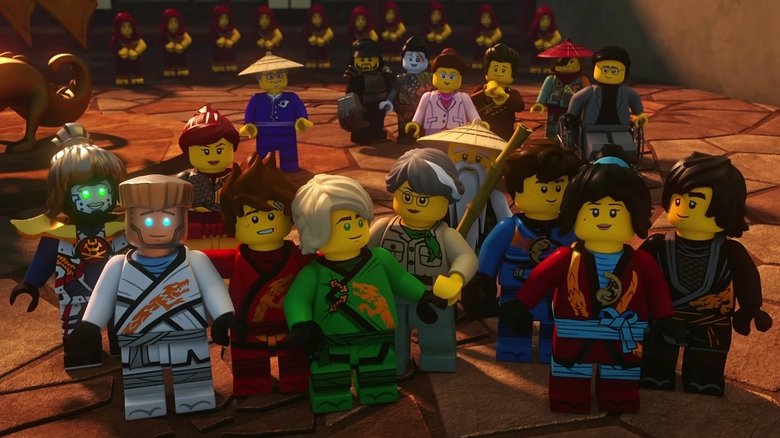
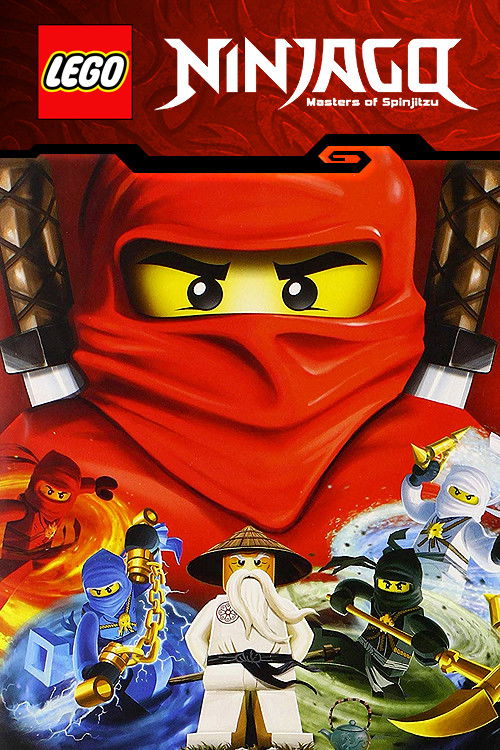
Ninjago: Masters of Spinjitzu is an epic computer-animated action-fantasy saga that follows the journeys of elemental warriors assembled under the tutelage of the ancient, enigmatic Master Wu. Set across the sprawling, mythical realm of Ninjago—a world where ancient Eastern mysticism collides with retro-futuristic urban technology—the series tracks four initial ninja apprentices (Kai, Jay, Zane, and Cole), who are later joined by the fated Green Ninja (Lloyd) and the water master (Nya). Together, they learn the sacred, whirlwind-based martial art known as Spinjitzu to guard the realms against existential catastrophes.

Across its extensive run of fifteen major seasons, specials, and arcs, the narrative expands from localized skirmishes against ancient serpentine tribes and underworld skeletal legions into sprawling cosmic conflicts. The ninja repeatedly travel through mystical planes, ancient subterranean civilizations, digitized cyberspace, oceanic depths, and forgotten realms. Rather than remaining static archetypes, the heroes age, confront deep familial trauma, make severe personal sacrifices, and face the consequences of their triumphs and losses.

At its overarching core, the show details the transition of naive, impulsive youths into mature guardians and mentors. As ancient rivalries, primordial creators, and rogue deities threaten to unravel the fabric of creation, the ninja prove time and again that moral endurance, mutual trust, and unity can overcome even the darkest preordained destinies.
Core Meaning

The overarching message of Ninjago is that true strength is forged through chosen family, emotional resilience, and the relentless choice to do good regardless of bloodline, heritage, or past failure.

Across its entirety, the series demonstrates that destiny is not a rigid cage but an active path shaped by selflessness, forgiveness, and moral courage. Light and darkness are eternal opposing forces in the universe, but darkness is never vanquished by sheer physical dominance; rather, it is neutralized when individuals confront internal flaws, accept vulnerability, and stand together to protect those who cannot protect themselves.

Thematic DNA

Found Family, Brotherhood, and Unity 30%
Destiny, Free Will, and Generational Legacy 25%
The Cosmic Balance Between Creation and Destruction 20%
Sacrifice, Loss, and Rebirth 15%
Identity, Humanity, and Self-Actualization 10%

Found Family, Brotherhood, and Unity

The absolute anchor of the series is the concept that "As iron sharpens iron, brother sharpens brother." Across every era—from the pilot episodes to March of the Oni and Crystalized—the team only stumbles when division or secrecy takes root. Their greatest techniques (such as the Tornado of Creation) only activate when complete spiritual and emotional unity is achieved.

Destiny, Free Will, and Generational Legacy

The characters consistently grapple with inherited burdens: Lloyd carrying the dark lineage of Garmadon and the First Spinjitzu Master; Kai and Nya living in the shadow of their lost blacksmith parents; and Morro rejecting his rejection as the chosen one. The narrative asserts that one’s origins do not dictate their morality.

The Cosmic Balance Between Creation and Destruction

Rooted in the primordial dichotomy of the Dragon (Creation) and the Oni (Destruction), the series examines why neither absolute light nor total darkness can unilaterally eradicate the other. Harmony requires coexistence and understanding rather than absolute obliteration.

Sacrifice, Loss, and Rebirth

Heroism in Ninjago carries genuine, painful costs. From Zane destroying himself to save New Ninjago City to Nya merging with the infinite ocean in Seabound, true power is measured by one’s willingness to surrender everything for the collective good.

Identity, Humanity, and Self-Actualization

Explored heavily through Zane’s realization of his Nindroid nature, P.I.X.A.L.’s independence, and Cole’s acceptance of ghostly existence, the show defines humanity not by flesh and bone, but by heart, compassion, and the capacity for love.

Character Analysis

Lloyd Garmadon

Jillian Michaels (Seasons 1–7) / Sam Vincent (Seasons 8–15)

Archetype: The Chosen One / Reluctant Leader / Maturing Hero Key Trait: Unflinching resilience and profound empathy

Motivation

Evolves from wanting to prove his villainous heritage to striving to save his father and live up to prophecy, and finally bearing the immense psychological weight of leadership and guiding the next generation.

Character Arc

Starts as a bratty, candy-stealing child seeking his evil father’s approval, prematurely ages into young adulthood, fulfills prophecy as the Ultimate Spinjitzu Master, and eventually matures into a battle-worn Master who succeeds Wu.

Kai

Vincent Tong

Archetype: Hot-headed Lancer / Protective Big Brother / Fire Warrior Key Trait: Uncontainable passion and fiery devotion

Motivation

Evolves from rescuing his sister Nya to pursuing glory and validation, and eventually fiercely defending his chosen family at any personal cost.

Character Arc

Begins as an impatient, prideful blacksmith obsessed with becoming the prophesied Green Ninja; grows into a selfless protector who gladly steps aside for Lloyd, finding fulfillment as an indispensable combat vanguard and brother.

All 5 characters and cast

Symbols & Motifs

The Golden Weapons of Spinjitzu

Meaning:

Raw creation, cosmic balance, and ancestral responsibility.

Context:

Introduced in the pilots as the tools used by the First Spinjitzu Master to forge Ninjago. They serve as the recurring catalysts for the show’s major historical inflection points, continually reforged and sacrificed.

The Tornado of Creation / Spinjitzu

Meaning:

Harmony, focus, and elemental synergy.

Context:

Spinjitzu represents an individual mastering inner discipline. The larger collective Tornado of Creation is only summoned when all ninja align their souls completely to build rather than destroy.

The Dragon and the Oni (Yin and Yang)

Meaning:

Creation vs. Destruction, peace vs. turmoil.

Context:

Serves as the central mythological genesis of Ninjago, personified through Master Wu (Dragon lineage) and Lord Garmadon / The Omega (Oni lineage).

The Destiny's Bounty

Meaning:

Home, sanctuary, and endurance through adversity.

Context:

The ninja's flying sailing ship gets crashed, rebuilt, upgraded, and destroyed multiple times across the 15 seasons, mirroring the team's resilience.

The Titanium / Silver Form (Zane)

Meaning:

Pure altruism and emotional transcendence over machinery.

Context:

Emerges after Zane's sacrifice against the Overlord, visually marking him not merely as a machine, but as an immortal beacon of protective light.

Memorable Quotes

Never put off until tomorrow what can be done today.
— Master Wu

Context

Spoken in the Pilots and recurring throughout the entire series.

Meaning

The fundamental ethos of Spinjitzu training and Wu's foundational life philosophy regarding discipline and proactive virtue.

As iron sharpens iron, brother sharpens brother.
— The Ninja Team

Context

Originated via Sensei Yang, Season 5: Possession, Episode 48 and recurring afterward.

Meaning

Captures the essence of their bond; conflict and mutual challenge among comrades refine them into better warriors and people.

All 6 quotes

Episode Highlights

Tick Tock

S1E7

Zane discovers blueprints revealing he is an android (Nindroid) created by Dr. Julien and unlocks his True Potential.

Significance:

Redefined the emotional depth of the series and introduced transhuman themes.

The Green Ninja

S1E10

Kai accepts he is not the Chosen One in the Fire Temple; the Golden Weapons reveal young Lloyd as the fabled Green Ninja.

Significance:

Fundamentally repositioned Lloyd as the franchise protagonist and shifted Kai’s character trajectory.

Rise of the Spinjitzu Master

S2E26

Lloyd unlocks his Golden Dragon power, defeats the Overlord, and purges Garmadon of the Great Devourer’s venom.

Significance:

Concluded the initial intended 2-season series arc and transformed Garmadon from villain to loving mentor.

The Titanium Ninja

S3E34

Zane sacrifices his physical body to freeze and destroy the Golden Master Overlord, scattering his power.

Significance:

Proved the show would deliver real stakes, emotional grief, and elevated Zane to a legendary symbol.

The Corridor of Elders

S4E44

Garmadon willingly banishes himself to the Cursed Realm to summon the original Anacondrai Generals and save Ninjago.

Significance:

Established deep parental sacrifice, unleashed Morro from the Cursed Realm, and reshaped Lloyd's maturation.

True Potential / Big Trouble, Little Ninjago

S8E83

Lord Garmadon is resurrected in pure demonic Oni form; the Colossus ravages the city; Lloyd loses his elemental powers and the team is split.

Significance:

The darkest inflection point in the franchise; forced the ninja into realm-hopping survival and gritty maturity.

Endings

S10E98

The ninja, Wu, and Garmadon unite to form the Tornado of Creation, vanquishing the Oni and meeting the First Spinjitzu Master in limbo.

Significance:

Concluded the historic Danish Wil Film era, wrapped the Oni Trilogy, and marked the 100-episode milestone.

The Turn of the Tide

S14E16

Nya performs the ultimate elemental fusion with the sea to defeat Wojira, sacrificing her human identity and departing the team.

Significance:

One of the most emotionally devastating climaxes in animated television, leading directly to the grief and finale of Crystalized.

Philosophical Questions

Can pure darkness be redeemed, or must it be balanced?

Explored via Garmadon’s oscillation between a loving father and an Oni warlord of pure destruction.

What defines a soul: biology or moral choice?

Addressed through Zane and P.I.X.A.L., showing that conscious sacrifice and love establish true personhood beyond artificial programming.

Is sacrifice truly noble if it inflicts permanent trauma on those left behind?

Examined through Zane's explosion in Rebooted and Nya’s oceanic dissolution in Seabound, looking closely at the agonizing grief of the survivors.

Alternative Interpretations

The Cyclical Balance Interpretation: Some critics interpret Ninjago not as a linear battle between good and evil, but as a Daoist cycle where light cannot exist without shadow. Every time absolute peace is achieved, the universe naturally destabilizes to produce a countervailing dark force (e.g., the Overlord resurfacing whenever balance tips).

Full ending explanation

Cultural Impact

Ninjago: Masters of Spinjitzu stands as one of the most commercially and critically enduring children's animated television series of the 21st century. Emerging during a period when toy-based television was often dismissed as superficial marketing, Ninjago disrupted industry expectations by providing complex serialized worldbuilding, genuine character death, and multi-season philosophical arcs.

Airing on Cartoon Network, the series consistently broke demographic records in the 2010s, matching the popularity of major staples like Adventure Time and Regular Show. It spurred a theatrical feature film (The Lego Ninjago Movie, 2017), video games, theme park attractions worldwide, and over a decade of continuous LEGO set lines. Its success paved the way for modern serialized franchise storytelling aimed at younger demographics, bridging the gap between Western superhero serials and Eastern martial arts storytelling.

Audience Reception

Golden Era Reception (Seasons 1–5): Highly praised for tight serialization, emotional stakes, character chemistry, and foundational lore (Tournament of Elements and Possession remain fan favorites).

The "Oni Trilogy" Renaissance (Seasons 8–10): Hailed by mature fans and critics for cinematic tone, elevated animation fidelity, nuanced writing by Bragi Schut, and genuine psychological tension (Sons of Garmadon and Hunted).

Criticisms & Controversies:

  • The redesign of characters in Season 8 (to resemble the 2017 movie aesthetics) caused initial backlash before the high writing quality won viewers over.
  • Season 11 (Secrets of the Forbidden Spinjitzu) received criticism for pacing issues, comedic tonal shifts, and the transition to the shorter 11-minute format.
  • The series finale (Crystalized) drew polarized reactions regarding the handling of Harumi's redemption and the resolution of major character arcs.

Overall Verdict: Regarded as a modern animated classic that transcended its toy-line origins to deliver one of the most compelling long-form serialized adventures of its era.

Interesting Facts

  • Ninjago was originally engineered by LEGO to run for only two seasons (2011–2012) alongside an intended 3-year toy line shelf life, but massive fan outcries, letters, and phenomenal merchandise sales prompted LEGO to resurrect the show permanently for 2014’s Rebooted.
  • Dan and Kevin Hageman served as head writers from the pilot through Season 9 (Hunted) before passing the showrunner baton to Bragi Schut.
  • Kirby Morrow voiced Cole from the 2011 pilots through Season 14/15; following his passing in late 2020, Seabound was dedicated to his memory.
  • Wil Film ApS in Denmark animated Seasons 1–10 in a 22-minute format, after which production moved to WildBrain Studios in Canada for Season 11 onward with an 11-minute episodic structure and dropped the Masters of Spinjitzu subtitle.
  • American indie-rock band The Fold composed the show’s iconic main theme, "The Weekend Whip," and produced dozens of season-specific remixes such as "The Ghost Whip," "The Pirate Whip," and "The Temporal Whip."

Easter Eggs

BIONICLE Lore Nods

The ancient language and hieroglyphics seen inside stone ruins and tombs across Seasons 1–5 frequently utilize authentic BIONICLE Matoran lettering, paying homage to LEGO's predecessor storyline.

Chima & Realm Multiverse

In Season 5 (Possession), while Lloyd and Morro battle across reality rifts, they briefly fall through the realm of Legends of Chima, confirming shared cosmic geography.

Pop Culture Cinematic Tributes

The series features numerous film parodies, including Raiders of the Lost Ark (boulder chases in early seasons), Mad Max: Fury Road (the wasteland aesthetics of the First Realm in Season 9), Tron (Season 12’s Prime Empire), and Dungeons & Dragons (Season 13’s Master of the Mountain).

Fritz Donnegan

Jay's continuous obsession with "Starfarer" sci-fi hero Fritz Donnegan is an homage to retro pulp space serials like Flash Gordon and Star Wars.

Frequently Asked Questions

Explore More About This Movie

Dive deeper into specific aspects of the movie with our detailed analysis pages

Comments (0)

Leave a comment

No comments yet. Be the first to share your thoughts!

Similar Movies