Steven Universe
A vibrant, musical tapestry where a boy’s boundless empathy heals ancient celestial scars, painting a universe where love is the ultimate superpower and vulnerability is the greatest strength.
Steven Universe

Steven Universe

"Believe in Steven."

04 November 2013 — 21 January 2019 United States of America 5 season 154 episode Ended ⭐ 8.4 (1,274)
Cast: Zach Callison, Estelle, Michaela Dietz, Deedee Magno, Tom Scharpling
Animation Sci-Fi & Fantasy Action & Adventure Family Comedy
Identity and Self-Discovery Non-Violence and Radical Empathy Intergenerational Trauma and Legacy The Ethics of Relationships (Fusion)

Overview

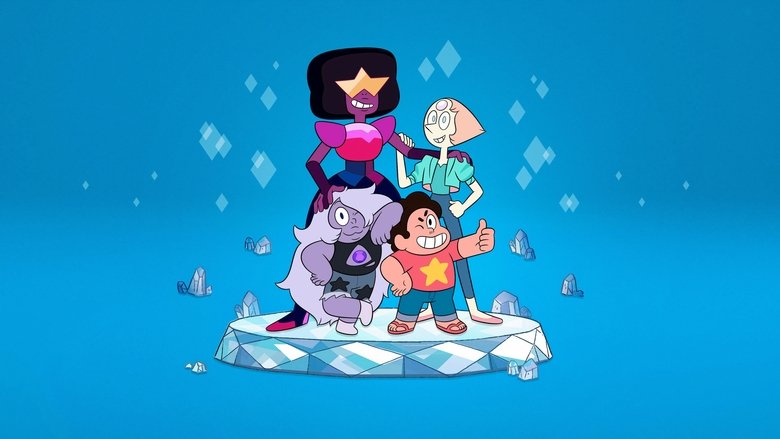
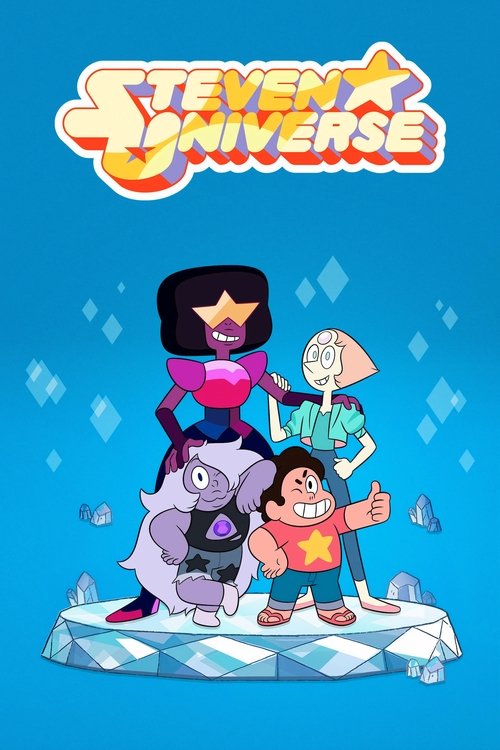
Steven Universe is a genre-defying animated epic that follows Steven, a young boy who is half-human and half-Gem, a race of magical extraterrestrial beings. Raised by the Crystal Gems—Garnet, Amethyst, and Pearl—in the coastal town of Beach City, Steven navigates the complexities of his dual heritage while protecting Earth from various extraterrestrial threats. The series begins as a lighthearted coming-of-age story but gradually unfolds into a deep, serialized space opera exploring the history of an intergalactic rebellion and the fractured legacy of Steven's mother, Rose Quartz.

As the series progresses across five seasons, the focus shifts from monster-of-the-week adventures to complex political and emotional arcs involving the Gem Homeworld and its authoritarian rulers, the Great Diamond Authority. Steven’s journey is defined by his rejection of traditional combat in favor of radical empathy and communication. The narrative masterfully weaves together high-stakes sci-fi lore with intimate character studies, culminating in a confrontation that challenges centuries of systemic oppression through the simple act of self-acceptance and familial reconciliation.
Core Meaning

The core meaning of Steven Universe is that empathy and the willingness to change are the most powerful forces in the universe. Created by Rebecca Sugar, the series posits that identity is not a fixed destination but a continuous process of growth and connection. It emphasizes that traditional heroism is found not in defeating an enemy, but in understanding them and oneself. Through the metaphor of "Fusion," the show argues that healthy relationships require work, communication, and mutual respect, ultimately suggesting that love—both for others and for oneself—is the only sustainable path to healing historical trauma and breaking cycles of violence.

Thematic DNA

Identity and Self-Discovery 30%
Non-Violence and Radical Empathy 25%
Intergenerational Trauma and Legacy 25%
The Ethics of Relationships (Fusion) 20%

Identity and Self-Discovery

The series explores the fluid nature of identity, particularly through Steven’s struggle to reconcile his human and Gem halves. This theme evolves from Steven trying to emulate his mother’s legacy to eventually realizing he is his own person, separate from her mistakes. It is further explored through the Gems' various reformations and the concept of Fusion as an expression of selfhood.

Non-Violence and Radical Empathy

Unlike many action-adventure series, Steven Universe consistently prioritizes diplomacy and emotional intelligence over physical combat. Steven’s primary "weapon" is his shield, a symbol of protection rather than aggression. The series arc leads toward a climax where the ultimate victory is achieved through conversation and the humanization of the "enemy."

Intergenerational Trauma and Legacy

The show examines how the secrets and choices of previous generations—specifically Rose Quartz’s rebellion—impact the present. Steven and the Crystal Gems must navigate the grief, resentment, and systemic scars left behind by the Gem War, illustrating that healing requires acknowledging the past rather than burying it.

The Ethics of Relationships (Fusion)

Fusion serves as a multifaceted metaphor for relationships, including romantic, platonic, and familial bonds. The show highlights the importance of consent, individuality within a partnership, and the dangers of codependency or toxic control, most notably in the contrast between Garnet’s stable love and the destructive fusion of Malachite.

Character Analysis

Steven Universe

Zach Callison

Archetype: The Reluctant Hero / Healer
Key Trait: Boundless Empathy

Motivation

Initially motivated by a desire to prove himself to the Gems and his father, his motivation evolves into a selfless mission to heal everyone, including his enemies, and find his own place in the world.

Character Arc

Steven grows from a carefree, enthusiastic child into a deeply compassionate leader who carries the weight of a galactic conflict. His arc culminates in the realization that he does not need to be his mother to be valuable, choosing to define his own future as a hybrid being.

Garnet

Estelle

Archetype: The Stoic Mentor
Key Trait: Internal Equilibrium

Motivation

Motivated by the preservation of her own existence as a fusion and the protection of Earth as a safe haven for love that is "forbidden" on Homeworld.

Character Arc

Revealed to be a fusion of Ruby and Sapphire, Garnet’s arc focuses on maintaining balance and stability. Over time, she becomes more emotionally expressive and learns to trust Steven as an equal rather than a ward.

Pearl

Deedee Magno Hall

Archetype: The Devoted Knight
Key Trait: Technical Precision

Motivation

Initially fueled by her lingering love for Rose, she transitions to protecting Steven and the Earth for their own sake and her own ideals.

Character Arc

Pearl moves from a state of crippling grief and obsession with the late Rose Quartz toward independence and self-worth. She eventually learns to value her own contributions and finds a life for herself outside of servitude.

Amethyst

Michaela Dietz

Archetype: The Wild Card
Key Trait: Carefree Resilience

Motivation

She seeks acceptance and a sense of belonging, eventually finding it by defining herself by her chosen family rather than her biological birthplace.

Character Arc

Amethyst struggles with intense self-loathing due to her origins as a "defective" Gem. Through her friendship with Steven, she learns to embrace her unique qualities and becomes the most emotionally grounded and supportive member of the group.

Greg Universe

Tom Scharpling

Archetype: The Unconventional Father
Key Trait: Patience

Motivation

Driven by unconditional love for his son and a desire to provide him with a normal, happy life despite the supernatural chaos surrounding them.

Character Arc

Greg remains a steady, grounding force for Steven. He provides a human perspective on the Gem's cosmic drama, teaching Steven that being "perfect" is less important than being kind and present.

Symbols & Motifs

The Star

Meaning:

A symbol of positivity, individuality, and rebellion.

Context:

The star is the insignia of the Crystal Gems, replacing the Diamond symbol to represent their defection from the Homeworld hierarchy. Steven wears it on his shirt, and it appears during the show’s transitions, marking his role as the heart of the team.

Fusion

Meaning:

A physical manifestation of a relationship or a shared identity.

Context:

Used throughout the series to show the strength of bonds. Garnet is a permanent fusion of Ruby and Sapphire, symbolizing a healthy marriage, while others like Stevonnie represent the beauty of non-binary identity and shared experience.

Rose's Shield

Meaning:

Symbolizes protection, defense, and the nurturing nature of Steven’s power.

Context:

As Steven’s primary weapon, it contrasts with the offensive weapons of the other Gems. It serves as a reminder of his mother’s legacy, but Steven eventually learns to use it in ways that are uniquely his own.

Cookie Cat

Meaning:

A metaphor for being a refugee and having a dual nature.

Context:

Introduced in the pilot, the jingle describes a "refugee from an interstellar war" who is "half-and-half," foreshadowing the reveal of the Gems’ alien origins and Steven’s own hybrid identity.

Memorable Quotes

If every porkchop were perfect, we wouldn't have hot dogs.

— Greg Universe

Context:

Season 1, Episode 2 ("Laser Light Cannon"). Greg says this to Steven to help him understand that not everything has to work perfectly to be meaningful.

Meaning:

A foundational philosophy of the show: flaws and mistakes can lead to something new and wonderful.

I am made of love, and it's stronger than you.

— Garnet

Context:

Season 1, Episode 52 ("Jail Break"). Garnet sings this during her fight with Jasper after revealing she is a fusion.

Meaning:

Asserts that relationships built on mutual love are more resilient than those built on power or fear.

I don't need you to respect me, I respect me. I don't need you to love me, I love me. But I want you to know you could know me, if you change your mind.

— Steven Universe

Context:

Season 5, Episode 29 ("Change Your Mind"). Steven sings this to White Diamond as a final plea for understanding.

Meaning:

Summarizes the show's stance on self-worth and the invitation to change even for the most stubborn oppressors.

Episode Highlights

Jail Break

S1E52

The season finale features the revelation that Garnet is a fusion and showcases the iconic song "Stronger Than You."

Significance:

It redefined the show's mechanics and established Fusion as the central metaphor for love and identity.

Mr. Greg

S3E8

A fully musical episode where Pearl and Greg finally confront their shared grief and complicated feelings regarding Rose Quartz.

Significance:

It provided much-needed closure for the adult characters and highlighted the series' emotional maturity.

Bismuth

S3E20

Steven encounters an original Crystal Gem who believes in using lethal force to win the rebellion.

Significance:

It challenged Steven’s pacifism and introduced moral ambiguity into the history of the Gem War.

A Single Pale Rose

S5E18

The episode that reveals the show’s biggest twist: Rose Quartz was actually Pink Diamond.

Significance:

It recontextualized the entire series, turning a simple rebellion story into a complex family tragedy.

Change Your Mind

S5E29

The 44-minute series finale where Steven confronts the Diamond Authority and establishes a new era for Gem-kind.

Significance:

It resolved the primary conflict of the series by emphasizing self-acceptance and the dismantling of rigid hierarchies.

Philosophical Questions

Does our origin define our destiny?

The series explores this through characters like Amethyst and Steven, who are born into roles or expectations they must eventually reject to find their true selves.

Can every person truly be redeemed?

The show tests this by having Steven offer redemption to even the most genocidal villains, suggesting that while their actions are inexcusable, the individuals are still capable of growth.

What is the true cost of peace?

The reveal of the 'Cluster' and the moral compromises made by Rose Quartz highlight that peace is often built on difficult secrets and sacrifices.

Alternative Interpretations

While the show is literally about magical aliens, many critics and fans interpret it as a trans and non-binary allegory. The process of Gems "reforming" and the concept of Fusion allow for explorations of gender identity and the fluidity of the self. Another common reading is that the entire series is an exploration of neurodivergence and PTSD, with Steven’s "Future" arc in the sequel series making this interpretation even more explicit as it deals with the physiological effects of chronic stress and early childhood trauma.

Cultural Impact

Steven Universe has left an indelible mark on television history, particularly as a pioneer for LGBTQ+ representation in children's media. It was the first animated series to win a GLAAD Media Award and featured the first televised same-sex wedding between two main characters in a children's cartoon. Beyond its representation, the show influenced a generation of creators with its "storyboard-driven" approach, prioritizing the personal artistic voices of its crew over rigid script adherence. Its legacy persists in the way modern animation handles mental health, trauma, and non-traditional family structures, setting a high bar for emotional complexity in all-ages storytelling.

Audience Reception

Initially praised for its charming visuals and music, Steven Universe developed a dedicated, intergenerational fan base that obsessed over its deep lore. While the series was critically acclaimed—holding high ratings on platforms like Rotten Tomatoes—it was not without controversy. Some audience members criticized the pacing, particularly the "filler" episodes centered on Beach City humans. The redemption of the Diamonds in the finale remains a point of debate, with some viewers feeling it was too rushed or forgiven too easily given their past actions. However, the overall verdict remains overwhelmingly positive, with the show being cited as one of the most important animated series of the 21st century.

Interesting Facts

  • Steven Universe is the first Cartoon Network series created solely by a woman (Rebecca Sugar).
  • Steven's character is based on Rebecca Sugar's real-life younger brother, Steven Sugar, who was also a background artist for the show.
  • The pilot episode featured a more 'realistic' and detailed art style that was simplified for the main series to allow for more expressive animation.
  • Rebecca Sugar wrote many of the show's songs before the episodes were even storyboarded, using music to drive the narrative.
  • The voice of Garnet, Estelle, is a Grammy-winning singer, which influenced the character's musical focus.
  • Beach City is inspired by various real-life Delaware beaches where the Sugar family spent their vacations.
  • The concept of Gems being 'sexless' but using female pronouns was a conscious choice by Sugar to explore non-binary representation.

Easter Eggs

The 'Pilot' design of the Gems appears in the series.

In 'Story for Steven,' the younger versions of the Gems resemble their designs from the 2013 pilot episode.

References to 'Sailor Moon' and 'Revolutionary Girl Utena'.

The series frequently pays homage to classic anime, particularly those that subvert gender norms and feature magical girls.

The 'Diamond' symbols evolving through history.

Background art shows ancient Gem ruins with a four-diamond logo, while modern Homeworld uses a three-diamond logo, subtly hinting at the loss of Pink Diamond.

⚠️ Spoiler Analysis

Click to reveal detailed analysis with spoilers

Frequently Asked Questions

Explore More About This Movie

Dive deeper into specific aspects of the movie with our detailed analysis pages

Comments (0)

Leave a comment

No comments yet. Be the first to share your thoughts!