Skip to content
No Mercy
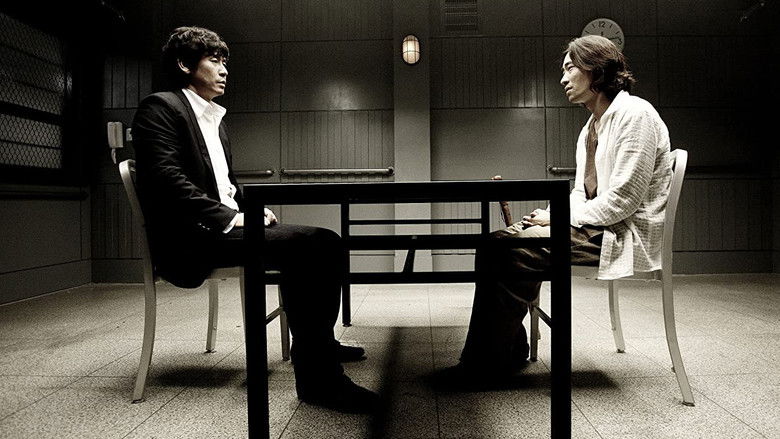
A clinical neo-noir shrouded in sterile frost, where grief curdles into vindictive fury, dissecting the human soul like a cold blade severing marrow from bone.
No Mercy
No Mercy

용서는 없다

"Rather be killed than forgive."

07 January 2010 South Korea 125 min 7.4 (214)

Director: Kim Hyoung-jun

Cast: Sul Kyung-gu, Ryoo Seung-bum, Han Hye-jin, Sung Ji-ru, Park Sang-wook

Crime Action Thriller Retribution and Asymmetrical Revenge Sins of the Past and Complicity The Fall of Professional Integrity and Hubris Paternal Love Distorted by Desperation

No Mercy — Ending Explained

⚠️ Spoiler Analysis

The plot pivots on a concealed injustice from thirteen years earlier: a disabled woman named Oh Eun-ah was gang-raped by three wealthy men and subsequently died. Dr. Kang Min-ho falsified the forensic autopsy report in exchange for career perks, ruling her death an overdose. Consequently, the attackers avoided punishment, leading Eun-ah's family into total ruin.

Eun-ah's brother, Lee Sung-ho, plotted a multi-layered revenge. Rather than simply killing Kang, Sung-ho abducted Kang's daughter, Kang Hye-won, the moment she arrived in South Korea. Sung-ho murdered and dismembered Hye-won into six parts, dumping her torso in the Geum River while withholding her identifying arm.

Dr. Kang spent the entirety of the film manipulating forensic evidence under the false premise that his daughter was held alive in captivity. In reality, Kang had already autopsied and dissected his own daughter's body during the opening sequence of the story. Upon discovering the missing limb containing her distinct identifier in Sung-ho's freezer, Kang realizes his actions. Overwhelmed by horror, Kang shoots Sung-ho dead and subsequently commits suicide, fulfilling Sung-ho's ultimate design.

Alternative Interpretations

The Karmic Inevitability Reading: Views Lee Sung-ho not merely as a mortal killer, but as the personification of inexorable karmic debt. Under this lens, Kang's perjury thirteen years prior broke cosmic order, making his ultimate punishment an unavoidable reckoning for past moral corruption.

The Nihilistic Decay Reading: Interprets the film as a critique of how the quest for retribution erodes moral boundaries. By brutally slaying an innocent young woman who bore no culpability for the past, Sung-ho duplicates the very depravity he sought to punish, demonstrating that unconstrained revenge merely breeds absolute evil.

The Institutional Failure Reading: Frames the narrative as an indictment of a compromised, class-stratified judicial framework. Because influential rapists escaped legal punishment through bribery and fabricated medical documentation, vigilantism became inevitable, demonstrating that institutional breakdown produces human monsters.

Explore More About This Movie

Dive deeper into specific aspects of the movie with our detailed analysis pages

Similar Movies