Skip to content
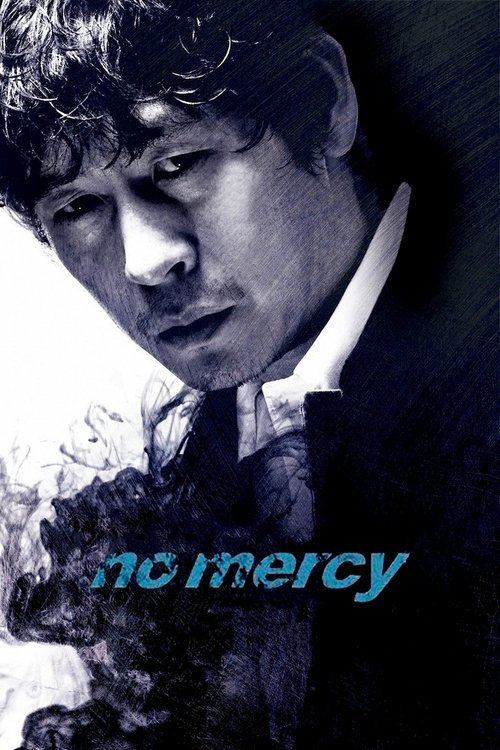
No Mercy
A clinical neo-noir shrouded in sterile frost, where grief curdles into vindictive fury, dissecting the human soul like a cold blade severing marrow from bone.
No Mercy

No Mercy

용서는 없다

"Rather be killed than forgive."

07 January 2010 South Korea 125 min 7.4 (214)

Director: Kim Hyoung-jun

Cast: Sul Kyung-gu, Ryoo Seung-bum, Han Hye-jin, Sung Ji-ru, Park Sang-wook

Crime Action Thriller Retribution and Asymmetrical Revenge Sins of the Past and Complicity The Fall of Professional Integrity and Hubris Paternal Love Distorted by Desperation

Overview

No Mercy is a taut 2010 South Korean procedural crime thriller marking the feature directorial debut of Kim Hyeong-jun. The narrative centers on Dr. Kang Min-ho, the preeminent forensic pathologist at South Korea's National Institute of Scientific Investigation, who prepares to retire to rebuild his estranged relationship with his daughter returning from thirteen years of studying abroad. Before he can conclude his career, local authorities discover the butchered, dismembered torso of a young woman missing a limb at the Geum River estuary.

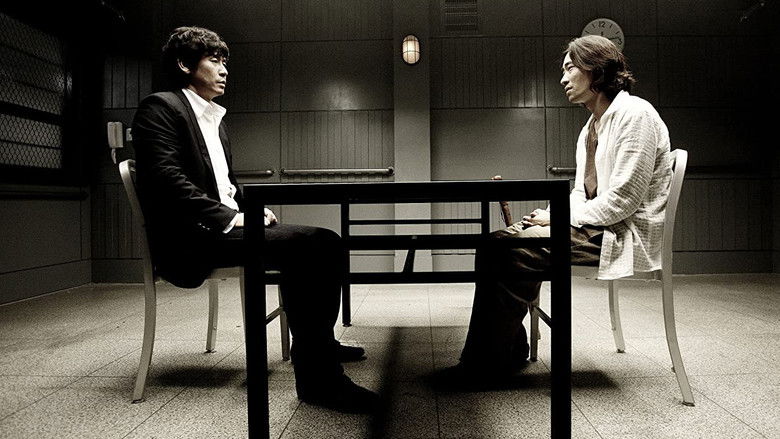
Dr. Kang agrees to conduct one final autopsy to assist his brilliant former student, rookie homicide detective Min Seo-young. Forensic clues quickly lead investigators to Lee Sung-ho, a quiet environmental activist protesting destructive land development. To the astonishment of the police, Sung-ho surrenders immediately and confesses to the murder, claiming it was an environmental statement against ecological carnage.

The procedural case takes a harrowing turn when Dr. Kang discovers that his daughter has been abducted by Sung-ho's associates. Communicating from police custody, Sung-ho presents a monstrous ultimatum: Kang must use his forensic authority to fabricate evidence, frame an innocent scapegoat, and secure Sung-ho's full acquittal within three days to see his daughter returned alive, ensnaring Kang in a desperate moral descent.
Core Meaning

At its core, No Mercy explores the catastrophic moral debt incurred when objective truth and forensic institutions are compromised for personal preservation. The film presents a bleak cautionary tale about the asymmetry of retribution, demonstrating that systemic corruption does not fade with time; rather, an unrectified injustice festers until it metastasizes into an all-consuming vindictiveness that obliterates both the guilty and the innocent.

By pitting an arrogant scientist against an aggrieved victim enacting an elaborate ritual of punitive agony, the narrative rejects the notion of catharsis through vengeance. The central thesis asserts that when legal systems fail to deliver justice, private retribution does not restore cosmic balance—it merely replicates barbarism until all participants are spiritually and physically annihilated.

Thematic DNA

Retribution and Asymmetrical Revenge 35%
Sins of the Past and Complicity 25%
The Fall of Professional Integrity and Hubris 20%
Paternal Love Distorted by Desperation 20%

Retribution and Asymmetrical Revenge

Vengeance is presented not as an impulsive eruption of fury, but as an engineered, slow-motion execution designed to inflict spiritual ruin. Lee Sung-ho refuses a swift execution of his enemies, choosing instead to systematically dismantle Dr. Kang's psychological core. The film reveals how unaddressed trauma can distort a victim into a ruthless architect of cruelty whose vengeance demands total obliteration rather than mere parity.

Sins of the Past and Complicity

The story demonstrates that past compromises inevitably resurface with destructive force. Dr. Kang regards his historic perjury as a distant, minor transgression prompted by human weakness, whereas for the victims, it served as a permanent decree of devastation. Moral complicity is shown to accrue inescapable compound interest that cannot be erased by subsequent professional prestige.

The Fall of Professional Integrity and Hubris

Initially championed through the maxim that 'the dead do not lie,' forensic science represents the pinnacle of objective truth. Dr. Kang's supreme intellectual arrogance collapses when he actively weaponizes forensic procedures to forge false narratives, contaminate evidence, and frame the innocent. Ultimately, his intellectual hubris is punished through the very scientific instruments he corrupted.

Paternal Love Distorted by Desperation

Both primary antagonists are spurred by deep-seated devotion to female relatives: Kang by desperate love for his daughter, and Sung-ho by sacred reverence for his deceased sister. The narrative reveals how fierce domestic loyalty can blind individuals to broader moral obligations, turning paternal affection into a devastating vulnerability that precipitates moral ruin.

Character Analysis

Dr. Kang Min-ho

Sul Kyung-gu

Archetype: Fallen Master / Tragic Hero Key Trait: Intellectual arrogance masking buried guilt.

Motivation

To rescue his abducted daughter at any professional, ethical, or human cost.

Character Arc

Shifts from an authoritative, emotionally detached medical examiner at the height of his career into a frantic, corrupt conspirator, culminating in absolute psychological despair and suicide.

Lee Sung-ho

Ryoo Seung-bum

Archetype: Vengeful Trickster / Nemesis Key Trait: Chilling, methodical composure and patience.

Motivation

To inflict maximum spiritual agony upon the medical examiner whose corrupt testimony destroyed his sister's life.

Character Arc

Maintains an exterior of calm, polite resignation while systematically navigating his pre-planned trap to completion, meeting death with serene triumph.

All 4 characters and cast

Symbols & Motifs

The Scalpel and Autopsy Tools

Meaning:

The scalpel represents clinical detachment, institutional authority, and objective reason, which ultimately morphs into an instrument of unwitting self-mutilation and poetic damnation.

Context:

Introduced in the opening autopsy scene where Dr. Kang dispassionately assesses biological specimens, and later mirrored when Kang unknowingly uses these exact instruments to dissect his own child's remains.

The Estuary and Tidal Mudflats (Geum River)

Meaning:

Symbolizes moral ambiguity, murky obscurity, and the suffocating burial of historical truth where boundaries between land and water dissolve.

Context:

Serves as the opening crime scene where the severed torso is discovered submerged in thick mud, mirroring the muddy ethical swamp Kang plunges into.

The Dismembered Body and the Missing Limb

Meaning:

Represents the fractured conscience of the protagonist, the shattered lives of the victims, and the deliberate withholding of critical identity.

Context:

The body severed into six portions acts as an anatomical puzzle that misleads investigators and conceals the unique mark on the hidden limb.

The Family Dog and Contaminated Blood

Meaning:

Signifies the sacrificial slaughter of domestic innocence and the active moral corruption required to manufacture legal falsehoods.

Context:

Dr. Kang drains blood from his own household pet to fabricate forensic traces on the murder weapon, visibly sealing his moral degeneration.

The Sealed Envelopes and Captive Photos

Meaning:

Operates as a motif of psychological panopticism and complete asymmetrical control over the protagonist's actions.

Context:

Delivered sequentially to Kang to prove his daughter is captive, allowing the incarcerated Sung-ho to dictate Kang's behavior from behind police bars.

Memorable Quotes

죽는 것보다 더 어려운 게 용서하는 겁니다.
— Lee Sung-ho

Context

Spoken to Dr. Kang during their climactic standoff when Kang demands to know why Sung-ho orchestrated such an excessively cruel trap.

Meaning

Articulates the philosophical tragedy underpinning the narrative: that physical death is swift and facile, while genuine forgiveness in the wake of catastrophic trauma is an unbearable impossibility.

시체는 거짓말을 하지 않는다.
— Dr. Kang Min-ho

Context

Delivered early in the film as Kang lectures students and detectives during an autopsy demonstration.

Meaning

Establishes Kang's foundational dogma and professional hubris, which is later ironically inverted when corpses are manipulated to weave elaborate deceptions.

All 3 quotes

Philosophical Questions

Does the failure of judicial retribution justify vigilante violence?

The narrative interrogates whether private citizens possess ethical justification to pursue retribution when formal legal institutions become thoroughly subverted by corruption and bribery.

Can an injustice against an innocent child ever balance the ledger of a past crime?

Explores the morality of generational retribution, testing whether an eye-for-an-eye ethos retains validity when its realization requires the destruction of innocent secondary victims.

Is living with unbearable truth a harsher punishment than death?

Reflects on whether acute psychological guilt and unending memory represent a more severe form of punitive justice than physical termination.

Alternative Interpretations

The Karmic Inevitability Reading: Views Lee Sung-ho not merely as a mortal killer, but as the personification of inexorable karmic debt. Under this lens, Kang's perjury thirteen years prior broke cosmic order, making his ultimate punishment an unavoidable reckoning for past moral corruption.

Full ending explanation

Cultural Impact

Released in January 2010, No Mercy arrived during the peak of South Korea's renowned extreme vengeance cinematic wave. Following globally acclaimed works such as Oldboy, Sympathy for Lady Vengeance, and The Chaser, the film pushed physical and moral limits within the procedural genre.

While contemporary domestic reviews compared its mechanics to established thrillers like Seven and Seven Days, the film achieved robust box-office success exceeding one million admissions. It has since developed a enduring global cult reputation for featuring one of the most uncompromising, emotionally devastating climaxes in Korean thriller history.

Audience Reception

Audience and critical consensus widely celebrated the electrifying performances of Sul Kyung-gu and Ryoo Seung-bum, whose tense cat-and-mouse dynamic anchored the film's runtime. Reviewers particularly noted the unflinching, authentic portrayal of forensic science and autopsy protocols alongside the sheer shock value of the narrative's climax.

Conversely, critical detractors argued that the middle investigative act suffered from uneven pacing and dialogue that occasionally leaned too heavily into exposition. Others pointed out narrative derivations borrowed from classic thrillers like Seven and Oldboy, while acknowledging that its bleak emotional tone left viewers with an intense, suffocating sense of despair.

Interesting Facts

  • Sul Kyung-gu won the Best Actor award at the 18th Chunsa Film Art Awards in 2010 for his performance.
  • Principal photography commenced on June 17, 2009, and concluded on September 18, 2009.
  • The final scene captured during shooting was the chronologically early arrival scene at Cheongju International Airport.
  • The production was produced by veteran filmmaker Kang Woo-suk, founder of Cinema Service.
  • The production team collaborated directly with certified medical examiners to accurately replicate National Institute of Scientific Investigation autopsy procedures and prosthetics.
  • The film recorded 1,125,141 admissions across 323 screens during its South Korean theatrical run.
  • Director Kim Hyeong-jun co-developed the screenplay with narrative contributions from screenwriter Lee Jung-ho.

Easter Eggs

Structural Homage to David Fincher's Seven (1995)

The plot mirrors Seven through a villain who turns himself in early to manipulate law enforcement from inside custody, culminating in a climactic challenge where shooting the killer fulfills the villain's master plan.

Thematic Resonance with Park Chan-wook's Oldboy (2003)

Echoes the tragic conceit of Oldboy by deceiving a father into perpetrating an irreversible, taboo horror against his own daughter as retribution for past transgressions.

Tragic Irony in Morgue Dialogue

Early dialogue where Kang objectively notes the fine skin of the corpse reads as detachment on first watch, but retrospectively reveals a father unwittingly admiring his own child's remains.

Saemangeum Seawall Reclamation Commentary

Sung-ho's fabricated eco-activist motive references actual South Korean public controversies regarding large-scale coastal reclamation projects that disrupted wetland ecosystems.

Frequently Asked Questions

Explore More About This Movie

Dive deeper into specific aspects of the movie with our detailed analysis pages

Comments (0)

Leave a comment

No comments yet. Be the first to share your thoughts!

Similar Movies