Skip to content
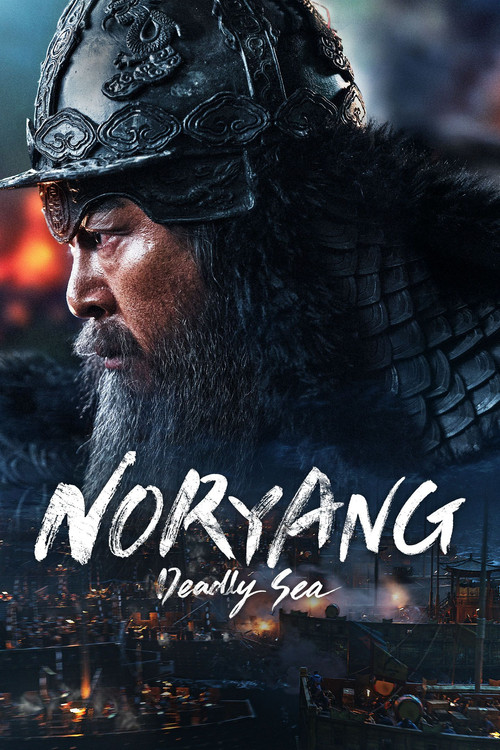
Noryang: Deadly Sea
A solemn naval epic of fire and black water, where a weary admiral steers toward his final dawn and the sea itself becomes both battlefield and grave, burning with vengeance, grief and quiet resolve.
Noryang: Deadly Sea

Noryang: Deadly Sea

노량: 죽음의 바다

"The long-awaited final clash."

20 December 2023 South Korea 153 min 6.4 (166)

Director: Kim Han-min

Cast: Kim Yun-seok, Baek Yoon-sik, Jung Jae-young, Huh Joon-ho, Kim Sung-kyu

Drama War History Action Sacrifice and duty Vengeance versus justice War, politics and geopolitics Mortality and the making of myth Leadership and collective spirit
Budget: $40,000,000
Box Office: $34,210,966

Overview

Noryang: Deadly Sea (2023) is the third and final chapter of Kim Han-min's Yi Sun-sin trilogy, following The Admiral: Roaring Currents and Hansan: Rising Dragon. Kim Yoon-seok plays the Korean admiral Yi Sun-sin. The film dramatizes the Battle of Noryang, the last major battle of the Japanese invasions of Korea (1592–1598).

The year is 1598, the seventh of the war. Toyotomi Hideyoshi has died and ordered his forces to withdraw. Joseon's Ming allies are also at the front, and Japanese commanders such as Konishi Yukinaga seek a quiet exit. Yi believes the invaders must not be allowed to leave unpunished, because a clean retreat would invite another invasion. The film becomes a contest between pragmatic diplomacy and his determination to end the war decisively.

Told as a large-scale ensemble war drama, the film balances political maneuvering among Joseon, Ming and Japanese camps with a long, immersive naval battle at night. It is less a celebration of triumph than a requiem for a man marching toward his own death.
Core Meaning

Kim Han-min closes his trilogy by stripping the legend down to a human being. Kim Yoon-seok has said he saw Yi's death as that of a lonely man in his fifties who spent his life as a soldier, not as a grand hero, and that it should be portrayed truthfully. The film argues that Yi's greatness lay in his clarity of purpose: finishing the war "the right way" so the nation would not be invaded again. It is also a quiet meditation on sacrifice, grief (his son's death fuels his resolve) and the cost of duty. His final order, to hide his death so the fight goes on, shows leadership as something that outlives the individual.

Thematic DNA

Sacrifice and duty 30%
Vengeance versus justice 25%
War, politics and geopolitics 20%
Mortality and the making of myth 15%
Leadership and collective spirit 10%

Sacrifice and duty

Yi presses the attack knowing the cost. His final act is to order his death concealed so the battle can be won.

Vengeance versus justice

Yi's mission to annihilate the enemy is both a duty to the nation and personal revenge for his son and countless others. The film leaves the line between the two thin.

War, politics and geopolitics

Joseon, Ming and Japanese camps each bargain for their own ends, and the film stops for historical explanation of East Asia's power dynamics. Hideyoshi's death and Yi's death bookend the story.

Mortality and the making of myth

The film frames Yi's death as lonely and unglamorous, yet it is the seed of his legend.

Leadership and collective spirit

The drums kept beating by his son and the crew's persistence show that a fleet's morale outlives its commander.

Character Analysis

Yi Sun-sin

Kim Yoon-seok

Archetype: Tragic hero Key Trait: Calm, unyielding resolve

Motivation

To annihilate the retreating enemy so Korea is never invaded again, and to avenge his son and the war's countless dead.

Character Arc

Worn by seven years of war and by personal loss, Yi drives toward a decisive final battle. He is wounded and dies in it, and his death is concealed so the victory can be completed.

Shimazu Yoshihiro

Huh Joon-ho

Archetype: Formidable antagonist Key Trait: Ferocious pride

Motivation

To escape alive and bring the army home.

Character Arc

A Japanese commander who must fight his way home with the retreating forces, he becomes Yi's last great opponent at Noryang.

All 4 characters and cast

Symbols & Motifs

War drums

Meaning:

Collective morale and continuity of leadership beyond death.

Context:

After Yi is shot, his son keeps beating the drums so the fleet keeps fighting.

The night sea

Meaning:

Death, uncertainty and the final reckoning; the title itself calls it the sea of death.

Context:

The climactic battle takes place in the Noryang strait, which is both battlefield and Yi's grave.

Fire

Meaning:

Destruction, vengeance and sacrifice.

Context:

Burning ships light the battle and dominate the film's imagery.

The admiral's calm, low voice

Meaning:

Stoic restraint as a form of command and of grief.

Context:

Yi delivers his last words, "do not announce my death", matter-of-factly, in his characteristic low voice.

Memorable Quotes

싸움이 급하다. 내 죽음을 알리지 마라.
— Yi Sun-sin

Context

Struck by a bullet at the height of the battle, Yi is carried to his cabin and gives the order. Kim Yoon-seok delivers it calmly, in a low voice.

Meaning

The most famous line in Korean history, with the admiral's last thought for the battle rather than himself.

Philosophical Questions

Where does justice end and revenge begin?

Yi's determination to destroy the enemy is both strategic prudence and grief for his son. The film leaves open whether total victory was necessary or personal.

Can a leader's death serve the cause?

Yi's order to hide his death suggests a leader's final duty may be to keep others fighting.

What is a heroic death?

The film portrays a death that is chaotic and lonely, not grand, and questions how myth is built from it.

How It Ends

Alternative Interpretations

One reading sees the film as a patriotic epic about national defence. Another, closer to the actor's own view, sees it as an anti-heroic portrait of a lonely, aging soldier, in which Yi's drive for annihilation is partly personal vengeance rather than pure strategy. The geopolitical scenes can also be read as a warning about alliances whose interests diverge from one's own.

Full ending explanation

Cultural Impact

The film caps a decade-long project by Kim Han-min. The Admiral: Roaring Currents became the most-watched and highest-grossing film in South Korean history, which made the sequels possible. Yi's last words are among the most enduring lines in Korean culture. Noryang depicts the end of the Imjin War, so the film joins a long tradition of Korean retellings of Yi as a national symbol. The Korea Times called it a requiem for a legendary admiral who becomes myth. It also notes that the film includes necessary historical explanations of East Asia's power dynamics.

Interesting Facts

  • The film is the third and final installment of the Yi Sun-sin trilogy, after The Admiral: Roaring Currents (2014) and Hansan: Rising Dragon (2022).
  • While producing The Admiral: Roaring Currents in 2013, Big Stone Pictures revealed plans for two sequels, contingent on that film's success.
  • Principal photography began on January 14, 2021, and wrapped on June 15, 2021.
  • The film was released theatrically in South Korea on December 20, 2023.
  • Yi Sun-sin was played by Choi Min-sik, Park Hae-il and Kim Yoon-seok in the three films respectively.
  • Kim Yoon-seok has said the director wanted the admiral's death to be portrayed truthfully rather than grandly.

Frequently Asked Questions

Explore More About This Movie

Dive deeper into specific aspects of the movie with our detailed analysis pages

Comments (0)

Leave a comment

No comments yet. Be the first to share your thoughts!

Similar Movies