Skip to content
Oh. What. Fun.
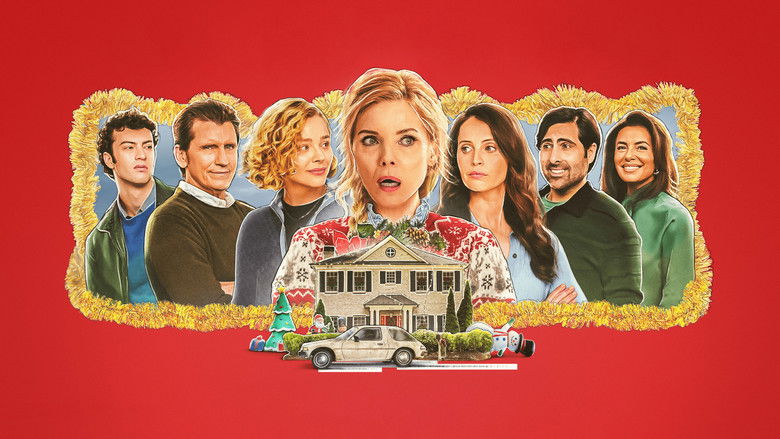
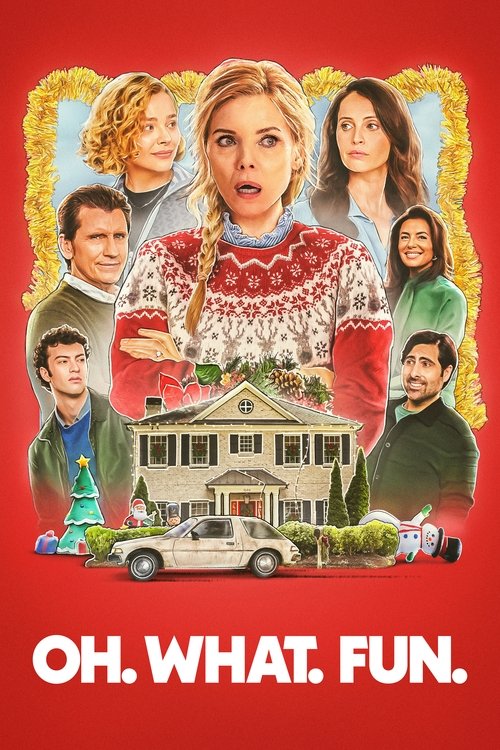
Beneath glittering tinsel and gingerbread veneer lies a sharp surge of maternal exhaustion: a domestic marathon runner abruptly abandoning the track to let the decorated Christmas snow globe shatter in mid-air.
Oh. What. Fun.

Oh. What. Fun.

"Come for the presents. Stay for the baggage."

03 December 2025 United States of America 108 min 5.6 (260)

Director: Michael Showalter

Cast: Michelle Pfeiffer, Denis Leary, Felicity Jones, Chloë Grace Moretz, Dominic Sessa

Comedy Invisible Maternal Labor & Domestic Burnout Generational Identity and Female Expectation The Performance of Holiday Cheer vs. Authentic Connection Family Egocentrism and the Blindness of Familiarity

Overview

Oh. What. Fun. (2025), directed by Michael Showalter, centers on Claire Clauster (Michelle Pfeiffer), the tireless matriarch of a Texas household whose entire calendar year is consumed by choreographing an immaculate family Christmas. Every recipe, ornament, and tradition is calculated to perfection. Claire’s sole holiday wish is modest yet deeply validating: for her family to nominate her for the annual "Holiday Mom Contest" hosted on national television by daytime personality Zazzy Tims (Eva Longoria).

The festive harmony unravels as Claire’s adult children descend on the Clauster homestead with their own crises. Eldest daughter Channing (Felicity Jones), an author wrestling with creative block and domestic pressure, arrives with her supportive but quirky husband Doug (Jason Schwartzman) and their twins; middle child Taylor (Chloë Grace Moretz), a commitment-phobic hairdresser, brings her newest partner, Donna, aka "DJ Sweatpants" (Devery Jacobs); and youngest son Sammy (Dominic Sessa) mopes over being abruptly dumped by his partner. Meanwhile, Claire’s husband Nick (Denis Leary) remains absorbed in his own distractions, leaving Claire solely burdened by domestic hospitality and an unspoken war of suburban aesthetics against their hyper-polished neighbor, Jeanne Wang-Wasserman (Joan Chen).

When a frantic outing leads her distracted family to accidentally leave Claire behind, the neglected matriarch snaps. Instead of quietly cleaning up the festive mess, Claire closes up shop and embarks on an impulsive cross-country road trip of self-liberation, leaving her bewildered family to navigate the holidays without their secret engine.

Core Meaning

The primary thesis of Oh. What. Fun. is an indictment of the invisible, unpaid, and unappreciated emotional and domestic labor shouldered by mothers during the holiday season. Showalter and co-writer Chandler Baker critique the classic holiday film canon—which traditionally casts mothers as dutiful background scenery while fathers or children experience transformative seasonal arcs. The film asserts that family traditions do not materialize by magic; they are built on relentless, unnoticed sacrifice. By stepping away, Claire forces her family to realize that true gratitude cannot be substituted by passive consumption of someone else's labor.

Thematic DNA

Invisible Maternal Labor & Domestic Burnout 35%
Generational Identity and Female Expectation 25%
The Performance of Holiday Cheer vs. Authentic Connection 20%
Family Egocentrism and the Blindness of Familiarity 20%

Invisible Maternal Labor & Domestic Burnout

The central thematic engine. Claire’s domestic servitude is taken for granted until she walks out, demonstrating that the "magic of Christmas" is simply hard work masquerading as spontaneous cheer.

Generational Identity and Female Expectation

Revealed through the friction between Claire and Channing. As an accomplished writer and mother of twins, Channing struggles with living in the shadow of Claire's domestic standards while wanting to cultivate her own holiday boundaries.

The Performance of Holiday Cheer vs. Authentic Connection

Illustrated through the aesthetic feud with Jeanne Wang-Wasserman. Claire's obsession with perfection shows how suburban holiday celebrations often become external competitive performances rather than genuine intimate gatherings.

Family Egocentrism and the Blindness of Familiarity

Each family member is so consumed by personal drama (career ruts, romantic instability, slacker complacency) that they treat their home and mother as an unconditional hotel service rather than a person with needs of her own.

Character Analysis

Claire Clauster

Michelle Pfeiffer

Archetype: The Burned-Out Matriarch / Reluctant Rebel Key Trait: Relentlessly organized yet emotionally starved

Motivation

To feel seen and valued by the family she spends every day serving.

Character Arc

Begins as a hyper-vigilant domestic planner desperately begging for crumbs of familial appreciation; evolves into a fiercely autonomous woman who demands to be seen on her own terms.

Nick Clauster

Denis Leary

Archetype: The Oblivious Patriarch Key Trait: Well-meaning, dryly sarcastic, and domestically incompetent

Motivation

Keeping the peace and maintaining personal comfort with minimal effort.

Character Arc

Moves from taking Claire’s hospitality completely for granted to realizing his utter uselessness around the home once she vanishes, stepping up to lead the family search.

All 5 characters and cast

Symbols & Motifs

The VHS Tape Collection / Holiday Movie Montage

Meaning:

Symbolizes how cinematic tradition has historically framed fathers and sons as holiday protagonists while mothers remain domestic background figures.

Context:

Used in the prologue as Claire points to a shelf of holiday VHS tapes (Planes, Trains, and Automobiles, Home Alone, A Christmas Story).

The Zazzy Tims "Holiday Mom Contest" Application

Meaning:

Represents Claire's longing for external recognition. Because contest rules stipulate that only family members can submit a nomination, the unsubmitted form reflects the emotional wall of indifference erected by her self-absorbed family.

Context:

Appears throughout the narrative as Claire repeatedly reminds her family to submit her name for the televised daytime contest.

The Over-Decorated Clauster House vs. The Wang-Wasserman Residence

Meaning:

Symbolizes Claire's internal struggle between festive authenticity and the exhausting standards of social validation.

Context:

Claire’s warm, maximalist Texas decor stands in stark contrast to Jeanne’s minimalist, white-lit, curated aesthetic across the street.

The Delivery Truck (Morgan’s Van)

Meaning:

Serves as a mobile sanctuary—a symbol of unencumbered transit, female camaraderie, and stepping off the suburban hamster wheel.

Context:

The vehicle Claire hitchhikes in alongside parcel delivery driver Morgan during her cross-country escape.

Nick’s Santa Suit

Meaning:

Embodies how patriarchs often claim the flashy, ceremonial "credit" for festive joy while escaping the preparation, cooking, and emotional scaffolding required underneath.

Context:

Worn by Claire's husband Nick as he dresses up as Santa Claus during holiday festivities.

Memorable Quotes

Every Christmas movie is about men.
— Claire Clauster

Context

Delivered in narration during the prologue as Claire combs through holiday cinema staples.

Meaning

Directly articulates the film's meta-critique of the holiday movie genre.

I didn't run away. I simply stopped running around for you.
— Claire Clauster

Context

Said when her panicked family finally reaches her by phone during her road trip.

Meaning

Draws a definitive boundary between abandonment and self-preservation.

All 3 quotes

Philosophical Questions

Does unconditional love obligate one to unconditional domestic servitude?

The film questions where devotion ends and exploitation begins within close-knit family units, examining how maternal affection can be weaponized into endless labor.

Can familial gratitude exist without disruption?

The narrative implies human beings naturally take ongoing comfort for granted until the underlying system abruptly collapses and forces accountability.

Is holiday tradition an expression of affection or an instrument of social control?

Claire’s manic adherence to rituals highlights how traditions often morph into rigid expectations that suffocate genuine spontaneous joy in pursuit of external validation.

How It Ends

Alternative Interpretations

The Cathartic Feminist Satire: Viewed this way, Claire’s desertion is a righteous, necessary domestic rebellion against traditional patriarchal family dynamics. Her televised meltdown is celebrated as an empowering rejection of the "saintly mother" archetype.

Full ending explanation

Cultural Impact

Oh. What. Fun. emerged amidst a widespread cultural discourse surrounding the "mental load" and the gendered imbalance of emotional labor, topics frequently amplified in contemporary parenting culture. Historically released directly to streaming on Prime Video in early December 2025, it represented Amazon MGM Studios' attempt to counter Netflix's flood of low-cost holiday romances with an A-list ensemble dramedy helmed by an established director.

Despite high expectations, the film had a polarising cultural footprint. While praised by family commentators for recognizing the domestic grind of mothers, critics largely noted that the corporate streaming machine blunted its satirical teeth, resulting in modest pop-cultural staying power outside streaming recommendation carousels.

Audience Reception

The film garnered predominantly mixed-to-negative reviews from major publications, sitting around a 35% Rotten Tomatoes critical approval rating and approximately 5.2/10 on IMDb.

Michelle Pfeiffer received universal acclaim for her charismatic, grounded, and emotionally resonant performance. Critics also highlighted the chemistry between supporting players like Jason Schwartzman and Danielle Brooks, as well as the refreshing core concept of spotlighting maternal burnout.

However, reviewers criticized Showalter’s sluggish comedic pacing, uneven tonality, and clichéd subplots. Many critics lamented that the script diluted a clever premise with predictable slapstick, synthetic streaming sheen, and an overstuffed, underutilized cast.

Interesting Facts

  • The film is adapted from Chandler Baker’s short story "Oh. What. Fun.", originally published as an Amazon Original Story in 2021. Baker co-wrote the screenplay alongside director Michael Showalter.
  • Principal photography took place throughout metropolitan Atlanta, Georgia, from early May 2024 through early July 2024.
  • The project marked a conscious return to broad comedy for three-time Academy Award nominee Michelle Pfeiffer, following her tenure in the MCU and serious biographical television.
  • Grammy Award winner Gwen Stefani wrote and recorded the high-energy original Christmas track "Shake the Snow Globe" tailored specifically for the film's climactic and credits sequences.
  • Siddhartha Khosla composed the orchestral score, with additional soundtrack selections from indie royalty including Fleet Foxes and Sharon Van Etten.
  • This was one of the first major studio comedy follow-ups booked by breakout star Dominic Sessa following his critically acclaimed film debut in Alexander Payne's The Holdovers (2023).

Easter Eggs

Andy Cohen Cameo

Television host Andy Cohen appears as himself on a talk show broadcast, reacting to and dissecting Claire’s unscripted viral meltdown on The Zazzy Tims Show.

The Bird and the Bee Cameo

The indie pop duo (Inara George and Greg Kurstin) make an in-universe musical guest appearance performing live on Zazzy Tims' stage.

The Clauster / Nick Name Pun

The family surname is "Clauster" and the patriarch's name is "Nick"—a deliberate, playful homage to "Santa Claus" (Saint Nick), despite Nick doing virtually none of the heavy seasonal lifting.

Nods to Holiday Classics

The opening features explicit visual and dialogue references to Home Alone, Christmas Vacation, and Planes, Trains, and Automobiles, establishing the film as an inverted, feminist response to John Hughes' holiday tropes.

Frequently Asked Questions

Explore More About This Movie

Dive deeper into specific aspects of the movie with our detailed analysis pages

Comments (0)

Leave a comment

No comments yet. Be the first to share your thoughts!

Similar Movies