Skip to content
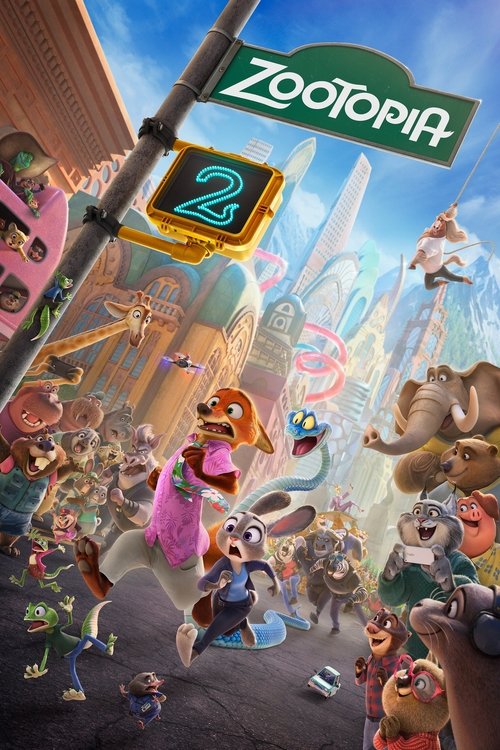
Zootopia 2
A vibrant neon-hued animated noir blending frantic buddy-cop humor with poignant emotional resonance, where cracked shadows across glowing weather walls reveal that true solidarity blooms only when hidden truths are unmasked.
Zootopia 2

Zootopia 2

"They're back with a twissst."

26 November 2025 United States of America 108 min 7.7 (3,149)

Director: Jared Bush, Byron Howard

Cast: Ginnifer Goodwin, Jason Bateman, Ke Huy Quan, Fortune Feimster, Andy Samberg

Animation Family Comedy Mystery Adventure Systemic Inequality, Historical Revisionism, and Urban Segregation Evolving Partnership, Vulnerability, and Communication Fear-Mongering and Xenophobia Corporate Wealth and Aristocratic Power Dynamics Truth and Restorative Justice
Budget: $150,000,000
Box Office: $1,868,208,796

Overview

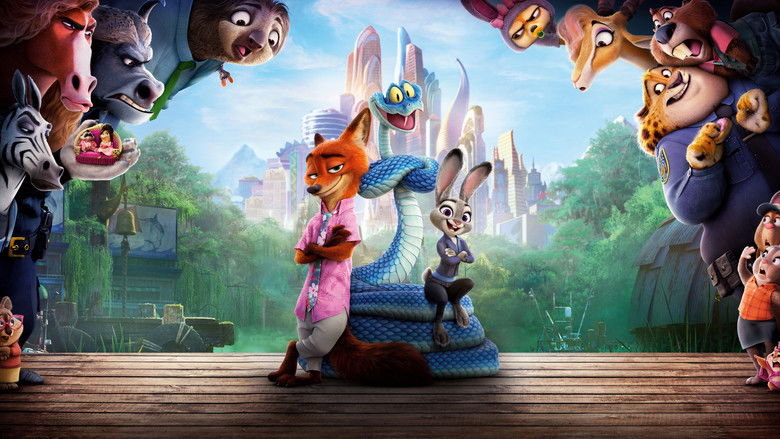
Following their successful exposure of Dawn Bellwether’s conspiracy in the first film, Officers Judy Hopps and Nick Wilde have established themselves as the celebrated flagship duo of the Zootopia Police Department. However, their contrasting investigative philosophies cause chaotic collateral damage during a dockyard bust targeting contraband smugglers. Exasperated by the destruction, Chief Bogo orders the pair into mandatory partnership counseling led by quokka therapist Dr. Fuzzby, threatening to permanently reassign them if they cannot get on the "same page".

Their professional routine is shattered when Judy discovers a shed snake scale at the crime scene—a shocking anomaly given that reptiles have been strictly exiled from Zootopia for over a century following the alleged murder of city founder Ebenezer Lynxley. The trail leads Judy and Nick to the grand Zootennial Gala, hosted by the aristocratic Lynxley family to celebrate the hundredth anniversary of the city's weather walls. When a blue pit viper named Gary De'Snake crashes the event and steals the historic Lynxley Journal containing original biome blueprints, panic engulfs the metropolis.

Determined to crack the case, Judy and Nick defy police orders and go rogue. Pursued by their own department under the relentless command of Captain Hoggbottom, the duo descends into Zootopia's hidden underbelly alongside conspiracy-obsessed beaver podcaster Nibbles Maplestick. Navigating the subterranean reptile sanctuary of Marsh Market, Judy and Nick must uncover a century-old historical cover-up while testing whether their friendship can survive under systemic pressure.
Core Meaning

Directed by Jared Bush and Byron Howard, Zootopia 2 elevates the franchise’s social commentary from interpersonal bias to structural inequality, historical revisionism, and urban gentrification. The core message argues that artificial harmony built on suppressed history and spatial segregation is fundamentally fragile and unjust.

The film emphasizes that authentic community requires active reconciliation rather than superficial tolerance. On an interpersonal level, it explores how true partnership does not mean total conformity or hiding flaws; rather, it thrives when two distinct individuals embrace their differences to hold each other accountable and fight for systemic truth.

Thematic DNA

Systemic Inequality, Historical Revisionism, and Urban Segregation 30%
Evolving Partnership, Vulnerability, and Communication 25%
Fear-Mongering and Xenophobia 20%
Corporate Wealth and Aristocratic Power Dynamics 15%
Truth and Restorative Justice 10%

Systemic Inequality, Historical Revisionism, and Urban Segregation

Zootopia 2 examines how institutions rewrite history to justify marginalization. The narrative reveals that Zootopia's gleaming biomes were constructed by literally burying the original reptile district (Marsh Market) and framing cold-blooded species for murder. This theme drives the plot as Judy uncovers how high-society elites maintain dominance by keeping marginalized populations invisible beneath modern infrastructure.

Evolving Partnership, Vulnerability, and Communication

Building on their friendship from the original, Judy and Nick navigate the friction of working together under institutional scrutiny. Through therapy and life-or-death fugitive escapes, they discover that "being on the same page" isn't about blind agreement, but trusting one another enough to show vulnerability and challenge each other's blind spots.

Fear-Mongering and Xenophobia

The arrival of Gary De'Snake triggers instant, hysteria-driven prejudice across Zootopia, showing how easily fear can be weaponized against unfamiliar demographic groups. The film highlights how deeply ingrained stereotypes cause even well-meaning citizens and police officers to treat entire populations as inherent threats.

Corporate Wealth and Aristocratic Power Dynamics

Through the Lynxley dynasty, the film depicts how unchecked private wealth can manipulate local government and law enforcement. The Lynxleys use their foundational prestige and financial influence over the mayoral office to execute predatory real estate expansions at the expense of displaced communities.

Truth and Restorative Justice

The movie highlights that moving forward as a society requires exposing uncomfortable historical crimes. Justice is presented not merely as locking up criminals, but as restoring stolen legacies and welcoming excluded voices back into public spaces.

Character Analysis

Judy Hopps

Ginnifer Goodwin

Archetype: Idealistic Hero / Driven Investigator Key Trait: Relentless determination and unyielding empathy

Motivation

To prove her partnership with Nick is genuine and restore true justice to Zootopia.

Character Arc

Transitions from relying on institutional validation and rigid police codes to recognizing systemic flaws within the law, choosing moral justice over official approval.

Nick Wilde

Jason Bateman

Archetype: Cynical Trickster turned Loyal Officer Key Trait: Sharp observational wit and streetwise resourcefulness

Motivation

To protect Judy and maintain their partnership while navigating his lingering cynicism about society.

Character Arc

Moves past his self-defensive emotional detachment and fear of vulnerability, risking his reputation and safety to back Judy completely.

All 5 characters and cast

Symbols & Motifs

The Weather Walls

Meaning:

Symbolize artificial segregation and the glossy tech illusion masking historical displacement.

Context:

They physically enable co-existence for land mammals while metaphorically walling off the truth of who built the city.

The Shedded Snake Skin

Meaning:

Symbolizes hidden truths waiting to be unraveled and the process of shedding old societal prejudices to reveal a new reality.

Context:

Discovered by Judy at the crime scene, starting the trail to unearthing the exiled reptile population and historical cover-up.

The Carrot Voice-Recording Pen

Meaning:

Serves as a motif of trust, accountability, and emotional bonding between Judy and Nick.

Context:

Nick's repair of the pen in the finale represents his acceptance of open emotional connection.

The Lynxley Journal

Meaning:

Symbolizes stolen historical memory and corporate IP theft.

Context:

It holds the physical evidence that rewrites Zootopia’s foundational myth and is stolen by Gary De'Snake at the gala.

Marsh Market

Meaning:

A subterranean district symbolizing marginalized communities living beneath the polished, glossed-over surface of modern urbanization.

Context:

Used as the hidden sanctuary where exiled reptiles live beneath Tundratown's modern infrastructure.

Memorable Quotes

Officer Hopps, despite my best efforts to avoid it, I like you.
— Chief Bogo

Context

Spoken during a private reprimand in Bogo's office.

Meaning

Shows Bogo's growth from viewing Judy as a token rabbit in the first film to genuinely caring for her safety and career.

Jokes are classic defense mechanism for someone with a traumatic childhood.
— Nick Wilde

Context

Nick's deadpan response to Bogo questioning his levity during police briefings.

Meaning

Encapsulates Nick’s character arc regarding masking vulnerability with humor.

All 6 quotes

Philosophical Questions

Can true social harmony exist if built upon historical erasure and displacement?

The film shows that Zootopia’s grand biomes were achieved by burying Marsh Market. It argues that glossing over past atrocities creates a fragile peace that inevitably cracks when truth emerges.

Is institutional law enforcement bound to preserve power rather than justice?

When the Lynxley family demands the arrest of Judy, Nick, and Gary, the police department under Captain Hoggbottom follows orders without questioning the elite narrative.

Does true partnership require total conformity or navigating conflict?

Dr. Fuzzby’s therapy sessions challenge the notion that "being on the same page" means agreeing on everything. The film demonstrates that strength comes from complementary differences and mutual honesty.

Are individuals obligated to break cycles of ancestral privilege and corruption?

Contested through Pawbert Lynxley, who chooses to uphold his family's oppressive legacy to gain personal prestige rather than break the cycle.

Alternative Interpretations

1. The Institutional & Political Reading: This interpretation views Zootopia 2 as an explicit critique of corporate feudalism and structural corruption. The Lynxley family represents old-money oligarchs who leverage municipal government (Mayor Brian Winddancer) and police forces to protect private land interests and erase historical atrocities.

Full ending explanation

Cultural Impact

Historical & Political Context: Released in late 2025, Zootopia 2 resonated strongly with contemporary discussions surrounding urban planning, gentrification, historical revisionism, and systemic institutional bias. Critics noted that while the 2016 original focused on individual prejudice and microaggressions, the sequel shifted to how historical power structures codify discrimination into city geography.

Critical and Audience Reception: Zootopia 2 was a massive commercial and critical success. It achieved a 91% rating on Rotten Tomatoes and grossed over $1.87 billion globally. Critics lauded the film’s willingness to tackle heavier social themes without sacrificing humor, as well as the vocal chemistry between Ginnifer Goodwin, Jason Bateman, and Ke Huy Quan.

Impact on Pop Culture: The film reignited passionate fan discussions around Judy and Nick’s relationship dynamics ("WildeHopps"), sparked viral meme trends around Fortune Feimster’s conspiracy beaver character Nibbles, and led to new character appearances across Disney theme parks worldwide.

Audience Reception

Praised Aspects: Audiences and critics overwhelmingly praised the expanded world-building (Marsh Market, water-transport systems), fluid animation dynamics, sharp film homages (The Shining, Chinatown), and Ke Huy Quan’s endearing performance as Gary.

Main Points of Criticism: A subset of viewers noted that the mystery narrative mirrored the narrative beats of the original film (a warm ally turning out to be the hidden villain). Some critics felt the urban gentrification commentary was wrapped up slightly too neatly for a complex social topic.

Controversial Moments: Pawbert Lynxley’s sudden dark turn split viewers who had rooted for his redemption, though critics commended Andy Samberg’s vocal shift from meek runt to villainous heir.

Overall Verdict: A highly acclaimed, hilarious, and emotionally resonant sequel that successfully matures its themes while delivering top-tier animated entertainment.

Interesting Facts

  • Zootopia 2 was released on November 26, 2025—exactly 9 years, 8 months, and 23 days after the 2016 original.
  • Jared Bush directed and wrote the screenplay while simultaneously serving as the Chief Creative Officer of Walt Disney Animation Studios, having been appointed to the role in September 2024.
  • Ke Huy Quan voiced Gary in 2025 (the Chinese Year of the Snake). He publicly joked about the irony that after starring in Indiana Jones and the Temple of Doom—where Indiana Jones famously hates snakes—and voicing Ouroboros in Loki, he was now playing a snake himself.
  • Ed Sheeran co-wrote the film’s central song, "Zoo," performed by Shakira (returning as Gazelle), alongside producer Blake Slatkin.
  • Animators built custom subsurface lighting algorithms to accurately render wet snake scales, basilisk running mechanics over water, and light refraction through translucent water tubes in Marsh Market.
  • WWE wrestler/actor Dwayne "The Rock" Johnson provided a secret cameo voice for "Zeke," a dik-dik who gets stuck inside a tuba during a chaotic parade.

Easter Eggs

Ratatouille Homage

During a high-speed chase through the Lynxley Manor kitchen, Judy and Gary knock off a lion chef’s hat, revealing a rat directly pulling the lion’s mane to control his cooking movements.

The Shining Snowcat Sequence

When Judy and Nick escape across Tundratown in a snowcat vehicle, the framing and camera angles directly mimic Stanley Kubrick’s The Shining winter escape.

The Silence of the Lambs Prison Visit

Former Assistant Mayor Dawn Bellwether (Jenny Slate) makes a cameo in a maximum-security prison cell made entirely of thick bulletproof glass, mirroring Hannibal Lecter's cell design.

Tangled Frying Pan Weapon

Nick uses a heavy iron skillet to knock out Gary De'Snake on the rooftop, referencing Rapunzel’s signature weapon.

A Bug's Life Cubicle Poster

Inside the ZPD Information Technology cubicles, a poster features a leaf reading "Crush the Bugs" in the exact font of Pixar's 1998 film A Bug's Life.

Babe Dialogue Homage

Boar officer Captain Hoggbottom tells her partner Truffler, "That'll do, pig. That'll do," quoting Farmer Hoggett's line from Babe (1995).

Punny Tech and Media Brands

Background screens display parody apps and media brands like "Zoogle" / "Valley Pigeon" (Google), "EweTube" (YouTube), "HuluZoo" (Hulu), and posters for the streaming show "Only Herders in the Building" (Only Murders in the Building).

Frequently Asked Questions

Explore More About This Movie

Dive deeper into specific aspects of the movie with our detailed analysis pages

Comments (0)

Leave a comment

No comments yet. Be the first to share your thoughts!

Similar Movies