Skip to content
One Battle After Another
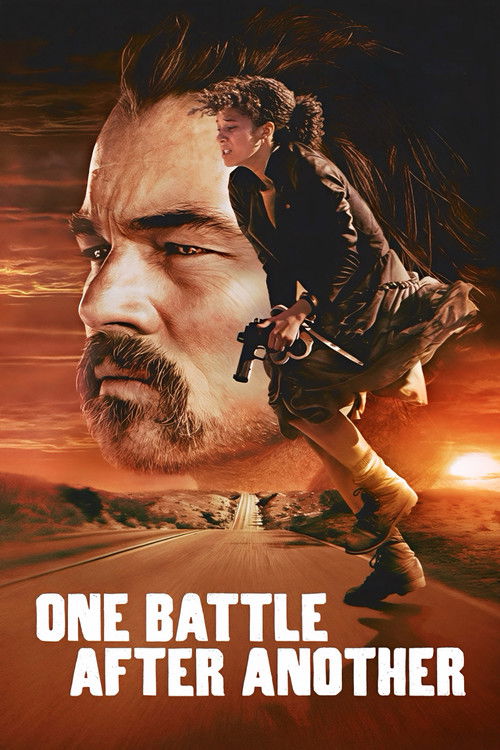
Set in a sun-bleached, paranoid California, this kinetic action-comedy-thriller blends absurd dark humor with raw existential anxiety, framing a father’s desperate crusade as a winding highway race against the relentless ghosts of political rebellion.
One Battle After Another

One Battle After Another

"Some search for battle, others are born into it..."

23 September 2025 United States of America 162 min 7.3 (4,006)

Director: Paul Thomas Anderson

Cast: Leonardo DiCaprio, Sean Penn, Chase Infiniti, Benicio del Toro, Regina Hall

Crime Thriller Comedy Intergenerational Struggle and the Torch of Resistance Fatherhood and Personal Love as Real Revolution The Fragility and Absurdity of Authoritarian Power Grassroots Solidarity and Community Sanctuary
Budget: $175,000,000
Box Office: $209,377,100

Overview

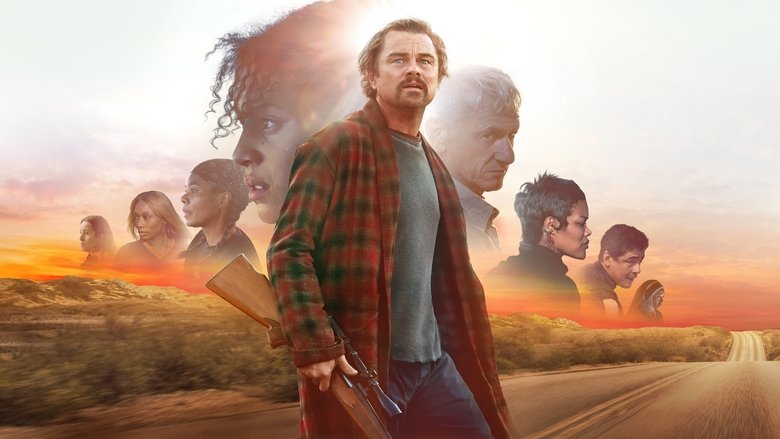
In the late 2000s, "Ghetto" Pat Calhoun (Leonardo DiCaprio) was an explosives specialist for "French 75," a radical left-wing guerrilla group operating in Southern California. Following a chaotic operation targeting an immigrant detention facility, the group fractured under intense federal pressure. Sixteen years later, Pat lives completely off the grid under the alias Bob Ferguson. Dressed in a ratty bathrobe and surviving in a haze of weed-fueled paranoia, his sole purpose is raising his headstrong, self-reliant teenage daughter, Willa (Chase Infiniti).

Bob’s fragile peace shatters when his former nemesis, the ruthless military officer Colonel Steven J. Lockjaw (Sean Penn), unexpectedly resurfaces to systematically eradicate remaining French 75 members. When Willa suddenly disappears during a military-backed crackdown, Bob is pulled out of his domestic stupor and forced back into the dangerous world he tried to leave behind.

Joined by Willa's calm martial arts instructor Sensei Sergio St. Carlos (Benicio del Toro) and surviving underground allies, Bob embarks on a frantic journey across a polarized American landscape. To rescue his daughter, he must navigate far-right militias, shadow surveillance, and unresolved family secrets before his turbulent past catches up with him.

Core Meaning

Director Paul Thomas Anderson uses a loose adaptation of Thomas Pynchon’s 1990 novel Vineland to explore the cyclical nature of political resistance, state authority, and generational trauma. The film’s core message asserts that true revolution is not found in isolated acts of radical violence, but in the enduring, everyday commitment to family, community, and mutual aid. Anderson demystifies authoritarian power, exposing it as fragile and driven by psychosexual obsession, while arguing that love and human connection represent the ultimate form of survival against systemic oppression.

Thematic DNA

Intergenerational Struggle and the Torch of Resistance 30%
Fatherhood and Personal Love as Real Revolution 25%
The Fragility and Absurdity of Authoritarian Power 25%
Grassroots Solidarity and Community Sanctuary 20%

Intergenerational Struggle and the Torch of Resistance

The film examines how the unfulfilled battles of past revolutionaries fall onto the shoulders of their children. Willa does not merely inherit her parents' paranoia; she transforms their legacy into her own active, hopeful activism.

Fatherhood and Personal Love as Real Revolution

Contrasts grand ideological violence with parental devotion. Bob’s ultimate redemption comes not from political rhetoric, but from risking everything to protect and love his daughter.

The Fragility and Absurdity of Authoritarian Power

Deconstructs state violence and far-right military structures. Through Col. Lockjaw, authority is depicted not as an invincible machine, but as an insecure, hypocritical hierarchy fueled by petty grudges and fragile male egos.

Grassroots Solidarity and Community Sanctuary

Highlights how survival against state persecution relies on informal mutual aid networks—exemplified by Sensei Sergio’s underground sanctuary network protecting undocumented families.

Character Analysis

"Ghetto" Pat Calhoun / Bob Ferguson

Leonardo DiCaprio

Archetype: Flawed Antihero / Reluctant Father Key Trait: Deeply affectionate, explosive expertise masked by disheveled panic.

Motivation

Protect Willa and escape the shadow of his past.

Character Arc

Transitions from a weed-addled, paranoid ex-radical hiding in a bathrobe into a determined father taking charge to rescue his daughter.

Col. Steven J. Lockjaw

Sean Penn

Archetype: Corrupt Antagonist / Fascistic Villain Key Trait: Rigidly authoritarian, psychosexually obsessed, brutally hypocritical.

Motivation

Eradicate French 75, erase his past shame, and capture Willa.

Character Arc

Regresses from an all-powerful military commander into a grotesquely disfigured, obsessed maniac who is betrayed by the elite system he served.

All 5 characters and cast

Symbols & Motifs

Bob’s Bathrobe

Meaning:

Symbolizes the decay of revolutionary idealism into domestic apathy and the absurd indignity of aging counterculture figures.

Context:

Worn by Bob Ferguson while surviving in a haze of weed-fueled paranoia and hiding off the grid.

Unclosed Vehicle Doors

Meaning:

Symbolizes chaotic escapes, unresolved emotional baggage, and fleeing without closure.

Context:

A visual motif where characters repeatedly drive away without closing their car doors.

The Winding California Highway

Meaning:

A visual metaphor for the unpredictable, endless path of history and political resistance ("one battle after another").

Context:

Featured across the high-speed pursuit sequences throughout the California landscape.

Perfidia’s Letter

Meaning:

Symbolizes the tender, tragic connection between past sacrifices and future hope, grounding Willa’s identity in maternal love rather than abandonment.

Context:

Handed to Willa by Bob at the conclusion of the film to explain her mother's past choices.

The Christmas Adventurers Club (CAC)

Meaning:

Represents the shadowy, white-supremacist patriarchy of elite power structures that ultimately consume and dispose of their own enforcers.

Context:

The elite institution Col. Lockjaw desperately seeks to join before they betray him.

Memorable Quotes

No fear. Just like Tom f---in' Cruise.
— Sensei Sergio St. Carlos

Context

A comedic pep talk given to Bob before he jumps out of a moving car to evade police.

Meaning

Provides humorous encouragement to inspire brave action during a high-stakes escape.

I believe she was a sperm thief.
— Col. Steven J. Lockjaw

Context

Lockjaw’s bizarre defense during his formal questioning by the Christmas Adventurers Club.

Meaning

Exposes Lockjaw's bizarre, absurd rationalization of his psychosexual obsession with Perfidia.

All 5 quotes

Philosophical Questions

Can personal love and domestic stability coexist with radical political action?

Explored through Bob's retreat into paranoid domesticity to protect Willa, contrasted with Perfidia's total revolutionary commitment and Willa's eventual synthesis of activism and personal identity.

Is violent state authority inherently self-destructive and fragile?

Explored through Col. Lockjaw's regression into disfigured obsession and his ultimate betrayal and execution by the very elite institution (the Christmas Adventurers Club) he sought to join.

How do subsequent generations construct their own hope from the failures of past movements?

Explored through Willa's journey as she transforms her parents' paranoid legacy and revolutionary history into active, hopeful activism on her own terms.

Alternative Interpretations

The film supports multiple analytical readings:

Full ending explanation

Cultural Impact

Released during a period of heightened debates over political polarization, military overreach, and immigration policy, One Battle After Another captured the cultural zeitgeist. Critics lauded it as a rare auteur-driven blockbuster that seamlessly combines populist action-thriller elements with sharp political satire. Its success at the 98th Academy Awards cemented Paul Thomas Anderson's status as a master filmmaker capable of commanding massive Hollywood budgets without sacrificing artistic vision.

Audience Reception

Audience and critical reception was broadly acclaimed while highlighting key discussion points:

  • Praised: PTA's direction, Michael Bauman's VistaVision cinematography, Jonny Greenwood's score, Sean Penn’s unhinged antagonist performance, DiCaprio's comedic-dramatic range, and Chase Infiniti's breakout debut.
  • Criticisms: The 162-minute runtime and rapid tonal shifts between screwball comedy and dark state violence alienated some viewers expecting a traditional action movie.
  • Controversies: Portrayals of far-right militias and border enforcement sparked debate across social media platforms.
  • Verdict: Broadly acclaimed as an entertaining, thought-provoking cinematic achievement.

Interesting Facts

  • Marks Paul Thomas Anderson's second Thomas Pynchon adaptation after 2014's Inherent Vice, updating Pynchon's 1990 novel Vineland to contemporary times.
  • Dedicated to PTA’s longtime first assistant director and producer Adam Somner, who passed away in November 2024.
  • Shot on high-resolution 35mm VistaVision format to achieve rich visual detail and expansive widescreen framing.
  • Made on a budget of $130M–$175M, becoming Anderson's most expensive production and highest-grossing film at over $213M worldwide.
  • Won 6 Academy Awards at the 98th Oscars, including Best Picture, Best Director (PTA), and Best Supporting Actor (Sean Penn).
  • Marked the feature debut of Chase Infiniti as Willa Ferguson.
  • Stunt coordinator Brian Machleit designed real vehicle chases, with Leonardo DiCaprio performing several of his own driving sequences.
  • Features non-professional actors in authority roles, including former federal security agent James "Jim" Raterman as Colonel Danvers.

Easter Eggs

The Battle of Algiers (1966)

Early in the film, Bob watches Gillo Pontecorvo’s classic revolutionary film The Battle of Algiers on television while hungover, directly mirroring his past.

Barry Lyndon (1975) Parallel

Lockjaw's formal questioning by the Christmas Adventurers Club mirrors Lord Wendover's speech to Redmond Barry in Kubrick’s masterpiece, highlighting how elite structures discard their enforcers.

The Big Lebowski Homage

Bob’s bathrobe, dark sunglasses, and weed-induced paranoia serve as a deliberate nod to "The Dude".

Director Legacy Cameo

Features Brooklyn Demme, son of legendary director Jonathan Demme (a major influence on PTA).

Frequently Asked Questions

Explore More About This Movie

Dive deeper into specific aspects of the movie with our detailed analysis pages

Comments (0)

Leave a comment

No comments yet. Be the first to share your thoughts!

Similar Movies