Once Upon a Time in America
"Crime, passion and lust for power."
Overview
Sergio Leone's final film, "Once Upon a Time in America," is a sprawling and poignant crime drama that chronicles fifty years in the lives of a group of Jewish gangsters from New York's Lower East Side. The story is told through the fragmented memories of David "Noodles" Aaronson, who returns to New York in 1968 after a 35-year self-imposed exile. This forces him to confront his past, including his intense and fraught relationships with his childhood friends, particularly the ambitious and volatile Maximilian "Max" Bercovicz, and his lifelong, unrequited love for Deborah Gelly.
The film navigates through three distinct time periods—the 1920s, the 1930s, and 1968—using a non-linear structure that mirrors the hazy, dreamlike nature of memory and regret. It explores the boys' rise from petty street criminals to powerful bootleggers during Prohibition, and the eventual, tragic dissolution of their friendship. Noodles must piece together the events that led to the apparent deaths of his friends and his subsequent flight from the city, all while grappling with the ghosts of his past.
Leone's magnum opus is a profound meditation on time, betrayal, and the elusive nature of the American Dream. The vastly different versions of the film—the original European cut versus the heavily edited American release—led to starkly different initial receptions, with the director's intended version now being celebrated as a masterpiece of cinema.
Core Meaning
The core meaning of "Once Upon a Time in America" revolves around a critical and melancholic examination of the American Dream, portraying it as an illusion that often leads to corruption, betrayal, and profound loss. Director Sergio Leone uses the gangster genre to explore deeper themes of memory, identity, and the inescapable passage of time. The film suggests that the past is not a fixed reality but a fluid, often painful construction shaped by guilt and regret. Through Noodles' fragmented and opium-fueled recollections, Leone questions the very nature of truth and memory, suggesting that we are often haunted and defined by the stories we tell ourselves about our lives. Ultimately, the film is a tragic poem about the loss of innocence, the destructive nature of greed and ambition, and the lifelong weight of choices made in youth.
Thematic DNA
The Illusory Nature of the American Dream
The film systematically deconstructs the myth of the American Dream. The characters' relentless pursuit of wealth and power does not lead to fulfillment but to moral decay, betrayal, and ultimately, despair. Their rise in the criminal underworld is depicted not as a glorious achievement but as a descent into a world devoid of loyalty and love, where every gain is tainted by loss. Leone presents America as a place where dreams of success are inextricably linked to violence and corruption.
Memory, Time, and Regret
The film's non-linear structure is central to its exploration of memory. The narrative unfolds as a series of flashbacks and flash-forwards, mirroring the way memory works—fragmented, associative, and unreliable. Noodles is a man trapped by his past, constantly reliving moments of friendship, love, and brutal betrayal. The film poignantly illustrates how the past shapes and haunts the present, and how regret can define a lifetime. The constant shifting between time periods emphasizes the theme that time destroys everything—friendships, love, and even one's sense of self.
Friendship and Betrayal
At its heart, the film is a story of the powerful bond between a group of childhood friends and its ultimate, devastating betrayal. The relationship between Noodles and Max is the central axis of the narrative. Their loyalty to one another is the foundation of their success, but their differing ambitions and desires—Noodles' longing for a simpler past and Max's insatiable greed for power—drive them apart. The film explores how love, jealousy, and ambition can corrupt even the strongest of friendships, leading to catastrophic consequences.
Loss of Innocence
The extended childhood sequences in the 1920s serve to establish a world of innocence that is gradually and brutally lost. We see the boys' initial forays into crime as almost playful, but their actions have deadly consequences, marking the beginning of their journey into a hardened, violent adulthood. This theme is mirrored in Noodles' relationship with Deborah; his idealized childhood love is shattered by his own violent actions, symbolizing the irreversible loss of purity and the impossibility of returning to the past.
Character Analysis
David 'Noodles' Aaronson
Robert De Niro
Motivation
Noodles is motivated by a deep-seated loyalty to his friends and a lifelong, idealized love for Deborah. Unlike Max, he is not driven by an insatiable hunger for power or wealth, but rather by a desire to preserve the bonds of his youth and find a sense of belonging. His actions, even the violent ones, are often reactions to perceived threats against his friends or his emotional world.
Character Arc
Noodles' arc is one of cyclical regret and reflection. As a youth, he is a tough but sensitive leader. After a long prison sentence, he returns to a world of organized crime but remains haunted by a desire for a life he can't have, particularly with Deborah. His life is defined by a single act of perceived betrayal against his friends, for which he punishes himself with 35 years of anonymous exile. His return forces him to confront the truth that he was the one who was betrayed, but he ultimately chooses to retreat into the ambiguity of his memories, finding a strange peace in the past rather than confronting the devastating reality of the present.
Maximilian 'Max' Bercovicz
James Woods
Motivation
Max is driven by a relentless and all-consuming ambition. He dreams of rising above his ghetto origins to achieve ultimate power and legitimacy. He sees his friendship with Noodles as both a strength and a weakness, ultimately sacrificing it for his grand vision. His motivation is to transcend the streets and become a key player in the larger American power structure, no matter the cost.
Character Arc
Max's arc is a relentless, tragic pursuit of power. He begins as a charismatic and daring young gangster, the driving force behind the group's criminal ambitions. Over time, his ambition curdles into a dangerous megalomania. He orchestrates a plan to fake his own death, steal the gang's money, and reinvent himself as the powerful and legitimate Secretary Bailey. His life becomes a testament to the corrosive nature of the American Dream. In the end, facing ruin and exposure, he seeks death at the hands of the friend he betrayed, completing his tragic fall from power.
Deborah Gelly
Elizabeth McGovern
Motivation
Deborah is motivated by a fierce desire for a life beyond the ghetto. She is ambitious and focused, prioritizing her career and escape from her origins above all else, including her love for Noodles. She sees him as a connection to a past she wants to leave behind, a "piece of the street" that has no place in her future.
Character Arc
Deborah's arc is one of escape and ambition, paralleling Noodles' in a different sphere. From a young age, she is determined to use her talent and beauty to escape the poverty of the Lower East Side and become a star. She loves Noodles but recognizes that his world of crime will only drag her down. She leaves him to pursue her career, achieving the success she always craved. When Noodles finds her again in 1968, she is the mistress of the powerful man he is seeking, having made her own compromises to survive and succeed. She represents a life and a dream that Noodles could never attain.
Symbols & Motifs
The Opium Den
The opium den symbolizes escape, oblivion, and the unreliability of memory. It is a physical manifestation of Noodles' desire to escape from his guilt and the pain of his past. The film's beginning and ending in the den suggest that the entire 1968 narrative could be an opium-induced dream or hallucination, a way for Noodles to rewrite his history and absolve himself of his perceived betrayals.
The film opens in 1933 with Noodles hiding in an opium den after the death of his friends. The final shot of the film returns to this scene, with Noodles smiling serenely under the influence of the drug. This framing device makes the entire structure of the film ambiguous, blurring the line between reality and dream.
The Ringing Telephone
The incessantly ringing telephone represents Noodles' guilt and the inescapable call of the past. It is the sound of his conscience, forever reminding him of the moment he betrayed his friends by calling the police. The sound acts as a narrative trigger, plunging Noodles (and the audience) back into his memories.
In the opening sequences set in 1933, the telephone rings relentlessly, a sound that haunts Noodles in his opium-induced state. It is a powerful auditory motif that bridges the different time periods and underscores the psychological weight of Noodles' past actions.
The Garbage Truck
The garbage truck at the end of the film symbolizes erasure, the disposal of the past, and death. It represents a final, ambiguous end for Max, who is either literally or metaphorically ground up and disposed of by the corrupt system he helped create. It signifies society "taking out the trash," a recurring cycle in the world of crime and politics.
In 1968, after Noodles refuses to kill him, Max walks out of his mansion and disappears behind a passing garbage truck. Noodles sees the truck's grinders churning, but Max is gone. The scene is deliberately surreal and open to interpretation, leaving Max's fate uncertain.
Memorable Quotes
What have you been doing all these years?
— Fat Moe
Context:
This exchange occurs in 1968, shortly after Noodles returns to New York and visits his old friend Fat Moe's bar for the first time in over three decades. It is the beginning of Noodles' journey back into his past.
Meaning:
This question from Moe to Noodles encapsulates the 35-year gap that is the central mystery of the film. Noodles' simple, poignant reply—"I've been going to bed early"—speaks volumes about the quiet, anonymous, and guilt-ridden life he has led in self-imposed exile. It's a statement of profound emptiness and regret.
You'll be carrying the stink of the streets with you for the rest of your life! / I like the stink of the streets. It makes me feel good. And I like the smell of it, it opens up my lungs. And it gives me a hard-on.
— Max and Noodles
Context:
This conversation takes place when they are young men, discussing their future and ambitions within the world of organized crime.
Meaning:
This dialogue perfectly illustrates the fundamental difference between Max and Noodles. Max despises their origins and is desperate to escape them, seeing the streets as something to be overcome. Noodles, in contrast, embraces his identity and finds a sense of vitality and belonging in the world they come from. It foreshadows their eventual conflict.
Many years ago, I had a friend, a dear friend. I turned him in to save his life, but he was killed. But he wanted it that way. It was a great friendship. But it went bad for him, and it went bad for me too.
— Noodles
Context:
Noodles says this in 1968 to Secretary Bailey (the older Max) before he recognizes him. He is explaining why he cannot accept the contract to kill Bailey, unknowingly narrating the story of their betrayal to the betrayer himself.
Meaning:
This is Noodles' summary of his entire life's tragedy, delivered to the man he doesn't yet realize is the friend in question. It's a statement laden with irony and pathos. He expresses the profound guilt that has defined his existence, while simultaneously justifying his actions as an attempt to save his friend. It is his truth, the story he has lived with for 35 years.
Nobody's gonna love you the way I loved you.
— Noodles
Context:
Noodles says this to Deborah in the back of the car after their disastrous date, just before he violently assaults her. It's a moment that shatters any romantic illusion and seals their separation forever.
Meaning:
This quote, spoken to Deborah, reveals the depth of Noodles' possessive and ultimately destructive love. It is both a declaration of his profound feeling for her and a curse, highlighting his inability to let her go or to love her in a way that doesn't seek to control her. It underscores the tragedy of their relationship, defined by his inability to escape his violent nature.
Philosophical Questions
Can we ever truly escape our past?
The film argues that the past is an inescapable force that shapes our present and future. Noodles spends 35 years in self-imposed exile, living an anonymous life in an attempt to escape his guilt and the memory of his friends' deaths. However, a single letter is all it takes to pull him back into the world he left behind. The narrative structure, constantly flashing back and forth in time, visually represents this idea that the past is always present. The film suggests that one cannot simply erase past actions and that identity is inextricably linked to memory, no matter how painful.
What is the true nature of the American Dream?
"Once Upon a Time in America" presents a deeply cynical view of the American Dream. It explores the idea that upward mobility and success in America are often built on a foundation of violence, greed, and corruption. The characters' journey from poverty to wealth is not a story of virtuous hard work but of brutal criminality. Max's transformation into the politically powerful Secretary Bailey is the ultimate embodiment of this theme, suggesting that the highest echelons of power are occupied by those who were ruthless enough to seize them, effectively blurring the lines between gangster and politician.
Is memory a reliable record of the past, or a story we tell ourselves?
Through its dreamlike, non-linear narrative, the film constantly questions the reliability of memory. The entire story is filtered through Noodles' perspective, which is clouded by time, guilt, and, potentially, opium. The ambiguity of the ending, in particular, suggests that the entire 1968 sequence might be a fabrication of Noodles' mind—a way to reframe his past in a more bearable way. Leone forces the audience to consider that what we remember is not objective truth, but a personal narrative constructed to help us live with our choices.
Alternative Interpretations
The most significant area for alternative interpretations in "Once Upon a Time in America" is its ending and overall narrative structure, leading to the "Opium Dream Theory."
The Opium Dream Theory: This is the most prevalent alternative reading of the film. It posits that everything seen after Noodles enters the opium den in 1933 is a hallucination. The entire 1968 storyline—receiving the mysterious letter, returning to New York, discovering Max's betrayal and transformation into Secretary Bailey, and the final confrontation—is an elaborate opium-fueled dream. Proponents of this theory point to several key pieces of evidence:
- The Framing Device: The film begins and ends in the 1933 opium den, culminating in a long, serene smile from a heavily intoxicated Noodles. This suggests a circular narrative structure centered in his drugged consciousness.
- Surreal Events: The 1968 sequences contain dreamlike and surreal elements, such as the mysterious disappearance of Max behind the garbage truck and the almost phantom-like reappearance of characters from his past.
- Psychological Wish-Fulfillment: The dream allows Noodles to grapple with his guilt. In this imagined future, he discovers he wasn't the betrayer but the betrayed, shifting the ultimate blame to Max. Max's request for Noodles to kill him is a final assertion of Noodles' moral superiority, which he maintains by refusing. The dream is a way for his subconscious to process the trauma and absolve him of his guilt.
A Literal Interpretation: The alternative is to take the narrative at face value. In this reading, the events of 1968 are real. Noodles genuinely lives a life of anonymity for 35 years before being summoned back by Max. The non-linear structure is simply a complex storytelling device used by Leone to explore the themes of memory and time, not to indicate a dream state. Critic Carlo Affatigato suggests that Noodles discovers the truth about Max but chooses not to accept it, preferring the reality he has constructed for himself over the objective one, which explains his passive departure after the confrontation.
Ultimately, Leone left the ending deliberately ambiguous, allowing both interpretations to coexist. The power of the film lies in this uncertainty, blurring the lines between memory, dream, and reality, and leaving the viewer to ponder the true nature of Noodles' epic and tragic story.
Cultural Impact
"Once Upon a Time in America" had a tumultuous journey, but its cultural impact is undeniable, particularly after the restoration of Sergio Leone's original cut. Initially released in a severely truncated and chronologically re-ordered version in the United States, it was a critical and commercial failure. Critics who had seen the European version, which premiered to a 15-minute standing ovation at Cannes, lambasted the American edit as a travesty. This stark difference in reception made the film a notorious case study in studio interference and the importance of directorial vision.
Over time, as Leone's intended version became available, the film's reputation underwent a massive reassessment. It is now widely regarded as a masterpiece and one of the greatest gangster films ever made, often ranked alongside "The Godfather" and "Goodfellas". Its non-linear, dreamlike narrative structure had a significant influence on subsequent filmmakers, demonstrating a more complex, psychological approach to the genre. The film's melancholic tone and focus on themes of memory, regret, and the failure of the American Dream offered a profound counterpoint to more romanticized portrayals of mob life.
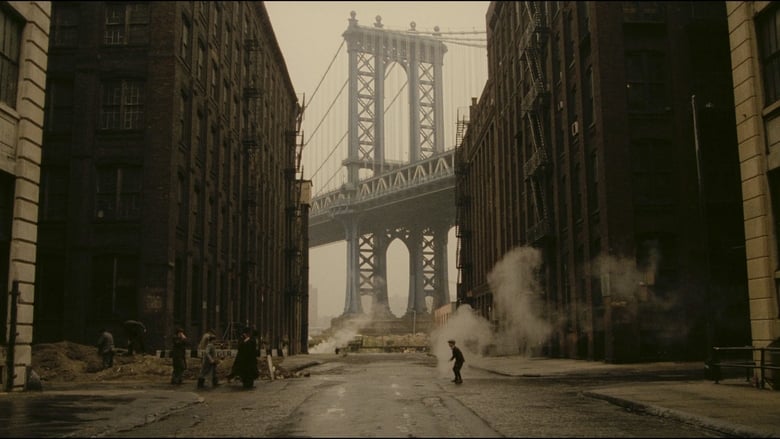
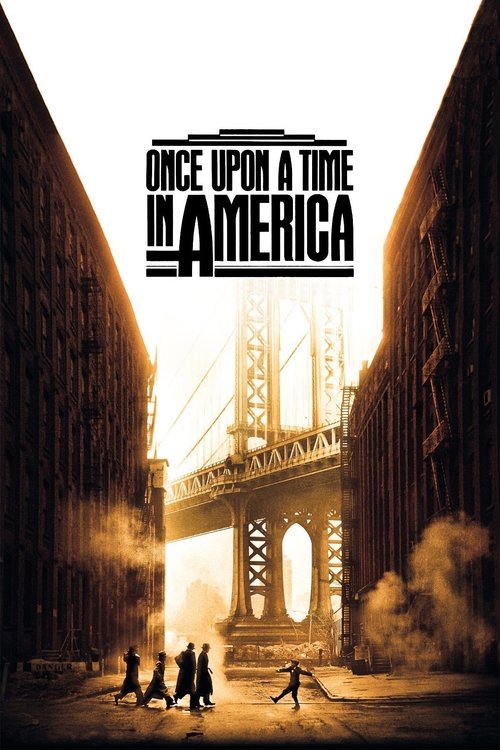
Ennio Morricone's haunting and evocative score is considered one of the finest in cinema history and is inseparable from the film's emotional power. The film's visual language, with Tonino Delli Colli's sweeping cinematography, created iconic images, such as the boys walking under the Manhattan Bridge, that have become ingrained in cinematic history. Though its initial U.S. reception was disastrous, its eventual resurrection has cemented its place as a profound, ambitious, and deeply personal epic that continues to influence filmmakers and captivate audiences with its tragic beauty.
Audience Reception
Audience reception for "Once Upon a Time in America" is largely divided by which version of the film was seen. The initial American theatrical cut (139 minutes) was widely panned by audiences, who found it confusing and emotionally hollow due to the chronological re-editing and removal of key scenes.
However, the reception for the restored, longer European cut is overwhelmingly positive. Audiences praise it as a cinematic masterpiece, frequently citing its epic scope, the stunning cinematography, and Ennio Morricone's iconic score as high points. Robert De Niro and James Woods' performances are often highlighted as some of their career bests. Viewers are captivated by the film's deep emotional resonance and its profound exploration of themes like friendship, betrayal, and the passage of time.
Points of criticism and controversy, even among fans of the long version, often center on the film's length, which some find daunting or slow-paced. The two scenes of sexual assault are particularly controversial and have been criticized as brutal and misogynistic, making for uncomfortable viewing and sparking debate about their narrative necessity and Leone's portrayal of women.
Overall, for those who experience the director's intended cut, the verdict is that it is a challenging but deeply rewarding film—a tragic, beautiful, and haunting epic that stays with the viewer long after it ends.
Interesting Facts
- Director Sergio Leone turned down the opportunity to direct "The Godfather" to focus on this passion project, which he had been developing since the 1960s.
- The film is based on the novel "The Hoods" by Harry Grey, a pseudonym for former gangster Harry Goldberg. Leone met with the reluctant author to get his blessing and insight.
- Ennio Morricone composed the film's score before filming was complete, and Leone often played the music on set to create the desired atmosphere for the actors.
- The initial American release was cut from 229 minutes to 139 minutes by the studio, which also rearranged the scenes into chronological order without Leone's consent. This version was a critical and commercial disaster, and Leone was reportedly devastated.
- Jennifer Connelly made her film debut in this movie, playing the young Deborah.
- The shoot lasted for nearly a year, and by the end, Leone had between eight and ten hours of footage.
- Robert De Niro was the first actor cast and was heavily involved in casting the other roles. He reportedly suggested Joe Pesci for the role of Frankie.
- Despite its New York setting, much of the film was shot at Cinecittà Studios in Rome, with other scenes filmed in Montreal, Paris, and Florida.
⚠️ Spoiler Analysis
Click to reveal detailed analysis with spoilers
Frequently Asked Questions
Explore More About This Movie
Dive deeper into specific aspects of the movie with our detailed analysis pages
Comments (0)
No comments yet. Be the first to share your thoughts!