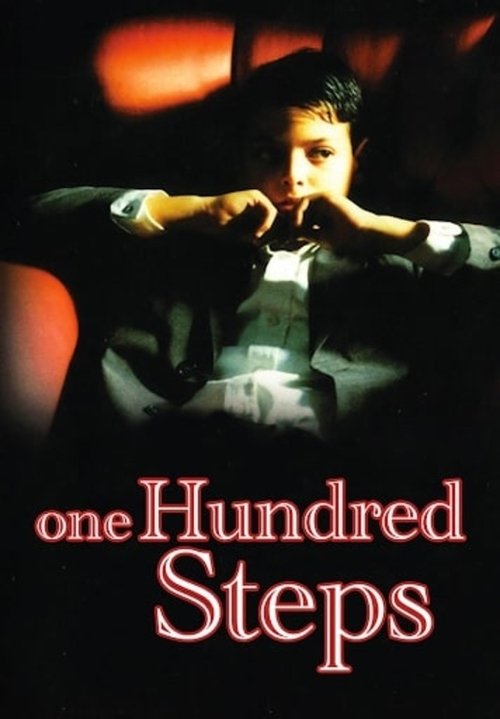
One Hundred Steps
A visceral political odyssey where the sun-drenched Sicilian landscape becomes a battlefield of voices, contrasting the soaring hope of 'Volare' with the crushing weight of a hundred silent, fatal steps.
One Hundred Steps

One Hundred Steps

I cento passi

01 September 2000 Italy 114 min ⭐ 7.8 (715)
Director: Marco Tullio Giordana
Cast: Luigi Lo Cascio, Luigi Maria Burruano, Lucia Sardo, Paolo Briguglia, Tony Sperandeo
Drama History
Rebellion and Anti-Mafia Activism The Generational Gap and Family Conflict The Power of Language and Irony Omertà vs. Free Speech
Box Office: $1,805,884

Overview

One Hundred Steps (I cento passi) is a powerful biographical drama that reconstructs the life and death of Peppino Impastato, a young activist in the Sicilian town of Cinisi. Born into a family with deep Mafia ties, Peppino chooses a path of radical defiance, breaking the code of silence (omertà) that has stifled his community for generations. The film tracks his journey from a curious child witness to a fearless political provocateur during the turbulent 1970s.

As Peppino matures, he harnesses the power of media, founding the pirate radio station Radio Aut. Through satire and biting irony, he publicly mocks the local Mafia boss, Gaetano Badalamenti, whose house stands exactly one hundred steps from the Impastato family home. This proximity serves as a constant reminder of the suffocating presence of organized crime in every aspect of daily life, setting the stage for an inevitable and tragic collision between personal conviction and familial duty.

Core Meaning

The core meaning of the film lies in the triumph of individual conscience over collective complicity. Director Marco Tullio Giordana uses Peppino’s life to argue that the Mafia’s greatest power is not violence, but the psychological submission of the populace. By choosing laughter and truth over fear and silence, Peppino de-mystifies the Mafia, stripping away its 'honor' to reveal it as a 'mountain of shit.' The film suggests that while an individual can be silenced, a truth once spoken becomes a permanent fissure in the wall of omertà.

Thematic DNA

Rebellion and Anti-Mafia Activism 35%
The Generational Gap and Family Conflict 25%
The Power of Language and Irony 20%
Omertà vs. Free Speech 20%

Rebellion and Anti-Mafia Activism

Revealed through Peppino's relentless use of Radio Aut to satirize 'Tano Seduto' (Sitting Tano). The film emphasizes activism not as a grand military struggle, but as a daily act of refusal to acknowledge the 'protection' of the mob.

The Generational Gap and Family Conflict

The central tension between Peppino and his father, Luigi Impastato, represents the clash between a youth movement seeking transparency and an older generation that accepted the Mafia as a necessary, albeit shameful, provider of security.

The Power of Language and Irony

Peppino uses irony as a weapon. By transforming the Mafia’s terrifying rituals into comedic radio skits, he removes the 'god-like' aura of the bosses, making them vulnerable to public ridicule.

Omertà vs. Free Speech

The film highlights the conspiracy of silence that pervades the town. Peppino's voice serves as the sonic antithesis to the physical and metaphorical walls built by the Mafia to hide their operations.

Character Analysis

Peppino Impastato

Luigi Lo Cascio

Archetype: The Martyr / The Idealist
Key Trait: Iconoclastic courage

Motivation

To reclaim the dignity and beauty of Sicily by exposing the Mafia as a grotesque and 'shitty' parasite on society.

Character Arc

Transforms from a boy traumatized by the car-bomb murder of his uncle into a vocal political firebrand who chooses truth over survival.

Luigi Impastato

Luigi Maria Burruano

Archetype: The Tragic Father
Key Trait: Moral ambiguity

Motivation

Protecting the family unit while maintaining the 'respect' required to live safely under Mafia rule.

Character Arc

A man caught between his love for his son and his life-long debt to the Mafia; his arc ends in a failed attempt to protect Peppino by appealing to the 'old codes'.

Felicia Impastato

Lucia Sardo

Archetype: The Resilient Mother
Key Trait: Quiet defiance

Motivation

Unconditional love for her children and a growing realization of the Mafia's cruelty.

Character Arc

Initially silent and submissive, she evolves into a source of quiet strength, eventually breaking with the 'family' to preserve Peppino's memory.

Gaetano Badalamenti

Tony Sperandeo

Archetype: The Tyrant
Key Trait: Cold ruthlessness

Motivation

Maintaining total control over Cinisi and the lucrative international drug trade (the 'Pizza Connection').

Character Arc

Remains a static force of menacing authority, representing the immovable status quo that Peppino seeks to topple.

Symbols & Motifs

The Hundred Steps

Meaning:

Represents the agonizingly short distance between normality and crime, or the family and its executioner.

Context:

Used in the iconic scene where Peppino forces his brother Giovanni to count the steps from their front door to the boss Badalamenti’s house, forcing him to acknowledge how close the 'monster' lives.

Radio Aut / The Microphone

Meaning:

A symbol of amplified truth and the democratization of information.

Context:

Used throughout the second half of the film as the medium through which Peppino attacks the Mafia, turning a private town secret into a public broadcast.

The song 'Volare' (Nel blu dipinto di blu)

Meaning:

Symbolizes freedom, escape, and the idealistic dreams of a Sicily that could rise above its grounded, bloody reality.

Context:

Played during the opening sequence with Peppino as a child, establishing his innate desire for 'flight' and beauty in a world of dust and violence.

The Railway Tracks

Meaning:

A symbol of destiny and the end of the line; the site where the personal journey is forcibly terminated by the state and the Mafia.

Context:

The location of Peppino's murder, where his body was placed to make it look like a botched terrorist attack or suicide.

Memorable Quotes

La mafia è una montagna di merda!

— Peppino Impastato

Context:

Peppino screams this during a moment of intense frustration with the complicity and fear surrounding him.

Meaning:

The most famous line in the film, it serves as a desecration of the Mafia's myth. It strips the organization of its 'honor' and identifies it as filth.

Uno, due, tre, quattro, cinque... dieci... cento passi!

— Peppino Impastato

Context:

Peppino forces his brother to walk and count the steps to Badalamenti's house.

Meaning:

Highlighting the physical proximity of evil and the absurdity of ignoring it when it is literally next door.

La faccia è come un paesaggio: può essere un giardino, o un bosco, o un luogo dove non cresce niente. Io dipingo solo i paesaggi che mi piacciono.

— Stefano Venuti

Context:

The painter and mentor Venuti explaining his artistic and moral choices to a young Peppino.

Meaning:

A philosophical observation on moral character; suggesting that a person's inner life is visible in their external being.

Philosophical Questions

Is the sacrifice of a life worth a truth that is only heard decades later?

The film explores this through the juxtaposition of Peppino's brutal death and the eventual 20-year journey to justice, asking if martyrdom is a failure or the ultimate victory of ideas.

Can beauty and art survive in a culture defined by fear and utility?

Revealed through Peppino's love for poetry and his relationship with the painter Venuti; the film asks if aesthetic appreciation is a form of political resistance.

Alternative Interpretations

Some critics have proposed an Oedipal reading of the film, suggesting that Peppino's rebellion against the Mafia is primarily a subconscious struggle to 'kill the father' (Luigi) and assert his own identity. In this view, the Mafia is merely the clothing for a more primal generational and psychological conflict. Another interpretation focuses on the film as a hagiography, noting that it simplifies Peppino's complex, sometimes abrasive political personality into a more digestible, saint-like figure of martyrdom to appeal to a broader audience.

Cultural Impact

One Hundred Steps is credited with redefining the 'Mafia movie' genre in Italy. Moving away from the romanticized, operatic depictions found in The Godfather, Giordana's film focuses on 'Civil Commitment' (cinema d'impegno civile). It turned Peppino Impastato into a national icon of resistance for the younger generation. The film is frequently screened in Italian schools to promote anti-Mafia culture and civic duty. It also successfully bridged the gap between popular cinema and historical justice, as its release coincided with a renewed legal interest in the 1978 murder.

Audience Reception

The film was met with universal acclaim in Italy, resonating deeply with an audience still grappling with the 'Years of Lead.' Critics praised Luigi Lo Cascio’s 'electric' performance and Giordana's restrained, non-sensationalist direction. Some international critics found the political specifics of 1970s Sicily occasionally difficult to follow, but the emotional core of the father-son conflict was praised as a universal tragedy. Audience members often cite the funeral scene—a rare moment of public defiance—as one of the most moving in Italian cinema.

Interesting Facts

  • Luigi Lo Cascio made his cinematic debut in this film; he was primarily a stage actor before being cast as Peppino.
  • The film's success was instrumental in the real-life reopening of the Peppino Impastato case, leading to the conviction of Gaetano Badalamenti in 2002.
  • The real-life murder of Peppino occurred on May 9, 1978, the same day the body of kidnapped Prime Minister Aldo Moro was found in Rome, which caused Peppino's death to be ignored by the national press.
  • Tony Sperandeo, who plays the villain Badalamenti, is actually a frequently cast actor in Mafia-related films, often playing either mobsters or police officers.
  • The film was shot on location in Cinisi, utilizing many of the actual sites where the historical events took place.
  • The script won the Best Screenplay award at the 57th Venice International Film Festival.

Easter Eggs

Cameo of the real Giovanni Impastato

Peppino's real-life brother appears in the film, providing a direct link between the cinematic reconstruction and the historical reality.

Pif (Pierfrancesco Diliberto) as Assistant Director

The famous Italian director and TV host Pif worked as an assistant on this film, which deeply influenced his own later anti-Mafia work, such as The Mafia Only Kills in Summer.

⚠️ Spoiler Analysis

Click to reveal detailed analysis with spoilers

Frequently Asked Questions

Explore More About This Movie

Dive deeper into specific aspects of the movie with our detailed analysis pages

Comments (0)

Leave a comment

No comments yet. Be the first to share your thoughts!