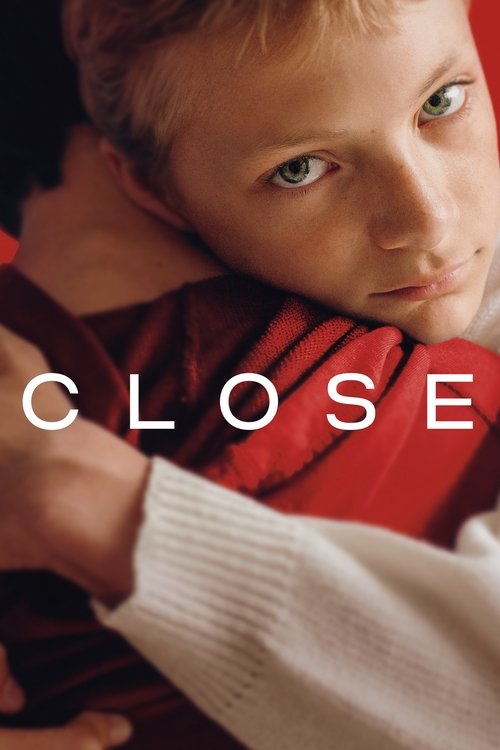
Close
Overview
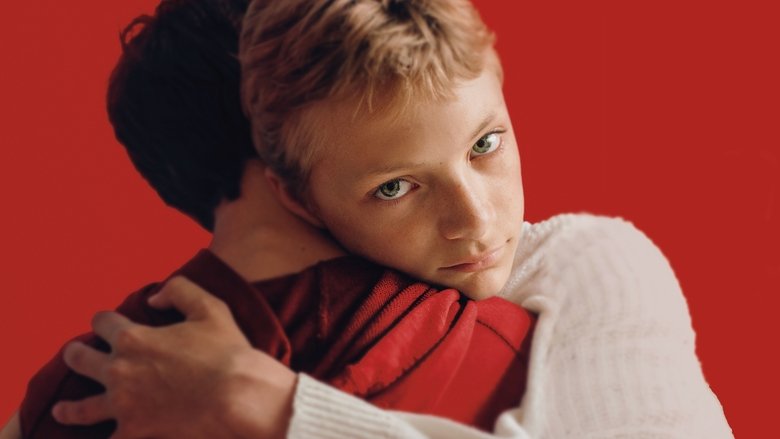
Set against the lush, sun-drenched flower fields of rural Belgium, Close follows Léo and Rémi, two thirteen-year-olds whose bond is characterized by a deep, tactile intimacy. They spend their summer days running through dahlias and their nights whispering secrets in a shared bed, existing in a world that feels untouched by external judgment. Their relationship is a sanctuary of unfiltered affection and mutual understanding.
The transition to secondary school, however, brings the harsh glare of social scrutiny. When classmates begin to question the nature of their closeness with homophobic teasing and rigid labels, Léo becomes increasingly self-conscious. Fearing ostracization, he begins to distance himself from Rémi, seeking refuge in the hyper-masculine world of ice hockey and new peer groups. This withdrawal creates a painful rift that leads to an unforeseen and devastating tragedy, forcing Léo to confront the crushing weight of guilt and the complexities of grief.

Core Meaning
The core of the film is a profound critique of gender policing and the "epidemic of loneliness" among young men. Director Lukas Dhont explores how society systematically dismantles the emotional literacy of boys, teaching them that intimacy and vulnerability are weaknesses or signs of an identity they must fear. Through the tragedy of Léo and Rémi, the film argues that the enforcement of heteronormative standards robs children of their capacity for deep connection, suggesting that the true tragedy isn't the presence of a specific label, but the loss of the freedom to love without one.
Thematic DNA
The Fragility of Masculinity
The film illustrates how Léo abandons his authentic self to conform to a performance of masculinity. This is seen in his transition from the softness of the flower fields to the aggression of the ice hockey rink, a sport where he can hide behind a mask and pads.
Grief and Internalized Guilt
The second half of the film is an intensive study of childhood trauma. Léo's inability to articulate his role in the rift with Rémi manifests as physical pain and emotional paralysis, highlighting how guilt can become an isolating prison for the young.
Social Conformity and Peer Pressure
The casual questions from female classmates act as the catalyst for the film's conflict. It reveals how the gaze of the "Other" can transform a private, beautiful connection into something that feels shameful and wrong.
Loss of Innocence
The film uses the seasonal cycle of the flower farm to mirror the characters' journey. The violent cutting of the flowers symbolizes the abrupt end of the boys' childhood paradise and their forced entry into the complexities of the adult world.
Character Analysis
Léo
Eden Dambrine
Motivation
Initially, his motivation is social survival—fitting in and avoiding bullying—which later transforms into a desperate search for absolution.
Character Arc
Léo moves from a state of total emotional openness to defensive isolation, eventually reaching a point of painful catharsis through confession and the acceptance of his grief.
Rémi
Gustav De Waele
Motivation
He is motivated purely by authentic connection and is unable to comprehend why Léo is weaponizing their intimacy against him.
Character Arc
Rémi's arc is defined by his inability to understand or adapt to the sudden loss of his best friend. His confusion turns into deep despair, leading to his tragic exit from the narrative.
Sophie
Émilie Dequenne
Motivation
Her primary motivation is to understand the missing pieces of her son's final days and to care for Léo, whom she views as a second son.
Character Arc
She journeys from overwhelming, silent grief to becoming the vessel for Léo's redemption, ultimately providing the forgiveness he cannot give himself.
Symbols & Motifs
The Flower Fields (Dahlias)
Symbolizes the transience of beauty and the fragility of the boys' friendship. The way the flowers are harvested—mechanically and efficiently—mirrors the systematic way society cuts down the intimacy between boys.
Used as the primary setting for the boys' play during the summer. Later, Léo is seen working in the fields alone, highlighting his isolation.
Ice Hockey
Represents performative masculinity and emotional armor. The heavy equipment, the violence of the sport, and the physical distance between players contrast with the soft, tactile closeness Léo once shared with Rémi.
Léo joins the team specifically to prove his "manhood" and distance himself from the accusations of being "gay."
The Red Bedroom
Symbolizes the safe space of the boys' initial intimacy. Red often denotes passion, but here it represents the warmth and intensity of a visceral, pre-verbal connection.
The color shifts in tone throughout the film; initially warm and inviting, it later becomes haunting as Léo returns to the room after Rémi's death.
The Wrist Cast
A physical manifestation of internal fracture. The cast protects a broken bone, just as Léo's stoic exterior protects his shattered psyche.
Léo breaks his wrist during hockey practice. The removal of the cast at the end of the film parallels his first steps toward emotional healing and confession.
Memorable Quotes
Are you together?
— Classmate
Context:
Asked by a girl in the school courtyard during their first week of secondary school.
Meaning:
This simple, invasive question serves as the inciting incident that shatters the boys' unlabelled paradise by imposing a binary adult perspective onto a fluid childhood bond.
You're like brothers.
— Classmate
Context:
Said during the same courtyard interrogation as a follow-up to the dating question.
Meaning:
An attempt to categorize their relationship in a way that is socially acceptable, yet even this label fails to capture the unique depth of their connection.
Mexico.
— Rémi
Context:
Rémi says this when the boys are imagining where they would go if they could travel the world together.
Meaning:
Represents the unfulfilled promise of a future together and the innocent escapism they shared before the world intruded.
It's my fault.
— Léo
Context:
Léo confesses this to Sophie while they are in her car, shortly before they embrace in the woods.
Meaning:
The ultimate climax of the film; Léo finally breaks his silence and takes responsibility for the distance he created, allowing his healing to begin.
Philosophical Questions
Can childhood innocence exist in a world that demands labels?
The film suggests that the 'naming' of a relationship can sometimes be its destruction. By forcing a definition on Léo and Rémi's bond, the school environment strips away the organic, fluid nature of their love.
To what extent are we responsible for the actions of others in response to our own self-protection?
Léo's decision to distance himself was a survival tactic, yet it had fatal consequences for Rémi. The film explores the agonizing intersection of individual self-preservation and communal responsibility.
Alternative Interpretations
Audience interpretations of Close often fall into two distinct camps. The Queer Reading suggests that the boys were experiencing an early, unspoken romantic attraction, and the tragedy stems from the violent suppression of that identity. In this view, Rémi's despair is a direct result of being 'closeted' by Léo's rejection. Conversely, the Universal Friendship Reading argues that the film is about the 'murder' of platonic intimacy. This perspective suggests that by making the story about sexuality, we are falling into the same trap as the bullies in the film—refusing to allow boys to have a deep, non-sexual physical bond. Director Lukas Dhont has stated that both readings are valid, as the film is ultimately about the fear of the label rather than the label itself.
Cultural Impact
Close had a significant cultural impact upon its release, winning the Grand Prix at Cannes and sparking global conversations about emotional literacy in boys. Critics hailed it as a masterpiece of empathy, though it also faced some controversy. Some viewers debated whether the film's refusal to explicitly label the boys' sexuality was an act of 'queer erasure' or a radical defense of unlabelled childhood intimacy. Regardless, it has become a touchstone for discussions on the toxic ways masculinity is socialized in modern society, influencing how educators and parents think about boys' friendships.
Audience Reception
The film received widespread critical acclaim, currently holding a high rating on Rotten Tomatoes. Audiences were particularly moved by the naturalistic performances of the two young leads, often noting that it didn't feel like 'acting.' However, a segment of the audience found the film's shift into tragedy in the second half to be excessively manipulative or 'misery porn.' Despite this, the consensus remains that Close is a devastatingly effective emotional experience that lingers long after the credits roll.
Interesting Facts
- Director Lukas Dhont discovered lead actor Eden Dambrine on a train; he was struck by the boy's expressive face and asked him to audition.
- The film was heavily inspired by the book Deep Secrets: Boys' Friendships and the Crisis of Connection by psychologist Niobe Way.
- Dhont's own brother, Michiel Dhont, served as one of the film's producers, mirroring the 'brotherly' themes of the story.
- To build chemistry, the two lead actors spent six months together before filming, participating in activities like baking and walking by the sea.
- The film was nominated for the Academy Award for Best International Feature Film at the 95th Academy Awards.
Easter Eggs
The casting of Émilie Dequenne
Dequenne is a legend of Belgian cinema, having won the Best Actress award at Cannes for the Dardenne brothers' Rosetta (1999). Her presence is a tribute to the lineage of Belgian social realism that influenced Dhont.
The significance of the color Red
Dhont specifically chose the color red for Rémi’s room as a visual callback to his first film, Girl, but also as a way to create an 'iconic' and memorable sanctuary that feels both visceral and separate from the rest of the world.
⚠️ Spoiler Analysis
Click to reveal detailed analysis with spoilers
Frequently Asked Questions
Explore More About This Movie
Dive deeper into specific aspects of the movie with our detailed analysis pages
Comments (0)
No comments yet. Be the first to share your thoughts!