Only Murders in the Building
A cozy, autumnal mystery woven with warm melancholy, where three lonely souls find connection through a shared obsession, painting a vibrant, funny, and surprisingly deep portrait of friendship in the heart of New York City.
Only Murders in the Building

Only Murders in the Building

"The building always wins."

31 August 2021 — 07 October 2025 United States of America 5 season 50 episode Returning Series ⭐ 8.5 (1,948)
Cast: Steve Martin, Martin Short, Selena Gomez, Michael Cyril Creighton, Jackie Hoffman
Crime Comedy Mystery
Intergenerational Friendship and Found Family Loneliness and Connection The Ethics of True Crime Past Trauma and Hidden Secrets

Overview

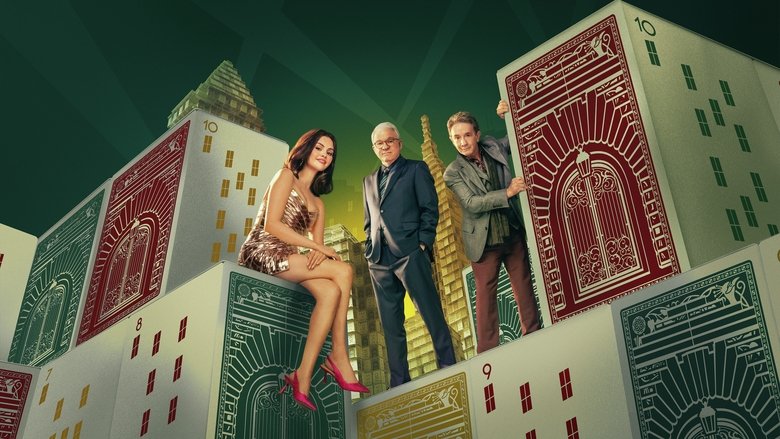
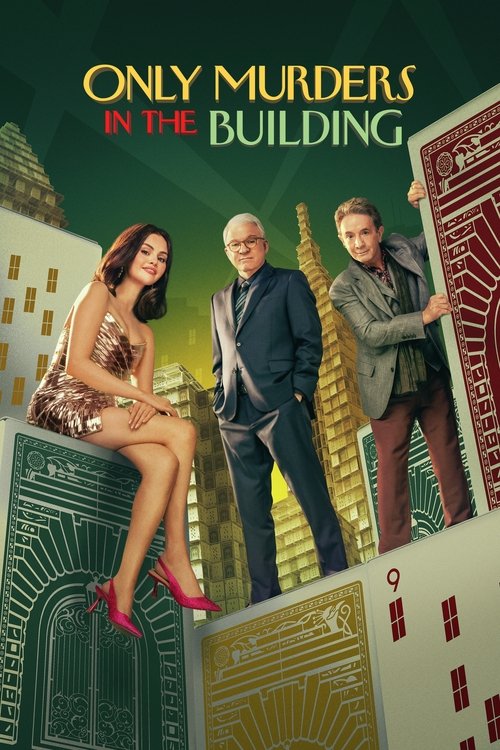
"Only Murders in the Building" follows three strangers residing in a luxurious Upper West Side apartment building, the Arconia, who share a passion for true crime podcasts. The trio consists of Charles-Haden Savage (Steve Martin), a semi-retired actor from a 90s detective show; Oliver Putnam (Martin Short), a flamboyant and financially struggling Broadway director; and Mabel Mora (Selena Gomez), a mysterious and artistic young woman with a personal connection to the building's past. When a gruesome death occurs in their building, the police rule it a suicide, but the trio suspects foul play. They decide to start their own podcast to investigate the murder, uncovering long-buried secrets of the Arconia and its eclectic residents.

Across its seasons, the unlikely friends find themselves entangled in a new murder each time, often with one of them becoming a prime suspect. Their investigations force them to confront their own past traumas, insecurities, and the nature of their evolving friendship. From uncovering the secrets behind a poisoned bassoonist and a murdered building board president, to solving the death of a difficult Hollywood star on Oliver's Broadway stage and the shocking murder of Charles's own stunt double, their podcast becomes both a local sensation and a constant source of peril. The series blends witty comedy, genuine pathos, and intricate mystery, exploring themes of loneliness, the ethics of true crime entertainment, and the families we choose.

Core Meaning

At its heart, "Only Murders in the Building" is a story about the profound human need for connection in an increasingly isolated world. Through the quirky lens of a murder mystery and the modern phenomenon of true-crime podcasting, the series explores how three lonely, multi-generational individuals find purpose, friendship, and a chosen family. It suggests that the secrets we keep are often rooted in past pain and that vulnerability is the key to forming meaningful bonds. The show posits that while obsession with the tragedies of others can be a form of escapism, it can also, unexpectedly, lead to genuine empathy and community. It serves as a warm, witty commentary on how storytelling—whether on a podcast or just between friends—can help us make sense of our own lives and heal old wounds.

Thematic DNA

Intergenerational Friendship and Found Family 35%
Loneliness and Connection 30%
The Ethics of True Crime 20%
Past Trauma and Hidden Secrets 15%

Intergenerational Friendship and Found Family

The central pillar of the series is the unlikely bond between Charles, Oliver (both in their 70s) and Mabel (in her late 20s). Initially united by a shared hobby, their relationship deepens into a genuine found family. They fill voids in each other's lives: Mabel finds surrogate father figures, while Charles and Oliver find a renewed sense of purpose and a daughterly connection that helps them confront their own regrets about family. Their dynamic highlights how meaningful connections can transcend age and background, offering a poignant look at companionship.

Loneliness and Connection

Each of the three protagonists begins the series in a state of isolation. Charles is a recluse haunted by a past relationship, Oliver is grappling with career failure and estrangement from his family, and Mabel is emotionally guarded due to childhood trauma. The murders, and the podcast they create, become a catalyst for them to emerge from their shells. The Arconia itself is a symbol of this theme—a building full of people living separate lives, yet intertwined by shared space and secrets. The series beautifully illustrates how a common purpose can combat loneliness and forge a powerful sense of community.

The Ethics of True Crime

The show offers a meta-commentary on the cultural obsession with true crime. It satirizes the genre's tropes through the trio's amateur podcasting and the slick, commercialized podcast of their idol-turned-rival, Cinda Canning (Tina Fey). The series raises questions about the morality of turning real tragedy into entertainment, the fine line between investigation and exploitation, and the impact this content has on its creators and consumers. It explores whether their pursuit of content sometimes overshadows the pursuit of justice for the victims.

Past Trauma and Hidden Secrets

Every character in the Arconia seems to be haunted by their past. Mabel's storyline, in particular, revolves around repressed memories of a traumatic event involving her childhood friends. Charles struggles with the emotional fallout of a past relationship and his relationship with a former step-daughter, while Oliver is tormented by his epic Broadway failures. The murders they investigate consistently force them, and the suspects, to confront long-buried secrets, suggesting that the past is never truly dead and has a way of resurfacing in dramatic fashion.

Character Analysis

Charles-Haden Savage

Steve Martin

Archetype: The Reluctant Sage
Key Trait: Cautious and Methodical

Motivation

Initially, his motivation is intellectual curiosity and a love for puzzles, stemming from his time playing a TV detective. This evolves into a deep-seated need to protect his new friends, Oliver and Mabel, who have become his de facto family. He finds a renewed sense of relevance and purpose through the podcast and the relationships it fosters, which becomes his driving force.

Character Arc

Charles begins as a lonely, semi-retired actor, famous for playing the detective "Brazzos." He is socially awkward and lives a life of quiet routine, haunted by a failed long-term relationship. Initially hesitant to join the investigation, the podcast gradually draws him out of his shell. Across the seasons, he learns to embrace friendship, becoming a protective, father-like figure to Mabel. He confronts his past, reconnects with his former step-daughter, and even finds love again (albeit with a murderer in Season 1). His journey is from a life of solitude and past regrets to one of connection, vulnerability, and active participation in a found family.

Oliver Putnam

Martin Short

Archetype: The Theatrical Enthusiast
Key Trait: Flamboyant and Ambitious

Motivation

His primary motivation is a desperate desire for a career revival and a return to the spotlight. He sees the podcast as his ticket back to relevance. Over time, this is supplemented by a genuine love for his friends and the thrill of the investigation. He also seeks to prove to his son, Will, that he can be responsible and successful again.

Character Arc

Oliver starts as a financially destitute Broadway director, desperate for a comeback after a string of spectacular flops. He is flamboyant, dramatic, and often comically self-absorbed. The podcast is initially just another "show" for him to direct. However, the investigation forces him to confront his financial irresponsibility and his strained relationship with his son. Through his friendship with Charles and Mabel, Oliver's theatricality finds a new, more earnest purpose. He rediscovers his creative passion, not just for the sake of fame, but as a way to connect with people and tell meaningful stories, culminating in his return to Broadway in Season 3.

Mabel Mora

Selena Gomez

Archetype: The Wounded Sleuth
Key Trait: Perceptive and Protective

Motivation

Mabel's motivation is deeply personal. She is driven by a need for justice and truth, not for entertainment, but to make sense of the tragedies in her own life. She seeks to solve the murders to heal her own wounds and protect the few people she allows herself to get close to. Her primary goal is to find closure and build a future for herself free from the ghosts of her past.

Character Arc

Mabel is introduced as a cynical, guarded young woman renovating her aunt's apartment in the Arconia. She is the emotional core of the trio, possessing a sharp mind and a personal connection to the first victim, Tim Kono. Her arc is one of healing from past trauma. The first season forces her to confront the death of her childhood friend, Zoe, and her role in the events that followed. Through her friendship with Charles and Oliver, she slowly lets down her emotional walls, learns to trust again, and begins to figure out her path in life. She evolves from a lone wolf haunted by her past to the empathetic heart of her found family.

Symbols & Motifs

The Arconia Building

Meaning:

The Arconia symbolizes a microcosm of New York City life, representing both isolation and community. Its grand, historic facade hides a labyrinth of secrets, private dramas, and hidden passageways, much like its residents. It is a character in its own right, embodying the idea that while people can live inches apart, they can remain complete strangers until a shared event forces them together.

Context:

The building is the primary setting for the entire series. Exterior shots are of the real-life Belnord on the Upper West Side. The interiors, built on a soundstage, feature unique apartment designs that reflect each character's personality. The hidden passageways discovered in Season 2 further emphasize the building's mysterious nature and its history of concealed truths.

Podcasting Equipment

Meaning:

The microphones, mixers, and recording gear symbolize the trio's attempt to impose order and narrative on the chaos of real life and death. For Oliver, it's a new stage to direct; for Charles, a way to find his voice again; and for Mabel, a tool to uncover the truth of her own past. The podcast itself represents the modern way people process tragedy and connect with others through shared storytelling.

Context:

The podcast "Only Murders in the Building" is a central plot device in every season. The creation of each episode structures the trio's investigation, and the show often uses their podcast narration as a framing device for the television episodes themselves, blending the lines between their story and the one they are telling.

Tie-Dye Hoodie

Meaning:

The tie-dye hoodie symbolizes suspicion, misdirection, and the anonymity of the perpetrator. It first appears as a clue linked to a mysterious figure, turning anyone who wears one into a potential suspect. It represents the difficulty of discerning friend from foe and how easily identity can be obscured in the sprawling world of the Arconia.

Context:

In Season 1, a man in a tie-dye hoodie is a key figure in the mystery of Tim Kono's death. The clothing item becomes a recurring motif, and the shocking appearance of building manager Bunny Folger in a tie-dye hoodie at the end of Season 1, just before her death, directly implicates Mabel and sets up the mystery for Season 2.

Memorable Quotes

This sends the investigation into a whole new direction.

— Charles-Haden Savage

Context:

Charles says this numerous times throughout the series, often after discovering a new clue. He delivers it with the same stoic seriousness as his TV character, which provides a humorous contrast to the often chaotic and unprofessional nature of their actual investigation.

Meaning:

This is the catchphrase from Charles's old detective show, "Brazzos." Its repeated use is a comedic runner that highlights his tendency to view their real-life, dangerous investigation through the lens of his fictional TV past. It's both a comfort mechanism for him and a source of gentle annoyance for his friends.

Embrace the mess. That's where the good stuff lives.

— Cinda Canning

Context:

Cinda Canning gives this advice to Mabel and Charles in Season 1, Episode 4, when they seek her guidance on making their podcast. The quote encapsulates the show's own philosophy of finding humor and heart in the messiness of its characters and plots.

Meaning:

This piece of advice from the queen of true crime podcasting becomes a recurring mantra for the trio. It speaks to the idea that truth and creativity are found not in perfect, clean narratives, but in the chaotic, complicated, and messy reality of human lives. It encourages them to dig deeper into the complexities of their cases.

Do I wanna break into a dead guy's apartment and go through all his s***? Sounds like an afternoon.

— Mabel Mora

Context:

Mabel says this in Season 1, Episode 2, when the trio first decides to investigate Tim Kono's death on their own. It's a key moment that solidifies their partnership and sets the tone for their adventurous, rule-bending investigation.

Meaning:

This quote perfectly captures Mabel's deadpan humor, cynical exterior, and underlying investigative curiosity. It establishes her as unflappable and resourceful, immediately signaling that she is more than capable of handling the dark world they are about to enter.

You know, I'm thinking of putting myself out there again. I mean, I slept with a murderer! That is a great story to tell on a first date.

— Charles-Haden Savage

Context:

Charles says this after the events of Season 1, where he discovered his girlfriend, Jan, was Tim Kono's killer. It shows his attempt to move on, using his unique, if unfortunate, experiences as a strange sort of social currency.

Meaning:

This line showcases Charles's awkward charm and his journey toward opening himself up again after immense betrayal. It's a darkly humorous take on his traumatic experience with Jan, reflecting the show's ability to find comedy in the macabre and demonstrating his character's growing resilience.

Episode Highlights

The Boy from 6B

S1E7

This critically acclaimed episode shifts its perspective to Theo Dimas, a deaf resident of the Arconia and son of their prime suspect, Teddy Dimas. The episode is presented almost entirely without audible dialogue, immersing the audience in Theo's world of silence. We see the trio's investigation from his point of view as he spies on them, revealing crucial information about the past and present mysteries.

Significance:

This episode is a masterclass in narrative innovation and empathy. By silencing the show's witty, dialogue-heavy leads, it builds incredible tension and offers a profound, authentic representation of a deaf character. It's a pivotal turning point in the Season 1 mystery, revealing Theo's involvement in a past death and deepening the conspiracy, all while being a formally daring and emotionally resonant piece of television.

Open and Shut

S1E10

In the season finale, the trio finally pieces together the clues and identifies Tim Kono's real killer: Charles's girlfriend, the bassoonist Jan. The episode culminates in a tense confrontation where Jan poisons Charles and attempts to gas the entire Arconia building. The climax is a chaotic, comedic, and thrilling race against time to stop her.

Significance:

This episode masterfully wraps up the central mystery while delivering a shocking twist that re-contextualizes the entire season. It cements the bond of the central trio and ends on a massive cliffhanger: Mabel is found covered in blood over the dead body of Bunny Folger, setting the stage perfectly for Season 2.

I Know Who Did It

S2E10

The Season 2 finale features a spectacular "killer reveal party" orchestrated by the trio to expose Bunny Folger's murderer. They gather all the suspects and, through a series of bluffs and theatrical misdirections, successfully trick Cinda Canning's assistant, Poppy, into confessing to the crime. The episode is filled with humor, tension, and satisfying reveals.

Significance:

This episode is a brilliant homage to classic drawing-room mystery finales. It cleverly resolves the season's complex plot, exposes the dark side of their podcasting rival, Cinda, and clears our heroes' names. Once again, it ends with a shocking cliffhanger, flash-forwarding one year to the opening night of Oliver's new play, where the star, Ben Glenroy (Paul Rudd), drops dead on stage.

Sitzprobe

S3E8

During a critical rehearsal for Oliver's musical, "Death Rattle Dazzle," the pressure reaches a boiling point. The episode centers on Loretta (Meryl Streep) and her powerful performance of a lullaby, which triggers a major breakthrough in the case. Charles must also overcome a debilitating case of stage fright to perform his own patter song, which contains key evidence.

Significance:

"Sitzprobe" is a standout for its emotional depth and musical integration. It features a stunning performance by Meryl Streep that reveals a crucial secret about her connection to another character. The episode masterfully weaves the theatrical setting into the mystery, using the show-within-a-show to drive the narrative forward in a highly entertaining and emotional way.

Opening Night

S3E10

On the opening night of Oliver's musical, the trio races to expose Ben Glenroy's killer before the final curtain. The finale reveals a surprising culprit and motive rooted in a desperate attempt to protect a family member. The episode is a thrilling blend of backstage drama and last-minute detective work, culminating in a successful show and a solved case.

Significance:

This episode provides a satisfying conclusion to the Broadway-centric season, highlighting Oliver's triumphant return to the theater. It reinforces the theme of family—both biological and chosen—as the ultimate motivation. The final scene delivers the series' most shocking cliffhanger yet: Charles's beloved stunt double, Sazz Pataki, is shot and killed in his apartment, seemingly mistaken for Charles.

Blow-Up

S4E6

Framed as a behind-the-scenes documentary being filmed for the movie adaptation of their podcast, this episode unfolds through various camera lenses: documentary crew cameras, cell phones, and hidden security footage. This found-footage style provides a fresh and dynamic perspective on the investigation into Sazz's murder.

Significance:

Praised for its narrative creativity, "Blow-Up" breaks the show's visual formula to great effect. The meta-narrative of the documentary adds another layer of commentary on the nature of true crime storytelling, while the shifting perspectives create a unique and compelling viewing experience that pushes the show's creative boundaries.

Philosophical Questions

What is the nature of truth in an age of curated storytelling?

The series consistently explores the gap between objective truth and the narratives people construct. The trio creates a podcast that tells a story, but it's just one version of events. Their rival, Cinda Canning, is shown to manipulate facts for a more compelling narrative. This raises questions about whether the goal of such stories is to find absolute truth or to create a satisfying conclusion for an audience. The show suggests that while truth is the goal, the way we tell the story shapes its meaning and impact.

Can community and connection be found in the shared observation of tragedy?

The friendship between Charles, Oliver, and Mabel is born from a shared, almost voyeuristic, interest in the death of their neighbor. The series explores the paradox of how something as dark as murder can be the catalyst for creating something as positive as their found family. It questions whether the modern obsession with true crime is purely macabre escapism or if it stems from a deeper human desire to understand life and death, and in doing so, to connect with others who share that same curiosity and fear.

Alternative Interpretations

One alternative interpretation of the series focuses on the idea that the podcast itself is an unreliable narrator. Since the story is often framed through Charles's narration for their in-world show, some viewers have theorized that events may be embellished or reordered for dramatic effect, just as Oliver would do for a Broadway production. This reading suggests that the audience is not seeing an objective reality but rather a curated version of the story, full of the trio's biases and creative liberties.

Another interpretation views the Arconia not just as a setting, but as a purgatorial space. Each murder victim is someone with unresolved issues, and their deaths force the living residents to confront their own past sins and regrets. In this light, Charles, Oliver, and Mabel are not just solving crimes but are on a journey of redemption, finding absolution for their past failures through their quest for truth. The constant cycle of death and investigation becomes a recurring process of catharsis for the entire community.

Cultural Impact

"Only Murders in the Building" premiered in 2021 to critical and audience acclaim, arriving at a peak moment of cultural obsession with true-crime podcasts. The series adeptly satirized and paid homage to the genre, resonating with a wide audience. Its success revitalized the careers of comedy legends Steve Martin and Martin Short for a new generation and successfully transitioned Selena Gomez into a more mature, critically respected acting role, showcasing her deft comedic timing. The show's charming blend of cozy mystery, sharp comedy, and genuine heart was praised as a refreshing antidote to the darker, more cynical television landscape.

The series has had a significant influence on television, helping to popularize the "cozy mystery" subgenre and demonstrating the power of multi-generational casting. Its critical reception has been overwhelmingly positive across its run, earning numerous Emmy and Golden Globe nominations for its writing, directing, and performances. Audience reception has remained strong, with viewers praising the chemistry of the leads and the intricate, surprising plot twists of each season. The show has become a flagship original series for Hulu, consistently ranking as one of its most-watched comedies. Its legacy will likely be its perfect tonal balance, its witty and empathetic exploration of modern loneliness, and its celebration of the enduring power of friendship across generations.

Audience Reception

"Only Murders in the Building" has been met with widespread acclaim from audiences since its debut. Viewers have consistently praised the remarkable chemistry between Steve Martin, Martin Short, and Selena Gomez, citing their dynamic as the heart and soul of the show. The witty, fast-paced dialogue, clever blend of comedy and genuine mystery, and the cozy, autumnal aesthetic of New York City are frequently highlighted as standout elements. The first season was celebrated for its originality and perfect execution. The subsequent seasons have also been well-received, though some viewers have noted the increasing complexity of the plots and the ever-expanding cast of high-profile guest stars, which has been a point of both praise and minor criticism. For example, some critics found Season 5's plot to be more scattered than previous installments. Despite this, audience opinion has remained overwhelmingly positive throughout the show's run, with each season finale's cliffhanger generating significant online discussion and anticipation for the next installment. It is consistently lauded as a smart, comforting, and thoroughly entertaining series.

Interesting Facts

  • The show's concept originated from an idea Steve Martin had over a decade ago about three older men who solve crimes in their building, but he later felt adding a younger woman (Selena Gomez) would be a perfect modern update.
  • The exterior shots of the grand Arconia building are filmed at The Belnord, a real, historic apartment building on the Upper West Side of Manhattan. The interiors are built on a set.
  • Martin Short's character, Oliver Putnam, is famously obsessed with dips. In real life, Martin Short is not a fan of dips at all.
  • The character of podcast host Cinda Canning, played by Tina Fey, is a parody of Sarah Koenig, the host of the seminal true-crime podcast "Serial."
  • Sting, who played a fictionalized, suspect version of himself in Season 1, gave the cast a private concert on set during a filming break.
  • The acclaimed silent episode, "The Boy from 6B," was inspired by co-creator John Hoffman's personal experience with a family member who had a profound hearing loss.
  • Michael Cyril Creighton, who plays the cat-loving Howard Morris, is actually allergic to cats in real life.
  • Steve Martin, an accomplished banjo player, also plays the concertina in the show. He already knew how to play the instrument before it was written into the script.

Easter Eggs

Steve Martin's wife, Anne Stringfield, makes a brief cameo.

In Season 1, Episode 9, "Double Time," Anne Stringfield appears as a makeup artist working on Charles's stunt double, Sazz Pataki. This inside joke adds a personal touch to the show for longtime fans of Martin.

Celebrity Residents

Each season features a real-life celebrity playing a fictionalized version of themselves living in the Arconia. Season 1 had musician Sting, and Season 2 featured comedian Amy Schumer moving into his old apartment. This running gag grounds the fantastical world of the Arconia in a semblance of New York City reality, where one might indeed have a famous neighbor.

Shirley MacLaine's Character Name

In Season 2, Shirley MacLaine plays Bunny's mother, Leonora Folger. Her name is likely a nod to the 1960 Billy Wilder film "The Apartment," which starred MacLaine as Fran Kubelik and Fred MacMurray as Sheldrake. The film, a major influence on the show's creators, also deals with the intertwined and secret lives of residents in a New York apartment building.

⚠️ Spoiler Analysis

Click to reveal detailed analysis with spoilers

Frequently Asked Questions

Explore More About This Movie

Dive deeper into specific aspects of the movie with our detailed analysis pages

Comments (0)

Leave a comment

No comments yet. Be the first to share your thoughts!