Skip to content
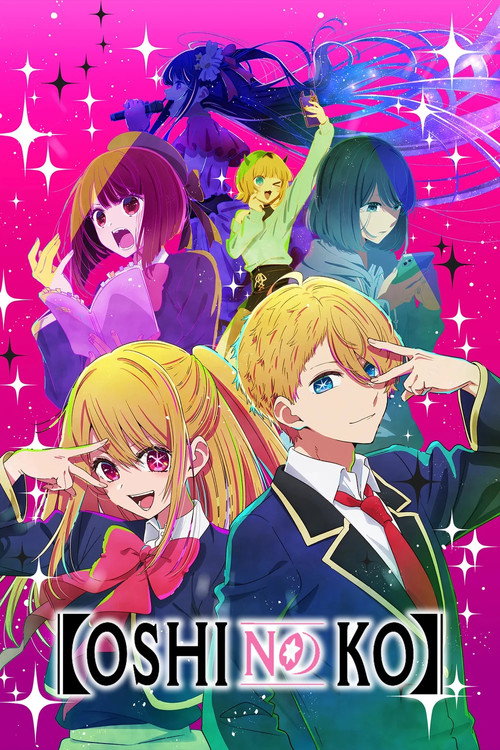
【OSHI NO KO】
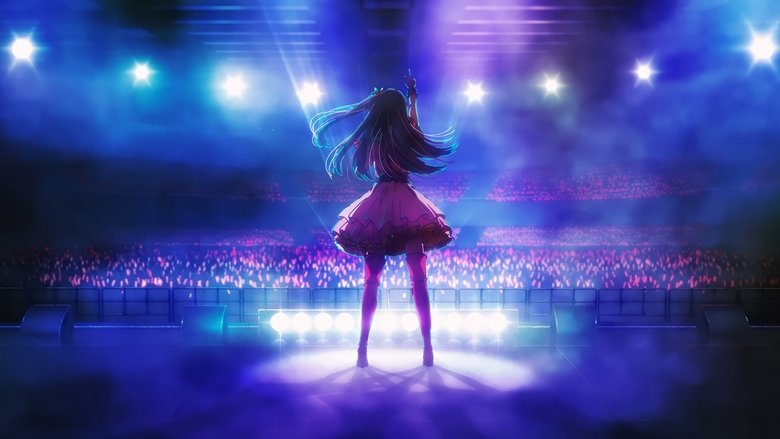
A psychological showbiz drama drenched in neon brilliance and pitch-black noir, where intoxicating stardom masks suffocating grief, like a shattered kaleidoscope catching stage lights amidst the ruins of innocence.
【OSHI NO KO】

【OSHI NO KO】

【推しの子】

12 April 2023 — 25 March 2026 Japan 1 season 35 episode Returning Series 8.3 (346)

Cast: Takeo Otsuka, Yurie Igoma, Megumi Han, Rumi Okubo, Manaka Iwami

Drama Animation The Duality of Lies vs. Authenticity in Entertainment The Poisonous Cycle of Trauma and Revenge The Perils of Parasocial Dynamics and Cyberbullying The Nature of Artistry, Acting, and Creative Craftsmanship

Overview

【OSHI NO KO】 explores the dazzling glamour and cutthroat realities of the Japanese entertainment industry. The narrative begins when Dr. Gorou Amamiya, an obstetrician in a rural clinic, encounters his idol, 16-year-old pop star Ai Hoshino, who is secretly pregnant with twins. On the night of delivery, Gorou is murdered by an obsessive stalker, only to awaken reincarnated as Ai’s newborn son, Aquamarine "Aqua" Hoshino, alongside his twin sister Ruby, who is secretly the reincarnation of a terminally ill patient Gorou once befriended. Together, the twins live a brief, enchanted childhood in the shadow of their mother’s rising stardom.

However, tragedy shatters their lives when Ai is ambushed and murdered at their doorstep. Realizing the killer possessed insider information that could only have come from their biological father, Aqua vows to uncover the culprit's identity by infiltrating the entertainment industry from within. Meanwhile, Ruby chooses to honor their mother’s legacy by walking the path of an idol herself.

As the story expands across television productions, reality dating programs, theatrical stage plays, and film sets, the siblings navigate a merciless labyrinth of public scrutiny, corporate exploitation, and artistic ambition. Aqua manipulates industry connections and harnesses acting techniques while hunting their father, while Ruby, alongside former child prodigy Kana Arima and online creator MEM-cho, re-forms Ai’s idol unit, B-Komachi. The series chronicles the cost of wearing public facades in an age of manufactured dreams.

Core Meaning

The core thesis of 【OSHI NO KO】 is an exploration of "the lie" (uso) as both an exploitative weapon and an act of transcendent love. Creators Aka Akasaka and Mengo Yokoyari deconstruct modern entertainment, illustrating how audiences consume idealized fabrications while performers commodify their true selves.

Across its overarching narrative, the series demonstrates that while parasocial obsession, media greed, and online malice can dehumanize and destroy individuals, genuine artistic expression and interpersonal devotion can transform manufactured illusions into genuine truth. It asserts that seeking vengeance locks the soul in a cycle of trauma, whereas true healing demands vulnerability, authenticity, and letting go of inherited ghosts.

Thematic DNA

The Duality of Lies vs. Authenticity in Entertainment 30%
The Poisonous Cycle of Trauma and Revenge 25%
The Perils of Parasocial Dynamics and Cyberbullying 25%
The Nature of Artistry, Acting, and Creative Craftsmanship 20%

The Duality of Lies vs. Authenticity in Entertainment

The series deconstructs how performers build personas (tatemae) to protect their private vulnerabilities (honne). Ai Hoshino’s foundational philosophy—that telling fans "I love you" is a lie she hopes will someday become real—is echoed throughout the show. Characters constantly navigate whether their stage presence is deceitful manipulation or a genuine gift of joy to an audience hungry for fantasy.

The Poisonous Cycle of Trauma and Revenge

Aqua’s life is defined by survivor’s guilt and an obsession with finding his biological father. The narrative illustrates how trauma narrows perception, turning human relationships into instrumental chess pieces. As the series deepens, revenge isolates the pursuer, contrasting with Ruby’s pursuit of joy and Kana’s dedication to craft.

The Perils of Parasocial Dynamics and Cyberbullying

The show presents a candid examination of social media lynching, toxic fan entitlements, and editorial manipulation. Through arcs like Akane Kurokawa’s reality TV ordeal, the series illustrates how digital mobs can drive vulnerable young performers to suicidal despair when they are stripped of humanity by anonymous consumers.

The Nature of Artistry, Acting, and Creative Craftsmanship

From low-budget web dramas to stage adaptations (Tokyo Blade), the narrative explores what separates communicative performance from technical skill. It contrasts method acting, emotional recall, and adaptive support acting, portraying art as a communal effort forged under extreme commercial constraints.

Character Analysis

Aquamarine "Aqua" Hoshino

Takeo Otsuka (Japanese) / Jack Stansbury (English)

Archetype: Tragic Antihero / Vengeful Strategist Key Trait: Calculating pragmatism masking an instinct to protect loved ones.

Motivation

Exposing and destroying his biological father to avenge Ai.

Character Arc

Reincarnated with memories of his past life as Dr. Gorou Amamiya, Aqua begins as a devoted son and prodigy before being defined by Ai’s murder. He represses his natural passion for acting, utilizing the entertainment industry solely as a hunting ground. Across the 2.5D Stage Play and Movie arcs, his psychological armor fractures under severe panic attacks and survivor's guilt, forcing him to choose between saving others and self-annihilation.

Ruby Hoshino

Yurie Igoma (Japanese) / Alyssa Marek (English)

Archetype: Radiant Heroine / Shadow-Touched Dreamer Key Trait: Unyielding vitality and expressive aura.

Motivation

Emulating Ai to perform at the Tokyo Dome, which evolves into uncovering truth through stardom.

Character Arc

Born from the reincarnated soul of Sarina Tendouji, Ruby starts as an exuberant, pure-hearted girl determined to dance on the stages her frail past body never allowed. As the story progresses and she uncovers the truth behind Gorou’s murder, her innocence darkens; she adopts her mother's star-eyed manipulative charm, weaponizing lies to climb the industry hierarchy before reclaiming her authentic joy.

All 5 characters and cast

Symbols & Motifs

Star-Shaped Pupils (Hoshigan)

Meaning:

Radiant white/gold stars symbolize magnetic charisma, the magic of deception, and idol perfection. Inverted pitch-black stars represent darkness, malice, manipulative intent, and trauma-driven obsession.

Context:

The defining visual motif of the Hoshino bloodline, appearing in the eyes of Ai, Aqua, and Ruby during pivotal emotional or performance shifts.

The Intercom / Front Door Chain

Meaning:

Represents the physical boundary between the private sanctuary and the predatory public world, and the fatal breach of trust between idol and parasocial consumer.

Context:

Appears when Ai opens the door to Ryosuke, and visually haunts Aqua's recurring nightmares throughout the series.

Glowsticks / Penlights

Meaning:

Represent identity, affirmation, and personal devotion. Color shifts carry profound emotional weight (Ai's purple, Ruby's red, MEM-cho's yellow, and Kana's white).

Context:

Used during idol concerts, particularly during Kana’s struggle when her light is not illuminated, culminating in Aqua turning his glowstick white to validate her worth.

Mirrors and Reflected Screens

Meaning:

Symbolize self-alienation, the fracture between identity and public image, and the digital surveillance state of modern media.

Context:

Prominently framed whenever characters rehearse their personas, apply makeup, or scroll through hateful online comments.

The "Tokyo Blade" Swords and Stage Scaffolding

Meaning:

Represent the externalization and confrontation of unresolved inner psychological wounds.

Context:

In Season 2, the theatrical stage serves as a battleground where characters express trauma through choreographed blade clashes and shifting projection mapping.

Memorable Quotes

嘘はとびきりの愛なんだよ?
— Ai Hoshino

Context

Spoken to her manager and children in Season 1, Episode 1.

Meaning

Defines Ai’s artistic and emotional creed that performance artifice is an act of generosity and love toward the audience.

ルビー、アクア…愛してる。ああ、やっと言えた…これは絶対、嘘じゃない。
— Ai Hoshino

Context

Ai’s dying words in Season 1, Episode 1, as she bleeds out in Aqua’s arms.

Meaning

Breaks her psychological curse of emotional detachment, providing emotional catharsis while inadvertently fueling Aqua's quest for vengeance.

All 5 quotes

Episode Highlights

Mother and Children

S1E1

A feature-length 82-minute prologue introducing the reincarnation premise, Ai's meteoric rise, and her shocking murder at her doorstep.

Significance:

Established the series' cinematic ambitions and broke viewership records across streaming platforms worldwide.

Egosurfing

S1E6

A grounded look at cyberbullying, social media mob mechanics, and mental health through Akane’s suicide attempt during a reality dating show.

Significance:

Garnered international critical acclaim for its nuanced and mature handling of modern online hostility.

Idol

S1E11

B-Komachi’s concert debut at the Japan Idol Festival, highlighting Kana’s emotional breakthrough as the group's center.

Significance:

Solidified the musical and emotional stakes of the idol storyline and launched the transition to the theatrical world.

Trigger / Sun

S2E6

Highlights Melt Narushima’s dramatic redemption arc and the intense stage confrontation between Kana and Akane during the Tokyo Blade play.

Significance:

Celebrated as a peak in Doga Kobo's animation production, blending rotating 3D stage dynamics with intense character drama.

Emotion

S2E8

Aqua utilizes emotional recall acting on stage, triggering a severe panic attack as he confronts repressed memories of Ai's dying smile.

Significance:

Represents the thematic fusion of acting and trauma, cementing Aqua's inner psychological fracture.

Reunion / Freedom

S2E12

The Takachiho trip where Gorou's skeletal remains are discovered, unmasking the deeper conspiracy, awakening Ruby’s dark star eyes, and introducing Hikaru Kamiki.

Significance:

Shifts the narrative trajectory from Aqua’s solo crusade into a twin-driven psychological thriller.

Philosophical Questions

Can a synthetic emotion or manufactured lie produce authentic human connection?

Explored through Ai's idol career and her hope that repeating "I love you" to fans would eventually transform an artifice into genuine emotional reality.

Where does the ethical responsibility lie when an audience consumes the personal life of a performer as disposable entertainment?

Examined through Akane's reality TV cyberbullying crisis and the exploitative editorial choices made by producers catering to volatile online mobs.

Does achieving justice through retributive revenge inherently destroy the soul of the avenger?

Depicted through Aqua's downward psychological spiral, panic attacks, and calculated alienation of personal relationships in pursuit of his biological father.

Is personal identity something discovered within, or a performance constructed for the external world?

Explored through the contrasting acting methodologies of Kana Arima, Akane Kurokawa, and Aqua Hoshino as they navigate public personas (tatemae) versus private truths (honne).

Alternative Interpretations

The narrative invites several multifaceted readings:

Full ending explanation

Cultural Impact

Released during an era marked by heightened scrutiny of talent agencies (such as the restructuring of Johnny & Associates) and rising concerns surrounding cyberbullying, 【OSHI NO KO】 captured the cultural zeitgeist.

The anime's opening theme, "Idol" (アイドル) by YOASOBI, became a global cultural phenomenon. It topped the Billboard Global Excl. U.S. chart as the first Japanese-language song to do so, garnered hundreds of millions of streams, and triggered viral dance trends worldwide. The series earned critical acclaim for lifting the veil on Japanese pop-entertainment mechanics while serving as a case study in multi-platform media storytelling.

Audience Reception

Season 1 (2023) received widespread critical acclaim. The premiere became an instant viral sensation, holding the #1 ranking on MyAnimeList during its initial broadcast run. Episode 6 ("Egosurfing") was specifically highlighted for its sensitive handling of modern social media issues.

Season 2 (2024) was praised for elevating the animation standard through the Tokyo Blade 2.5D Stage Play arc. Critics and fans commended the depth given to supporting characters like Melt, Taiki Himekawa, and Akane, solidifying the anime's standing as a premier production.

Overall, the series is considered a modern anime landmark, blending mystery, psychological thriller, and workplace drama. Minor criticisms are primarily directed at occasional tonal shifts between comedic teen romance and dark melodrama.

Interesting Facts

  • Renowned historically for cute slice-of-life and romantic comedies, studio Doga Kobo pivoted into psychological drama with this production, resulting in its acquisition by Kadokawa in 2024.
  • Lead character designer Kanna Hirayama discovered the manga in a bookstore, fell in love with it, and approached producer Shimpei Yamashita directly to initiate the anime adaptation project.
  • The production committee took the rare gamble of producing an 82-minute premiere episode that debuted theatrically in Japan before broadcasting worldwide on streaming platforms.
  • Author Aka Akasaka conducted extensive interviews with real-world J-pop idols, voice actors, TV directors, and talent managers to ensure every production pipeline detail was realistically portrayed.
  • Yurie Igoma, the voice actress for Ruby Hoshino, was an industry newcomer whose genuine enthusiasm mirrored Ruby’s, making it her breakout role.

Easter Eggs

Shared Universe with Kaguya-sama: Love is War

The shojo manga Sweet Today, which Aqua acts in during Season 1, is the exact same series read by characters in Kaguya-sama, and an adult Kaguya Shinomiya makes a canonical cameo as a celebrity photographer.

Mengo Yokoyari’s Art Style Homages

The production team directly incorporated illustrator Mengo Yokoyari’s trademark saturated watercolor aesthetics and distinct eye-glint patterns into critical close-up sequences.

Terrace House and Reality TV Parallels

The "LoveNow" reality dating arc directly critiques the real-life systemic pressures of unscripted entertainment and social media backlash.

Vocaloid and J-Rock Tropes

MEM-cho’s backstory and B-Komachi’s modern streaming strategies reference the transition of Japanese music culture from traditional talent agencies to YouTube, TikTok, and independent VTuber platforms.

Frequently Asked Questions

Explore More About This Movie

Dive deeper into specific aspects of the movie with our detailed analysis pages

Comments (0)

Leave a comment

No comments yet. Be the first to share your thoughts!

Similar Movies