The Apothecary Diaries
薬屋のひとりごと
Overview
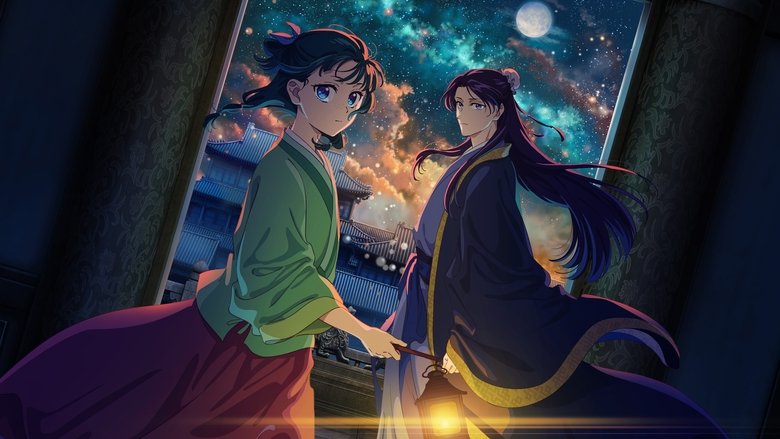
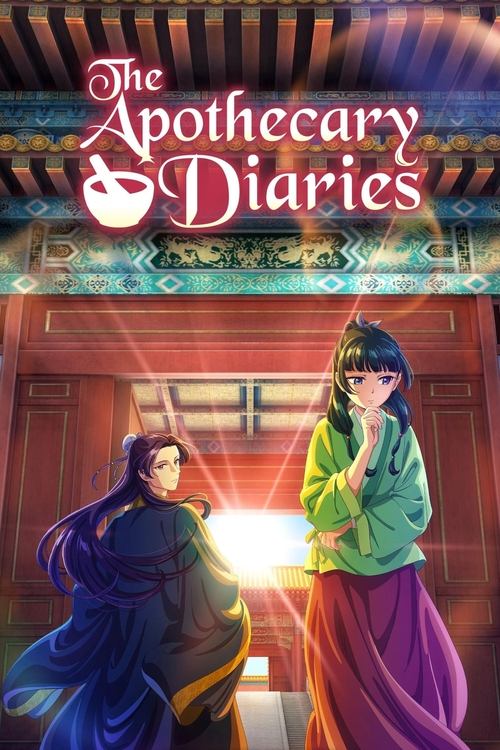
"The Apothecary Diaries" follows Maomao, a clever young woman raised in the pleasure district as an apothecary, who is kidnapped and sold into servitude in the emperor's inner palace. Determined to live an inconspicuous life, her plans go awry when her medical knowledge and keen observational skills become apparent. She catches the attention of the enigmatic and influential official, Jinshi, after she correctly identifies the cause of a mysterious illness afflicting the emperor's infant children.
Promoted from a mere laundress to a lady-in-waiting and food taster for the Emperor's favorite consort, Lady Gyokuyo, Maomao finds herself entangled in the complex and often dangerous politics of the court. Each episode presents a new puzzle—from poisonings and apparent curses to workplace accidents—that Maomao solves using her extensive knowledge of medicine, chemistry, and botany. While she navigates the treacherous social hierarchy, she builds relationships with the consorts and other palace staff, all while contending with the persistent and increasingly affectionate advances of Jinshi, whose own identity is a mystery she has yet to fully unravel.

Core Meaning
The core meaning of "The Apothecary Diaries" revolves around the power of knowledge and pragmatism in a world governed by rigid social structures and superstition. It champions a woman who uses her intellect, not her status or beauty, to navigate and survive a dangerous environment. The series explores the quiet strength and resilience of women within a patriarchal society, highlighting their intelligence and camaraderie as essential tools for survival. It posits that truth, sought through scientific inquiry and objective observation, is a powerful force that can cut through political intrigue, social pretense, and even deeply rooted traditions. Maomao's journey is a testament to the idea that one's worth is defined by their skills and character, not their birthright.
Thematic DNA
Knowledge as Power and a Burden
Maomao's extensive knowledge of medicine and poisons is her greatest asset, allowing her to solve mysteries, save lives, and elevate her status from a lowly servant. However, this same knowledge constantly puts her in danger, drawing unwanted attention from powerful figures like Jinshi and entangling her in court conspiracies she would rather avoid. Her intellect is a double-edged sword: it ensures her survival but simultaneously strips away her desired anonymity.
The Status and Agency of Women
The series offers a nuanced exploration of the lives of women in a setting modeled on Imperial China. Confined to the inner palace, the concubines and their ladies-in-waiting wield influence through subtle and strategic means. The show examines their rivalries, alliances, and personal tragedies, portraying them not as passive objects but as intelligent individuals fighting for security and power within a restrictive system. Maomao herself subverts traditional gender roles, valuing her independence and skills over romance or social climbing.
Appearance vs. Reality
A recurring theme is that things are rarely as they seem. Jinshi, perceived as a beautiful and influential eunuch, is hiding his true identity. Curses and supernatural events are consistently debunked by Maomao as products of human action, often involving poison or intricate plots. Characters' motivations and histories are gradually revealed to be far more complex than their initial appearances suggest, from the high-ranking official Lakan to the various consorts, teaching the viewer to look beyond the surface.
Pragmatism vs. Emotion
Maomao is a deeply pragmatic and rational protagonist, often approaching situations with a detached, scientific curiosity, even when dealing with matters of life and death. This contrasts sharply with the high emotional stakes of the palace and Jinshi's persistent romantic interest. Her character arc involves a slow, subtle opening up to the emotional connections she forms, challenging her instinct to remain detached from a world she finds both fascinating and frustrating.
Character Analysis
Maomao
Aoi Yuuki
Motivation
Maomao's primary motivation is her insatiable curiosity, particularly for poisons, medicines, and the truth. She is driven by a need to understand *why* things happen, applying a scientific method to every problem she encounters. While she values her freedom, her desire to solve a compelling puzzle often overrides her instinct to stay out of the spotlight.
Character Arc
Maomao begins the series as a detached and cynical observer, intent only on surviving her servitude and returning to her quiet life as an apothecary. Initially, she actively hides her skills to avoid trouble. However, her innate curiosity and sense of justice compel her to solve the mysteries around her. Through her interactions with Jinshi and the women of the inner palace, she slowly begins to form connections and invest in the well-being of others, moving from a position of pure self-preservation to one of reluctant engagement. Her journey is not about changing her core personality but about allowing her expertise and compassion to find a place in a world she never chose.
Jinshi
Takeo Otsuka
Motivation
Initially, Jinshi is motivated by a desire to maintain order and root out corruption within the palace, using Maomao as a valuable tool. This quickly evolves into a personal motivation to keep Maomao by his side, both for her skills and his growing romantic feelings. His broader motivation is tied to his hidden identity and the complex duties he must perform for the Emperor.
Character Arc
Jinshi is introduced as a preternaturally beautiful and influential eunuch who manages the rear palace with cunning and charm. He is immediately intrigued by Maomao's indifference to his looks and her sharp intellect. His arc involves his growing, genuine affection for Maomao, which challenges his manipulative tendencies and forces him to be more direct. As the series progresses, the veil of his secret identity as a high-ranking member of the royal family begins to slip, revealing the immense pressure and responsibilities he bears. He evolves from seeing Maomao as an interesting 'toy' to a person he deeply respects and wants to protect.
Gyokuyo
Atsumi Tanezaki
Motivation
Gyokuyo's motivation is to protect her children and secure her position as a favored consort. She is keenly aware of the dangers of the inner palace and values loyalty and competence, which is why she takes Maomao under her wing. She also shows a genuine interest in seeing the slow-burn romance between Maomao and Jinshi develop.
Character Arc
As one of the Emperor's four high-ranking consorts, Lady Gyokuyo starts as a grateful patient after Maomao saves her and her infant daughter. She quickly recognizes Maomao's value and becomes her protector and employer within the Jade Pavilion. Her arc is one of solidifying her position in the court. She is consistently portrayed as intelligent, kind, and politically savvy, forming a genuine bond of trust and friendship with Maomao. She remains a stable, supportive figure who provides Maomao with the platform and protection needed to conduct her investigations.
Gaoshun
Katsuyuki Konishi
Motivation
Gaoshun's motivation is absolute loyalty to Jinshi. He is dedicated to protecting Jinshi's secrets, facilitating his work, and ensuring his well-being. He acts as Jinshi's confidant and the practical enforcer of his plans, driven by a deep sense of duty and personal care for his young master.
Character Arc
Gaoshun is Jinshi's ever-present, dutiful attendant. He is a steadfast and reliable figure whose character arc is intrinsically tied to Jinshi's. He begins as a serious, almost stoic aide, but as the series progresses, his role as a surrogate father figure and moral compass for Jinshi becomes more apparent. He often acts as the exasperated but supportive middleman between Jinshi's schemes and Maomao's bluntness, showing subtle humor and deep loyalty. His development is seen in his growing respect and fondness for Maomao, whom he recognizes as a positive, if chaotic, influence on his master.
Symbols & Motifs
Poisons and Medicines
Poisons and medicines are dual symbols of harm and healing. They represent the core theme of knowledge as a double-edged sword. In the palace, the same substance can be used to kill an enemy or cure an illness, and only a discerning eye like Maomao's can distinguish between the two. Her fascination with testing poisons on herself symbolizes her risky, empirical pursuit of truth.
Used constantly throughout the series. The central mystery of the first episodes revolves around lead-based face powder poisoning the consorts and their children. Maomao's role as a food taster and her personal experiments with toxins are recurring plot elements.
Kanzashi (Hairpins)
Hairpins function as symbols of status, connection, and intention. Jinshi bestowing a hairpin upon Maomao is a significant gesture, representing his favor and a desire to bind her to his service. In the pleasure district, a courtesan receiving a hairpin signifies being bought for the night. Within the series, they act as markers of complex social and power dynamics in every relationship.
Jinshi gives Maomao a hairpin early in the series, which she later uses to request a favor from the officer Lihaku. The meaning and exchange of hairpins are central to understanding the motivations behind Lakan's backstory in the latter half of the first season.
Blue Roses
The blue rose symbolizes the impossible or the unattainable. In the context of the story, it represents a difficult, seemingly impossible task that requires ingenuity and scientific knowledge to achieve, mirroring the challenges Maomao herself undertakes.
In episode 22, "Blue Roses," Maomao is tasked with helping to cultivate blue roses for a garden party. This plotline highlights her problem-solving abilities outside of purely medical mysteries and serves as a metaphor for achieving the extraordinary through intellect.
Episode Highlights
Maomao
The first episode efficiently establishes the entire premise. Maomao, a kidnapped apothecary servant, secretly uses her knowledge to diagnose the illness killing the imperial heirs, leaving a note that reveals the cause is poisonous face powder. Her intelligence is immediately recognized by Jinshi, setting the main plot in motion.
This episode is the catalyst for the entire series. It introduces the main characters, the core conflict between Maomao's desire for anonymity and her compulsion to solve mysteries, and the central relationship dynamic between her and Jinshi.
The Garden Party
During a lavish garden party for the consorts, Maomao is tasked with identifying poison in Lady Lishu's food. She successfully uncovers the plot, not only saving the consort but also exposing the complex social rivalries and dangers lurking beneath the court's polished veneer. She receives a symbolic hairpin from Jinshi for her efforts.
This episode expands the scope of the mysteries from medical accidents to deliberate, politically motivated poisonings. It solidifies Maomao's role as an indispensable investigator for Jinshi and deepens the intrigue of the inner palace.
The Eunuch and the Courtesan
Maomao's contract of servitude in the rear palace ends, and Jinshi must decide her fate. This episode delves into Maomao's past in the pleasure district and her connection to the Verdigris House. Jinshi ultimately chooses to release her, a pivotal moment that changes their dynamic.
This episode marks a major turning point in the series, shifting Maomao's status from a servant to a free woman, albeit one still connected to Jinshi. It concludes the first major arc of her life in the rear palace and sets the stage for her new role in the outer court.
Lakan
The brilliant but eccentric military strategist, Lakan, is properly introduced. His strange obsession with go and his connection to the Verdigris House are explored. Maomao displays a profound and unexplained hatred for him, setting up one of the season's most important personal mysteries.
Lakan's introduction is crucial for the overarching plot concerning Maomao's parentage. This episode lays the groundwork for the emotional climax of the season, revealing that the court's political intrigues are deeply personal for Maomao.
Jinshi and Maomao
The season finale resolves the mystery of Maomao's biological father, revealing the tragic love story between Lakan and her courtesan mother, Fengxian. Maomao confronts her past, and in a powerful moment, she and Jinshi share a dance under a plum tree, solidifying their bond and hinting at his true, non-eunuch identity.
This episode provides a deeply emotional and satisfying conclusion to the season's main character arc. It resolves the question of Maomao's lineage while simultaneously opening up new mysteries about Jinshi's identity and their future, perfectly setting up the next season.
Philosophical Questions
Does knowledge bring freedom or imprisonment?
The series consistently explores this question through Maomao. Her medical expertise allows her to solve life-threatening problems and earn a degree of respect and autonomy unavailable to other servants. However, this same knowledge makes her a target and a tool for the powerful, trapping her in the dangerous world of court politics she desperately wants to escape. The narrative suggests that knowledge is a form of power, but one that comes with heavy burdens and responsibilities that can severely restrict one's freedom.
What is the nature of justice in a hierarchical society?
Maomao often uncovers truths behind poisonings and deaths, but true justice is rarely served in a straightforward manner. The culprits are often powerful individuals, and punishment is dictated by political expediency rather than moral righteousness. Maomao's role is not of a judge, but of a truth-seeker. The series seems to argue that in a rigid hierarchy, the pursuit of truth is a revolutionary act in itself, even if the system is incapable of delivering perfect justice.
Alternative Interpretations
One alternative reading of the series frames it as a critique of class structures. Maomao, a commoner from the red-light district, consistently proves herself more intelligent and capable than many of the nobles and officials she serves. Her success can be interpreted as an argument that merit and knowledge are more valuable than noble birth. Her clashes with the rigid court hierarchy and her disregard for status highlight the absurdity of a system that values lineage over ability.
Another interpretation focuses on the dynamic between Jinshi and Maomao as a commentary on power and consent. While presented as a slow-burn romance, some critics and viewers analyze Jinshi's actions through a modern lens, flagging his initial manipulation and use of his authority over Maomao as problematic. This reading explores the complexities of their relationship not just as a budding romance, but as an ongoing negotiation of power between a high-ranking official and his subordinate, where Maomao must constantly assert her boundaries and independence.
Cultural Impact
"The Apothecary Diaries" quickly became a breakout hit of the 2023-2024 anime season, earning praise from both Japanese and international audiences for its intelligent protagonist and unique blend of genres. Set in a world inspired by Imperial China, the series resonated with viewers for its detailed depiction of court life, medicine, and political intrigue, all viewed through the eyes of a capable and refreshingly pragmatic female lead. Maomao's character, in particular, was lauded for subverting typical anime heroine tropes; her arc is driven by intellectual curiosity rather than romance, appealing to a broad audience that craves more complex female characters.
The series' success has significantly boosted sales of the original light novels and manga, introducing the source material to a global fanbase. In Japan, its popularity led to unique collaborations, including Maomao appearing on the cover of a public health magazine, demonstrating its penetration into mainstream culture. Critically, the show has been celebrated as a standout historical drama, praised for its well-paced mysteries and strong character development. While not overtly political, its focus on the agency and intelligence of women in a restrictive, patriarchal society has been noted as a timely and empowering theme. The announcement of a second season was met with widespread enthusiasm, cementing "The Apothecary Diaries" as a major new franchise in the anime landscape with a lasting legacy.
Audience Reception
"The Apothecary Diaries" received overwhelmingly positive reception from audiences worldwide. Upon its release, it quickly became one of the highest-rated and most popular anime of its season. On platforms like MyAnimeList, it holds a high score, with hundreds of thousands of users rating it favorably. Audiences have overwhelmingly praised the series for its unique protagonist, Maomao, celebrating her intelligence, independence, and amusingly deadpan personality. The slow-burn, non-traditional romance between Maomao and Jinshi has also been a major point of discussion and praise, with many fans enjoying the witty banter and gradual development of their relationship.
The intricate mysteries and the detailed historical setting inspired by Imperial China have been cited as major strengths, keeping viewers engaged on a case-by-case basis while building a larger, overarching narrative. Criticisms are minor and infrequent, though some viewers have commented on the occasionally slow pacing of the court drama. Overall, the audience consensus is that "The Apothecary Diaries" is a refreshing, intelligent, and beautifully animated series that successfully blends mystery, historical drama, and comedy, making it a must-watch. The announcement of a second season was met with widespread excitement, indicating a strong and dedicated fanbase eager for more.
Interesting Facts
- The series is based on a popular light novel series written by Natsu Hyuuga, which was first published online in 2011 on the user-generated novel site Shōsetsuka ni Narō.
- The setting is a fictional country, but it is heavily inspired by Imperial China during the Tang Dynasty.
- There are two different manga adaptations of the light novel that began in 2017, illustrated by Nekokurage and Minoji Kurata respectively.
- The anime was produced by Toho Animation Studio and OLM, the latter of which is famous for the "Pokémon" anime.
- The original author, Natsu Hyuuga, initially conceived of Jinshi as a less important character who was supposed to die, but his popularity with readers led to his role being expanded into the male lead.
- Aoi Yuuki, Maomao's Japanese voice actress, was praised for her ability to capture the character's deadpan delivery and occasional cat-like vocalizations.
- The anime's popularity in Japan was so significant that its protagonist, Maomao, became the first fictional character to be featured on the cover of the magazine for Japan's Ministry of Health, Labour, and Welfare.
⚠️ Spoiler Analysis
Click to reveal detailed analysis with spoilers
Frequently Asked Questions
Explore More About This Movie
Dive deeper into specific aspects of the movie with our detailed analysis pages
Comments (0)
No comments yet. Be the first to share your thoughts!