Robot Dreams
A dialogue-free tragicomedy painted in vibrant hues, exploring the bittersweet melody of friendship and the poignant silence of loss in 1980s New York.
Robot Dreams

Robot Dreams

"Experience a once-in-a-lifetime friendship beyond your wildest dreams"

06 December 2023 France 102 min ⭐ 8.0 (711)
Director: Pablo Berger
Cast: Ivan Labanda, Tito Trifol, Rafa Calvo, José García Tos, José Luis Mediavilla
Drama Animation Comedy Science Fiction
Friendship and Loneliness Memory and Dreams Loss and Acceptance The Passage of Time
Budget: $5,300,000
Box Office: $4,656,348

Overview

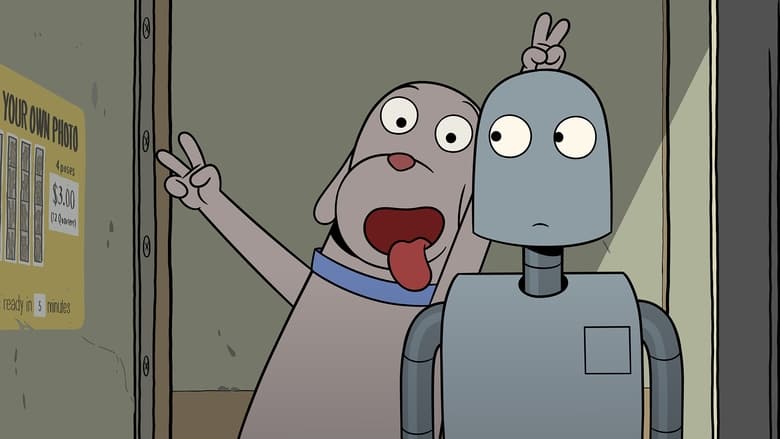
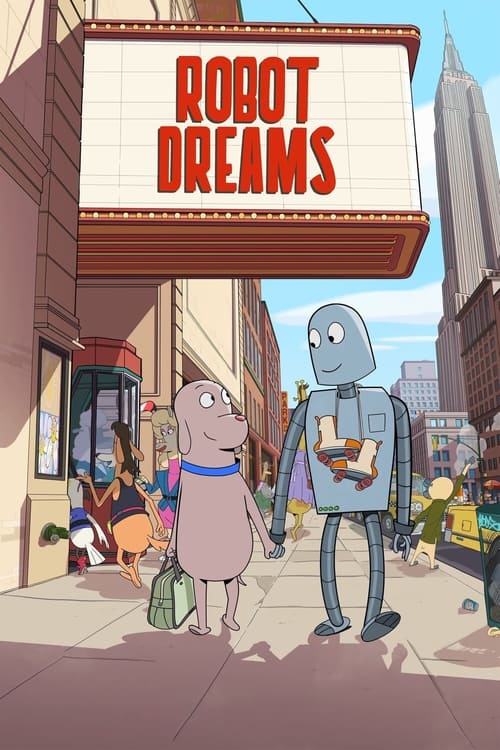
Set in a vibrant, anthropomorphic 1980s New York City, "Robot Dreams" tells the story of Dog, a lonely resident of the East Village. To combat his solitude, he orders a mail-order robot companion. Upon assembly, Dog and Robot become inseparable friends, sharing a summer of joyous adventures, from roller-skating in Central Park to the iconic rhythm of Earth, Wind & Fire's "September."

Their perfect friendship is abruptly paused after a day at the beach. Robot rusts from the salt water and becomes completely immobilized. A heartbroken Dog is forced to leave him behind, fully intending to return the next day. However, he discovers the beach is fenced off and closed until the following June. The film then splits its narrative, following Dog's attempts to cope with loneliness and find new connections, while Robot, stranded on the sand, experiences a series of dreams and encounters, holding onto the memory of his friend.
Core Meaning

"Robot Dreams" is a profound meditation on the nature of relationships, memory, and the inevitability of change. Director Pablo Berger crafts a story that explores how deeply friendships can shape our lives, even after they're gone. The film's core message is one of poignant acceptance: that love and loss are intertwined, and that moving on doesn't negate the significance of past connections. It suggests that memories, while sometimes painful, are treasures we carry with us, and that true affection means wishing the best for someone, even if your paths diverge. The bittersweet ending encapsulates this, showing that life continues and new happiness can be found, while still honoring the beauty of what was.

Thematic DNA

Friendship and Loneliness 35%
Memory and Dreams 25%
Loss and Acceptance 25%
The Passage of Time 15%

Friendship and Loneliness

The film's central theme is the profound bond of friendship and the deep-seated loneliness it alleviates. Dog's initial isolation is palpable, and the arrival of Robot fills his life with joy and companionship. Their separation forces both characters back into solitude, highlighting their yearning for connection as they navigate the world alone, forever changed by the friendship they shared.

Memory and Dreams

With Robot immobilized for a year, his inner world is explored through a series of vivid, often surreal dreams. These sequences, which reference classic films like "The Wizard of Oz," reveal his fears, hopes, and unwavering memory of Dog. Dreams become a crucial narrative device, illustrating the enduring power of memory and the subconscious processing of love and trauma.

Loss and Acceptance

"Robot Dreams" eschews a simple, happy reunion for a more mature and emotionally complex exploration of loss. It portrays the painful reality that some relationships, no matter how cherished, are transient. The film's powerful conclusion is a masterclass in acceptance, showing both characters finding new happiness while acknowledging the indelible mark their past friendship left on them. It argues that moving on is not an act of forgetting, but a testament to the capacity to love again.

The Passage of Time

The narrative is structured around the changing seasons, emphasizing the unavoidable passage of time and how circumstances can irrevocably alter relationships. Dog's initial plan to rescue Robot the next day is thwarted by a whole year of waiting. This extended separation forces both characters to grow and change independently, making their eventual, unspoken reunion a poignant reflection on how time shapes individual paths.

Character Analysis

Dog

Ivan Labanda (sound effects)

Archetype: The Everyman / The Seeker
Key Trait: Hopeful

Motivation

Dog's primary motivation is to overcome his loneliness and find a meaningful connection. After Robot is stranded, his motivation shifts to rescuing his friend. Ultimately, his arc shows a deeper motivation: to find happiness and companionship, even if it means accepting loss and moving forward.

Character Arc

Dog begins as a lonely individual who finds profound happiness through his friendship with Robot. Their separation plunges him into a period of grief and desperate attempts to reconnect. Over the year, he learns to navigate his loneliness again, attempting to form new, albeit less successful, relationships. His journey is one of learning to cope with loss, cherish memories, and eventually open his heart to a new companion, Tin, demonstrating emotional growth and resilience.

Robot

N/A

Archetype: The Innocent / The Steadfast Companion
Key Trait: Loyal

Motivation

Robot's initial motivation is to be a good companion to Dog. While stranded, his motivation is to reunite with his friend. In the end, his motivation evolves into a selfless desire for both himself and Dog to be happy, even if it means they must remain apart.

Character Arc

Robot starts as a newly-assembled, curious companion who experiences the world with wide-eyed wonder. After being stranded, his physical journey halts, but his internal journey is vast. Through his dreams and interactions with beach wildlife, he processes his abandonment and holds onto hope. After being rescued and rebuilt by Rascal, he forms a new, meaningful friendship. His final decision not to reveal himself to Dog shows immense growth; he chooses to preserve his friend's new happiness over his own desire for reunion, demonstrating a selfless and mature understanding of love and acceptance.

Rascal

N/A

Archetype: The Rescuer / The New Friend
Key Trait: Resourceful

Motivation

Rascal's motivation appears to be one of creativity and companionship. He sees potential in the discarded Robot and, through his actions, finds a new friend to share his life with.

Character Arc

Rascal is a resourceful raccoon who discovers Robot in a scrapyard. He takes Robot's discarded parts and gives them a new life, rebuilding Robot's body into a boombox. He becomes Robot's new close friend and companion, symbolizing that new, meaningful relationships can be formed from the pieces of what was lost.

Tin

N/A

Archetype: The New Companion
Key Trait: Cheerful

Motivation

As a companion robot, Tin's motivation is to be a friend to Dog, helping him find happiness again after a period of grief.

Character Arc

Tin is the new robot Dog buys to cope with his loneliness after accepting that Robot is gone. He represents a new beginning and Dog's ability to move forward. The relationship between Dog and Tin is shown to be a happy one, though different from the one Dog had with Robot. Dog has learned from his past mistakes, as seen when he carefully oil-sprays Tin before going to the beach.

Symbols & Motifs

The song 'September' by Earth, Wind & Fire

Meaning:

It symbolizes the peak of Dog and Robot's friendship—a pure, unadulterated anthem of their shared joy. It later becomes a bittersweet memory, a musical motif that connects them even when they are apart. In the final scene, it represents their mutual, unspoken understanding and acceptance of their separate paths, a final shared dance across a distance.

Context:

The song is first played when Dog and Robot are joyfully roller-skating in Central Park. Its melody is woven throughout the score. The film concludes with Robot playing the song from his new apartment, and Dog hearing it on the street below, leading to a final, synchronized dance that serves as their farewell.

The Beach

Meaning:

The beach represents both paradise and prison. It is the setting for one of Dog and Robot's happiest days but becomes the site of their traumatic separation. It symbolizes a place of idyllic moments that can be frozen in time, but also the physical and emotional distance that can suddenly and cruelly separate loved ones.

Context:

Dog and Robot spend a joyful day at Ocean Beach, but Robot rusts and becomes immobilized there after swimming. The beach is then closed for the season, physically separating them for a year and becoming the central location of Robot's long wait and dreams.

The Boombox

Meaning:

Initially just a tool for playing their favorite song, Robot's body is eventually repurposed into a functional boombox by Rascal. This transformation symbolizes rebirth and finding a new purpose after profound loss. Robot literally incorporates the music that defined his past into his new form, allowing him to broadcast their shared memory in the film's final moments.

Context:

After being discarded in a scrapyard, Robot's parts are found by a raccoon named Rascal, who transforms his torso into a boombox. In the final scene, Robot uses his new body to play "September" for Dog, a final act of connection and release.

Philosophical Questions

What defines a meaningful relationship, and must it last forever to be significant?

The film challenges the conventional idea that the success of a relationship is measured by its longevity. The friendship between Dog and Robot, though brief, fundamentally changes both of their lives. The poignant ending suggests that a relationship's value lies in its depth and impact, not its duration. It affirms that even transient connections can leave a permanent, beautiful mark on who we become.

Can true affection exist without possession?

The climax of the film explores the idea of selfless love. Robot sees Dog, happy with a new companion, and makes the conscious choice not to interfere. This act suggests that the ultimate expression of his love for Dog is to prioritize Dog's current happiness over his own desire for reunion. The film posits that true affection can mean letting go and being happy for someone from a distance, a mature and often painful form of love.

How do we reconcile cherished memories with the need to move forward?

"Robot Dreams" portrays memory not as something to be escaped, but as an integral part of life that coexists with the present. The final scene, with the shared, distant dance to "September," is a perfect visualization of this concept. Dog and Robot don't erase their past; they honor it with a final, beautiful moment of shared remembrance before continuing on their separate new paths. The film suggests that moving on is not about forgetting, but about integrating memories into a new reality.

Alternative Interpretations

While the primary interpretation of "Robot Dreams" focuses on the bittersweet nature of friendship and the necessity of moving on, some viewers and critics have explored other readings.

One perspective views the film as a metaphor for a romantic relationship. The intense, idyllic summer shared by Dog and Robot mirrors the honeymoon phase of a romance, while their sudden, forced separation represents a painful breakup due to circumstances beyond their control. Their subsequent individual journeys—dating others, processing grief, and eventually finding new partners—align closely with the arc of recovering from lost love. The film's ending, in this light, is a mature depiction of seeing a former partner happy with someone new and finding peace in that knowledge.

Another interpretation delves into a more philosophical reading about memory and identity. It questions whether the Robot at the end is the 'same' Robot from the beginning. Having been dismantled, discarded, and rebuilt by someone new (Rascal), one could argue his identity has been fundamentally altered. His final decision not to approach Dog might stem from a realization that he is no longer the same being Dog remembers, and that a reunion would be a meeting of two different people who have grown too far apart. This reading emphasizes that profound experiences and new relationships literally remake us.

Cultural Impact

"Robot Dreams" achieved significant critical success upon its release, premiering at the Cannes Film Festival and culminating in an Academy Award nomination for Best Animated Feature. It was widely praised as a masterful piece of dialogue-free storytelling, drawing comparisons to classic silent films while feeling entirely modern in its emotional depth. Critics celebrated its ability to convey a rich, complex narrative about friendship, loss, and acceptance purely through visuals and music, resonating deeply with adult audiences.

The film serves as a powerful counter-narrative to the dominant 3D, dialogue-heavy animated features from major American studios, championing the artistic and emotional potential of traditional 2D animation. Director Pablo Berger's meticulous recreation of 1980s New York City acts as a nostalgic time capsule, celebrating a pre-globalization era of the city's culture. By being based on an American graphic novel by Sara Varon and produced by a Spanish-French team, the film is an example of successful cross-cultural artistic collaboration. Its universal themes, accessible without language barriers, have allowed it to connect with audiences globally, reaffirming that animation is a medium, not just a genre for children.

Audience Reception

Audience reception for "Robot Dreams" has been overwhelmingly positive, with viewers frequently describing it as a deeply moving, beautiful, and unexpectedly emotional experience. Many praised its ability to tell a profound story without any dialogue, relying instead on its charming animation, expressive characters, and evocative soundtrack. The use of Earth, Wind & Fire's "September" was frequently highlighted as a perfect and heart-wrenching musical choice. The film's bittersweet ending was a major point of discussion, with most viewers finding it poignant, mature, and more realistic than a conventional happy reunion. While some found the ending heartbreaking, the consensus was that its emotional complexity is what makes the film so powerful and memorable. It's often cited as a film that, despite its simple appearance, deals with very adult themes of loss and acceptance, leaving a lasting impact on viewers.

Interesting Facts

  • The film is completely dialogue-free. Director Pablo Berger had previous experience with silent storytelling, having directed the black-and-white, silent film "Blancanieves" (2012).
  • The film is based on the 2007 graphic novel of the same name by American author Sara Varon.
  • Director Pablo Berger considers the film his "love letter to 80s New York," having lived there for a decade. The apartment where Dog lives is based on Berger's own last apartment in the city.
  • The film is populated by over 1000 different anthropomorphic animal characters, designed to make the New York setting feel diverse and alive.
  • The iconic song "September" by Earth, Wind & Fire was part of the script from the very first draft.
  • The production initially planned to collaborate with the Irish animation studio Cartoon Saloon ("The Secret of Kells", "Wolfwalkers"), but the plans were cancelled due to the COVID-19 pandemic, leading Berger's producers to create a new studio specifically for the film.
  • The film received widespread critical acclaim, winning the Contrechamp Award at the Annecy International Animation Film Festival and was nominated for the Academy Award for Best Animated Feature.
  • The animation was created using Toon Boom Harmony and Storyboard Pro software.

Easter Eggs

The box Robot arrives in is from a company called "Berger Corp" and the model is "Amica 2000."

"Berger Corp" is a direct reference to the film's director, Pablo Berger. "Amica" is Italian for "friend," making the robot's model name literally "Friend 2000."

In one of Robot's dream sequences, he and Dog journey through a landscape that directly references "The Wizard of Oz."

This is a homage to the classic 1939 film, with Dog, Robot, and other characters taking on the roles of Dorothy and her companions on the Yellow Brick Road. The dream sequences are filled with references to classic cinema, including the musicals of Busby Berkeley.

Numerous 1980s New York City cultural and historical details are embedded in the background.

These include graffiti by artist Keith Haring, the Guardian Angels non-profit on the subway, real advertisements for brands like Doublemint Gum, the now-defunct Kim's Video store, and the World Trade Center's Twin Towers in the skyline.

The mascot on Dog's bag is Naranjito.

Naranjito, an orange, was the official mascot of the 1982 FIFA World Cup, which was held in Spain, the home country of the director.

In the library, Dog looks through a repair manual for a Commodore 64.

The Commodore 64 was an immensely popular home computer released in 1982, grounding the film's technology firmly in the 1980s setting.

⚠️ Spoiler Analysis

Click to reveal detailed analysis with spoilers

Frequently Asked Questions

Explore More About This Movie

Dive deeper into specific aspects of the movie with our detailed analysis pages

Comments (0)

Leave a comment

No comments yet. Be the first to share your thoughts!