Skip to content
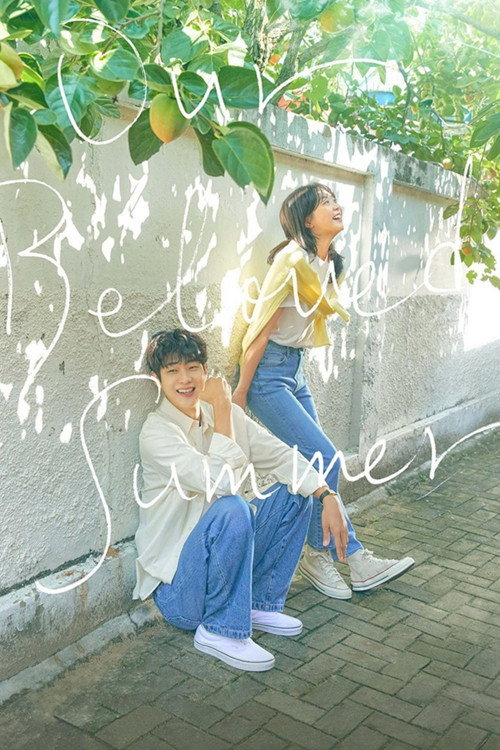
Our Beloved Summer
A sun-drenched, melancholic romance bathed in dappled light and sudden downpours, capturing the ache of youth, where unresolved heartache softens like watercolors under the gentle warmth of second chances.
Our Beloved Summer

Our Beloved Summer

그 해 우리는

"Let's film the documentary again."

06 December 2021 — 25 January 2022 South Korea 1 season 16 episode Ended 8.4 (177)

Cast: Choi Woo-shik, Kim Da-mi, Kim Sung-cheol, Roh Jeong-eui, Ahn Dong-gu

Drama Comedy Vulnerability, Communication & Emotional Growth Memory, Subjective Truth & The Documented Life Socioeconomic Disparity & Self-Preservation Lingering Love & Second-Chance Romance Loneliness, Adoption & Sense of Belonging

Overview

Our Beloved Summer is a 16-episode slice-of-life romantic drama and coming-of-age story created by Studio N, written by Lee Na-eun, and directed by Kim Yoon-jin. The narrative centers on Choi Ung and Kook Yeon-su, two high school classmates who represent opposite extremes of academic achievement: Yeon-su is the fierce, prideful top student, while Ung is the laid-back, introverted slacker ranked dead last. When a production team documents their daily interactions for a high school special, their bickering gradually blossoms into a tender five-year romance, which later collapses into a bitter, unexplained breakup.

A decade after their original high school project, their documentary unexpectedly goes viral online. Capitalizing on public nostalgia, television producer Kim Ji-ung—Ung’s lifelong best friend who has harbored unexpressed feelings for Yeon-su since adolescence—persuades the estranged former lovers to shoot a 10-year follow-up documentary. Now twenty-nine years old, Ung has become an incognito architectural illustrator working under the moniker Ko-oh, while Yeon-su is a pragmatic marketing team leader burdened by economic anxiety and self-reliance.

Forced to coexist in front of unblinking camera lenses, Ung and Yeon-su must navigate lingering resentments, unspoken trauma, and mutual attraction. The mockumentary format interweaves present-day interactions with documentary confessions and past memories, tracking not only their romantic reconciliation but also their individual transitions from defensive, scarred adolescents into emotionally honest adults.
Core Meaning

The fundamental message of Our Beloved Summer is that emotional maturity requires unmasking personal vulnerabilities and redefining the narratives we construct about our own lives. The creators illustrate how emotional survival mechanisms—Yeon-su’s preemptive abandonment of loved ones born of economic insecurity, Ung’s passive withdrawal stemming from childhood abandonment, and Ji-ung’s emotional detachment as an observer—prevent authentic connection.

Through the metaphor of a documentary camera, the drama demonstrates that ordinary, flawed lives hold intrinsic beauty when viewed with empathy. Growth is framed not as achieving external status or erasing the past, but as cultivating the courage to communicate honestly, forgive oneself, and invite others into one's inner world.

Thematic DNA

Vulnerability, Communication & Emotional Growth 30%
Memory, Subjective Truth & The Documented Life 25%
Socioeconomic Disparity & Self-Preservation 20%
Lingering Love & Second-Chance Romance 15%
Loneliness, Adoption & Sense of Belonging 10%

Vulnerability, Communication & Emotional Growth

The primary conflict is the lack of candid communication between the leads. Both employ self-protective barriers: Yeon-su conceals her economic desperation behind pride, while Ung avoids confronting pain by feigning apathy. Over 16 episodes, their evolution requires learning how to voice fears rather than running away.

Memory, Subjective Truth & The Documented Life

The mockumentary framework explores how memory is filtered through personal bias. The camera acts as a quasi-objective witness, yet reveals that truth is deeply subjective; what one partner remembered as a cold confrontation, the documentary lenses reveal to be a moment of sorrow and love.

Socioeconomic Disparity & Self-Preservation

Yeon-su’s early life is defined by poverty and caregiving duties for her grandmother, forcing her to abandon anything deemed an indulgence—including love. In contrast, Ung's financial security allows him to live aimlessly. The series dissects how class pressures distort intimate relationships without villainizing either party.

Lingering Love & Second-Chance Romance

Rather than presenting a whirlwind new romance, the story explores the inertia of first love that never truly faded. The narrative reveals that time alone does not heal wounds; conscious reconciliation and emotional rebuilding are essential.

Loneliness, Adoption & Sense of Belonging

Ung’s quiet struggle with childhood abandonment by his biological father and his deep gratitude—and subtle guilt—toward his adoptive parents shapes his fear of becoming an emotional burden. Parallel to this is Ji-ung’s isolation from an emotionally absent mother, showing how family trauma dictates adult attachment styles.

Character Analysis

Choi Ung

Choi Woo-shik

Archetype: The Wounded Artist / Reluctant Hero Key Trait: Introverted, deeply loyal, pensive.

Motivation

Shifted from seeking a quiet, undisturbed existence to actively protecting his relationships and pursuing artistic purpose.

Character Arc

Begins as an unmotivated, passive youth carrying suppressed childhood abandonment trauma; transforms into an assertive, self-aware artist who pursues higher education abroad and openly claims his agency in love and life.

Kook Yeon-su

Kim Da-mi

Archetype: The Fierce Pragmatist / Defended Heroine Key Trait: Resilient, fiercely independent, guarded.

Motivation

Moves from mere survival and self-preservation to self-acceptance, emotional openness, and genuine connection.

Character Arc

Evolves from a rigid, prickly overachiever who pushes people away due to economic insecurity into a vulnerable, warm woman who realizes she was never truly alone and deserves happiness.

All 4 characters and cast

Symbols & Motifs

Architectural Drawings (Buildings without People)

Meaning:

Symbolizes a desire for permanence, stability, and emotional control, reflecting a profound fear of transitory human relationships and the pain of loved ones walking away.

Context:

Used throughout the series as Choi Ung's artistic signature under the pseudonym Ko-oh, where he meticulously draws permanent structures in pen and ink while strictly excluding human figures.

The Documentary Camera / Viewfinder

Meaning:

Represents the delicate boundary between observation and participation, acting as both a defensive shield against emotional vulnerability and a mirror compelling emotional transparency.

Context:

Utilized by Kim Ji-ung to hide his unrequited longing for Yeon-su behind the lens, while simultaneously functioning as the medium that forces Ung and Yeon-su to confront their buried truths.

Summer Rain & Umbrellas

Meaning:

Rain acts as an emotional catalyst for breakthroughs and heightened intimacy, while umbrellas symbolize care, emotional shelter, and the deliberate lowering of defensive barriers.

Context:

Featured during critical relationship milestones, including the high school gazebo confession, the pivotal Episode 8 kiss during a rural retreat downpour, and key reunion scenes.

The Jujube Tea and Cherry Blossoms

Meaning:

Jujube tea represents nurturing affection, care, and comfort, while falling cherry blossom petals evoke the impermanence of youth and the fleeting beauty of shared memories.

Context:

Ung brews jujube tea to soothe Yeon-su's chronic insomnia and anxiety, while cherry blossom imagery punctuates nostalgic flashbacks to their early romance.

The Title of 'Ko-oh' (Drawing Pen Nibs)

Meaning:

Represents Ung's introspective identity and endurance, symbolizing the intense pressure borne in solitude to produce delicate, enduring beauty.

Context:

Adopted as Ung's professional artist pseudonym, visible in his continuous, fine-line ink artwork and live drawing exhibitions.

Memorable Quotes

우리가 헤어진 건… 내 오만 때문이었어. 너 없이도 살 수 있다는 내 오만.
— Kook Yeon-su

Context

Spoken in Episode 11 during an emotional turning point when Yeon-su finally confronts and confesses the real reason behind their painful breakup years earlier.

Meaning

Shatters Yeon-su's defensive emotional façade by acknowledging that her unilateral decision to break up was rooted in destructive, self-protective pride rather than a lack of love.

내가 버리기 가장 쉬운 게 너였어? 내가 가장 버리기 쉬운 게 너냐고.
— Choi Ung

Context

Spoken in Episode 6 following his 100-hour live drawing performance, when Ung tearfully confronts Yeon-su about why she abandoned him.

Meaning

Gives voice to years of internalized inadequacy and pain, confronting the emotional trauma caused by being repeatedly pushed away by the person he loved most.

All 4 quotes

Episode Highlights

I Know What You Did Last Summer

S1E1

Introduces the high school documentary framing device alongside Ung and Yeon-su's present-day mutual estrangement and bickering dynamic.

Significance:

Establishes the core premise of the viral high school project forcing the estranged former lovers back into each other's orbits ten years later.

The Boy, or the Girl, We Liked Back Then

S1E4

Explores the early days of their adolescent romance juxtaposed with their present-day commercial collaboration on the Soen Shop project.

Significance:

Reveals the persistent emotional chemistry underlying their defensive animosity and highlights how unresolved past grief still shapes their interactions.

Pride and Prejudice

S1E6

Ung completes an exhausting 100-hour live drawing exhibition and directly confronts Yeon-su regarding her past abandonment of him.

Significance:

Acts as a major emotional turning point, breaking down their mutual emotional defenses through raw vulnerability and tearful confrontation.

Before Sunset

S1E8

The documentary production crew travels to a rural retreat where Ung and Yeon-su find themselves isolated during a sudden rainstorm.

Significance:

Features a pivotal kiss in the rain, decisively shattering the barrier between past silence and lingering romantic attraction.

Our Beloved Summer

S1E11

Yeon-su experiences an emotional breakdown at Sol-yi’s bar, acknowledging that she never stopped loving Ung, while Ung drops his passive guard.

Significance:

Leads to the collapse of their remaining pretenses and culminates in mutual, honest confessions of love.

Begin Again

S1E12

Marks Ung and Yeon-su's official reconciliation as they spend the night engaged in honest, transparent conversation.

Significance:

Establishes a mature, communicative foundation for their renewed relationship, dismantling previous cycles of avoidance.

Our Beloved Summer (Goodbye, Our Beloved Summer)

S1E16

Ung departs to study architecture in France while Yeon-su chooses to remain in Seoul, successfully maintaining a healthy long-distance relationship before Ung returns.

Significance:

Concludes the series with their marriage and the publication of a joint illustrated book, demonstrating complete individual autonomy and mature love.

Philosophical Questions

Is passivity a form of self-defense, or a refusal to live fully?

Explored through Choi Ung's initial determination to live an undisturbed, unambitious life, illustrating how a fear of loss and abandonment can masquerade as peaceful detachment.

Can one love another person authentically without first developing self-compassion?

Examined through Kook Yeon-su’s realization that her defensive pride, harsh self-criticism, and economic shame poisoned her ability to receive and sustain love.

Does the act of observing life prevent us from participating in it?

Investigated through Kim Ji-ung's emotional self-exile behind the documentary camera, illustrating how adopting the role of a detached spectator shields one from rejection while guaranteeing chronic isolation.

Alternative Interpretations

A major interpretive debate revolves around the mockumentary format: whether the camera serves as an intrusive voyeuristic tool that forces performance or as a psychological mirror. Many critics interpret the documentary lens as an external catalyst that compels Ung and Yeon-su to acknowledge truths they actively repressed in private.

Full ending explanation

Cultural Impact

Airing in late 2021 and early 2022 amid widespread pandemic fatigue, Our Beloved Summer resonated globally as a restorative 'healing drama' praised for its absence of villainous tropes and its focus on empathetic, micro-level interpersonal conflicts.

While linear television broadcast ratings on SBS remained moderate (between 3% and 5.3%), the drama became a major international streaming hit on Netflix, consistently maintaining Top 10 rankings across Asia, Europe, and the Americas.

The series struck a deep chord with viewers in their twenties experiencing quarter-life career anxiety, financial pressures, and delayed emotional maturation, establishing itself as a defining modern coming-of-age romance.

Audience Reception

Our Beloved Summer received widespread acclaim from audiences and critics alike, who singled out the magnetic on-screen chemistry between Choi Woo-shik and Kim Da-mi, the nuanced and empathetic screenplay by Lee Na-eun, and the warm, cinematic direction.

Special praise was directed toward the award-winning soundtrack and lyrical visual palette. Minor criticisms noted the deliberate, slow-burn pacing of the early episodes, the melancholy and understated resolution of Ji-ung's unrequited love arc, and the brief utilization of the long-distance separation narrative toward the series finale.

Overall, it is regarded as one of the most mature, emotionally resonant, and visually refined Korean slice-of-life romance dramas of the 2020s.

Interesting Facts

  • Our Beloved Summer was the inaugural original TV series produced by Studio N (a subsidiary of Naver Webtoon) alongside Super Moon Pictures and SBS.
  • A prequel webtoon titled 'That Year We - Early Summer!' illustrated by Han Kyoung-chal was published simultaneously on Naver to depict the characters' high school filming period.
  • Lead actors Choi Woo-shik and Kim Da-mi previously co-starred as mortal enemies in the 2018 action-mystery film 'The Witch: Part 1. The Subversion'.
  • BTS member V (Kim Tae-hyung), a close friend of Choi Woo-shik, contributed the flagship OST ballad 'Christmas Tree' and visited the set during filming.
  • The OST track 'Christmas Tree' debuted at No. 79 on the US Billboard Hot 100, becoming the first Korean OST song to enter the chart.

Easter Eggs

Every episode title is an explicit homage to a famous classic or romantic film, including 'Pride and Prejudice', 'Before Sunset', 'Begin Again', and 'Good Will Hunting'.

The thematic narrative arc of each individual episode directly reflects the emotional core and premise of its namesake film.

Choi Ung is shown reading Milan Kundera's novel 'The Unbearable Lightness of Being' in early episodes.

Foreshadows the narrative's philosophical exploration of fate, the concept of eternal return, and the dichotomy between the lightness of passivity and the weight of conscious choice.

Frequently Asked Questions

Explore More About This Movie

Dive deeper into specific aspects of the movie with our detailed analysis pages

Comments (0)

Leave a comment

No comments yet. Be the first to share your thoughts!

Similar Movies