Skip to content
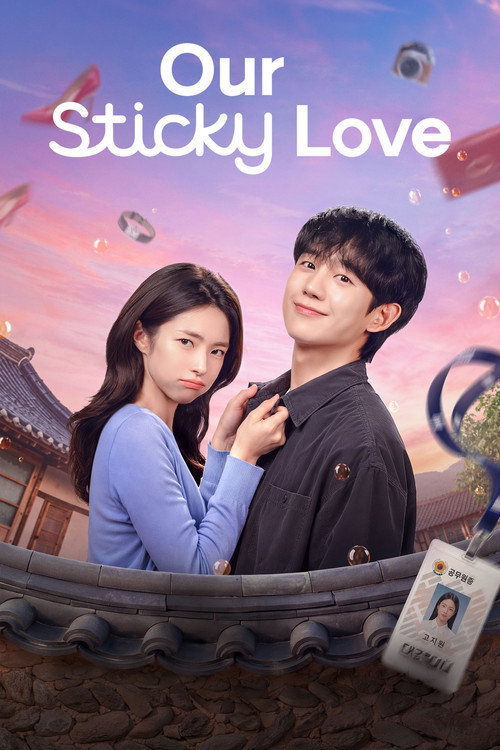
Our Sticky Love
A rural romance dipped in gangster noir, where a woman with no memory is handed a sweeter past than the one she lost — love pulled and folded like warm taffy, sticky enough to bind, brittle enough to snap.
Our Sticky Love

Our Sticky Love

이런 엿같은 사랑

"No past. No proof. He's my only clue!"

07 August 2026 — 07 August 2026 South Korea 1 season 12 episode Ended 8.8 (101)

Cast: Jung Hae-in, Ahn Ha-young, Heo Sung-tae, Kim Yeong-ok, Jeon Bae-soo

Drama Comedy Memory, identity and the self that survives erasure Love built on a lie Inherited violence and the refusal to repeat it Community as chosen family Sweetness and violence as the same substance

Overview

Our Sticky Love (이런 엿같은 사랑) is a twelve-episode South Korean romantic comedy released on Netflix on August 7, 2026, written by Mo Ji-hye and directed by Kim Jang-han — their second collaboration after the 2021 Wavve series You Raise Me Up. Jung Hae-in returns to Netflix for the first time since D.P., opposite Ha Young (Ahn Ha-young), who broke out in The Trauma Code.

The premise is deceptively simple. Go Eun-sae, a prosecutor, wakes in a countryside hospital with her memory gone and her past erased down to her fingerprints. A stranger named Jang Tae-ha — a former boxer turned syndicate man — walks in and calmly announces that he is her boyfriend. He takes her home to a small taffy-making village, where she is given a borrowed life: a name, a routine, a man who loves her, and neighbours who fold her into their days without asking questions.

What follows braids three registers at once. It is a cohabitation romcom about two people improvising intimacy from a lie; a warm village comedy carried by the taffy-makers who become Eun-sae's accidental family; and, underneath, a noir about the crime organisation still hunting her and the debt Tae-ha owes it. The director described the intended recipe as a romantic comedy with a spoonful of noir, and the season's tension comes from how long the sweetness can hold before the harder story underneath breaks through.

Core Meaning

The series argues that identity is not stored in memory but rebuilt in relationship — and it tests that idea by taking everything from its heroine, including the ridges on her fingertips, and asking who is left. Eun-sae without her case files, her rank, or her history is still recognisably herself, which is the show's quiet consolation: a person is not their résumé.

Against that, it sets a harder question about love founded on deception. Tae-ha's lie is monstrous in principle and protective in practice, and the show refuses to let him off easily — the truth costs him, as it should. Its final position is that a lie told to keep someone alive is still a lie, and the only way through it is to be forgiven by the person you wronged, in full knowledge of what you did.

The title carries the thesis. Yeot, Korean taffy, is sweet, adhesive, and inseparable from the vulgar curse yeot meogeo. Love here is exactly that compound: something sticky and sustaining that you also swear at. And around the central pair, the taffy village makes the wider claim — that belonging is something a community chooses to extend, not something a person must earn by proving who they were.

Thematic DNA

Memory, identity and the self that survives erasure 28%
Love built on a lie 24%
Inherited violence and the refusal to repeat it 20%
Community as chosen family 16%
Sweetness and violence as the same substance 12%

Memory, identity and the self that survives erasure

The series opens by stripping Eun-sae down to nothing: no memory, no name she trusts, not even fingerprints, which her captors burned off precisely so she could not be identified. What the show then tracks is what regenerates. Her prosecutorial instincts — the reflex to notice inconsistencies, to press a witness, to follow a thread — surface long before her memories do, and they are what eventually crack Tae-ha's fiction.

The mid-season return of her memory in Episode 8 does not resolve the theme but complicates it. She now holds two selves: the prosecutor who was tortured and the village woman who was happy, and neither cancels the other. The back half is about integrating them rather than choosing.

Love built on a lie

Tae-ha's opening deception is total — he invents her past, her relationship, and her place in the world. The romance is therefore structurally rotten from the first scene, and the show knows it, mining the setup for comedy early (two strangers performing a couple) and for genuine moral discomfort later.

The theme evolves from farce to reckoning. Once Eun-sae knows, her anger is treated as legitimate rather than an obstacle to be waved away, and reconciliation is earned only when she can weigh the lie against the intent behind it: that he broke her life open because the alternative was to end it.

Inherited violence and the refusal to repeat it

Tae-ha is a boxer who became a criminal; Baek Sang-gil is a boxer who became a criminal a generation earlier. The series doubles them deliberately, then reveals the doubling is literal — Sang-gil is his biological father, a man expelled from the ring for cheating who abandoned Tae-ha's pregnant mother.

The arc is about whether a fist is destiny. Tae-ha's whole trajectory is a slow refusal: he declines to kill on command, he stages a death rather than cause one, and in the final confrontation he stops short of becoming the thing he is hunting.

Community as chosen family

The taffy village functions as the show's moral counterweight to the syndicate. Its residents — pointedly played by veterans like Kim Yeong-ok and Jeon Bae-soo — absorb a woman with no past and no explanation and simply make room for her, offering the unconditional belonging that both leads were denied by blood.

Critics who liked the series liked it largely for this; the warmth of the villagers is what several reviews singled out as the element that made the drama shine, and the finale's wedding among them is the emotional payoff the whole run builds toward.

Sweetness and violence as the same substance

The tonal collision is itself a theme. The show alternates slapstick cohabitation gags with torture, kidnapping and gunfire, and the title's pun — taffy as candy, taffy as curse — licenses the whiplash rather than apologising for it.

Across the run the two registers stop alternating and start overlapping: by the late episodes the village comedy is shot through with dread, and the noir climax is resolved so that domestic sweetness can be restored. Whether the blend holds is the single most contested thing about the series.

Character Analysis

Jang Tae-ha

Jung Hae-in

Archetype: Antihero / reluctant protector Key Trait: Blunt, physically formidable tenderness — a man whose only fluent language is protection

Motivation

Begins as survival and obligation to the organisation; converts almost immediately into keeping one person alive. By the second half the motivation is redemption — to be forgiven by Eun-sae in full knowledge of what he did, and to cut the inherited line of violence rather than extend it.

Character Arc

Introduced as a syndicate enforcer with a boxer's past, sent to eliminate a prosecutor. The moment he identifies his target he cannot do it, and the rest of the series is the long consequence of that refusal: he fakes her death, invents himself as her boyfriend, and hides her among the people he came from.

Across the run he moves from a man performing tenderness as cover to a man who has to live inside the performance and discovers it was never a performance. The late episodes force him to confront Sang-gil directly, and his growth is measured by what he does not do — he brings himself to the brink of killing and stops. He ends the series without the one piece of knowledge the audience holds, having never learned the man he served was his father.

Go Eun-sae

Ha Young (Ahn Ha-young)

Archetype: Amnesiac heroine turned investigator of her own life Key Trait: Interrogative — she cannot stop cross-examining, even when the witness is the man she loves

Motivation

First simply to know what is true; then to recover her past; finally, once she has it, to decide what of it is worth keeping. Her arc converts the demand for truth into the harder work of deciding what to do with it.

Character Arc

She starts at absolute zero: waking in a rural hospital with no memory, no fingerprints, and a stranger claiming to be her partner. Early episodes cast her as the one being handled, but her prosecutor's instincts never left, and she gradually shifts from the object of the deception to the person dismantling it.

Episode 8 restores her memory and flips the power in the relationship entirely. The final stretch is her negotiation between two lives — the tortured prosecutor and the happy village woman — ending with her choosing to hold both: she confronts what was done to her, judges Tae-ha's lie on her own terms, and forgives it because she can see the fear underneath.

All 4 characters and cast

Symbols & Motifs

Yeot (Korean taffy)

Meaning:

The show's governing metaphor: something sweet, stubbornly adhesive, and hard to separate once it sets — and simultaneously, in the idiom yeot meogeo, a blunt insult. Love that sustains you and love that you curse are the same material.

Context:

Taffy is the village's entire industry, its daily labour, and the source of the title. Director Kim Jang-han stated the wordplay was chosen to evoke sweetness, stickiness and fate all at once; the cast admitted they initially thought the title was a joke.

Burned fingerprints

Meaning:

The most violent image of identity erasure in the series: the state's proof of who a person is, destroyed so a body could never be named. It also marks Eun-sae as legally dead before she is medically amnesiac.

Context:

Inflicted by Sang-gil's men during the torture that precedes the opening amnesia. The detail recurs as the reason she cannot simply be looked up, restored, or returned — it forces the borrowed life the whole premise depends on.

The boxing ring

Meaning:

The rule-bound version of violence, and the road not taken. Boxing is what both Tae-ha and Sang-gil abandoned for the unregulated brutality of the syndicate, making the ring a symbol of discipline, fairness and the men they failed to become.

Context:

Tae-ha's background as a former boxer is his defining backstory; Sang-gil's expulsion from the sport for cheating is the origin of his criminal life. The father–son rhyme runs entirely through the sport.

The staged death

Meaning:

A false grave standing in for a real rescue. It symbolises the series' central bargain: to keep Eun-sae alive, Tae-ha has to kill her socially, and the fiction of the boyfriend is simply the afterlife he builds for her.

Context:

Tae-ha fakes Eun-sae's death when he cannot carry out the order to kill her, then takes her to his hometown. Everything the audience watches in the village is, technically, a posthumous life.

Fire and the harbour explosion

Meaning:

Violence as the key that unlocks memory. The blast is the point at which the show's two genres physically collide, and the sweetness of the village can no longer insulate the heroine from what was done to her.

Context:

In Episode 8, Eun-sae is put on a boat bound for Japan by Kaito; looking back at the shore she sees Tae-ha fighting Sang-gil's crew, and the fire he sets — and the explosion — shock her memories back.

The village wedding

Meaning:

Belonging made formal. A ceremony witnessed by a chosen family rather than a blood one, it symbolises identity restored not by recovering a past but by being publicly claimed in a present.

Context:

The finale's wedding scene among the villagers, which reviewers described as more beautiful and lovable than any other possible ending, closes the series on the community rather than on the crime plot.

Episode Highlights

Episode 1

S1E1

Eun-sae wakes in a rural hospital with no memory of who she is. Jang Tae-ha walks in, tells her he is her boyfriend, and takes her to the taffy village — an opening that establishes the entire premise as a lie the audience is in on and the heroine is not.

Significance:

Sets the show's dual contract: a cohabitation romcom on the surface, a noir rescue underneath. Every scene of domestic sweetness that follows is charged by the audience knowing its foundation is false.

Episode 8

S1E8

The hinge of the series. Tae-ha pre-emptively puts Eun-sae on a boat for Japan with his associate Kaito; from the water she looks back and sees him fighting Baek Sang-gil's crew. He sets a fire, the explosion follows, and the shock brings her memories flooding back.

Significance:

Ends the borrowed life at the exact midpoint and inverts the power balance. From here the show stops being about a woman being protected and becomes about a woman deciding what to do with the truth — and with the man who withheld it.

Episode 12 (Finale)

S1E12

The final confrontation with Baek Sang-gil, revealed to be Tae-ha's biological father — a disgraced boxer who abandoned Tae-ha's pregnant mother. Tae-ha brings himself to the edge of killing him; Sang-gil takes the gun and dies by suicide first, and Tae-ha never learns who he was. The series closes on a wedding among the villagers.

Significance:

Resolves both genres at once and splits critical opinion doing it. The wedding was widely praised as a beautiful, lovable close, while the Sang-gil parentage twist and his death were criticised as contrived and abrupt — the two halves of the show's reception in a single episode.

Philosophical Questions

If your memories are gone, are you still the same person?

The series takes the question past metaphor: Eun-sae loses not only her recollections but her fingerprints, the state's proof of who she is. What persists is temperament — the instinct to interrogate, to notice the seam in a story — and it is that, not memory, that eventually exposes the fiction around her. When memory does return in Episode 8, she is left holding two lives rather than one true one, and the show declines to rank them.

Can a lie be an act of love?

Tae-ha's deception is indefensible in the abstract and lifesaving in the particular. The show plays it for comedy, then for betrayal, then refuses a clean verdict: Eun-sae's anger is treated as fully legitimate, and forgiveness arrives only after she weighs the lie against what it was for. The answer it lands on is conditional — such a lie can be loving, but it does not stop being a wrong, and only the person deceived has standing to absolve it.

Is violence inherited?

Father and son are given the same biography — a boxer's discipline abandoned for a criminal's brutality — and the series presses on whether Tae-ha is running a script written before his birth. His entire arc answers by subtraction: the kill he doesn't make, the death he stages instead, the trigger he doesn't pull. That he stops short without ever knowing the man in front of him is his father makes the refusal a choice rather than sentiment.

What makes somewhere home — a past, or people willing to keep you?

The taffy village takes in a woman who can offer no account of herself, and asks for none. Set against a biological father who abandoned his child and a syndicate that assigns worth by usefulness, the villagers make the case that belonging is extended rather than earned. The finale's wedding puts the argument on screen: the witnesses are neighbours, not blood.

How It Ends

Alternative Interpretations

The romance as rescue, or the romance as capture. The generous reading is the one the finale endorses: Tae-ha lied because the truth would have killed her, Eun-sae forgives him once she can see his motive, and the wedding is earned. A colder reading notes that a man erased a woman's history, installed himself in it, and was rewarded with marriage — and that the show resolves the ethical problem through her forgiveness rather than through any real cost to him. Both readings survive the text; the series simply chooses to stand on the first.

Full ending explanation

Cultural Impact

Our Sticky Love arrived as a high-profile Netflix Korea original in August 2026 and performed accordingly, climbing to No. 1 in Korea and displacing The East Palace and Agent Kim Reactivated. It carried two commercial narratives at once: Jung Hae-in's return to Netflix after D.P., and Ha Young's first leading role after her breakout in The Trauma Code — a pairing the platform marketed heavily on chemistry.

Its cultural interest lies mostly in the argument it provoked about K-drama's relationship to its own conventions. The amnesiac heroine and the gangster male lead are two of the most heavily worn devices in the form, and the series deployed both without irony in 2026. One widely circulated Korean review dismissed it as 'this old-fashioned drama', writing that a gangster male lead in 2026 felt like boarding a time machine to the past. Others read the same choices as deliberate comfort-viewing — the 'same-old flavour' the production's own launch materials leaned into.

Where it found more genuine affection was the taffy village. Reviews that defended the show did so almost entirely on the strength of its ensemble of villagers, with one critic writing that the drama shone because of their warmth and humanity and that they wanted to live in that town. That response places the series in a durable Korean television lineage — the rural found-family drama, where a wounded urban professional is healed by a small community — grafted onto a crime thriller rather than a slice-of-life frame.

Its likely legacy is as a test case rather than a landmark: a glossy, well-cast demonstration of how far charisma and a warm ensemble can carry premises that a segment of the audience now considers exhausted.

Audience Reception

Commercially strong, critically split. The series rose to No. 1 in Korea on Netflix after its August 7, 2026 release, overtaking The East Palace and Agent Kim Reactivated, and drew heavy attention as Jung Hae-in's first Netflix outing since D.P. Viewer response was mixed: praise concentrated on the lead chemistry and the execution, criticism on the reliance on familiar tropes and melodrama.

The main line of attack was datedness. A prominent Korean review ran under the headline that even Jung Hae-in's best efforts couldn't save 'this old-fashioned drama', arguing that an amnesiac female lead paired with a former gangster male lead felt, in 2026, like riding a time machine into the past. That complaint — that the show's premises were retreads rather than reinventions — recurred across viewer discussion.

The defence was warmth. Positive reviews credited the taffy village ensemble, with one critic writing that the drama sparkled because of the villagers' warm humanity and cheerful charm, and framing the finale's wedding among them as more beautiful and lovable than any alternative ending. The veteran supporting cast was consistently treated as the show's real asset.

The finale was the flashpoint. Even sympathetic reviewers who loved the wedding balked at the Baek Sang-gil revelation and his death, calling the setup stale and abrupt and questioning whether it was needed at all. Opinion broadly evolved over the run from curiosity at the premise, to enjoyment of the mid-season cohabitation comedy, to disappointment that the crime plot resolved on a twist the drama hadn't required.

Verdict: a handsomely made, well-cast comfort romance whose ensemble and leads outperform its script — rewarding if you are there for the village and the chemistry, frustrating if you expected the noir half to justify itself.

Interesting Facts

  • Written by Mo Ji-hye and directed by Kim Jang-han — their second collaboration, after the 2021 Wavve original series You Raise Me Up.
  • Released on Netflix on August 7, 2026, as a 12-episode single season.
  • It is Jung Hae-in's second Netflix series after D.P., and his first new drama in roughly two years.
  • Female lead Ha Young (Ahn Ha-young) came to the role off her breakout in The Trauma Code (중증외상센터).
  • The press conference was held on August 5, 2026 at Hotel Naru Seoul MGallery in Mapo-gu, Seoul, attended by director Kim Jang-han with Jung Hae-in, Ha Young and Heo Sung-tae.
  • Cast members admitted they thought the title was a joke when they first read it — the Korean title translates roughly as 'this taffy-like love', trading on a well-known vulgar idiom.
  • Director Kim Jang-han said the taffy wordplay was chosen to evoke sweetness, stickiness and fate simultaneously.
  • The production pitched the tone as 'a romantic comedy with a spoonful of noir', and the team deliberately worked to keep the noir elements from turning the drama too dark or heavy.
  • Kim Jang-han cast Jung Hae-in partly on temperament, saying the actor's straightforward, 'manly' qualities lined up closely with Tae-ha.
  • The series rose to No. 1 in Korea on Netflix after release, overtaking The East Palace and Agent Kim Reactivated.

Easter Eggs

The title itself is a buried profanity

이런 엿같은 사랑 literally reads as 'this taffy-like love', but yeot is inseparable from the crude Korean insult yeot meogeo. The title is simultaneously a description of the village's candy industry, a curse aimed at the romance, and — per the director — a nod to fate. The cast's reported reaction of thinking it was a joke is part of the gag.

Boxing as a father–son rhyme planted long before the reveal

Tae-ha's history as a former boxer who drifted into the syndicate is introduced early as pure character colour; Sang-gil's identical trajectory — a boxer expelled for cheating, then recruited by the underworld — retroactively converts it into a planted clue for the parentage twist.

The village industry is the show's own metaphor, made literal

Setting the hideout in a town whose entire economy is taffy production means the characters spend the series physically pulling, folding and setting the substance the title uses to describe their relationship — the theme is embedded in the production design rather than stated.

Frequently Asked Questions

Explore More About This Movie

Dive deeper into specific aspects of the movie with our detailed analysis pages

Comments (0)

Leave a comment

No comments yet. Be the first to share your thoughts!

Similar Movies