Skip to content
Our Unwritten Seoul
A poignant drama of swapped destinies, where twin sisters trade Seoul's sterile corporate towers for rural warmth, confronting buried trauma and rediscovering themselves like blank pages waiting for ink.
Our Unwritten Seoul

Our Unwritten Seoul

미지의 서울

24 May 2025 — 29 June 2025 South Korea 1 season 12 episode Ended 8.4 (100)

Cast: Park Bo-young, Jinyoung, Ryu Kyung-soo, Jang Young-nam, Kim Sun-young

Drama Identity, Projection, and the Self Corporate Burnout and Societal Pressure Healing Through Empathy and Vulnerability Embracing the Unwritten and the Unknown

Overview

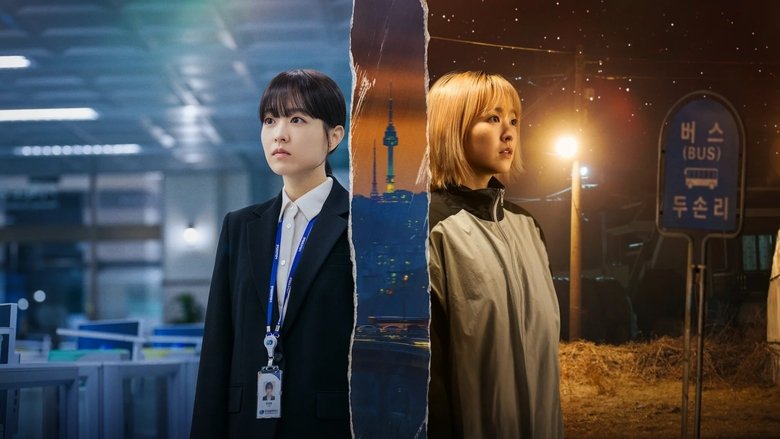
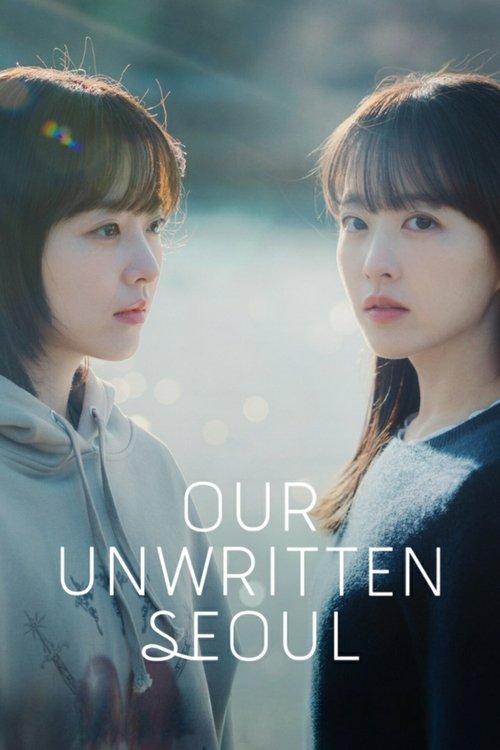
Our Unwritten Seoul (2025) follows identical twin sisters Yu Mi-ji and Yu Mi-rae, two women who share identical faces but completely antithetical lives. Mi-ji, a former competitive sprinter whose promising athletic career was abruptly shattered by injury, drifts through odd jobs with boundless resilience and optimism. In contrast, Mi-rae is an accomplished employee at a prestigious public corporation in Seoul, yet she suffers silently under immense workplace toxicity, acute anxiety, and systemic burnout.

When Mi-rae reaches an emotional breaking point, the estranged sisters make an impulsive decision to swap identities. Mi-ji moves to the bustling capital to impersonate her sister in corporate meetings, while Mi-rae retreats into Mi-ji's quiet, unstructured life. In Seoul, Mi-ji crosses paths with Lee Ho-su, a polished, emotionally detached corporate lawyer who conceals deep-seated trauma behind professional perfection. At the same time, Mi-rae encounters Han Se-jin, an earnest local farm owner who provides an unexpected space of unconditional acceptance.

As the masquerade forces each sister to confront the harsh realities and hidden sorrows of the other's existence, their counterfeit lives gradually spark genuine personal awakenings. Across 12 deeply introspective episodes, the series weaves workplace ethics, familial reconciliation, and tender romance, guiding its characters from paralyzing self-doubt toward reclaiming their authentic desires in an unpredictable world.


Core Meaning

At its heart, Our Unwritten Seoul conveys that life is defined not by rigid societal milestones or others' expectations, but by the courage to embrace uncertainty. The Korean word Miji (미지) translates literally to 'the unknown', serving as both the protagonist's name and the show's philosophical anchor. Through the twins swapping places, creator Lee Kang and director Park Shin-woo argue that one can only truly understand oneself—and others—when daring to step outside ingrained survival mechanisms, recognizing that the future remains a blank, unwritten canvas waiting for self-compassion and honest choice.

Thematic DNA

Identity, Projection, and the Self 30%
Corporate Burnout and Societal Pressure 25%
Healing Through Empathy and Vulnerability 25%
Embracing the Unwritten and the Unknown 20%

Identity, Projection, and the Self

The series explores the tension between who society expects us to be and who we truly are. By having Park Bo-young navigate four iterations of character—Mi-ji, Mi-rae, and each sister posing as the other—the narrative highlights how social roles often reduce multidimensional humans to mere functions, showing that genuine identity requires peeling away performance.

Corporate Burnout and Societal Pressure

Set against Seoul's competitive corporate landscape, the drama critically examines workplace culture, high-stress public enterprise environments, and the emotional exhaustion young professionals face. Mi-rae's panic attacks and Ho-su's emotional dissociation underscore how relentless modern hyper-efficiency hollows out the human spirit.

Healing Through Empathy and Vulnerability

Emotional healing occurs not through solitary endurance, but through shared vulnerability. As Ho-su learns to communicate his quiet sorrow and the sisters inhabit each other's burdens, the drama illustrates that healing requires breaking down defensive walls and acknowledging one's fragility to those who genuinely listen.

Embracing the Unwritten and the Unknown

A steadfast philosophical current through the series is redefining 'the unknown' from a source of dread into a realm of liberation. Both sisters mourn derailed timelines, yet their journeys demonstrate that letting go of predetermined scripts creates room for authentic, spontaneous living.

Character Analysis

Yu Mi-ji

Park Bo-young

Archetype: Hero Key Trait: Resilient, warm-hearted, and protective

Motivation

Initially motivated to shield her twin sister from catastrophe, her motivation evolves into pursuing her own self-worth and establishing genuine, unmasked love.

Character Arc

Begins as an underemployed former sprint prodigy concealing her lingering grief behind cheerful energy. When she assumes Mi-rae's corporate identity in Seoul, she learns that vulnerability is not weakness, ultimately reclaiming her agency and choosing a career and romantic life aligned with her true voice.

Yu Mi-rae

Park Bo-young

Archetype: Shadow Key Trait: Meticulous, conscientious, yet emotionally exhausted

Motivation

Initially motivated by survival and escape from overwhelming workplace trauma, evolving into discovering genuine self-acceptance and familial peace.

Character Arc

Starts as a perfectionist office worker suffocated by corporate obligations, leading to emotional collapse. Taking over Mi-ji's low-stakes, communal existence allows her to dismantle her people-pleasing tendencies and embrace a self-determined lifestyle without external validation.

All 5 characters and cast

Symbols & Motifs

The Running Shoes and Track

Meaning:

Symbolizes Mi-ji's lost youth, arrested dreams, and her transition from competing against a stopwatch to setting her own organic pace in life.

Context:

Introduced in early flashbacks of Mi-ji's athletic track days, and revisited when she runs down Seoul's streets in corporate clothes, reclaiming movement on her own terms.

Ho-su (The Lake)

Meaning:

Symbolizes stillness, repressed emotional depths, and quiet reflection, paralleling Lee Ho-su's personality.

Context:

Explicitly referenced in Lee Ho-su's name and the recurring water motifs where he observes reflections, concealing turbulence beneath an outwardly calm surface.

The Strawberry Farm

Meaning:

Represents grounded reality, patience, natural growth, and restorative labor outside Seoul's hyper-competitive rat race.

Context:

Managed by Han Se-jin, the farm serves as the therapeutic haven where Mi-rae recovers from corporate exhaustion and learns to slow down.

Hair and Wardrobe Transformations

Meaning:

Signifies social armor, public conformity, and the fragile line between facade and true self-discovery.

Context:

Mi-ji's vibrant hair and casual apparel contrasted against Mi-rae's tailored, muted corporate suits, which each sister must adapt to when stepping into the other's life.

Memorable Quotes

어제는 끝났고, 내일은 멀었고, 오늘은 모른다.
— Yu Mi-ji

Context

Delivered during the series finale in Episode 12 as a voiceover closing the twins' transformational journey.

Meaning

Encapsulates the core philosophy of the series: letting go of past regrets and future anxiety to live fully in the present 'unknown' moment.

나도 너 좋아했다고.
— Yu Mi-ji

Context

Confessed to Lee Ho-su in Episode 6 after discovering that he had waited for her years ago during the school mountain climb.

Meaning

A candid release of long-suppressed feelings, breaking years of silence and mutual hesitation between high school companions.

All 3 quotes

Episode Highlights

Episode 1

S1E1

The distinct, contrasting worlds of former runner Yu Mi-ji and corporate analyst Yu Mi-rae are established. Pushed to the brink of collapse, Mi-rae asks Mi-ji to trade places, initiating an audacious deception.

Significance:

Sets up the primary premise of identity substitution and establishes the emotional fractures within both sisters.

Episode 2

S1E2

Mi-ji navigates the perilous social hierarchies of Mi-rae's workplace and encounters corporate attorney Lee Ho-su, whose keen intuition begins detecting behavioral incongruities.

Significance:

Catalyzes the romantic tension and emotional bonding between Mi-ji and Ho-su while illuminating the toxic corporate environment.

Episode 6

S1E6

After an eventful gathering, Ho-su reveals to Mi-ji that he recognized her steadfast spirit from their youth, prompting an honest confession that shifts their relationship from wary caution to mutual devotion.

Significance:

Serves as the emotional turning point where past history merges with present affection, strengthening their mutual trust.

Episode 10

S1E10

The life swap threatens to collapse under corporate scrutiny and family confrontations. Rather than fleeing, Mi-ji and Ho-su confront their feelings head-on, leading to a long-awaited kiss and mutual commitment.

Significance:

Marks the climax of the romantic arc and the beginning of dismantling the public lies before disaster strikes.

Episode 12

S1E12

Both sisters publicly reveal the truth, settle corporate corruption disputes, and forge authentic individual paths. Seoul ceases to be an oppressive monolith, becoming an open space of infinite possibility.

Significance:

Provides narrative closure by celebrating emotional reconciliation, self-actualization, and embracing the unwritten tomorrow.

Philosophical Questions

Can an individual ever truly be known through their social role?

The drama illustrates how corporate designations and familial obligations strip individuals of their true humanity, suggesting that true intimacy only starts when these masks are abandoned.

Does escaping our immediate circumstances lead to genuine freedom?

By exchanging lives, both twins realize that running away to someone else's sanctuary only swaps one set of constraints for another; authentic liberation requires internal ownership.

What does it mean to live peacefully with an unwritten future?

The narrative challenges modern anxieties about meticulous life planning, arguing that embracing unpredictability is an essential prerequisite for joy.

How It Ends

Alternative Interpretations

Some critical commentators interpret the entire identity swap as an extended psychological allegory: Mi-ji and Mi-rae function as two halves of a single fractured psyche, with Mi-ji representing the wild, repressed id and Mi-rae embodying the exhausted, duty-bound superego. In this reading, their convergence and role-reversal represent an internal dialogue on self-integration rather than merely an external romance.

Full ending explanation

Cultural Impact

Our Unwritten Seoul sparked widespread social discourse in South Korea concerning youth employment anxiety, corporate burnout in state-owned enterprises, and the immense pressure placed on adult children. By treating psychological collapse not as individual failure but as a systemic consequence of hyper-competition, the drama struck a chord across working demographics. Additionally, Park Bo-young's multifaceted technical performance was heralded by domestic critics as one of the standout acting feats of 2025.

Audience Reception

Broadcast on tvN and streaming internationally on Netflix, Our Unwritten Seoul achieved high viewership ratings and universal acclaim. Domestic and international audiences praised Park Bo-young's extraordinary acting range, seamlessly differentiating the twins through subtle shifts in posture, vocal pitch, and gaze. Jinyoung was commended for his restrained, resonant emotional acting, while Ryu Kyung-soo, Jang Young-nam, and Kim Sun-young provided rich grounding support. Minor critiques noted that early corporate intrigue followed standard K-drama tropes, but its emotional sincerity and atmospheric directing consistently won viewers over.

Interesting Facts

  • Park Bo-young took on four distinct acting variations: Yu Mi-ji, Yu Mi-rae, Mi-ji posing as Mi-rae, and Mi-rae posing as Mi-ji.
  • For the twin interactions, director Park Shin-woo and the crew utilized rapid costume changes, allowing Park Bo-young to switch between long and short hair stylings in approximately 30 minutes between takes.
  • Actor Jinyoung noted in post-finale interviews that director Park Shin-woo advised him: 'The less Ho-su reacts, the sadder he becomes,' guiding his reserved, interior performance.
  • The drama marked Park Bo-young's first on-screen blonde styling for a role during her character's athletic and freelance phases.
  • A public photography and snap contest titled 'Our Unwritten Seoul' was hosted in major Seoul hubs like Teheran-ro and Euljiro-1-ga, featuring curated fan-submitted snapshots on giant electronic billboards.

Easter Eggs

Visual and thematic parallels to director Park Shin-woo's previous works, such as It's Okay to Not Be Okay.

Viewers noted deliberate homages in the framing of mental health crises, panic attacks, and the delicate integration of fairytale-like isolation motifs.

Playful fan references to Jinyoung's prior romance role Yoo Babi from Yumi's Cells.

Jinyoung humorously addressed viewers' comparisons in interviews, contrasting Babi's smooth social intuition with Ho-su's absolute social awkwardness and lifelong isolation.

Frequently Asked Questions

Explore More About This Movie

Dive deeper into specific aspects of the movie with our detailed analysis pages

Comments (0)

Leave a comment

No comments yet. Be the first to share your thoughts!

Similar Movies