Skip to content
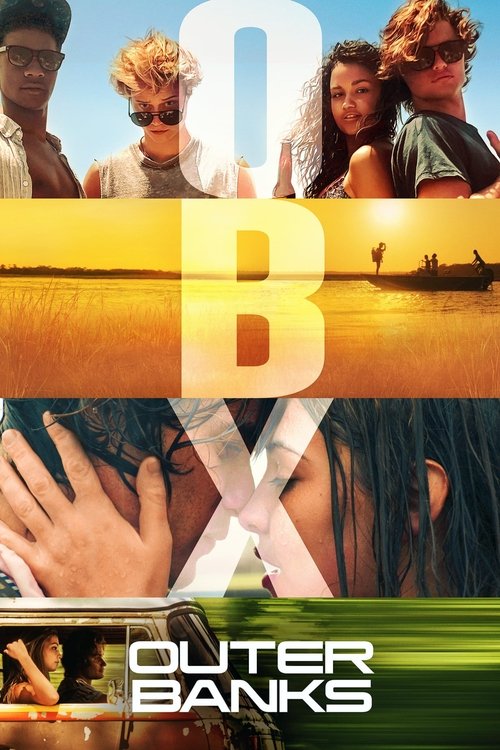
Outer Banks
A sun-drenched, adrenaline-charged summer odyssey where the warmth of golden hour clashes with the sting of coastal grit, capturing the reckless euphoria of youth chasing ghosts and fortunes against a collapsing tide.
Outer Banks

Outer Banks

"Pogues for life."

15 April 2020 — 20 August 2026 United States of America 5 season 50 episode Ended 8.2 (1,238)

Cast: Chase Stokes, Madelyn Cline, Madison Bailey, Jonathan Daviss, Drew Starkey

Action & Adventure Mystery Class Warfare & Systemic Inequality Chosen Family vs. Toxic Bloodlines The Destructive Price of Greed & Obsession Coming of Age, Freedom & Escapism Historical Memory & Generational Legacy

Overview

Outer Banks follows a tightly knit group of working-class teenagers living on the barrier islands of North Carolina, known collectively as the Pogues. Led by the charismatic and persistent John B Routledge, the group stumbles upon an intricately woven historical mystery tied to the disappearance of John B’s father. What begins as a quest to locate the sunken British ship Royal Merchant quickly spirals into a multi-generational hunt for fabled wealth across the Caribbean, South America, and beyond.

As the narrative expands over five seasons, the Pogues find themselves navigating dangerous criminal syndicates, corrupt patriarchs, and ruthless mercenaries. Concurrently, they are locked in a relentless class conflict against the wealthy local elite—the Kooks—testing their values of solidarity, survival, and identity. The adventure moves from the humid salt marshes of Kildare Island to the jungles of the Orinoco Basin and the dunes of North Africa, constantly questioning whether any fortune is worth the human cost it demands.

Through escalating danger and tragedy, the series maintains a focus on the emotional bonds of its central surrogate family. The characters repeatedly risk freedom and safety not merely for gold or prestige, but to protect one another, preserve their coastal sanctuary, and break free from systemic cycles of socioeconomic entrapment.
Core Meaning

At its heart, Outer Banks presents a critique of wealth worship and the corrosive nature of greed. The show asserts that true treasure is not found in sunken gold bullion, ancient relics, or aristocratic titles, but in chosen family, unconditional loyalty, and authentic personal freedom. Across its entire narrative arc, the series demonstrates that the relentless pursuit of material power destroys families, corrupts institutions, and feeds generational trauma. In contrast, the Pogues’ motto—"Pogues for Life" (P4L)—posits that human connection, shared resilience, and staying true to one's roots are the ultimate forms of wealth.

Thematic DNA

Class Warfare & Systemic Inequality 30%
Chosen Family vs. Toxic Bloodlines 25%
The Destructive Price of Greed & Obsession 20%
Coming of Age, Freedom & Escapism 15%
Historical Memory & Generational Legacy 10%

Class Warfare & Systemic Inequality

The foundational tension of the series lies in the divide between the affluent "Kooks" (Figure Eight) and the working-class "Pogues" (the Cut). In early seasons, this manifests in turf battles and police bias; as the series progresses, it evolves into an exploration of how wealth insulates the powerful from legal consequences while leaving the disenfranchised vulnerable.

Chosen Family vs. Toxic Bloodlines

Biological parentage repeatedly betrays the protagonists (Ward Cameron’s manipulation, Luke Maybank’s abuse, Big John’s relentless fixation), whereas the Pogue collective serves as an unwavering, protective sanctuary where members find unconditional trust and love.

The Destructive Price of Greed & Obsession

From the Royal Merchant’s 400-million-dollar gold cache to the Cross of Santo Domingo, El Dorado, and the Blue Crown of Portugal, every legendary treasure brings violence, betrayal, and death. Characters who chase wealth for domination face profound moral decay, while the Pogues learn that their obsession often costs more than it yields.

Coming of Age, Freedom & Escapism

The series captures the bittersweet transition from youth to adulthood. The Pogues navigate the boundaries of law, romance, trauma, and independence, striving to retain their carefree spirit while facing adult responsibilities and irreversible consequences.

Historical Memory & Generational Legacy

The treasures are tethered to real historical injustices, including maritime trade, enslavement (Denmark Tanny's legacy), colonialism, and pirate lore (Blackbeard). The narrative reflects on how unearthing buried history demands accountability for past sins.

Character Analysis

John B Routledge

Chase Stokes

Archetype: The Hero / Relentless Adventurer Key Trait: Relentless optimism and fierce loyalty

Motivation

Originally finding his father; evolves into securing a home and safety for his chosen family.

Character Arc

Begins as a grieving teen searching for his missing father and evading foster care. Across the series, he evolves from an impulsive runaway into a mature, protective leader who confronts the reality of his father’s flaws and commits to building a safe future with Sarah.

Sarah Cameron

Madelyn Cline

Archetype: The Rebel Princess / Defector Key Trait: Resilience and moral courage

Motivation

Escaping her family's toxic control; seeking genuine belonging, love, and truth.

Character Arc

Starts as the idolized "Kook princess" entangled in a privileged, fragile world. After discovering her family's dark criminal nature, she defects to the Pogues, sheds her elitist upbringing, and survives multiple betrayals to forge an independent identity.

All 5 characters and cast

Symbols & Motifs

The HMS Pogue

Meaning:

Represents collective autonomy, survival, and the Pogue ethos of making the best out of salvaged remnants.

Context:

Used as John B’s weathered boat throughout the adventures and journeys across the waters of the Outer Banks.

The Compass (Pogue Family Heirloom)

Meaning:

Symbolizes John B’s connection to his father, the quest for truth, and finding one's moral direction amid chaos.

Context:

An heirloom inscribed with the word "Redfield" passed down and tracked as a primary clue to the mystery.

The Bandana

Meaning:

Serves as a tangible symbol of Pogue solidarity, shared identity, and survival against all odds.

Context:

Worn consistently by John B and passed between friends in moments of hardship and loyalty.

Sunsets and Golden Hour

Meaning:

Emphasizes fleeting youth, romantic optimism, and the lingering illusion of an endless coastal summer.

Context:

Featured as recurring visual motifs framing key moments of freedom, intimacy, and reflection.

The Gold & Relics

Meaning:

Symbols of historical curses and greed, reflecting the corrupting nature of material wealth.

Context:

Manifests in the Royal Merchant gold, the Cross of Santo Domingo, El Dorado, and the Blue Crown of Portugal.

Poguelandia

Meaning:

Represents the utopian ideal of a community free from class divides and external societal rules.

Context:

Appears both as a physical desert island haven in Season 3 and as a surf-shop compound in Season 4.

Memorable Quotes

Outer Banks, paradise on earth. It’s the sort of place where you either have two jobs or two houses. Two tribes, one island.
— John B

Context

Spoken in the opening narration of Season 1, Episode 1 ("Pilot").

Meaning

Establishes the core premise and socio-economic geography of the show, defining the Cut versus Figure Eight dynamic.

Pogues for life.
— The Pogues

Context

Repeated as a recurring rallying cry throughout all seasons in times of triumph and crisis.

Meaning

The defining oath and mantra of the central friendship group, serving as a beacon of mutual protection and unconditional loyalty.

All 5 quotes

Episode Highlights

Pilot

S1E1

Introduces Kildare Island, the class rivalry between Pogues and Kooks, Hurricane Agatha, and the sunken wreck that ignites the Royal Merchant gold hunt.

Significance:

Sets up the primary lore, central characters, class divide, and mystery driving the initial season.

The Phantom

S1E10

Season 1 finale where John B is framed for Sheriff Peterkin's murder; John B and Sarah drive into a tropical storm to escape.

Significance:

Leaves the friend group believing John B and Sarah are dead and shifts the scope from local turf conflict to fugitive survival.

The Gold

S2E1

John B and Sarah arrive in Nassau, Bahamas, fighting to reclaim the gold from Ward Cameron’s offshore estate.

Significance:

Establishes an international scale for the series and expands the battle against the Cameron family's reach.

The Coastal Venture

S2E10

The Pogues attempt to recover the Cross of Santo Domingo aboard a cargo ship; Cleo joins the group as they narrowly escape on a lifeboat, washing ashore on an uninhabited island.

Significance:

Marks the creation of "Poguelandia", adds Cleo to the core crew, and reveals Big John Routledge is alive.

Poguelandia

S3E1

Explores the Pogues living in self-sufficient isolation before being pulled back into the hunt for El Dorado by Carlos Singh.

Significance:

Showcases the group's utopian bond and introduces the South American quest for El Dorado.

Secret of the Gnomon

S3E10

The climax in South America where the Pogues locate the gold of El Dorado; major sacrifices occur, including the deaths of Big John Routledge and Ward Cameron.

Significance:

Closes the initial three-season treasure trilogy and resolves the central paternal conflicts of the series.

The Rally

S4E1

Shows the Pogues attempting to build a sustainable life with their fortune at "Poguelandia 2.0," only to run out of funds and accept Wes Genrette's proposal to hunt Blackbeard's treasure.

Significance:

Launches a new storyline anchored in local maritime history and introduces the Genrette mystery.

The Blue Crown

S4E10

A harrowing finale set in Morocco; JJ discovers his true parentage as Larissa Genrette’s son, recovers the Blue Crown, but is fatally stabbed by Chandler Groff.

Significance:

Delivers the series' most tragic loss and unites the surviving Pogues and Rafe on a mission of vengeance.

Series Finale

S5E10

Brings the saga back full circle to the coast of North Carolina; resolves lingering rivalries, delivers justice against Groff and the Corsairs, and concludes the story.

Significance:

Completes the five-season overarching arc planned by the creators, resolving the conflict between Pogues and Kooks.

Philosophical Questions

What is the true measure of wealth?

The show contrasts material hoards (which bring paranoia, violence, and death) against shared community, personal peace, and unconditional loyalty.

Can one escape the destiny dictated by birth and class?

Explores whether individuals can overcome systemic class prejudice and generational poverty through personal merit alone.

Does the end ever justify the means in the face of survival?

Examines how moral boundaries blur when marginalized youths are forced to break laws simply to survive corrupt systems and institutional hostility.

Is generational trauma an inevitable cycle?

Investigates whether children can sever the toxic behavioral patterns of their forebears without destroying themselves in the process.

Alternative Interpretations

The series supports multiple thematic interpretations:

Full ending explanation

Cultural Impact

Outer Banks debuted in April 2020 at the onset of global COVID-19 pandemic lockdowns, quickly becoming a major cultural touchstone. Its sun-drenched cinematography, youth escapism, and themes of outdoor adventure resonated deeply with homebound audiences. The show fueled significant fashion trends (the Pogue aesthetic: tie-dye, bandanas, vintage surf wear) and drove renewed tourism to coastal North and South Carolina. Critically, the show was embraced as an entertaining blend of classic teen drama (The O.C., Dawson's Creek) and mystery adventure (The Goonies), winning People's Choice Awards for its bingeable pacing and charismatic ensemble.

Audience Reception

Seasons 1 & 2 were widely praised for high-energy momentum, escapist tone, and strong character dynamics, with audiences embracing the romance of John B and Sarah while noting occasional melodramatic plot armor. Season 3 received mixed reactions; while concluding the Royal Merchant and El Dorado arcs, some felt the South American setting moved the series away from its grounded North Carolina roots. Seasons 4 & 5 were praised for re-grounding the story in local maritime lore (Blackbeard) and introducing darker, emotionally mature stakes, though the shocking climax involving JJ's fate sparked intense emotional reactions. Overall, the show is regarded as one of Netflix's definitive YA adventure series.

Interesting Facts

  • Although set in North Carolina's Outer Banks, the production was filmed primarily in and around Charleston, South Carolina, due to North Carolina’s controversial House Bill 2 legislation at the time of development.
  • Show creators Jonas Pate, Josh Pate, and Shannon Burke conceived Outer Banks as a structured five-season arc inspired by classic adventure novels and their own North Carolina youth.
  • Rudy Pankow (JJ) and Chase Stokes (John B) briefly lived together as roommates during Season 1 filming to authentically develop their on-screen brotherhood.
  • The core cast underwent intensive boat handling, scuba diving, and surfing bootcamps prior to Season 1 to perform many of their open-water stunt scenes.
  • Jonas Pate used his North Carolina filming ecosystem to discover musical talent and develop The Runarounds, a project linked to the creative universe of the production team.

Easter Eggs

Denmark Tanny / Denmark Vesey Reference

The character Denmark Tanny, a formerly enslaved man who purchased his freedom and acquired land on Kildare Island, is a direct historical reference to Denmark Vesey, a leader of a planned 1822 slave revolt in Charleston, South Carolina.

The Goonies and National Treasure Homages

Numerous scenes directly mirror classic adventure cinema through hidden maps in old basements, church organ puzzles, and underground cave traps.

Twain and Literature Nods

John B’s home ("The Chateau") and his rebellious wanderlust are styled after Huckleberry Finn and Mark Twain’s American frontier literature.

Blackbeard’s Ocracoke Legacy

Season 4 leans directly into genuine Outer Banks pirate folklore, integrating Edward Teach’s (Blackbeard) history and his historical ties to Ocracoke Inlet.

Frequently Asked Questions

Explore More About This Movie

Dive deeper into specific aspects of the movie with our detailed analysis pages

Comments (0)

Leave a comment

No comments yet. Be the first to share your thoughts!

Similar Movies