Skip to content
Tower of God
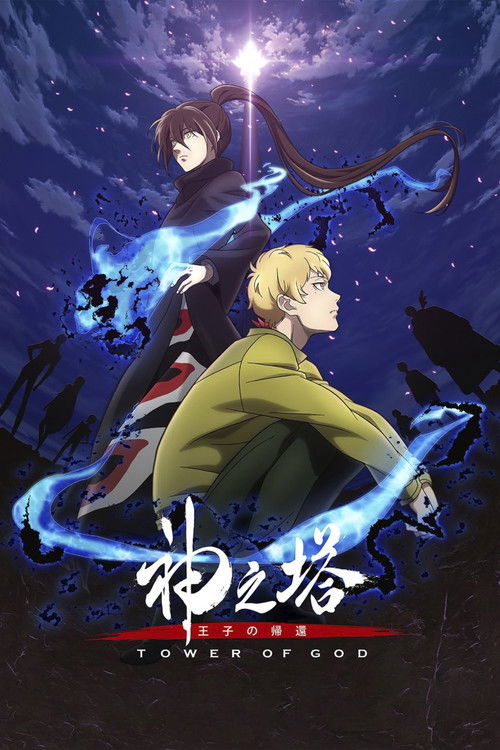
A dark, atmospheric fantasy where innocent longing bleeds into brutal betrayal, visualised as a solitary star flickering inside a endless, oppressive labyrinth of towering steel and glowing liquid light.
Tower of God

Tower of God

神之塔 -Tower of God-

02 April 2020 — 29 December 2024 Japan 2 season 39 episode Ended 8.1 (527)

Cast: Taichi Ichikawa, Nobuhiko Okamoto, Takuya Eguchi, Yuma Uchida, Sayumi Watabe

Animation Sci-Fi & Fantasy Action & Adventure Mystery Ambition vs. Morality Codependency and Identity Formation Destiny vs. Free Will Classism and Systemic Corruption Trust, Betrayal, and Redemption

Overview

Tower of God (Original Title: 神之塔 -Tower of God-) is an action-fantasy and mystery anime series adapted from the celebrated Korean WEBTOON by creator SIU. The story follows Twenty-Fifth Bam, a gentle boy who has spent his entire existence trapped in a dark cave beneath a massive, mysterious structure known as the Tower. His only connection to light and human warmth is Rachel, a girl who enters the Tower driven by her dream to reach the top and see the night sky. When Rachel vanishes inside, Bam forces open the Tower's gates to follow her—an act that marks him as an "Irregular," an uninvited intruder capable of shaking the very foundations of the world.

Across its two seasons (spanning 39 episodes), the narrative expands from a claustrophobic gauntlet of survival tests into a sprawling socio-political epic. Season 1 focuses on Bam's entry onto the Floor of Tests, where he forms bonds with cunning strategists, fierce warriors, and fellow climbers. However, a tragic betrayal shatters Bam's worldview and forces him into the shadows.

Season 2 picks up six years later, introducing new protagonists alongside returning allies while exposing the dark syndicate FUG and the autocratic reign of King Jahad. As Bam navigates political intrigue, secret weapon developments during the Workshop Battle, and his own forced identity shift, the series explores what it truly costs to climb to the top of a world where desire is weaponized.
Core Meaning

At its core, Tower of God is a deconstruction of ambition, codependency, and the corrupting nature of power. Through the multi-season arc of Bam and those around him, the creators convey that climbing toward an idolized goal—be it wealth, status, or another person—is meaningless if achieved by sacrificing one's humanity and empathy.

The Tower serves as a grand metaphor for hyper-competitive societal structures. It questions whether individuals can maintain their purity and compassion when trapped in systems designed to pit them against one another. Ultimately, the series argues that true godhood or triumph is not found in dominating others at the peak, but in choosing solidarity and protecting human bonds against fate and tyrannical authority.

Thematic DNA

Ambition vs. Morality 25%
Codependency and Identity Formation 25%
Destiny vs. Free Will 20%
Classism and Systemic Corruption 15%
Trust, Betrayal, and Redemption 15%

Ambition vs. Morality

In Season 1, ambition is framed through Rachel's desperation to see the stars and the Regulars' drive to pass tests. By Season 2, this theme darkens to examine how institutions like FUG and the Workshop exploit individual ambition, turning desperate climbers into tools of war.

Codependency and Identity Formation

Bam begins as an empty vessel whose sole motivation is Rachel. After her betrayal, he is forced as "Jue Viole Grace" to forge an identity separate from her. Over time, his drive shifts from chasing someone else’s light to protecting the companions who choose to walk alongside him.

Destiny vs. Free Will

As an Irregular, Bam is prophesied to bring change or destruction to the Tower. The narrative constantly tests whether Bam is merely a pawn fulfilling ancient prophecies or an agent capable of choosing his own destiny despite the manipulations of High Rankers and syndicates.

Classism and Systemic Corruption

Early tests reveal the stark divide between privileged members of the 10 Great Families and common Regulars. Season 2 deepens this by revealing how the Ruling Class (Jahad and the 10 Families) maintains absolute power through oppression, force, and rigged tests.

Trust, Betrayal, and Redemption

The shock of Rachel's betrayal in Season 1 establishes a world of paranoia. Season 2 explores the slow process of rebuilding trust through new allies like Ja Wangnan and Team Sweet Apple, showing that redemption is possible even in a deeply corrupted environment.

Character Analysis

Twenty-Fifth Bam / Jue Viole Grace

Taichi Ichikawa

Archetype: Reluctant Hero / Chosen One Key Trait: Boundless empathy coupled with frighteningly infinite potential.

Motivation

Initially to stay by Rachel's side; evolves into protecting his companions from FUG and changing the Tower.

Character Arc

Transforms from a naive, codependent boy who climbs solely for Rachel into the cold FUG Slayer Candidate "Viole," and ultimately into a compassionate leader who climbs on his own terms to safeguard his friends.

Khun Aguero Agnes

Nobuhiko Okamoto

Archetype: Cunning Strategist / Antihero Ally Key Trait: Ruthless intelligence masked behind a cool, collected exterior.

Motivation

To reclaim power and authority on his own terms while protecting Bam.

Character Arc

Banished from one of the 10 Great Families, Khun begins as a distrustful, manipulative tactician. Bam's innocence touches him, causing him to dedicate his intelligence to keeping Bam safe and exposing the Tower's corruption.

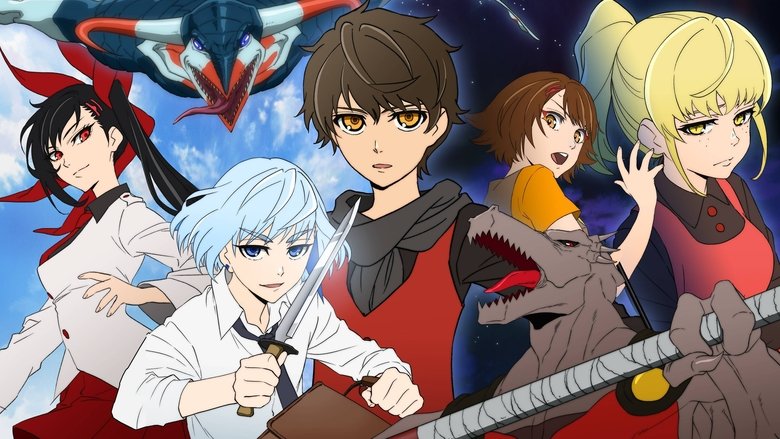
All 5 characters and cast

Symbols & Motifs

The Stars / The Night Sky

Meaning:

Symbolizes unattainable dreams, freedom, and pure desire.

Context:

For Rachel, it represents escape from her obscurity; for Bam, "Rachel" herself was his star.

Shinsu (Divine Water)

Meaning:

Represents life force, power, and environmental flow.

Context:

Flows throughout the Tower, acting as both an element for combat and a metric of a character's divine potential.

The Black March & 13 Month Series

Meaning:

Symbolizes imperial authority, burden, and dormant power.

Context:

The sentient needle given by Yuri Jahad represents Bam's unique ability to resonate with high-tier power despite his low status.

Pockets and Light Bearer Cubes

Meaning:

Symbolize information control, communication, and strategic mastery.

Context:

Light Bearers manipulate these cubes to dictate battlefields, reflecting how knowledge governs power in the Tower.

The Ring of Jahad / Crimson Rings

Meaning:

Motif representing royal lineage, hidden heirlooms, and systemic oppression.

Context:

Seen prominently on Ja Wangnan in Season 2.

Memorable Quotes

What do you desire? Money and wealth? Honor and pride? Authority and power? Revenge? Or something that transcends all these? Whatever you desire is here.
— Headon

Context

Season 1, Episode 1 ("BALL") – Spoken as Bam enters the First Floor.

Meaning

Sets the premise and thematic thesis of the entire series.

If Rachel isn't up there, that place is nothing more than a pile of garbage.
— Twenty-Fifth Bam

Context

Season 1, Episode 11 ("Underwater Hunt (1)") – Bam speaking to Yu Hansung.

Meaning

Encapsulates Bam's pure motivation in contrast to the selfish ambitions of the Tower's inhabitants.

All 5 quotes

Episode Highlights

BALL

S1E1

Introduces the world, Headon's test, Yuri Jahad's arrival, and Bam's status as an Irregular.

Significance:

Establishes the inciting incident and core central mystery.

The Crown's Fate

S1E5

Climax of the Crown Game where Bam instinctively manifests monstrous Shinsu power to protect Rachel.

Significance:

Reveals Bam's hidden, dangerous potential to all competitors and Rankers.

The One-Horned Ogre

S1E9

Hoh's tragic downfall and suicide during the Tag game due to despair over lack of talent.

Significance:

Delivers a sobering message on the brutal nature of the Tower's elimination process.

Tower of God

S1E13

The Season 1 finale reveals Rachel's secret deal with Headon and her shocking betrayal in pushing Bam off the platform.

Significance:

Recontextualizes the entire first season and resets Bam's trajectory.

Last Chance

S2E1

Six-year timeskip introducing Ja Wangnan and the formidable, cold Jue Viole Grace.

Significance:

Reinvents the narrative perspective and introduces FUG’s overt presence.

A New Trial

S2E12

Destruction of the Hand of Arlen and Khun discovering Viole's true identity.

Significance:

Re-aligns the original Season 1 cast with Season 2's new characters.

Workshop Battle Finale

S2E26

The climax of the Workshop Battle where Bam earns the Thorn weapon and re-unites with his original friends.

Significance:

Concludes the first major saga of Season 2, freeing Bam from FUG's immediate control.

Philosophical Questions

Is an illusion of purpose better than a peaceful existence in darkness?

Explored through Bam's transition from an isolated cave existence to entering the Tower's relentless climbing system in pursuit of Rachel.

Does absolute power inherently necessitate the oppression of lower classes?

Explored through King Jahad and the 10 Great Families, who maintain absolute dominance through oppression, force, and rigged tests.

Can a person remain uncorrupted by systemically forced competition?

Explored through Bam's struggle to maintain his empathy and protect his companions despite brutal elimination tests and FUG manipulations.

Alternative Interpretations

The series can be interpreted through three major lenses:

Full ending explanation

Cultural Impact

Released in 2020, Season 1 was a landmark release alongside The God of High School that opened the door for Korean manhwa IP adaptations in Japan's anime production pipeline.

The series incorporates heavy allusions to gnostic Christianity, the Tower of Babel, and Korean social critiques regarding competitive academic and corporate environments.

Season 1 achieved cult acclaim for its artistic linework and Kevin Penkin's score. Season 2 received a more mixed response due to the change in studio, animation fidelity, and altered pacing, though its narrative complexity remained widely respected among core fans.

Audience Reception

Season 1 Reception: Highly positive. Praised for its unique visual charm, immersive world-building, high-stakes games, and shocking finale twist.

Season 2 Reception: Mixed to critical. Fans appreciated the return of the story and expanded world-building. However, heavy criticism was aimed at the studio transition to The Answer Studio, citing downgraded animation quality, generic visual presentation, and rushed pacing.

Overall Verdict: A narratively rich fantasy epic whose compelling lore and emotional weight carry it through animation and pacing inconsistencies across its 39-episode run.

Interesting Facts

  • Season 1 was animated by Telecom Animation Film (directed by Takashi Sano), while Season 2 transitioned to The Answer Studio under chief director Kazuyoshi Takeuchi and director Akira Suzuki.
  • Composer Kevin Penkin scored both seasons, winning 'Best Score' for Season 1 at the 5th Crunchyroll Anime Awards in 2021.
  • K-pop group Stray Kids performed the Season 1 opening ('TOP') and ending ('SLUMP') in Japanese, Korean, and English, while J-pop group NiziU performed Season 2's themes ('Rise Up', 'Believe').
  • Tower of God was one of the premier titles produced under the 'Crunchyroll Originals' initiative in 2020, representing a major push to bring Korean webtoons into mainstream Japanese anime format.
  • Director Takashi Sano also directed the high-profile Adult Swim anime short Rick and Morty vs. Genocider during the production period of Tower of God.

Easter Eggs

Roronoa Zoro Cameo

In Season 1, Episode 4, a background character named "Full Black" wears Zoro’s signature green outfit and facial scar from One Piece.

Football/Soccer Naming Conventions

Creator SIU named numerous characters after real-world international football stars (e.g., Khun Aguero Agnis after Sergio "Kun" Agüero; Cassano after Antonio Cassano).

Gaara / Anime Homages

Early crowd scenes in Season 1 include background character designs referencing popular shonen figures, including a sand-gourd-bearing regular mimicking Gaara from Naruto.

Frequently Asked Questions

Explore More About This Movie

Dive deeper into specific aspects of the movie with our detailed analysis pages

Comments (0)

Leave a comment

No comments yet. Be the first to share your thoughts!

Similar Movies