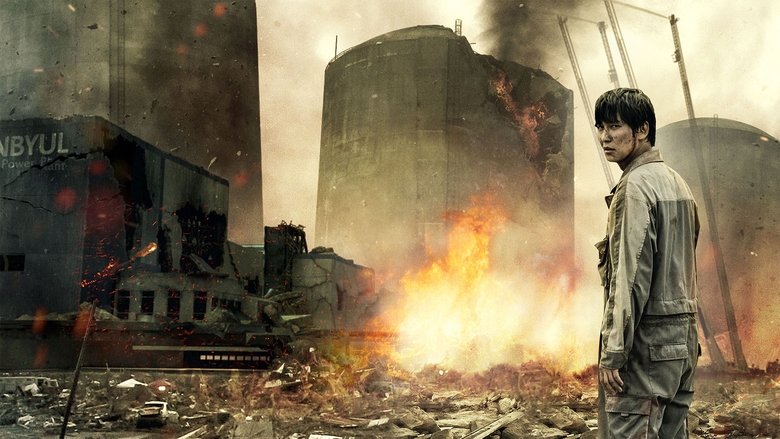
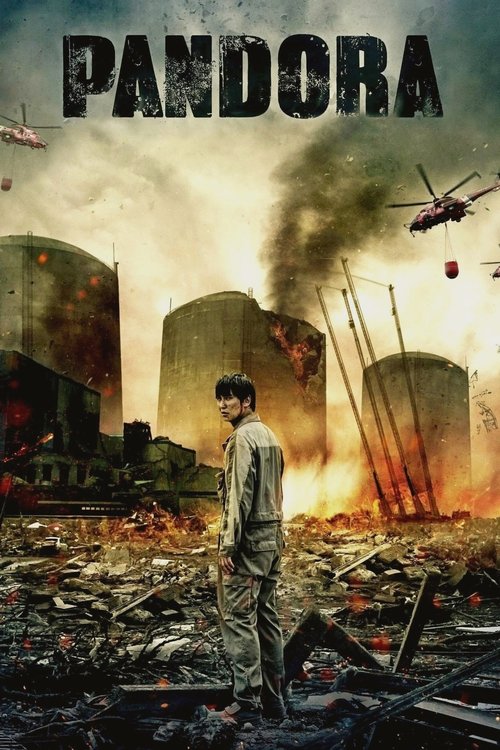
The trigger. A magnitude 6.1 earthquake strikes the region where the aging Hanbyul plant stands. The tremor cracks a cooling valve and radiation begins to leak. The film is careful about causality: the quake is the occasion, not the cause. The plant was already old and under-maintained, its safety margins already spent, and every subsequent escalation traces back to decisions taken in offices long before the ground moved.
The political failure. Once the leak begins, the story splits. Inside the plant, workers and managers confront a cascade they cannot stop with the resources they have. Outside, in Seoul, the response is captured by the Prime Minister (Lee Kyung-young), who treats disclosure as the primary danger and manoeuvres to control what the public is told, while the young President (Kim Myung-min) discovers that holding the office does not mean holding the power. Officials arrive at the film's central, damning formulation — that saving the nation may require writing off one small town. The delay this produces converts a containable incident into a spreading catastrophe, and when official statements are finally contradicted by what people can see, evacuation collapses into panic on blocked roads.
The sacrifice. Because no institution can or will act in time, containment falls to the people the film began with: the plant's own low-paid maintenance workers, men with no protective advantage and no obligation beyond the town they live in. Kang Jae-hyeok — who spent the first act openly hating the plant that had already taken members of his family, and planning to run away from it with Yeon-joo — goes back in. His motive is never national; it is his mother, his sister-in-law, his nephew, Yeon-joo. He risks and gives his life to stop the disaster from spreading further, and the film's power comes from the fact that the least civic-minded man in the story is the one who pays.
What it means in retrospect. The title reframes everything once the ending lands. Nuclear energy is the box that should never have been opened; what escapes cannot be recalled; and hope, in the myth, is only what is left after everything else has flown out. The film's hope is Jae-hyeok — which is to say, hope in Pandora is not a solution but a bill, paid in the bodies of the powerless. The early scenes of his resentment, his escape fantasies and his family's history of loss to the plant read differently on a second viewing: they are not colour, they are the argument. The town was already being consumed by the reactor economically and generationally before it was consumed by radiation.
The final indictment. Nothing structural is repaired by the ending. The politicians who mismanaged the crisis are exposed but the arrangement that produced them stands; the plant is contained, not un-built. The film closes on a nation saved by exactly the logic it spent two hours condemning — the sacrifice of a few for the many — leaving the audience with the implication that the next earthquake will find the same country, the same reactors and the same instinct to protect the state's image before its people.