Skip to content
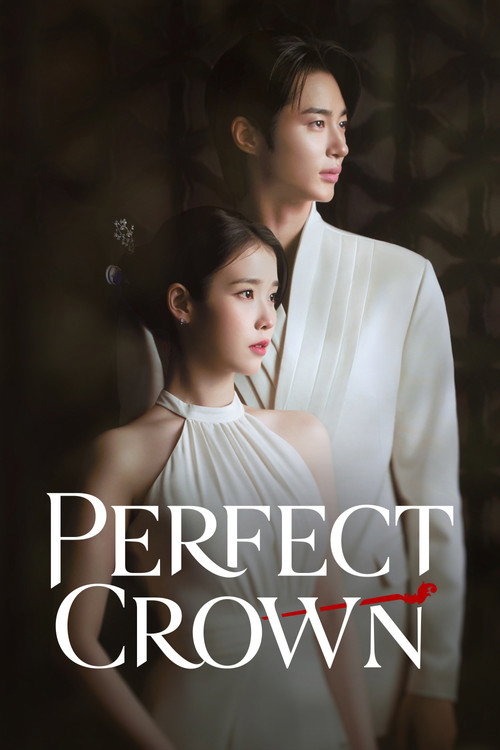
Perfect Crown
Set against a dazzling alternate monarchy, this romantic political drama evokes a poignant ache through the visual metaphor of a golden cage dissolving into dust beneath the quiet warmth of unconditional love.
Perfect Crown

Perfect Crown

21세기 대군부인

"A royal deal… that changed everything."

10 April 2026 — 16 May 2026 South Korea 1 season 12 episode Ended 9.1 (182)

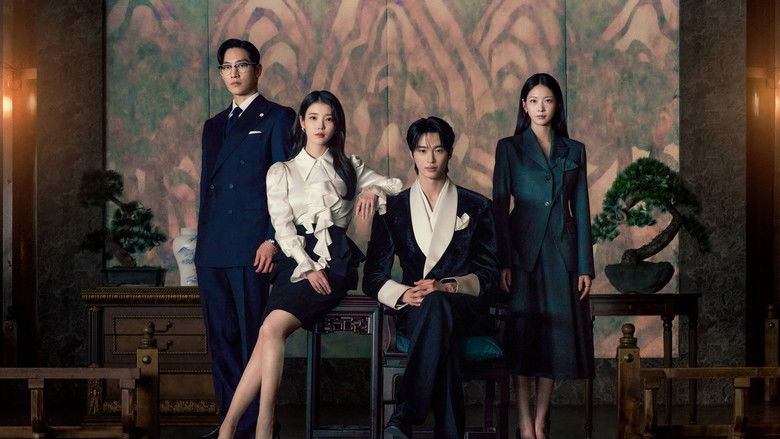
Cast: IU, Byeon Woo-seok, Steve Sanghyun Noh, Gong Seung-yeon, Yoo Su-bin

Drama Comedy Social Class and the Illusion of Status The Burden of Duty vs. Personal Autonomy Transformation from Transactional Alliance to Genuine Love Political Corruption and Institutional Decay Freedom Through Renunciation

Overview

Perfect Crown (Original Korean Title: 21세기 대군부인 / 21st Century Grand Prince's Wife) is a 12-episode romantic political drama set in an alternate 21st-century South Korea governed by a modern constitutional monarchy. The narrative centers on Seong Hui-ju, a fiercely intelligent and ambitious CEO of a luxury cosmetics conglomerate. Despite having supreme wealth, beauty, and talent, Hui-ju is constantly disrespected by high society due to her social status as a "commoner" and an illegitimate daughter of a chaebol family. On the opposite end of the social spectrum stands Grand Prince Yi An, the second son of the royal house. Though possessing royal blood and immense popular affection, Yi An leads a melancholic existence, suppressed by strict court protocols and forced to suppress his personal ambitions to avoid being perceived as a threat to the throne.

Determined to break through the aristocratic glass ceiling, Hui-ju proposes a high-stakes, transactional contract marriage to Grand Prince Yi An. Her proposition offers the financially constrained royal house access to her vast corporate capital in exchange for the royal title and social legitimacy she lacks. Yi An accepts the proposal to gain the leverage needed to protect his young nephew, King Yi-yun, and to dismantle the deep-seated political corruption inside the palace court.

What begins as a cold, calculated business alliance quickly draws the couple into a dangerous web of political intrigue, assassination plots, corporate sabotage, and court power struggles led by Prime Minister Min Jeong-u and conservative royal factions. As Hui-ju and Yi An navigate life-threatening crises together, their superficial contract evolves into a profound, transformative romance that ultimately challenges the very foundation of South Korea's social hierarchy.

Core Meaning

The core meaning of Perfect Crown lies in its radical critique of inherited privilege, social stratification, and the artificial constraints placed on human identity. Through the parallel journeys of a chaebol commoner who has everything except status and a prince who has status but nothing else, the series demonstrates that institutional titles, corporate wealth, and noble lineage are gilded cages that hinder genuine human fulfillment.

The creators convey that true human dignity and freedom cannot be bestowed by legal contracts, royal bloodlines, or societal approval; rather, they are forged through personal agency, moral courage, and authentic human connection. By concluding with the ultimate renunciation of royal power, the show asserts that breaking free from oppressive systems and reclaiming control over one's own destiny is the highest form of self-realization.

Thematic DNA

Social Class and the Illusion of Status 30%
The Burden of Duty vs. Personal Autonomy 25%
Transformation from Transactional Alliance to Genuine Love 20%
Political Corruption and Institutional Decay 15%
Freedom Through Renunciation 10%

Social Class and the Illusion of Status

Throughout the series, class boundaries are depicted as arbitrary walls designed to protect entrenched power. Hui-ju's corporate success is repeatedly undermined by aristocrats due to her illegitimate birth, while Yi An's royal title isolates him from normal life. The theme evolves as both characters realize that status is a hollow social construct, culminating in their joint effort to dismantle class barriers.

The Burden of Duty vs. Personal Autonomy

Yi An is bound by royal obligations and family grief, while Hui-ju is constrained by corporate expectations and family stigma. Across the season, the story traces their struggle to claim agency over their lives, shifting from fulfilling external duties to prioritizing personal truth and happiness.

Transformation from Transactional Alliance to Genuine Love

Starting as a strict legal contract governed by pragmatic M&A logic ("no interference in personal lives"), the relationship shifts as shared danger forces both leads to drop their emotional armors. Their evolution explores how vulnerability and mutual support can dismantle even the most rigid defenses.

Political Corruption and Institutional Decay

The palace court and corporate boardrooms are portrayed as parallel arenas of ambition and deceit. Through assassination attempts, poisoned wine, and financial manipulation, the show exposes how institutional power structures inevitably rot when driven by self-preservation and greed.

Freedom Through Renunciation

In the series' final arc, the narrative argues that true authority lies in the power to step away. By voluntarily giving up crowns, corporate titles, and inherited wealth, the protagonists prove that ultimate liberation requires relinquishing the very power society demands everyone pursue.

Character Analysis

Seong Hui-ju

IU (Lee Ji-eun)

Archetype: Ambitious Rebel / Pragmatic Heroine Key Trait: Unapologetic determination and sharp intellect

Motivation

Initially seeks absolute societal legitimacy; evolves into seeking emotional authenticity and freedom alongside Yi An.

Character Arc

Begins as a guarded, hyper-competitive CEO determined to secure royal status to erase her stigma as an illegitimate child. Over the series, she learns that her self-worth does not depend on aristocratic validation and risks her life and fortune to protect the man she loves.

Grand Prince Yi An (이안대군)

Byeon Woo-seok

Archetype: Reluctant Hero / Melancholic Prince Key Trait: Quiet resilience and self-sacrificing nobility

Motivation

Originally focused on protecting his young nephew King Yi-yun; evolves into dissolving the monarchy to free everyone from royal bondage.

Character Arc

Starts by hiding his sharp intellect behind a carefree persona to avoid palace suspicion. Through his partnership with Hui-ju, he finds the strength to confront political corruption and ultimately makes the unprecedented decision to abolish the monarchy.

All 5 characters and cast

Symbols & Motifs

The Irworobongdo Screen (일월오봉도)

Meaning:

Symbolizes overwhelming institutional authority and the suffocating weight of royal heritage.

Context:

The traditional folding screen depicting the Sun, Moon, and Five Peaks stands behind the royal throne and is used extensively in palace interior shots.

The Marriage Contract

Meaning:

Represents the transactional nature of modern relationships under capitalist and aristocratic pressures, later marking the couple's transition from legal pragmatism to authentic devotion.

Context:

Serves as the foundational business arrangement; the physical document is hidden, leaked to the national press, and eventually rendered obsolete.

Fire and Flames

Meaning:

Symbolizes destruction, historic palace cover-ups, and eventual purification through trial.

Context:

Appears at critical narrative junctures, including childhood trauma scenes and the catastrophic palace council hall fire.

Digoxin (Poisoned Wine)

Meaning:

Symbolizes the deadly hostility hidden beneath refined royal etiquette.

Context:

Used as a toxic substance in palace assassination attempts during ceremonial court events.

Luxury AMG GT Vehicles (Red vs. Grey)

Meaning:

The visual contrast symbolizes Hui-ju's aggressive, modern corporate ambition versus Yi An's suppressed, quiet royal existence.

Context:

Hui-ju drives a striking red AMG GT while Yi An drives a muted grey model.

Memorable Quotes

깨끗하게 질 바엔 더럽게 이기는 게 낫지요.
— Seong Hui-ju (IU)

Context

Spoken in Episode 1 during her initial introduction as a ruthless corporate leader.

Meaning

Establishes Hui-ju's unapologetic, hyper-competitive mindset as she refuses to let high-society elitism dictate her life.

전하를 지키세요. 내가 옆에 있을게요.
— Seong Hui-ju (IU)

Context

Delivered during a major political crisis when Yi An's life and position are threatened.

Meaning

Highlights the turning point where their transactional marriage converts into unwavering romantic devotion.

All 3 quotes

Episode Highlights

The Audacious Proposal

S1E1

Introduces the 21st-century constitutional monarchy world. Seong Hui-ju faces social mockery at the Royal Academy banquet despite her business success, prompting her to approach Grand Prince Yi An with a contract marriage offer.

Significance:

Establishes the central premise and transactional dynamic that drives the first half of the series.

Public Statement

S1E3

A media scandal erupts following a secret rendezvous, leading Yi An to make a dramatic public declaration acknowledging their relationship.

Significance:

Officially launches their public fake-dating campaign and raises the political stakes.

The Shielding Collision

S1E5

Assassin forces attempt to crash Hui-ju's vehicle, but Yi An intentionally rams his own sports car into hers to absorb the impact.

Significance:

Proves Yi An's willingness to sacrifice himself for Hui-ju, shifting their dynamic from business partners to emotional allies.

Exposed

S1E8

Political rivals leak the hidden marriage contract to the national press, throwing both Castle Group and the royal court into chaos.

Significance:

Forces the leads to confront their unacknowledged feelings under intense media and court pressure.

Inferno at the Council Hall

S1E10

A massive fire breaks out in the palace council hall, trapping Yi An inside until Hui-ju charges through flames to find him.

Significance:

Shatters their remaining emotional barriers and confirms their deep romantic bond.

The Throne of Discord

S1E11

A political vacuum forces Yi An into the enthronement process, featuring intense political clashes with Prime Minister Min Jeong-u.

Significance:

Drives the political climax and sets up the dramatic resolution regarding the royal house.

Dissolution and Dawn

S1E12

Yi An stuns the nation by officially abolishing the South Korean monarchy and transferring royal wealth into a public foundation.

Significance:

Resolves the overall series arc as Yi An and Hui-ju begin life as ordinary citizens, ending with a kiss-cam moment at a baseball stadium.

Philosophical Questions

Is human worth defined by inherited status or individual agency?

The series explores how social structures impose arbitrary values on individuals based on birth, asserting that true worth stems from conscious choices and moral courage.

Can an inherently unequal institution be reformed from within, or must it be dismantled?

Through Yi An's eventual abolition of the monarchy, the narrative suggests that systems built on unequal privilege cannot be fixed—they must be dissolved.

What is the boundary between self-preservation and moral integrity in corrupt systems?

Explored through characters like Min Jeong-u and Yun I-rang, examining how political expediency can corrupt noble intentions.

Alternative Interpretations

Critics and commentators have offered several alternate perspectives on the series:

Full ending explanation

Cultural Impact

Perfect Crown premiered on MBC TV and Disney+ in April 2026 to high ratings, peaking at 13.8% nationwide (with peak minute ratings reaching 16.3%). Audiences praised the star power and romantic chemistry between IU and Byeon Woo-seok.

Despite its commercial success, the show suffered major domestic backlash during Episode 11. In the enthronement scene, palace ministers chanted "Cheonse!" ("Live for a thousand years") instead of "Manse!" ("Live for ten thousand years"). Historically, "Cheonse" was used by subordinate vassal states under Chinese imperial hegemony, whereas "Manse" was used by independent sovereign nations. Furthermore, Yi An wore a 9-tassel crown (guryumyeonryugwan) assigned to tributary lords rather than a 12-tassel crown (simibyeonryugwan) reserved for independent emperors.

Korean viewers and historians criticized the production for misrepresenting Korean national sovereignty. The outcry prompted formal public apologies from director Park Joon-hwa, writer Yoo Ji-won, MBC, and lead actors IU and Byeon Woo-seok. Production companies subsequently edited the audio, subtitles, and CGI for streaming (Disney+/VOD) and rerun broadcasts.

Audience Reception

Praised Aspects: Viewers praised the electric chemistry between IU and Byeon Woo-seok, the high-fashion wardrobe, breathtaking cinematography, and the fast-paced blend of rom-com tropes with palace drama.

Main Points of Criticism: Critics and viewers noted that condensing the script from 16 to 12 episodes caused the second-half political plots and villain motivations to feel rushed. The historical accuracy controversy in Episode 11 also overshadowed the finale week in South Korea.

Overall Verdict: Perfect Crown is remembered as a commercially successful K-drama elevated by top-tier lead performances, though somewhat flawed in its final arc by pacing constraints and historical oversight.

Interesting Facts

  • Co-produced by MBC and Kakao Entertainment, the series had a budget of ₩30 billion (approx. $22 million USD) to build modern royal sets and create custom haute-couture wardrobe pieces.
  • Perfect Crown became Disney+'s most-watched South Korean series globally upon release, accumulating over 43 million viewing hours.
  • Writer Yoo Ji-won revealed in post-broadcast interviews that the story was originally drafted for 16 episodes but was compressed to 12 episodes to maintain high-octane pacing.
  • Mercedes-Benz officially provided high-end vehicles (AMG GTs), though Hui-ju's hypercar in Episode 1 was a custom chassis modified with digital CGI to resemble a Bugatti hybrid.
  • The show reunited IU with supporting actress Chae Seo-an shortly after their work together on When Life Gives You Tangerines.

Easter Eggs

Historical Nomenclature

The Korean title 21세기 대군부인 uses "Daegun" (대군), the specific Joseon historical title reserved for a king's legitimate second son who is excluded from immediate crown succession, hinting early on at Yi An's powerless institutional status.

Musical Theatre Cameos

Renowned musical theater actor Son Jun-ho made a special guest appearance as King Hui-jong (Yi An's deceased father) in trauma flashback sequences.

Real-World Imperial Parallels

Hui-ju's narrative mirrors aspects of Empress Emerita Michiko of Japan, a wealthy commoner industrialist's daughter who married into an ancient imperial family.

Frequently Asked Questions

Explore More About This Movie

Dive deeper into specific aspects of the movie with our detailed analysis pages

Comments (0)

Leave a comment

No comments yet. Be the first to share your thoughts!

Similar Movies