Skip to content
Pinocchio
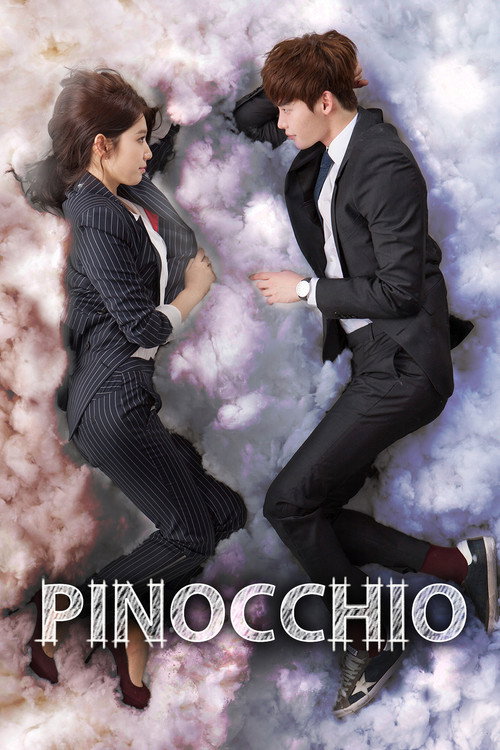
A sharp investigative melodrama woven with yearning and fragile warmth, Pinocchio portrays bruised souls holding trembling lanterns against manufactured narratives, illuminating how fragile truths survive the suffocating weight of public spectacle.
Pinocchio

Pinocchio

피노키오

"How far can you get by lying?"

12 November 2014 — 15 January 2015 South Korea 1 season 20 episode Ended 8.2 (648)

Cast: Park Shin-hye, Lee Jong-suk, Kim Young-kwang, Lee Yu-bi, Jin Kyung

Drama Comedy Mystery The Power and Ethics of the Spoken Word & Media Vengeance vs. Principled Justice The Burden and Nature of Truth Chosen Family, Forgiveness, and Reconciliation

Overview

Pinocchio centers on Ki Ha-myung and Choi In-ha, two individuals bound together by a tragic past and an unconventional family dynamic. After a catastrophic factory explosion leads to media sensationalism that vilifies Ha-myung’s firefighting father and destroys his family, Ha-myung is rescued from the sea by an elderly man with memory loss who mistakes him for his deceased son, Choi Dal-po. Adopting this new identity, Dal-po is raised alongside In-ha, the elderly man's granddaughter, who suffers from the fictional Pinocchio Syndrome—a physical condition causing violent hiccups whenever she speaks a lie.

As Dal-po conceals his sharp intellect behind an unassuming exterior, he discovers that In-ha's estranged mother is Song Cha-ok, the ruthless television anchor whose sensationalized reporting orchestrated his family's downfall. Despite the painful connection, Dal-po develops deep romantic feelings for In-ha. Motivated by different imperatives—In-ha striving to follow in her mother’s footsteps with radical honesty, and Dal-po seeking to reclaim his voice and uncover the truth—both enter the fiercely competitive world of broadcast journalism as rookie reporters for rival networks (YGN and MSC).

The series traces their turbulent journey alongside fellow rookie reporters Seo Beom-jo and Yoon Yoo-rae as they navigate high-stakes newsrooms, political corruption, and journalistic ethics. While confronting systemic media manipulation, personal grievances, and institutional cover-ups, Ha-myung and In-ha must decide whether the power of the microphone should be wielded for vengeance or used as an instrument of accountability and healing.


Core Meaning

The core thesis of Pinocchio is that words possess life-altering weight; when detached from ethical responsibility and empathy, journalism ceases to be an instrument of democracy and becomes a weapon of mass destruction. Writer Park Hye-ryun critiques the 24-hour media cycle’s appetite for sensationalism, illustrating how public opinion can be manipulated into witch-hunts based on half-truths. Simultaneously, the drama asserts that genuine justice cannot be achieved through retaliatory malice; true retribution and integrity come from confronting corruption with uncompromised truth and humane compassion.

Thematic DNA

The Power and Ethics of the Spoken Word & Media 35%
Vengeance vs. Principled Justice 25%
The Burden and Nature of Truth 20%
Chosen Family, Forgiveness, and Reconciliation 20%

The Power and Ethics of the Spoken Word & Media

The narrative explores how journalists balance public interest against ratings. It contrasts sensationalist journalism (represented by MSC's dramatized 'news people want to see') with ethical fact-checking (represented by YGN's commitment to 'news people need to hear').

Vengeance vs. Principled Justice

The divergent paths of the Ki brothers highlight the thematic contrast between destructive personal retribution (vigilantism and murder) and institutional accountability achieved through ethical investigative journalism.

The Burden and Nature of Truth

Through the metaphor of Pinocchio Syndrome, the series illustrates that while unfiltered honesty can cause acute discomfort, suppressed truth creates internal dissonance. It investigates the difficulty of maintaining integrity in a world that thrives on convenient fabrications.

Chosen Family, Forgiveness, and Reconciliation

The unconditional love within the Choi household proves that emotional bonds are forged through care, acceptance, and shared vulnerability rather than mere biology.

Character Analysis

Ki Ha-myung / Choi Dal-po

Lee Jong-suk (young: Nam Da-reum)

Archetype: Reluctant Hero / Seeker of Truth Key Trait: Fierce Intellect & Hidden Integrity

Motivation

Initially to safeguard his adoptive sanctuary and punish Song Cha-ok; evolves into an ethical imperative to clear his family's name and ensure the press never destroys another innocent life.

Character Arc

Begins as a traumatized boy hiding his genius to protect his adoptive father; evolves into a driven rookie reporter seeking revenge; culminates in a mature, principled journalist who chooses systemic integrity over personal vengeance.

Choi In-ha

Park Shin-hye (young: Noh Jeong-eui)

Archetype: Idealistic Rebel / Uncompromising Moralist Key Trait: Radical Honesty & Tenacity

Motivation

To reconnect with her mother and prove that a 'Pinocchio' can be an investigative reporter; later shifts to holding journalism to absolute ethical standards.

Character Arc

Starts as an ostracized girl unable to tell lies who idolizes her absent mother; undergoes a painful awakening when discovering her mother’s corruption; transforms into an unapologetic, fearless reporter who holds her own family accountable.

All 5 characters and cast

Symbols & Motifs

Pinocchio Syndrome & Hiccups

Meaning:

A physical manifestation of conscience. It serves as a literal and narrative device demonstrating that truth cannot remain buried without causing psychic and physical distress.

Context:

Used primarily through Choi In-ha whenever she attempts to speak or conceal a falsehood, triggering involuntary hiccups until she admits the truth.

The Microphone & Press ID Badge

Meaning:

The ultimate dual-edged sword. In inexperienced or corrupt hands, it serves as a murder weapon; in principled hands, it serves as an instrument of restorative justice.

Context:

Featured across newsrooms, press scrums, and broadcast rooms at YGN and MSC as reporters wield their reporting authority.

The Toast / 'Toast Kiss'

Meaning:

Symbolizes everyday domestic warmth, blurred boundaries between familial and romantic devotion, and the unexpressed affection growing in plain sight.

Context:

Featured in intimate morning routines and shared domestic scenes between Dal-po and In-ha inside the family home.

The Shaggy Haircut / Makeover

Meaning:

Dal-po’s rural shaggy hair represents his self-imposed concealment and protective cocoon; shedding it marks his entry into the open world to confront his real identity.

Context:

Worn during his early years on the island and in high school, subsequently cut when transitioning into adulthood and public life.

The Button Necklace

Meaning:

Serves as a tangible anchor of unvoiced love, shared history, and mutual protection.

Context:

Made from Dal-po’s school uniform button and worn continuously around In-ha’s neck.

The Red Traffic Cone / Rain Umbrella

Meaning:

Underscores improvised shelter, emotional solidarity, and perseverance amidst adversity.

Context:

Used during rainstorms and stakeouts while working in the field under harsh reporting conditions.

Memorable Quotes

사람들은 피노키오가 진실만을 말한다고 생각하죠. 사람들은 기자들도 진실만을 전한다고 믿습니다. 피노키오도 기자들도 그걸 알았어야죠. 사람들이 자기 말을 무조건 믿는다는 걸.
— Ki Ha-myung (Lee Jong-suk)

Context

Episode 4 ('Romeo and Juliet'), spoken during the YGN open debate test when In-ha defends unverified assumptions.

Meaning

Encapsulates the central thesis about the perilous authority wielded by journalists and the devastating danger of unchecked public assumptions.

거짓말을 하면 딸꾹질을 하는 사람이 진실을 숨긴 채 살아가면 얼마나 가슴이 답답하겠어.
— Choi Gong-pil (Byun Hee-bong)

Context

Episode 16, as Gong-pil admits he knew Dal-po was not his real biological son all along.

Meaning

Delivers profound unconditional empathy and releases Dal-po from his long-held burden and guilt.

All 4 quotes

Episode Highlights

Pinocchio

S1E1

Introduces the 2000 factory explosion, the Ki family tragedy orchestrated by media coverage, and Ha-myung's adoption into the Choi household.

Significance:

Establishes the entire emotional, narrative, and thematic foundation for the series.

Romeo and Juliet

S1E4

Ha-myung and In-ha compete in the YGN blind debate, where Ha-myung sharply attacks In-ha’s defense of media assumptions.

Significance:

Exposes the fatal danger of unverified reporting and drives a major ideological and emotional rift between the two leads.

The King’s Ears Are Donkey’s Ears

S1E10

Dal-po discovers his brother Jae-myung's revenge killings while Jae-myung simultaneously becomes hailed as a national hero for saving a child.

Significance:

Highlights the acute dramatic irony between manufactured media perception and dangerous reality.

A Midsummer Night’s Dream

S1E11

Ha-myung reveals his true identity to Jae-myung and broadcasts his brother’s crimes publicly on YGN.

Significance:

Ha-myung chooses professional integrity over familial concealment, breaking the cycle of destructive vengeance.

Don Quixote

S1E15

A new industrial fire breaks out, leading Chairman Park Ro-sa to order MSC to scapegoat an Olympic competitor to divert public scrutiny.

Significance:

Directly mirrors the original Ki family tragedy, revealing the ongoing systemic playbook of corporate media manipulation.

The North Wind and the Sun

S1E19

Song Cha-ok turns over internal evidence against Chairman Park, while Beom-jo turns himself in to force his mother to confess.

Significance:

Triggers the collapse of the systemic corruption ring through whistleblowing and personal sacrifice.

Peter Pan

S1E20

Chairman Park is convicted, Song Cha-ok transitions to lecturing on ethics, and Gong-pil formally nullifies Ha-myung's adoption to give his blessing for their wedding.

Significance:

Provides definitive thematic and romantic resolution, marking the characters' full maturation into adulthood and ethical responsibility.

Philosophical Questions

Is unfiltered truth always moral, or does compassion require deception?

The series examines whether absolute honesty can result in unnecessary cruelty, probing the delicate boundary between tactful diplomacy and cowardly deception.

Can an institution driven by commercial profit ever deliver pure public truth?

The narrative questions whether corporate newsrooms dependent on ratings, advertiser revenue, and political access can truly remain free from manipulation by oligarchs.

Does the end ever justify the means in the pursuit of justice?

Explored through the contrasting paths of the Ki brothers: whether extrajudicial vengeance (Jae-myung) or slow, principled institutional reform (Ha-myung) constitutes valid justice.

Alternative Interpretations

The drama allows for multiple layered readings beyond standard romance and investigative tropes:

Full ending explanation

Cultural Impact

Broadcast in late 2014 and early 2015, Pinocchio resonated strongly with real-world South Korean media controversies. Following national tragedies like the 2014 Sewol Ferry disaster, public distrust of state-influenced broadcast media and sensationalist reporters (termed gireogi or 'trash reporters') was at an unprecedented peak. The drama's depiction of newsrooms rushing unverified breaking news, colluding with corporate chaebols, and manipulating public emotion struck a chord with the domestic zeitgeist.

Internationally, the series surpassed 1 billion views on Youku, cementing Lee Jong-suk and Park Shin-hye as top-tier Hallyu stars. It solidified what critics term Park Hye-ryun’s informal Social Integrity Trilogy (alongside I Hear Your Voice and While You Were Sleeping), illustrating that prime-time television can weave deep socio-political commentary into mainstream romantic drama.

Audience Reception

Pinocchio received widespread acclaim from critics and audiences alike, holding an aggregated critical rating of 9.0/10. Domestically, it maintained strong double-digit viewership, consistently led its Wednesday-Thursday timeslot, and swept major accolades at the 2014 SBS Drama Awards and the 51st Baeksang Arts Awards.

Critics universally lauded writer Park Hye-ryun's tightly constructed narrative, the organic romantic chemistry between the leads, and Park Shin-hye's proactive, morally courageous heroine. Minor criticisms were limited to occasional pacing lulls between Episodes 13 and 15, slight melodramatic tropes, and early production wig aesthetics.

Interesting Facts

  • Writer Park Hye-ryun, director Jo Soo-won, and lead actor Lee Jong-suk re-teamed after their massive success on the 2013 SBS drama I Hear Your Voice.
  • At the time of broadcast, Pinocchio set the record for the highest price per episode ever paid for a Korean drama in China, sold to Youku/Tudou for approximately $280,000 per episode.
  • The medical disorder 'Pinocchio Syndrome' was completely invented by writer Park Hye-ryun for the series, but framed so convincingly that viewers searched medical databases to verify its existence.
  • Every single episode title is named after a world-renowned fairytale, fable, or literary classic framing each broadcast's thematic dilemma.
  • Lee Jong-suk wore an intentionally absurd, shaggy 'country bumpkin' wig for the first four episodes, which became a viral sensation and talking point.

Easter Eggs

Yoon Sang-hyun Cameo in Episode 11

Reprising his role as public defender Cha Kwan-woo from I Hear Your Voice, Yoon Sang-hyun appears as Ki Jae-myung’s defense attorney in a direct Park Hye-ryun cinematic universe crossover.

Lee Bo-young Voice Cameo

The star of I Hear Your Voice provided the voice for Dal-po’s taxi GPS navigation system named Hye-sung, referencing her character name from the previous series.

Foreshadowed Physical Details in Episode 1

Song Cha-ok's neck bandage and a subtly damaged office trophy in Episode 1 foreshadow the later reveal that Jae-myung had attacked her with the award years earlier.

Kangnam Cameo in Episode 20

Hip-hop and variety star Kangnam makes a cameo appearance as a student attending Cha-ok's university ethics lecture.

Jung Woong-in Cameo in Episode 2

Jung Woong-in reprised his villainous persona Min Joon-gook from I Hear Your Voice during Dal-po’s courtroom nightmare sequence.

Frequently Asked Questions

Explore More About This Movie

Dive deeper into specific aspects of the movie with our detailed analysis pages

Comments (0)

Leave a comment

No comments yet. Be the first to share your thoughts!

Similar Movies