Skip to content
In the House
A razor-sharp, voyeuristic psychological dramedy steeped in intellectual seduction and creeping dread, where storytelling becomes a Trojan horse dismantling the pristine glass walls of bourgeois domesticity.
In the House

In the House

Dans la maison

"There’s always a way to get in."

26 September 2012 France 105 min 7.2 (922)

Director: François Ozon

Cast: Fabrice Luchini, Ernst Umhauer, Kristin Scott Thomas, Emmanuelle Seigner, Bastien Ughetto

Drama Thriller Comedy Mystery Voyeurism and the Parasitic Ethics of Art The Blurring Boundary Between Fiction and Reality Class Resentment and Bourgeois Deconstruction Pedagogy, Mentorship, and Surrogate Kinship
Box Office: $11,879,046

Overview

In the House (Dans la maison), written and directed by François Ozon and adapted from the Spanish theatrical play The Boy in the Last Row (El chico de la última fila) by Juan Mayorga, is an intricate meta-cinematic puzzle navigating the seductive boundaries between literature and life.

The story follows Germain Germain (Fabrice Luchini), an embittered literature teacher at Lycée Gustave Flaubert who has long grown cynical regarding the intellectual capacity of his teenage students. His gloom is shattered when sixteen-year-old Claude Garcia (Ernst Umhauer)—a quiet pupil who sits in the back of the classroom—turns in a writing assignment detailing how he befriended a classmate, Raphaël "Rapha" Artole (Bastien Ughetto), solely to infiltrate his "normal" suburban middle-class household. The essay ends provocatively with the cliffhanger: "À suivre..." ("To be continued...").

Recognizing exceptional literary talent and harboring unfulfilled ambitions of his own, Germain takes Claude under his wing as a personal protégé. Encouraged by Germain's feedback and shared voyeurism with Germain’s wife Jeanne (Kristin Scott Thomas), Claude writes subsequent installments that blur the lines between objective observation, deliberate emotional manipulation, and fabricated fiction. As Claude's intrusion into the Artole family deepens, the master-pupil dynamic spirals out of control, threatening the fabric of both households.

Core Meaning

François Ozon uses the narrative to dissect the voyeuristic, parasitic nature of artistic creation and storytelling. The film posits that every storyteller is fundamentally an intruder who exploits real human vulnerabilities for narrative pleasure, and that the audience (represented by Germain and Jeanne) is complicit in this invasion.

Ozon cautions against the hubris of believing one can passively direct the lives of others without bearing the collateral damage of narrative fallout. When art treats life merely as raw material to be shaped for dramatic tension, reality retaliates.

Thematic DNA

Voyeurism and the Parasitic Ethics of Art 35%
The Blurring Boundary Between Fiction and Reality 25%
Class Resentment and Bourgeois Deconstruction 20%
Pedagogy, Mentorship, and Surrogate Kinship 20%

Voyeurism and the Parasitic Ethics of Art

The film explores the predatory impulse behind storytelling. Claude insinuates himself into the Artole home not out of genuine friendship, but to dissect them as characters. Germain becomes addicted to these private dispatches, acting as an eager consumer whose moral boundaries dissolve under the intoxicating lure of suspense.

The Blurring Boundary Between Fiction and Reality

Ozon continuously blurs what is authentic, what is embellished, and what is outright engineered by Claude to satisfy narrative mechanics. The film demonstrates how written fiction has the power to manipulate real-world actions, ultimately rewriting the lives of its creators and consumers.

Class Resentment and Bourgeois Deconstruction

Claude comes from a broken, working-class background (caring for an invalid father in a modest flat). His calculated invasion of the Artole household—and his disdainful yet fascinated deconstruction of their banal, consumerist life—serves as an incisive satire of middle-class domestic complacency.

Pedagogy, Mentorship, and Surrogate Kinship

Childless Germain seeks intellectual immortality and a surrogate son through Claude, while Claude seeks an intellectual father figure and an appreciative reader. However, the dynamic shifts as the protégé outmaneuvers the master, turning the teacher into a pawn within his overarching novel.

Character Analysis

Germain Germain

Fabrice Luchini

Archetype: The Frustrated Mentor / Tragic Enabler Key Trait: Pedantic, arrogant, intellectually vain.

Motivation

To find artistic fulfillment through a gifted pupil after failing as a novelist himself.

Character Arc

Shifts from an authoritative, bored teacher to an obsessive, manipulative reader, eventually losing his career, marriage, and status to his pupil’s design.

Claude Garcia

Ernst Umhauer

Archetype: The Seductive Trickster / Shadow Protagonist Key Trait: Chillingly composed, voyeuristic, calculating.

Motivation

To escape his bleak reality, master the craft of storytelling, and possess the lives of others.

Character Arc

Evolves from a quiet, observant student into a predatory author figure who actively engineers domestic crises to provide plot momentum.

All 5 characters and cast

Symbols & Motifs

The "Back Row" (La Dernière Rangée)

Meaning:

Symbolizes the omniscient vantage point of the observer/outsider.

Context:

From the back of the classroom, Claude remains invisible while observing the entire social hierarchy, giving him narrative detachment and power.

The Artole Family Home

Meaning:

A physical manifestation of bourgeois normality, order, and illusion.

Context:

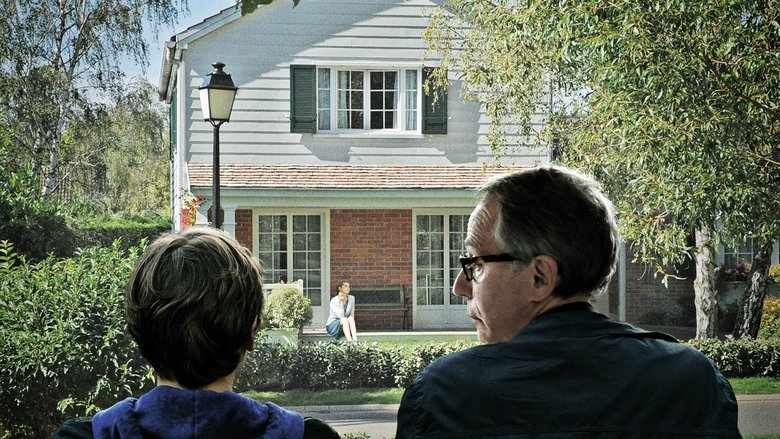
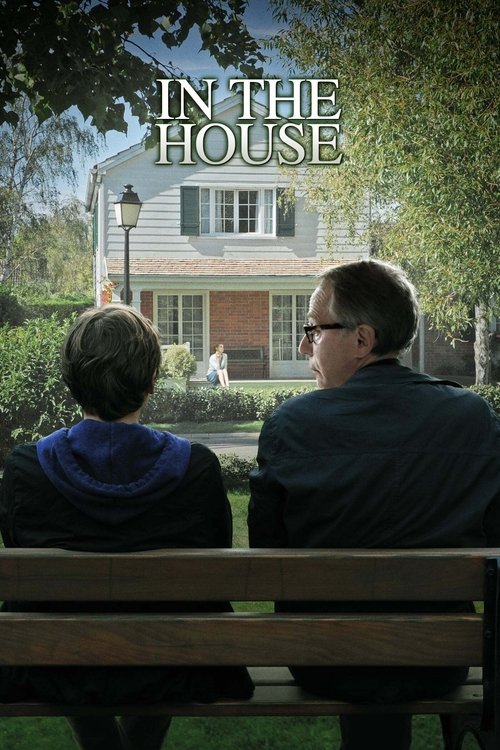
The modern, glass-paneled structure represents both domestic comfort and extreme vulnerability to outside eyes.

The Maze / Minotaur’s Labyrinth (Art Gallery)

Meaning:

Symbolizes the deceptive narrative maze that Claude builds around Germain, who wanders blindly into the trap.

Context:

Jeanne’s modern art gallery is explicitly linked to the myth of the labyrinth.

The School Uniform

Meaning:

Highlights the contrast between enforced surface uniformity and the turbulent, uncontrollable individual desires lurking beneath.

Context:

Introduced at Lycée Gustave Flaubert at the film's beginning to enforce egalitarian conformity.

"À suivre..." (To Be Continued)

Meaning:

Operates as a narrative hook that strips Germain of his authority as an educator, reducing him to a craving reader.

Context:

The repeated tagline at the bottom of Claude's essays serves as a motif of serial addiction.

Memorable Quotes

Claude a le don d'écrire... Il a cette odeur si singulière des femmes de la classe moyenne.
— Germain

Context

Germain discovers and reads Claude’s first assignment.

Meaning

This sentence hooks Germain immediately, demonstrating Claude’s acute, sensual, and contemptuous observation of Esther Artole.

À suivre...
— Claude Garcia

Context

Written at the conclusion of his texts.

Meaning

The cliffhanger formula used at the end of every installment, turning high school homework into an addictive psychological serial.

All 5 quotes

Philosophical Questions

What are the moral boundaries of artistic inspiration?

Does an artist have the ethical right to commodify the real private lives and pain of others under the justification of aesthetic excellence?

Can a consumer/reader ever remain innocent?

Does the desire to be entertained by conflict make the spectator morally liable for the suffering required to produce the story?

Where does reality end and narrative construction begin?

How much of human identity and interpersonal relationships are objective, and how much is merely narrative fiction projected onto others?

Alternative Interpretations

1. The Meta-Cinematic Reading (The Viewer as Accomplice): Germain is not simply a character; he represents the audience. Claude represents the director/screenwriter. When Germain demands more conflict, romance, and scandal, he channels the audience's appetite for sensationalism. In this reading, Claude’s cruel manipulation is actively commissioned by the reader's appetite for drama.

Full ending explanation

Cultural Impact

In the House was released in late 2012 amidst discussions concerning modern French education, standardized testing, and the resurgence of bourgeois conservatism in Europe.

Critical Reception: The film received wide critical acclaim across France, the UK, and North America (holding an 89% approval rating on Rotten Tomatoes and 72/100 on Metacritic). Critics praised Ozon for balancing sophisticated intellectual satire with the tension of a Hitchcockian thriller.

Awards: Nominated for six César Awards in 2013 (including Best Film, Best Director, Best Actor for Luchini, and Most Promising Actor for Umhauer), and nominated for European Director and European Screenwriter at the European Film Awards.

Influence: The film solidified Ozon’s status as a master of metafiction, standing alongside Swimming Pool (2003) as one of the definitive modern cinematic investigations into the ethics of the writing process.

Audience Reception

Praised Elements:

  • The seamless transitions between the classroom, the Artole house, and the literary text, often featuring Germain physically stepping into scenes to offer real-time directorial feedback.
  • Exceptional performances by Fabrice Luchini and Kristin Scott Thomas, alongside the breakthrough role of Ernst Umhauer.
  • The sharp, witty screenplay that shifts between biting comedy and psychological suspense.

Points of Criticism:

  • A handful of viewers and critics found the third act slightly rushed or straining for dramatic resolution compared to the tight control of the first two acts.
  • Some audience members felt the tone remained deliberately emotionally detached, making it harder to sympathize deeply with any individual character.

Controversial Moments:

  • Claude stealing an official national mathematics exam paper with Germain's complicity, and the ethical boundary crossings involving an underage boy and older married women.

Overall Verdict: A sophisticated, darkly funny, and thought-provoking triumph of French auteur cinema that rewards multiple viewings.

Interesting Facts

  • The film is an adaptation of the 2006 Spanish stage play El chico de la última fila (The Boy in the Last Row) by award-winning dramatist Juan Mayorga.
  • François Ozon was drawn to the source material partly because both of his parents were schoolteachers, giving him an intimate understanding of academic weariness, syllabus mechanics, and pedagogical vanity.
  • Ernst Umhauer was selected after extensive auditions; Ozon cast him because of his androgynous looks, piercing gaze, and ability to project an unsettling combination of innocence and calculated malice.
  • In the House marks Ozon's fourth stage-to-screen adaptation, following Water Drops on Burning Rocks (Rainer Werner Fassbinder), 8 Women (Robert Thomas), and Potiche (Pierre Barillet and Jean-Pierre Grédy).
  • The film won the Golden Shell (Best Film) and the Jury Prize for Best Screenplay at the 60th San Sebastián International Film Festival (2012), along with the FIPRESCI Prize at the 2012 Toronto International Film Festival (TIFF).
  • This was Fabrice Luchini's second collaboration with François Ozon, following their success on the hit comedy Potiche (2010).

Easter Eggs

Gustave Flaubert

Germain teaches at Lycée Gustave Flaubert. This explicitly pays homage to the master of French realism and author of Madame Bovary, reflecting the themes of bourgeois romantic dissatisfaction embodied by Esther Artole.

Humbert Humbert & Vladimir Nabokov

The teacher's full name is Germain Germain. Critics and scholars have noted this double-name structure is a direct literary homage to Nabokov’s Lolita (Humbert Humbert), signaling illicit obsessions and unreliable subjective realities.

Alfred Hitchcock’s Rear Window (1954)

The climax and final sequence directly mirror Hitchcock's masterpiece. Germain and Claude sit side-by-side observing illuminated apartment windows across a residential building, interpreting the silent domestic dramas unfolding in each frame.

Contemporary Art Satire (Yolande Moreau cameo)

Jeanne runs the art gallery featuring an exhibition titled "The Dictatorship of Sex," featuring provocative phalluses and art installations. Yolande Moreau appears in a comedic dual role as the twin buyers/curators evaluating the art.

Pasolini's Teorema (1968)

Germain references Pasolini during discussions with Claude, framing Claude's infiltration as that of an enigmatic visitor whose arrival dismantles every member of a bourgeois family.

Frequently Asked Questions

Explore More About This Movie

Dive deeper into specific aspects of the movie with our detailed analysis pages

Comments (0)

Leave a comment

No comments yet. Be the first to share your thoughts!

Similar Movies