Planet Earth
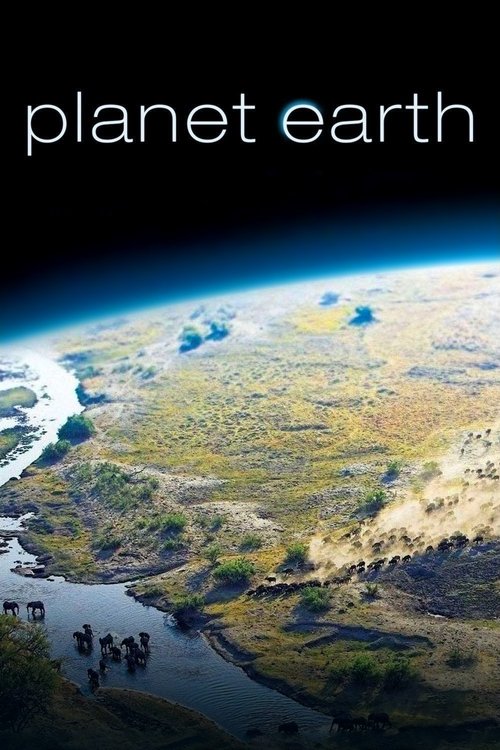
A breathtaking high-definition odyssey across Earth's last wildernesses, this documentary series is a majestic, emotional symphony of the planet's raw, untamed beauty.
Planet Earth

Planet Earth

"Prepare to see it as never before."

05 March 2006 — 10 December 2006 Japan 1 season 11 episode Ended ⭐ 8.6 (1,161)
Cast: David Attenborough
Documentary
The Spectacle of Biodiversity The Struggle for Survival Environmental Fragility and Interconnectedness Humanity as Observers

Overview

Planet Earth is a landmark 2006 documentary series from the BBC Natural History Unit that presents a definitive, global look at the diverse habitats of our planet. Five years in the making, it was the most expensive nature documentary ever commissioned by the BBC at the time and the first to be filmed entirely in high definition, offering audiences an unparalleled visual experience. Narrated by the celebrated naturalist David Attenborough, the series consists of eleven episodes, each dedicated to a specific environment—from the icy poles and towering mountains to the deepest oceans and driest deserts.

Without a traditional plot, the series' arc is one of exploration and revelation. Each episode immerses the viewer in a different biome, showcasing the incredible and often brutal strategies that life uses to survive and thrive. The series takes a comprehensive approach, traveling to over 200 locations across every continent to capture rare footage of animals, many of which had never been filmed before. Beyond the spectacle, each episode concludes with a ten-minute 'Planet Earth Diary' featurette, revealing the immense challenges and innovative techniques the film crews employed to capture the stunning imagery.

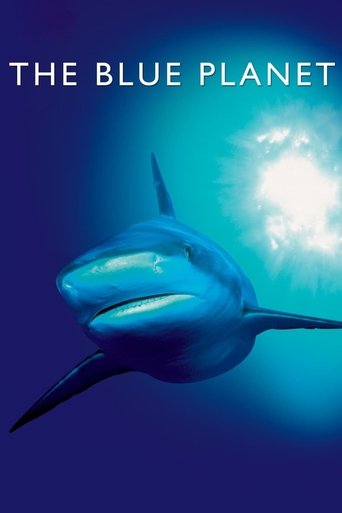
Core Meaning

The core meaning of Planet Earth is to foster a profound sense of awe and appreciation for the natural world's complexity, beauty, and grandeur. By showcasing the interconnectedness of Earth's diverse ecosystems and the extraordinary adaptations of its inhabitants, the creators aimed to present our planet as a fragile, precious, and unified entity. The series implicitly argues for the intrinsic value of biodiversity and wilderness. While not overtly an activist documentary, it subtly underscores the vulnerability of these environments by presenting them in their pristine state, leaving the audience with a powerful, unspoken understanding of what stands to be lost due to human impact. It serves as a monumental record of life on Earth at the beginning of the 21st century, urging a deeper connection and sense of responsibility towards our shared home.

Thematic DNA

The Spectacle of Biodiversity 35%
The Struggle for Survival 30%
Environmental Fragility and Interconnectedness 20%
Humanity as Observers 15%

The Spectacle of Biodiversity

Throughout its eleven episodes, Planet Earth relentlessly showcases the sheer variety of life on our planet. Each habitat reveals a new cast of creatures with unique evolutionary solutions to the challenges they face. From the birds of paradise in the dense jungles to the elusive snow leopard in the high mountains and the bizarre life forms in the deep ocean, the series is a testament to the endless creativity of evolution. This theme is not just about cataloging species but about celebrating the vast, intricate web of life that covers every corner of the globe.

The Struggle for Survival

A central, recurring theme is the daily, life-or-death struggle faced by all living things. The series captures this with dramatic and often brutal honesty. Memorable sequences, such as a pack of wild dogs hunting, a great white shark breaching to catch a seal, or a polar bear's desperate search for food in a melting landscape, highlight that nature is unsentimental. This theme emphasizes the incredible resilience, strength, and ingenuity required for life to persist in Earth's most extreme environments.

Environmental Fragility and Interconnectedness

While the series focuses on the beauty of the natural world, it carries an undercurrent of its fragility. The opening episode, "From Pole to Pole," establishes this by tracing the influence of the sun and seasons across the globe, demonstrating how climate connects disparate ecosystems. The plight of the polar bear in "Ice Worlds" directly, though subtly, alludes to the impacts of climate change. The series acts as a powerful statement on the delicate balance of these systems and what is at stake.

Humanity as Observers

A unique theme is the human endeavor to witness and understand the natural world. This is primarily explored through the 'Planet Earth Diaries' segments at the end of each episode. These behind-the-scenes featurettes highlight the immense patience, technological innovation, and physical hardship endured by the film crews. This meta-narrative reveals a deep human desire to connect with nature and the lengths we will go to document its wonders, framing the entire series as a monumental achievement of human curiosity and perseverance.

Character Analysis

The Narrator

David Attenborough

Archetype: The Sage / The Guide
Key Trait: Reverent

Motivation

Attenborough's motivation is to foster a sense of wonder, understanding, and respect for the natural world. He aims to translate the complex science of ecology and animal behavior into a compelling narrative that is accessible to a global audience. His ultimate goal is to inspire viewers to cherish the planet and recognize their responsibility in protecting it.

Character Arc

David Attenborough's role is not one of a character with a traditional arc, but rather that of a constant, wise guide. His presence evolves from being a simple presenter of facts to the very conscience of the series. His calm, knowledgeable, and deeply empathetic narration shapes the viewer's perception of the events on screen. His tone can shift from one of childlike wonder at a bird's courtship display to somber gravity when describing an animal's struggle for survival, providing the emotional core that connects the audience to the natural world.

Symbols & Motifs

The Snow Leopard

Meaning:

The snow leopard symbolizes the ultimate rarity and fragility of the natural world. It represents the unseen, the elusive, and the wildness that exists at the very edge of human reach. Its ability to survive in one of the planet's harshest environments makes it a powerful emblem of resilience.

Context:

Featured in the "Mountains" episode, the quest to film the snow leopard was a monumental challenge for the production team, taking three years to capture the first-ever footage of a hunt. This context, explained in the behind-the-scenes diary, elevates the animal beyond a mere subject to a symbol of the series' ambition and its goal of revealing the planet's most hidden treasures.

The Polar Bear

Meaning:

The polar bear symbolizes the immediate and tragic consequences of climate change. It embodies the struggle against an environment that is rapidly changing due to forces beyond its control, representing a powerful, living icon of environmental vulnerability.

Context:

In the "Ice Worlds" episode, the sequence of an exhausted polar bear failing to hunt walrus after a long swim across melted ice sheets became one of the series' most discussed and poignant moments. It directly confronts the audience with the real-world effects of global warming, serving as a somber warning for the future of the planet's ecosystems.

Time-Lapse Fungi

Meaning:

The time-lapse sequences of fungi growing and decaying symbolize the unseen forces and cycles of life and death that underpin every ecosystem. They represent the processes of decomposition and rebirth that are fundamental to nature's continuity but are often too slow for the human eye to perceive.

Context:

Used spectacularly in the "Jungles" and "Seasonal Forests" episodes, the high-speed footage of fungi erupting from the forest floor or consuming a dead insect provides a mesmerizing and slightly alien perspective on life. It highlights the series' use of technology to reveal hidden natural processes and underscores the theme of interconnectedness within the web of life.

Memorable Quotes

A hundred years ago, there were one and a half billion people on Earth. Now, over six billion crowd our fragile planet. But even so, there are still places barely touched by humanity. This series will take you to the last wildernesses and show you the planet and its wildlife as you have never seen them before.

— David Attenborough

Context:

This quote is from the opening of the first episode, "From Pole to Pole". It serves as the thesis statement for the entire series, outlining its purpose and scope.

Meaning:

This opening narration establishes the series' grand ambition and its underlying conservationist ethos. It immediately frames the stunning visuals that follow within a context of human expansion and the increasing rarity of true wilderness, setting the stage for a journey that is both celebratory and poignant.

Only 3% of the water on our planet is fresh. Yet these precious waters are rich with surprise. All life on land is ultimately dependent on fresh water.

— David Attenborough

Context:

This line is from the narration of the "Fresh Water" episode. It introduces the central theme of the episode and its global importance.

Meaning:

This quote succinctly highlights the critical importance and scarcity of a resource often taken for granted. It sets up an exploration of freshwater habitats by emphasizing their vital role in sustaining all terrestrial life, thereby elevating their significance in the viewer's mind.

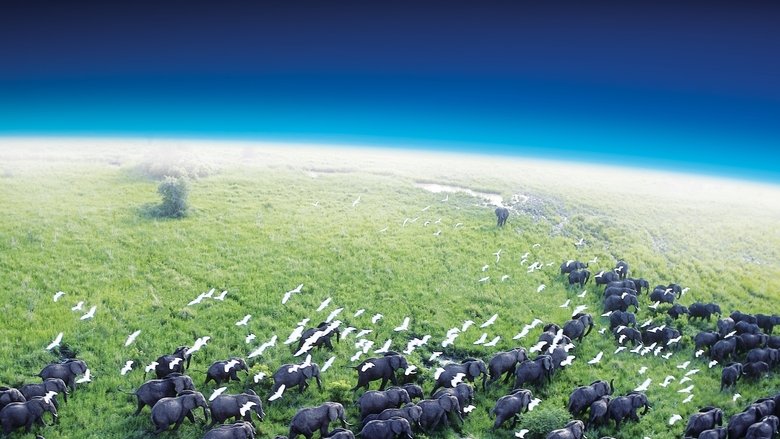
The plains of our planet support the greatest gatherings of wildlife on Earth. At the heart of all that happens here is a single living thing. Grass. This miraculous plant covers a quarter of all the lands of the Earth.

— David Attenborough

Context:

Spoken during the "Great Plains" episode, this quote introduces the fundamental element that sustains the immense herds of animals featured in the program.

Meaning:

This statement brilliantly reframes the viewer's perspective. It takes a seemingly mundane element—grass—and reveals it as the central, life-giving force of a vast ecosystem. This encapsulates the series' ability to find the magnificent in the seemingly ordinary and to explain complex ecological relationships in a simple, profound way.

Episode Highlights

From Pole to Pole

S1E1

This opening episode serves as a magnificent overture for the entire series. It follows the path of the sun, traveling from the Antarctic to the Arctic and showcasing the seasonal changes that drive life across the globe. It features emperor penguins in the Antarctic winter, migrating caribou, and a memorable hunt sequence with African wild dogs. Its sheer scope and ambition immediately established the series as a landmark television event.

Significance:

"From Pole to Pole" is the highest-rated episode and sets the thematic and visual tone for everything that follows. It introduces the core ideas of interconnectedness, seasonal change, and the struggle for survival. The sequence capturing a great white shark breaching to hunt a seal became an instant, iconic television moment.

Mountains

S1E2

This episode explores the world's great mountain ranges, from the Andes to the Himalayas. It is renowned for featuring the first-ever footage of a wild snow leopard hunting, a sequence that took the film crew three years to capture. Other highlights include gelada baboons in the Ethiopian highlands and grizzly bears emerging from hibernation.

Significance:

The successful filming of the snow leopard was a monumental achievement in natural history filmmaking and became a symbol of the series' dedication and groundbreaking nature. The episode powerfully conveys the harsh, isolated, and majestic nature of these high-altitude environments.

Fresh Water

S1E3

Following the journey of water from mountain streams to mighty rivers, this episode features some of the series' most dramatic moments. It includes stunning shots of Angel Falls, the world's highest waterfall, and a climactic, slow-motion sequence of a crocodile ambushing a migrating wildebeest. It also showcases river dolphins, giant salamanders, and piranhas.

Significance:

The crocodile hunt became one of the most iconic and visceral scenes of the series, perfectly illustrating the raw power of predation. The episode effectively highlights the vital importance of the planet's very limited freshwater resources.

Caves

S1E4

Exploring one of Earth's final frontiers, this episode delves into a world of perpetual darkness. It features the Cave of Swallows in Mexico, the world's deepest freefall pit, and animals uniquely adapted to life without light, such as the cave angelfish and troglodytes. A key sequence follows millions of bats emerging from a cave to hunt.

Significance:

"Caves" took viewers to a truly alien environment, showcasing a bizarre and fascinating ecosystem that is rarely seen. The filming, conducted in pitch darkness with infrared cameras, was a technical marvel and revealed the challenges of documenting such an extreme and hostile habitat.

Jungles

S1E8

This episode explores the planet's rainforests, which are home to over half of the world's species. It is celebrated for its stunning footage of birds of paradise performing elaborate courtship rituals. It also features mesmerizing time-lapse photography of parasitic cordyceps fungi taking over an insect host and erupting from its body.

Significance:

The footage of the birds of paradise and the cordyceps fungus became iconic representations of the jungle's incredible biodiversity and its sometimes bizarre, brutal realities. The episode vividly illustrates the intense competition for resources in the planet's richest habitats.

Philosophical Questions

What is humanity's place and responsibility in the natural world?

Planet Earth explores this question not by providing answers, but by holding up a mirror to a world largely untouched by human hands. The opening narration explicitly states that over six billion people now 'crowd our fragile planet'. By then dedicating itself to showcasing the 'last wildernesses', the series constantly begs the unasked question of what has happened to the rest of the planet. The sheer beauty and complexity on display serve as a powerful, implicit argument for conservation. The final companion series, Planet Earth: The Future, tackles this more directly, but the main series allows the viewer to contemplate whether humans are stewards, conquerors, or simply another species in a complex web of life.

Can we truly observe nature without altering it?

This question is raised by the 'Planet Earth Diaries' segments. The massive logistical efforts, including helicopters, advanced camera equipment, and months-long human presence in fragile habitats, highlight the paradox of documentary filmmaking. While the goal is to capture authentic behavior, the very act of observation requires intrusion. One critic, watching a polar bear starve, famously pondered whether the rule of non-interference should be rewritten when human-induced climate change is already disrupting the balance of nature. The series forces a reflection on the ethics of observation and our relationship with the wild subjects we seek to understand.

Alternative Interpretations

While overwhelmingly praised, Planet Earth has been subject to some critical interpretations that question its approach. One perspective argues that by presenting the natural world as a series of stunning, pristine, and largely human-free spectacles, the series creates a form of escapism that downplays the severity of the environmental crisis. Critics of this view suggest that its 'coffee-table book' aesthetic might inadvertently lead to audience passivity, fostering a sense of awe without a corresponding sense of urgency or call to action. The series can be seen as a beautiful elegy for a world that is disappearing, rather than a direct confrontation with the causes of its disappearance.

Another interpretation focuses on the narrative choices within the series. Some critics have pointed out that the storytelling often anthropomorphizes animals, creating dramatic, human-like struggles and triumphs. While this makes for compelling television, it can be seen as a simplification of complex animal behavior and ecological realities. The immense effort and technology used to capture seamless, dramatic shots—often edited from months of footage—can be interpreted as creating a hyper-reality, a vision of nature that is more cinematic and perfect than the real thing. This raises questions about whether the series presents an authentic view of nature or a highly constructed and idealized version of it.

Cultural Impact

Planet Earth had a profound and lasting cultural impact, revolutionizing the nature documentary genre and setting a new standard for television production. Its release in 2006 marked a turning point in broadcast history as the first major series filmed entirely in high definition. The stunning visual clarity it offered became a primary selling point for the new generation of HD televisions, making the series a 'killer app' for the technology.

Critically, the series was a massive success, earning numerous awards, including four Primetime Emmy Awards and a Peabody Award. It garnered huge audiences globally, with the first episode attracting nearly 9 million viewers in the UK alone, making it one of the most-watched nature programs in history. This success demonstrated that big-budget, epic-scale natural history programs could be primetime, mainstream entertainment.

Beyond its technical achievements, Planet Earth significantly influenced public consciousness regarding biodiversity and environmentalism. While its conservation message was often subtle, the sheer beauty and grandeur of the footage inspired a renewed appreciation for the natural world in millions of viewers. The series spawned a successful franchise for the BBC, including sequels like Planet Earth II (2016) and Planet Earth III (2023), as well as a feature film adaptation titled Earth (2007). Its legacy can be seen in the wave of cinematic, high-budget nature documentaries that followed, all aspiring to its epic scale and visual splendor. It cemented David Attenborough's status as a global icon and remains a benchmark against which all subsequent nature documentaries are measured.

Audience Reception

Planet Earth was met with overwhelmingly positive reception from audiences worldwide, achieving both massive viewership and critical acclaim. Upon its premiere in the UK in 2006, it attracted huge ratings, with the first episode being the most-watched natural history program since The Blue Planet in 2001. This success was replicated internationally, where the series was eventually broadcast in 130 countries. Audiences praised the series for its cinematic quality, the epic scale of its production, and the unprecedented, breathtaking visuals made possible by high-definition filming. David Attenborough's narration was almost universally lauded in the UK version for its warmth, intelligence, and gravitas.

The main points of praise focused on the stunning, often dramatic footage of animal behavior, much of which had never been seen before, such as the snow leopard hunt and the breaching great white shark. Criticisms were minimal but did exist. Some viewers found the American version, narrated by Sigourney Weaver, to be less compelling than the original Attenborough version. A few critics and viewers also raised concerns that the series prioritized spectacle over a more forceful conservation message, presenting a beautiful but ultimately sanitized view of a planet in peril. Despite this, the overall verdict from audiences was that Planet Earth was a monumental, landmark achievement in television history that redefined the nature documentary.

Interesting Facts

  • The series took five years to make and was the most expensive nature documentary ever commissioned by the BBC at the time of its release, with a budget of $25 million.
  • Production involved 40 camera crews filming across 200 locations in 64 different countries, accumulating over 2,000 days in the field.
  • It was the first nature documentary to be filmed entirely in high definition (HD), setting a new benchmark for the genre.
  • The crew spent three years trying to get footage of a snow leopard hunt for the "Mountains" episode, a world-first in wildlife filmmaking.
  • For the American broadcast on the Discovery Channel, David Attenborough's narration was replaced with that of actress Sigourney Weaver. The original BBC version with Attenborough is the more critically acclaimed version.
  • To achieve the sweeping, stable aerial shots, the crew used a military-developed Cineflex camera mounted to a helicopter, allowing for incredible zoom and stability from great heights.
  • The crew filming in the Gomantong Caves in Borneo for the "Caves" episode described it as the most disgusting filming experience, living for a month among mountains of bat guano and millions of cockroaches.
  • A companion series, Planet Earth: The Future, was also produced, which focused more explicitly on the conservation challenges facing the habitats and species shown in the main series.

⚠️ Spoiler Analysis

Click to reveal detailed analysis with spoilers

Frequently Asked Questions

Explore More About This Movie

Dive deeper into specific aspects of the movie with our detailed analysis pages

Comments (0)

Leave a comment

No comments yet. Be the first to share your thoughts!