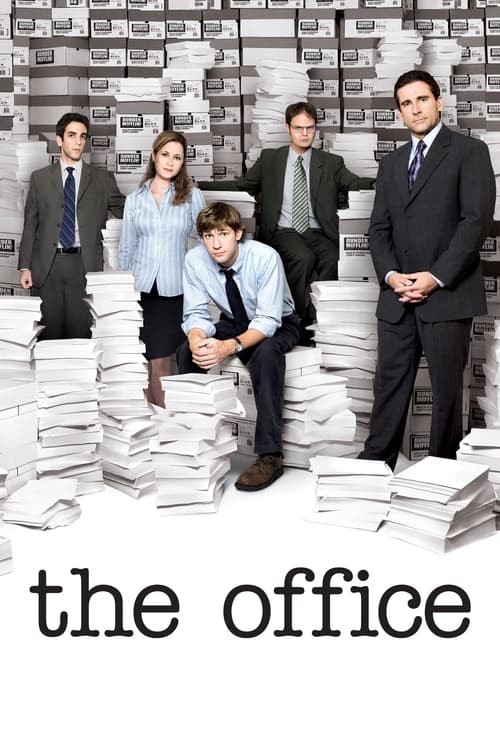
The Office
A heartfelt and humorous mockumentary that finds extraordinary meaning in the mundane, capturing the awkward, beautiful, and hilarious moments of a found family in a fluorescent-lit paper company.
The Office

The Office

"A comedy for anyone whose boss is an idiot."

24 March 2005 — 16 May 2013 United States of America 9 season 186 episode Ended ⭐ 8.6 (4,704)
Cast: Rainn Wilson, John Krasinski, Jenna Fischer, Leslie David Baker, Brian Baumgartner
Comedy
The Beauty in the Mundane The Workplace as a Found Family Love and Relationships Personal Growth and Ambition

Overview

"The Office" is an American mockumentary sitcom that depicts the everyday work lives of employees at the Scranton, Pennsylvania branch of the fictional Dunder Mifflin Paper Company. The series is filmed by a documentary crew, whose presence is acknowledged by the characters, creating a unique and intimate viewing experience. The office is led by the socially awkward and often inappropriate regional manager, Michael Scott (Steve Carell), whose desperate need for validation and friendship drives much of the show's comedy and pathos. The series primarily revolves around the interactions between the eccentric ensemble cast.

Over its nine seasons, the show chronicles the evolving relationships, personal growth, and career ambitions of its characters. A central storyline is the slow-burning romance between the witty salesman Jim Halpert (John Krasinski) and the shy but artistic receptionist Pam Beesly (Jenna Fischer). Their relationship is often contrasted with the bizarre secret romance between the eccentric beet farmer and top salesman Dwight Schrute (Rainn Wilson) and the stern accountant Angela Martin (Angela Kinsey). The show masterfully blends cringe comedy with genuinely touching moments, exploring the characters' search for connection and happiness amidst the absurdity of corporate life. While individual seasons have distinct arcs, such as branch mergers and changes in management, the overarching narrative is a celebration of the profound bonds that can form in the most ordinary of settings.
Core Meaning

The core meaning of "The Office" is the profound idea that there is extraordinary beauty and significance to be found in ordinary, everyday life. As Pam concludes in the series finale, an ordinary paper company was a great subject for a documentary because "there's a lot of beauty in ordinary things." The series suggests that a workplace, often seen as a place of drudgery and unfulfilled ambition, can become the setting for life's most important moments: falling in love, forming a family, and discovering one's true self. It's a message about making the best of your circumstances and finding fulfillment not in grand achievements, but in the connections you forge with the people around you. The show champions empathy, demonstrating that even the most flawed individuals, like Michael Scott, are driven by a universal need for love and acceptance.

Thematic DNA

The Beauty in the Mundane 35%
The Workplace as a Found Family 30%
Love and Relationships 25%
Personal Growth and Ambition 10%

The Beauty in the Mundane

This is the central theme of the entire series. The show elevates the monotonous environment of a mid-level paper company into a stage for profound human drama and comedy. It focuses on small, everyday moments—pranks, conversations, shared lunches, and office parties—to reveal deeper truths about the characters' lives and relationships. The final lines of the series, delivered by Pam, explicitly state this theme, reflecting on how a documentary about an ordinary paper company captured the beauty of their simple lives. This theme argues that life's most meaningful experiences aren't necessarily dramatic events but are often found in the daily, shared existence with others.

The Workplace as a Found Family

Despite their personality clashes, professional rivalries, and Michael's often-misguided management, the employees of Dunder Mifflin evolve into a dysfunctional but deeply loyal family. Michael Scott constantly refers to his employees as his family, and while this is initially a source of comedy due to his neediness, it becomes a reality over the course of the show. Characters rally around each other during personal crises, celebrate milestones like weddings and births, and ultimately form bonds that transcend their professional roles. This is powerfully illustrated in Michael's farewell episode, where he has individual, heartfelt goodbyes with each employee, and in the finale, where they all reunite for Dwight and Angela's wedding.

Love and Relationships

The series explores romantic relationships in various forms, from the idealistic and aspirational love story of Jim and Pam to the strange, secretive, and tumultuous affair of Dwight and Angela, and Michael Scott's often-disastrous but earnest search for a soulmate, which he eventually finds in Holly Flax. The show portrays love not as a fairy tale but as something that requires patience, friendship, and overcoming obstacles. The Jim and Pam storyline, in particular, was a central emotional anchor for the series, following them from flirtatious friends to a married couple navigating the challenges of work, parenting, and personal ambition.

Personal Growth and Ambition

Many characters grapple with the conflict between their current reality and their dreams. Pam begins as a timid receptionist stuck in a dead-end engagement and slowly blossoms into a more assertive artist and salesperson. Jim, initially cynical about his job, learns to find fulfillment in his work and family life. Dwight's lifelong ambition to become Regional Manager is a recurring plotline, which he eventually achieves through a long and bizarre journey of growth. The series suggests that growth is a slow, often non-linear process of learning to be true to oneself while adapting to life's circumstances.

Character Analysis

Michael Scott

Steve Carell

Archetype: The Lovable Fool / The Antihero
Key Trait: Desperately lonely

Motivation

Michael's core motivation is an overwhelming desire to be loved, liked, and validated. He is profoundly lonely, stemming from a difficult childhood where he struggled to make friends. This desperation fuels his inappropriate jokes, constant need for attention, and his insistence that his employees are his family. His motivation evolves from needing everyone to like him to finding true fulfillment and love with one person, Holly, which finally allows him to see his coworkers as friends rather than a surrogate family.

Character Arc

Michael begins the series as a deeply insecure, inappropriate, and often incompetent boss, modeled after David Brent from the UK original. His primary motivation is to be loved by his employees, whom he sees as his family. His arc is one of the most significant in the series. Through his relationships, particularly with Jan, and later his soulmate Holly Flax, Michael slowly matures. He learns empathy and begins to understand the difference between being a friend and being a boss. While he never fully loses his childlike personality, he grows from a cringe-inducing caricature into a well-rounded and sympathetic character who finds genuine happiness and builds a real family, making a quiet, heartfelt return in the series finale for Dwight's wedding.

Jim Halpert

John Krasinski

Archetype: The Everyman / The Observer
Key Trait: Witty and charming

Motivation

Initially, Jim's motivation is simply to endure the workday through humor and his connection with Pam. His primary motivation then becomes winning Pam's love. After they get together, his motivation shifts to providing for his new family and finding a career that he is truly passionate about. This pursuit of a more fulfilling career becomes a central driving force in the final seasons, testing his character and his most important relationships.

Character Arc

Jim starts as a witty but unmotivated salesman who sees his job at Dunder Mifflin as a temporary stop, deriving his main enjoyment from his friendship with Pam and his elaborate pranks on Dwight. His arc is defined by his willingness to take risks for the things he truly wants. His love for Pam inspires him to confess his feelings, transfer branches, and ultimately commit to building a life with her. In later seasons, Jim's ambition grows, leading him to co-manage the branch and start his own sports marketing company, Athleap, in Philadelphia. This creates significant conflict in his marriage, forcing him to learn how to balance his personal dreams with his family commitments, ultimately choosing his family and strengthening his bond with Pam.

Pam Beesly

Jenna Fischer

Archetype: The Wallflower / The Developing Hero
Key Trait: Artistic and kind

Motivation

Pam's initial motivation is to maintain stability and avoid conflict, which keeps her in a state of inertia. Her evolving motivation becomes the pursuit of personal and creative fulfillment. She wants more than just a job and a safe relationship; she wants a life she has actively chosen. This drives her to take risks in her career, her art, and her relationship with Jim, learning to navigate the complexities of her own ambitions alongside her family life.

Character Arc

Pam's journey is one of the show's most compelling growth arcs. She begins as a shy, passive receptionist in a stagnant, long-term engagement with her high school sweetheart, Roy. Her friendship with Jim awakens her to the possibility of a more fulfilling life. Over nine seasons, she finds her voice. A key turning point is her speech during the "Beach Games" episode where she honestly expresses her feelings. She breaks off her engagement, pursues art school, becomes a salesperson, and eventually the office administrator. Her arc is about overcoming fear and insecurity to become an assertive and confident woman, wife, and mother who learns to advocate for her own happiness.

Dwight Schrute

Rainn Wilson

Archetype: The Eccentric / The Loyalist
Key Trait: Intense and eccentric

Motivation

Dwight's primary motivation is the acquisition of power and authority, driven by his black-and-white view of the world based on rules, hierarchies, and Schrute family traditions. He is relentlessly ambitious in his goal to become manager. A secondary, often conflicting, motivation is his deep, abiding love for Angela, for whom he is willing to sacrifice his job and reputation. Over time, his motivation expands to include a genuine desire to protect and lead the people he has come to see as his subordinates and friends.

Character Arc

Dwight starts as an arrogant, power-hungry sycophant and a constant nuisance to Jim. He is a man of bizarre traditions, intense loyalty to Michael Scott, and an unyielding desire to become Regional Manager. While many of his eccentricities remain, his character gains significant depth throughout the series. His complex, on-again, off-again relationship with Angela Martin reveals a more vulnerable and romantic side. He also develops a deep, albeit strange, friendship with Pam and, most surprisingly, with Jim, who he eventually calls his "bestest mensch" at his wedding. Dwight's arc is about learning to temper his rigid worldview with empathy and connection, ultimately achieving all his dreams: he becomes the manager of the Scranton branch, marries Angela, and becomes a father.

Symbols & Motifs

The Documentary Camera

Meaning:

The camera symbolizes an objective observer, the audience's perspective, and a catalyst for self-reflection. It represents the act of finding significance in the mundane by choosing to document it. For the characters, it's a confidant, a silent friend to whom they can confess their true feelings in "talking head" interviews.

Context:

The camera is a constant presence throughout all nine seasons. Characters frequently glance at the camera, sharing a silent joke or a moment of exasperation with the audience. The talking head interviews are a core structural element. In the final season, the documentary airs, and the camera's role shifts as the characters react to seeing their lives on television, blurring the line between observer and participant.

Paper

Meaning:

Paper symbolizes the mundane and ordinary. Dunder Mifflin sells a product that is, by its nature, unremarkable. However, this ordinary product is the foundation upon which the characters build their lives, relationships, and find meaning. It represents the canvas of their everyday existence.

Context:

As the product sold by Dunder Mifflin, paper is the backdrop for the entire series. The characters' professional lives revolve around it, from sales calls to inventory. The ordinariness of the product underscores the show's central theme that extraordinary things can happen in the most commonplace settings.

Jim's Teapot Gift to Pam

Meaning:

The teapot symbolizes Jim's deep, personal, and unspoken love for Pam. Unlike a generic gift, he fills it with inside jokes and memories specific to their relationship, representing a love that is thoughtful, detailed, and goes beyond superficial attraction. It also contains his sealed letter, symbolizing the confession of love he is not yet ready to make.

Context:

In the Season 2 episode "Christmas Party," Jim gets Pam's name for Secret Santa and gives her a teapot filled with personal mementos. Though he removes the heartfelt card before giving it to her, the teapot itself becomes an iconic symbol of their relationship's early stages. Pam eventually reads the letter in Season 9, bringing the symbol's journey full circle.

Dundie Awards

Meaning:

The Dundies symbolize Michael Scott's desperate attempt to create a positive and familial workplace culture, as well as his need for love and attention. The awards, often awkward and misguided, represent his sincere, if clumsy, affection for his employees. They are a manifestation of his belief that the office should be a place of fun and recognition, not just work.

Context:

The Dundie Awards are featured most prominently in the Season 2 premiere, "The Dundies," held at a local Chili's restaurant. This episode is a turning point for the series, showing a more sympathetic side to Michael. The awards are mentioned again in later seasons, and Michael's final Dundies are hosted by his replacement, Deangelo Vickers, in Season 7, highlighting the end of an era.

Memorable Quotes

That's what she said.

— Michael Scott

Context:

First used in the Season 2 episode "Sexual Harassment," this quote appears in dozens of episodes throughout Michael's tenure on the show. He uses it in inappropriate contexts, from business meetings to depositions, much to the exasperation of his coworkers.

Meaning:

This is Michael Scott's signature catchphrase, a simple double entendre he uses constantly to inject juvenile sexual humor into any situation. Its significance lies in its perfect encapsulation of Michael's immature, attention-seeking personality and his complete lack of a social filter. Over time, it becomes an endearing, iconic part of the show's identity.

I wish there was a way to know you're in the good old days before you've actually left them.

— Andy Bernard

Context:

Spoken by Andy Bernard during his talking head interview in the series finale (Season 9, Episode 23). He is reflecting on his time at Dunder Mifflin after having left and returned, finally understanding the value of the daily interactions he once took for granted.

Meaning:

This poignant quote captures the series' overarching theme of appreciating the present moment. Delivered in the finale, it's a moment of profound reflection on the seemingly mundane time the characters spent together at Dunder Mifflin, realizing in hindsight that those were cherished times. It resonates deeply with the show's nostalgic and bittersweet conclusion.

Would I rather be feared or loved? Easy. Both. I want people to be afraid of how much they love me.

— Michael Scott

Context:

From the Season 2 episode "The Fight." Michael says this to the documentary crew after a farcical karate match with Dwight at a dojo during their lunch break.

Meaning:

This quote perfectly illustrates Michael's flawed and contradictory logic, as well as his desperate need for his employees' affection. It's a hilarious line that reveals his deep-seated desire to be seen as both a powerful leader and a beloved friend, without understanding that the two are often mutually exclusive. It's a quintessential Michael Scott-ism.

Identity theft is not a joke, Jim! Millions of families suffer every year!

— Dwight Schrute

Context:

In the Season 3 episode "Product Recall," Jim comes into the office dressed exactly like Dwight and mimicking his mannerisms. Dwight becomes increasingly infuriated, culminating in this shouted declaration.

Meaning:

This quote is a perfect example of Dwight's literal-mindedness and his complete inability to recognize a prank. Jim's impersonation of him is met not with amusement but with the gravitas of a public service announcement, highlighting Dwight's lack of social awareness and his dedication to facts, no matter how absurd the context. It's an iconic line from the Jim vs. Dwight prank war.

I'm not superstitious, but I am a little stitious.

— Michael Scott

Context:

Michael says this at the beginning of the Season 4 premiere, "Fun Run." He says it after hitting Meredith with his car, believing the office is now cursed.

Meaning:

A classic Michael Scott malapropism, this line showcases his unique way of trying to sound intelligent and profound, but failing comically. It demonstrates his flawed confidence and how his brain works in a way that is just slightly off from everyone else's. It's a simple, funny, and highly quotable line that fans love.

Episode Highlights

Diversity Day

S1E2

After Michael recites an inappropriate Chris Rock routine, corporate mandates diversity training. Michael, feeling his authority is undermined, hijacks the session and runs his own offensive and disastrously misguided workshop. This episode is significant for establishing the depths of Michael's cluelessness and the show's brand of cringe comedy. It was the first episode with a completely original script, distinguishing the US version from its UK predecessor.

Significance:

This episode defined the comedic tone of the series, moving beyond the UK version's pilot script. It showcased the ensemble's reactions to Michael's behavior, a dynamic that would become a cornerstone of the show, and solidified Michael Scott as a uniquely American brand of incompetent boss.

Casino Night

S2E22

In the season finale, written by Steve Carell, Michael hosts a charity casino night in the warehouse. The episode is a masterclass in balancing multiple storylines, but its climax is the pivotal moment in the Jim and Pam story. After she rejects him, Jim finds Pam on the phone with her mother and finally confesses his love and kisses her.

Significance:

This episode is arguably the most important of the early seasons. Jim's confession and their first real kiss was a huge emotional turning point for the series' central romance and ended the season on a massive cliffhanger, leaving fans to wonder about the future of the show's most beloved couple.

Dinner Party

S4E13

Michael and Jan host a disastrous dinner party for Jim, Pam, Andy, and Angela. The evening descends into a psychologically raw and painfully awkward display of Michael and Jan's deeply toxic relationship, culminating in a shouting match and Jan smashing Michael's prized plasma TV with a Dundie award. The episode is almost entirely character-driven, taking place in a single location.

Significance:

Often cited by critics and fans as one of the best sitcom episodes of all time, "Dinner Party" is a masterpiece of cringe comedy and character study. It pushed the show's format to its limits, feeling more like a stage play. It marked the boiling point and effective end of Michael and Jan's relationship, paving the way for Michael's eventual growth and meeting Holly.

Stress Relief

S5E

This two-part episode opens with one of the show's most famous scenes: Dwight's fire drill, which causes mass panic and gives Stanley a heart attack. To lower stress levels in the office, Michael organizes a roast of himself, which quickly turns brutal, leaving him genuinely hurt. The B-plot involves Pam's parents' marital problems, which are exacerbated after her father talks with Jim.

Significance:

Aired after the Super Bowl, this was the most-watched episode of the series. The cold open is considered an all-time classic. The episode expertly balances broad physical comedy with emotional depth, showcasing Michael's vulnerability and the complexities of Jim and Pam's relationship on the cusp of marriage.

Niagara

S6E

The entire office travels to Niagara Falls for Jim and Pam's wedding. The event is plagued by mishaps, including Andy injuring himself dancing and Michael's awkward interactions. To escape the chaos, Jim and Pam secretly run off and get married on the "Maid of the Mist" boat under the falls, before returning for their official ceremony, which is famously interrupted by their coworkers' viral dance down the aisle.

Significance:

This episode served as the emotional culmination of six seasons of romantic buildup. It was a hugely anticipated television event that paid off the central love story in a way that was both epic and deeply personal. The dual wedding ceremonies perfectly captured the characters' desire for an intimate moment amidst the public chaos of their lives, a core dynamic of the show.

Goodbye, Michael

S7E22

In Michael Scott's farewell episode, he secretly plans to leave for Colorado with Holly a day earlier than he told everyone. This allows him to have quiet, individual goodbye moments with each member of the office, tailored to their specific relationships. The episode culminates in Pam catching him at the airport for a final, heartfelt, and silent goodbye.

Significance:

This episode marked the departure of the show's central character, Steve Carell. It was a significant turning point for the series and was widely praised for its emotional weight and poignant handling of Michael's exit. It celebrated his immense growth, showing him leaving not as a joke, but as a beloved friend who had finally found his family.

Finale

S9E

One year after the documentary has aired, the Dunder Mifflin crew reunites for Dwight and Angela's wedding and a "where are they now" panel. The episode ties up numerous character arcs: Dwight is manager, Jim and Pam decide to move to Austin for Jim's career, and Michael Scott makes a surprise return to be Dwight's best man. The final scenes feature the characters reflecting on their time together and the beauty they found in their ordinary lives.

Significance:

The finale served as a poignant and satisfying conclusion to the entire series. It provided emotional closure for the characters and the audience, reinforcing the show's core themes of found family and the beauty of the mundane. Michael's brief, perfect return was a highlight for fans, bringing the show's emotional journey full circle.

Philosophical Questions

Where can true happiness and fulfillment be found?

The series consistently explores whether fulfillment comes from professional ambition or personal relationships. Characters like Jim and Pam ultimately find that their happiness is rooted in their family and the bonds they formed at work, rather than just their career paths. Michael Scott's entire arc is a search for love, which he values far more than his managerial position. The show seems to conclude that while ambition is important, true, lasting contentment is found in human connection and appreciating the small, everyday moments of life.

What is the nature of friendship and family?

"The Office" challenges traditional definitions of family. Michael's insistence that his coworkers are his family is played for laughs but evolves into a poignant truth. The series demonstrates that family can be "found" and that deep, supportive, and loving bonds can be forged among people in the most unexpected places. It explores how these relationships are built through shared experience, forgiveness, and loyalty, creating a community that functions as a deeply dysfunctional but ultimately caring family unit.

Can people truly change?

The show is an extended study in character development. Michael Scott evolves from a self-absorbed man-child to a more empathetic partner. Pam transforms from a passive observer to an active participant in her own life. Dwight learns to value friendship and love over rigid adherence to rules. While the characters' core personalities remain, the series offers an optimistic view on personal growth, suggesting that through relationships and life experience, people can learn, mature, and become better versions of themselves.

Alternative Interpretations

While largely seen as a heartwarming comedy, some alternative interpretations of "The Office" exist. One darker reading suggests that the documentary format itself is exploitative. The camera crew films deeply personal and painful moments, such as Pam crying or Michael's breakdowns, for entertainment. The final season touches on this, as the characters grapple with having their lives broadcast, but some critics argue the show doesn't fully reckon with the ethical ambiguity of its own premise.

Another interpretation views the series as a subtle critique of corporate America's dehumanizing nature. The characters are trapped in unfulfilling jobs with little hope for advancement, and their eccentricities and personal dramas are a coping mechanism for the soul-crushing boredom of their work. Michael's desperate attempts to make the office fun are a futile rebellion against an impersonal system. From this perspective, the ending, where several characters escape Dunder Mifflin for more passionate pursuits, is seen as the only true path to happiness.

Finally, the romance of Jim and Pam, often hailed as idealistic, has been re-examined by some as being more complex and, at times, codependent. Arguments have been made that Jim's early affection bordered on obsession and that Pam's personal growth was often subsumed by her role as a wife and mother, highlighting the realistic compromises and struggles within their "perfect" relationship, especially in the final season.

Cultural Impact

"The Office" premiered to low ratings and the challenge of adapting a beloved British sitcom for American audiences. However, it grew to become one of the most influential and beloved comedies of its time. Its primary influence was popularizing the mockumentary format for mainstream American sitcoms. Shows like "Parks and Recreation" and "Modern Family" owe a significant debt to the single-camera, talking-head, and no-laugh-track style that "The Office" perfected.

Critically, the show's reception evolved from mixed for its first season to widespread acclaim, particularly for its second through fifth seasons, earning an Emmy for Outstanding Comedy Series in 2006. While viewership declined after the departure of Steve Carell in Season 7, the show maintained a loyal fanbase. In the streaming era, its popularity exploded, becoming one of the most-watched shows on platforms like Netflix. This second life introduced it to a new generation and cemented its place in pop culture. Phrases like "That's what she said," characters like "Prison Mike," and countless scenes have become enduring internet memes and cultural touchstones. The show's legacy lies in its deeply humanistic approach to comedy, its celebration of the ordinary, and its creation of a relatable, comforting world that viewers continue to revisit.

Audience Reception

The audience reception for "The Office" evolved significantly over its run. The first season received a lukewarm response, with many viewers finding Michael Scott's character too abrasive and the show a pale imitation of the UK original. However, from Season 2 onwards, as the show found its own voice and developed a more sympathetic Michael, its popularity soared. Seasons 2 through 5 are generally considered the show's golden age by fans, praised for their perfect blend of humor, heart, and character development. The Jim and Pam romance was a massive draw for viewers.

Reception for the later seasons, especially after Steve Carell's departure in Season 7, is more divided. Many viewers felt the show lost its anchor without Michael Scott, and criticism was directed at the handling of some characters, like Andy Bernard, and the introduction of new ones. The final season, however, received praise for bringing the story to a satisfying and emotional conclusion that honored the characters and themes the audience had grown to love. In the years since its finale, the show's popularity has seen a massive resurgence on streaming platforms, solidifying its status as a beloved comfort show for millions.

Interesting Facts

  • John Krasinski, who played Jim, shot the footage of Scranton, Pennsylvania, that is used in the show's opening credits.
  • The show was filmed in a real office building in its early seasons, not on a soundstage, to add to its realistic mockumentary feel.
  • Several of the main cast members were also writers for the show, including B.J. Novak (Ryan), Mindy Kaling (Kelly), and Paul Lieberstein (Toby). Kaling was the most prolific writer, with 24 credited episodes.
  • Phyllis Smith, who played Phyllis Vance, was working as a casting associate for the show. The producers liked her so much while reading lines with auditioning actors that they created a character for her.
  • The episode "Dinner Party" was the only script completed before the 2007-08 Writers Guild of America strike. Steve Carell refused to cross the picket line, halting production.
  • Jenna Fischer (Pam) and Angela Kinsey (Angela) are best friends in real life and co-host a popular podcast about the show called "Office Ladies."
  • Bob Odenkirk was a top contender for the role of Michael Scott before Steve Carell was ultimately cast.
  • Jenna Fischer kept the engagement ring that Jim gave to Pam as a souvenir.
  • Steve Carell's real-life wife, Nancy Carell, played Michael's recurring girlfriend Carol Stills, the real estate agent.

Easter Eggs

Throughout the series, there are subtle clues and a running subplot suggesting that Toby Flenderson might be the infamous "Scranton Strangler."

This is a popular fan theory. The clues include Toby's absence from the office on the day of the police chase for the strangler, his detailed knowledge of the case, and his visible discomfort when the topic is brought up. When he serves as a juror on the case, he expresses guilt that they may have convicted an innocent man, which some fans interpret as his own guilt. The writers never confirmed this, leaving it as a dark, ambiguous running gag for observant fans to debate.

In several episodes, a small doll of Homer Simpson can be seen on a filing cabinet.

This is a nod to the show's developer and executive producer, Greg Daniels, who was a veteran writer for "The Simpsons" before adapting "The Office" for American television.

The character of Mose Schrute, Dwight's bizarre cousin, was played by Michael Schur.

Michael Schur was one of the key writers and producers for "The Office." He later went on to co-create "Parks and Recreation" (which was originally conceived as a spin-off of "The Office") and create "The Good Place" and "Brooklyn Nine-Nine," becoming one of the most acclaimed comedy creators in television.

In Season 7, Ricky Gervais, the creator of the original UK "The Office," makes a brief cameo as his character David Brent.

In the episode "The Seminar," Michael Scott bumps into David Brent outside an elevator. The two bosses share a brief, awkward, and comically similar conversation, creating a meta-moment that bridges the UK and US versions of the show.

⚠️ Spoiler Analysis

Click to reveal detailed analysis with spoilers

Frequently Asked Questions

Explore More About This Movie

Dive deeper into specific aspects of the movie with our detailed analysis pages

Comments (0)

Leave a comment

No comments yet. Be the first to share your thoughts!