Scissor Seven
A frenetic dance of comedic absurdity and poignant melancholy, animated with the raw energy of a street fight sketched in a heartfelt journal.
Scissor Seven

Scissor Seven

刺客伍六七

25 April 2018 — 20 November 2024 China 5 season 50 episode Returning Series ⭐ 8.6 (734)
Cast: Duan Yixuan, Xiaofeng He, Jiang Guangtao, Hou Junjie, Zhen Zhang
Animation Sci-Fi & Fantasy Action & Adventure Comedy
Identity vs. Past The Meaning of Strength & Protection Friendship and Found Family Comedy and Tragedy

Overview

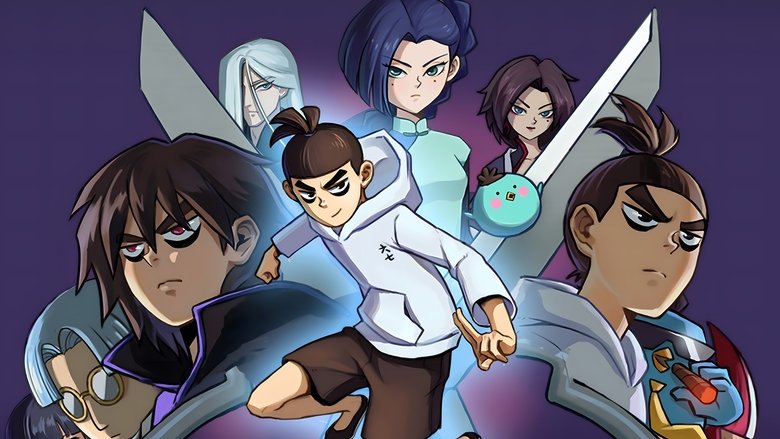
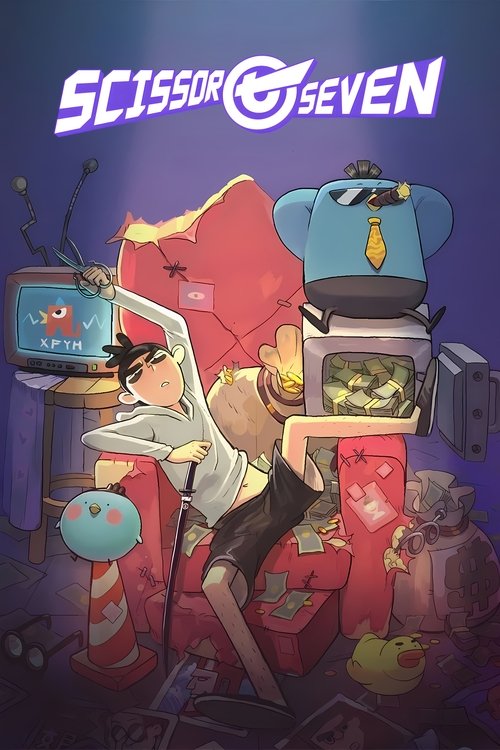
"Scissor Seven" follows Wu Liuqi (Seven), an amnesiac who clumsily operates a hair salon on Chicken Island as a cover for his new, unlikely career as a contract killer. Encouraged by his mentor, a blue chicken named Dai Bo, Seven takes on a series of bizarre assassination jobs to earn money for a memory-restoring procedure. However, his inherent kindness and ineptitude for murder mean he usually ends up befriending his targets and solving their problems in hilarious and often heartwarming ways.

As the series progresses, this lighthearted premise gives way to a deeper, overarching narrative. Glimpses of Seven's past reveal he was once the most formidable and ruthless member of the League of Shadow Assassins, codenamed Qi. Figures from his violent former life begin to surface, drawn to the unassuming Chicken Island and threatening the peaceful life and the friends he has come to cherish. The show masterfully transitions from episodic comedy to a serialized action-drama, exploring Seven's struggle to reconcile his gentle present self with his deadly past, forcing him to choose what kind of person he truly wants to be.

Core Meaning

The core meaning of "Scissor Seven" is a profound exploration of identity and self-determination. It posits that a person is not defined by their past or the skills they possess, but by the choices they make and the people they choose to protect. The series champions the idea that one can reject a predetermined, violent destiny in favor of a new life built on compassion and friendship. Through Seven's journey, the creators convey that true strength is not the power to kill, but the courage to care for others, even when it means confronting the darkest parts of oneself.

Thematic DNA

Identity vs. Past 40%
The Meaning of Strength & Protection 30%
Friendship and Found Family 20%
Comedy and Tragedy 10%

Identity vs. Past

The central theme is Seven's struggle between his current, amnesiac personality (a kind, goofy hairdresser) and his past self (Qi, a cold-blooded, elite assassin). Initially, he seeks to recover his memory, but as he learns more about his violent history, he begins to fear it. The series masterfully explores whether he is destined to revert to his old self or if he can forge a new identity. This internal conflict is the emotional core of the show, culminating in his decision to use his past skills not to kill, but to protect the life he has built.

The Meaning of Strength & Protection

The series constantly questions the purpose of strength. In the world of assassins, strength is for killing and completing missions, and emotions are a weakness. However, Seven repeatedly fails his missions because of his empathy. He discovers his true strength lies in protecting his friends on Chicken Island. This theme is crystallized in Season 3, where the question "Who is the one you want to protect?" becomes a recurring motif, showing that fighting for others provides a greater power than fighting for duty or reputation. Thirteen's character arc also mirrors this, as she evolves from a duty-bound killer to someone willing to defy her master to protect Seven.

Friendship and Found Family

Despite being a powerful assassin in his past, Qi was a loner. As Seven, he builds a "found family" on Chicken Island with Dai Bo, Xiao Fei, and the other eccentric residents. These relationships are what ground him and give him a reason to fight. The comedic, slice-of-life episodes in the first season are crucial for establishing these bonds, giving emotional weight to the later seasons when the island and its inhabitants are threatened. His connection with these characters is the primary reason he rejects his past and fights for his new life.

Comedy and Tragedy

The series is celebrated for its unique ability to blend slapstick, absurd humor with moments of genuine tragedy and emotional depth. An episode can pivot from a ridiculous fight scene involving a transforming chicken to a heartbreaking backstory about loss and trauma, such as Thirteen's history. This tonal balance makes the world feel more dynamic and the characters' struggles more resonant, suggesting that even in the most absurd of lives, there is room for profound sorrow and heartfelt connection.

Character Analysis

Wu Liuqi (Seven / Qi)

He Xiaofeng

Archetype: Antihero / The Amnesiac
Key Trait: Empathetic

Motivation

Initially, his motivation is purely financial: to earn enough money to restore his lost memories. This quickly evolves into a powerful desire to protect the residents of Chicken Island from the threats his past life attracts. His ultimate motivation becomes the preservation of his new identity and the found family he has come to love.

Character Arc

Seven's arc is a journey of self-reconstruction. He begins as a bumbling, kind-hearted amnesiac trying to become a killer, a role he is fundamentally unsuited for. As his past as the ruthless assassin Qi is revealed, his primary goal shifts from recovering his memories to actively resisting them. He fears losing the compassion and friendships he's gained. Across the seasons, he learns to integrate the skills of his past self without succumbing to his cold-blooded nature. His arc culminates in him consciously choosing to be Seven, the hairdresser who protects his friends, rather than Qi, the killer who lives for missions. He learns that his past doesn't have to define his future.

Meihua Shisan (Thirteen)

Duan Yixuan

Archetype: Femme Fatale / The Rival
Key Trait: Duty-bound

Motivation

Her initial motivation is to complete her mission to kill Seven and prove herself to her master, Green Phoenix. Over time, this is replaced by a conflicted desire to understand Seven and, eventually, a powerful drive to protect him from the dangers of their shared world, even at great personal cost.

Character Arc

Thirteen is introduced as a skilled and serious assassin tasked with eliminating Seven. Her arc is about unlearning the rigid assassin code that emotions are a fatal flaw. Her tragic backstory reveals she joined the assassins after her mother's death, seeking strength so she would never be helpless again. Her interactions with the goofy and compassionate Seven consistently challenge her worldview. She evolves from an antagonist to a reluctant ally, and eventually to Seven's protector. In the Season 3 finale, she directly defies her master to save Seven, completing her transformation from a tool of the assassins' league to an individual guided by her own feelings and loyalties.

Dai Bo

Jiang Guangtao

Archetype: The Mentor / Greedy Sidekick
Key Trait: Pragmatic

Motivation

His primary motivation appears to be money, specifically to pay off the massive debt for Seven's medical bills. However, his true, underlying motivation is to protect his own and ensure a safe, peaceful life for his son, Xiao Fei, and his adopted son, Seven.

Character Arc

Dai Bo starts as a seemingly greedy, cynical manager who pushes Seven into the assassination business for money. He is the comedic engine of the early seasons, often acting as the straight man to Seven's foolishness. However, his backstory reveals a deep-seated desire for justice and protection, stemming from his son Xiao Fei's past. His arc shows him transforming from a purely self-interested manager into a genuine, albeit grumpy, father figure to Seven. He becomes fiercely protective of Seven and the island, willing to risk his own life and confront powerful enemies to keep his small family safe, revealing the loyal and caring heart beneath his tough exterior.

Symbols & Motifs

Scissors

Meaning:

The scissors symbolize Seven's dual identity. They are a tool for a hairdresser—an instrument of creation, style, and mundane work. Yet, in his hands, they become a formidable weapon. This duality perfectly represents his existence, caught between his peaceful life as a barber and his violent potential as an assassin. His choice to primarily use scissors over his more lethal past weapons signifies his attempt to find a middle ground and control his deadly abilities.

Context:

Seven's primary weapon throughout the series is his pair of hairdressing scissors, which he controls telekinetically. He uses them for everything from giving haircuts to engaging in high-stakes battles with top-tier assassins. They are a constant visual reminder of his current life on Chicken Island.

Thousand Demon Daggers

Meaning:

The Thousand Demon Daggers represent Seven's inescapable, violent past as Qi. It is a legendary and immensely powerful blade that he only summons when in extreme danger, often when his old personality begins to surface. The dagger is a tool purely for killing, unlike his versatile scissors. Its appearance signifies a loss of control and a regression to the cold-blooded killer he once was, a past he is actively fighting to leave behind.

Context:

The dagger is first introduced towards the end of Season 1 and makes key appearances in major battles, such as the fight against Captain Jack and the Prince of Stan. Whenever Seven uses it, his demeanor changes, becoming more serious and lethal, visually signaling the return of his assassin persona.

Seven's White Hoodie

Meaning:

Seven's simple white hoodie, with the Chinese character for "Seven" (七) on it, symbolizes his new, unassuming identity. It's a stark contrast to the dark, elaborate attire of the other Shadow Assassins. The hoodie represents his desire for a simple, normal life. It is the uniform of the goofy hairdresser, not the legendary killer, and wearing it is a conscious choice to be "Seven" rather than "Qi".

Context:

This is Seven's primary outfit for the majority of the series. When his memories are temporarily restored and his assassin persona takes over, he is often depicted in his former, darker attire in flashbacks. His return to the hoodie signifies his return to his new self.

Episode Highlights

Thousand Demon Daggers

S1E10

When the Prince of Stan's advanced technology proves too much for the island's protectors, Seven is pushed to his absolute limit. In a desperate moment, he summons the legendary Thousand Demon Daggers and his powerful, cold-blooded assassin persona, Qi, temporarily awakens. Thirteen arrives to help, witnessing his transformation firsthand.

Significance:

This episode marks a major turning point for the series. It's the first time viewers see the true, terrifying extent of Seven's past abilities, shifting the show's stakes from comedic misadventures to a serious life-or-death struggle. It firmly establishes the core conflict of Seven's dual identity.

Thirteen

S1E11

This episode delves into the tragic backstory of Meihua Thirteen. As the 13th daughter of a swordsman who desperately wanted a son, she was neglected and disdained. After her mother was killed, she was saved by Green Phoenix, who took her in as an apprentice in the League of Shadow Assassins, leading her to adopt the cold, emotionless creed of a killer.

Significance:

This special episode provides crucial depth to a character who was primarily an antagonist, transforming her into a sympathetic figure. It explains her motivations and the internal conflict she faces when dealing with Seven, setting the stage for her long-term character arc and her eventual defiance of her master.

Fate

S2E10

Facing the formidable Blood Demon to protect Chairman Jiang and Chicken Island, Seven fully reconnects with his old self. He must harness the full power of his Xuanwu martial arts and his assassin instincts, but in a critical moment, he blends it with his new identity as a barber to win the fight.

Significance:

As the highest-rated episode of the first two seasons, "Fate" represents the first true synthesis of Seven's two identities. It demonstrates that he doesn't have to choose one over the other, but can instead use the skills of his past for the protective goals of his present. It's a pivotal moment of character growth.

Who Is the One You Want to Protect

S3E10

Weakened by poison and hunted by multiple Shadow Assassins, Seven is on the verge of losing his memories of Chicken Island forever. As the assassin Black Bird prepares to kill him, Thirteen makes a choice. Defying her master and the assassin's code, she fights with all her strength to protect Seven.

Significance:

This is the thematic climax of the entire series up to this point. It brings the central question of "protection" to the forefront, solidifying Thirteen's character arc from antagonist to hero. The episode is almost entirely serious, showcasing the show's maturation and the high emotional stakes of the characters' journeys.

Showdown on the Chicken Island

S4E9

The powerful assassin White Fox arrives on Chicken Island, ready to destroy it. The Prince of Stan and Cola fight him but are overpowered. Just as all seems lost, the island residents and other unexpected allies, including Redtooth, unite to defend their home in an epic, large-scale battle.

Significance:

This episode showcases the culmination of the "found family" theme. It's not just Seven fighting to protect the island; the island itself fights back. It validates the importance of the community Seven chose to be a part of and demonstrates that even seemingly weak or silly side characters can have immense strength when they have something to protect.

Philosophical Questions

Can you truly escape your past, or are you destined to repeat it?

The series constantly explores this through Seven's amnesia. His past as the ruthless killer Qi is not just a memory but an active part of him that resurfaces in moments of crisis. The central philosophical question is whether his new, kind personality is a permanent change or merely a temporary state. The show suggests that while the past can never be erased, one can learn to control its influence and use past experiences to forge a better future, rather than being defined by them.

What is the true measure of strength?

"Scissor Seven" contrasts two forms of strength: the physical prowess and emotional detachment required to be a top assassin, and the emotional courage required to form bonds and protect others. The assassin's code explicitly states that emotions are a weakness. However, the series argues the opposite, showing that Seven's and Thirteen's greatest feats of strength occur when they are driven by their desire to protect someone they care about. It posits that true strength is not invincibility, but vulnerability and connection.

Is identity inherent or is it a conscious choice?

By literally splitting Seven into two distinct personas—Qi and Seven—the show asks whether our identity is a fixed trait or something we build through our actions and relationships. Seven's journey is one of conscious choice. He learns about who he was and actively decides he doesn't want to be that person anymore. The series champions a hopeful, existentialist view that one's essence is determined by their choices, not by their innate talents or predetermined history.

Alternative Interpretations

While the main narrative is straightforward, fans have proposed alternative interpretations and theories, particularly regarding Seven's origins:

  • The Heir Theory: One popular fan theory suggests that Seven is not just a random prodigy but is secretly related to the leader of the Shadow Assassins. Proponents argue this would explain why he was accepted into the elite group at such a young age (15) and possesses a unique, unidentifiable fighting style. This interpretation frames his story as a subversion of the "chosen one" trope, where the heir to a dark legacy actively rejects his birthright for a life of peace.
  • The Lone Survivor Theory: An alternative theory posits that Seven has no grand lineage and was instead a lone wanderer who grew up surviving in the wild. This would account for his incredible resilience, resistance to poisons, and a fighting style that is chaotic and instinct-based because it's self-taught. In this reading, his story is not about rejecting a destiny but about a feral, isolated individual learning humanity and connection for the first time on Chicken Island.

Cultural Impact

"Scissor Seven" has had a significant cultural impact, primarily by being a breakout hit that introduced a global audience to modern Chinese animation, or donghua. As the first donghua to be streamed as a Netflix Original, it shattered many preconceived notions about the industry, proving that Chinese animation could compete on a global stage with its unique storytelling and style.

The series is deeply rooted in Chinese culture, but in a way that is both specific and universally accessible. Its comedic style is heavily influenced by "mo lei tau" (nonsensical humor) popularized by Hong Kong filmmaker Stephen Chow, blending absurd gags with sudden, impactful moments of emotion. Furthermore, it incorporates elements of wuxia (martial arts chivalry), with its world of assassins, rival clans, and Qi-based powers. The use of both Mandarin and Cantonese in the original dub, especially when Seven's assassin persona emerges, is a distinct cultural marker that adds depth to his character.

Critically and commercially successful both in China and internationally, "Scissor Seven" has helped pave the way for other donghua to gain international distribution. It demonstrated a viable model for blending Eastern narrative traditions with a modern, global comedic sensibility. Its legacy is that of a cultural ambassador, a show that is unapologetically Chinese in its roots yet universal in its themes of identity, friendship, and finding one's own path.

Audience Reception

"Scissor Seven" has been met with overwhelmingly positive audience reception both in its native China and internationally. Viewers consistently praise its masterful blend of genres, celebrating its ability to shift from laugh-out-loud slapstick comedy to high-octane action and genuinely touching emotional drama, often within the same episode. The unique, hand-drawn animation style is frequently highlighted as a refreshing and expressive departure from more conventional anime aesthetics.

The character development, especially of Seven and Thirteen, is another major point of praise. Audiences have become deeply invested in Seven's struggle with his identity and his heartwarming, slow-burn relationship with Thirteen. The supporting cast of eccentric islanders is also beloved for contributing to the show's charm and humor. As the seasons progress, the deepening lore and escalating stakes have been lauded for adding satisfying complexity to the initially simple premise.

Criticism is generally mild and sparse. Some viewers found the episodic, "mission-of-the-week" structure of the first season to be slightly repetitive or slow to build momentum. Another common critique is the short runtime of the episodes (around 15 minutes), which can sometimes make significant plot developments or character backstories feel rushed. However, the vast majority of viewers agree that the show's strengths far outweigh these minor drawbacks, considering it a hidden gem on Netflix and a standout series in the world of animation.

Interesting Facts

  • The series creator, He Xiaofeng, is a jack-of-all-trades. He not only created, directs, and writes the show, but also provides the original Mandarin voice for the main character, Seven, and has written lyrics for some of the ending theme songs.
  • "Scissor Seven" was the first Chinese animated series to be acquired by Netflix as a Netflix Original, introducing the world of modern "donghua" (Chinese animation) to a massive global audience.
  • The initial animation team for the series was very small, consisting of only 5 people including He Xiaofeng for the first year of production.
  • Director He Xiaofeng has stated in an interview that he envisions the series as a long-term project, with plans for the story to potentially run for up to 10 seasons.
  • The art style was deliberately designed to evoke a sense of nostalgia and humanity, with some building designs being inspired by Chinese architecture from the 1990s.

⚠️ Spoiler Analysis

Click to reveal detailed analysis with spoilers

Frequently Asked Questions

Explore More About This Movie

Dive deeper into specific aspects of the movie with our detailed analysis pages

Comments (0)

Leave a comment

No comments yet. Be the first to share your thoughts!