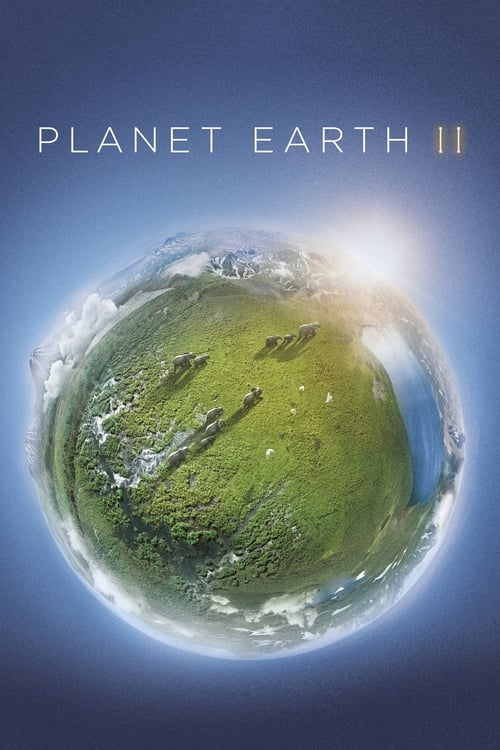
Planet Earth II
A breathtaking documentary odyssey that captures the raw, savage beauty of Earth's creatures, blending heart-stopping drama with awe-inspiring visuals, like a symphony of survival.
Planet Earth II

Planet Earth II

"A new world revealed."

06 November 2016 — 11 December 2016 United Kingdom 1 season 6 episode Ended ⭐ 8.6 (852)
Cast: David Attenborough
Family Documentary
The Brutal Reality of Survival Adaptation and Ingenuity The Impact of Humanity The Cinematic Beauty of the Natural World

Overview

A decade after the original groundbreaking series, Planet Earth II returns to explore the world's most iconic habitats and the extraordinary ways animals survive within them. Narrated by the incomparable Sir David Attenborough, the series utilizes revolutionary technology—including ultra-high definition (4K), advanced camera stabilization, and remote recording—to provide an unprecedentedly intimate and immersive viewing experience. The camera is no longer a passive observer but an active participant, moving with the animals and showing the world from their perspective.

Each of the six episodes focuses on a distinct environment: islands, mountains, jungles, deserts, grasslands, and, for the first time, cities. From the dramatic chase of a baby iguana by a horde of racer snakes to the stealthy prowl of a leopard through the streets of Mumbai, Planet Earth II crafts compelling narratives of struggle, resilience, and adaptation. The series is a powerful testament to the fragility and wonder of the natural world, concluding with a poignant look at the growing challenge of wildlife coexisting with the ever-expanding human domain.
Core Meaning

The core message of Planet Earth II is a profound celebration of life's tenacity in the face of immense environmental challenges. The series showcases the incredible, often brutal, ingenuity that animals employ to survive in diverse and demanding habitats. More subtly, particularly in its final episode, it carries a sobering reminder of humanity's ever-growing footprint on the planet. By showing how wildlife adapts to or struggles with urban environments, the series posits that the future of the natural world is inextricably linked to the choices humanity makes. As Attenborough concludes from a London skyscraper, the responsibility for maintaining our connection to nature—for the sake of both wildlife and ourselves—rests entirely in our hands.

Thematic DNA

The Brutal Reality of Survival 35%
Adaptation and Ingenuity 30%
The Impact of Humanity 20%
The Cinematic Beauty of the Natural World 15%

The Brutal Reality of Survival

Throughout its six episodes, the series relentlessly portrays the daily life-or-death struggles animals face. This is not a sanitized view of nature; it is visceral and often violent. Memorable sequences, such as lions hunting a giraffe in the desert, a jaguar ambushing a caiman, and the famous iguana vs. snake chase, highlight the constant peril and the incredible feats of endurance required to simply stay alive. The theme underscores that for most creatures, life is a continuous, high-stakes battle against predators, the elements, and starvation.

Adaptation and Ingenuity

Planet Earth II is a testament to the remarkable adaptability of life. Each episode is filled with examples of animals that have evolved unique strategies and behaviors to thrive in challenging environments. This is seen in the bobcat's descent into snowy mountains for food, the darkling beetle's method of harvesting fog in the desert, and the incredible parkour of langur monkeys in Indian cities. The groundbreaking final episode, "Cities," is dedicated entirely to this theme, showing how species like leopards, peregrine falcons, and raccoons have adapted to the newest and fastest-changing habitat on Earth.

The Impact of Humanity

While not an overt environmental polemic for most of its run, the series subtly builds a case for awareness of human impact. This theme is most explicit in the "Cities" episode, which explores both the conflicts and surprising opportunities urban landscapes create for wildlife, such as newly hatched sea turtles becoming disoriented by city lights. Attenborough's closing monologue serves as a direct address to the audience, emphasizing that humanity's actions are reshaping the planet and that we have an "awesome responsibility" to protect the creatures we share it with.

The Cinematic Beauty of the Natural World

A core theme is the sheer, breathtaking beauty and wonder of Planet Earth. Utilizing cutting-edge cinematography, including UHD cameras, drones, and stabilized gimbals, the series presents nature with a cinematic grandeur previously unseen in documentaries. The sweeping aerial shots of mountains, intimate close-ups of tiny glass frogs, and fluid tracking shots of animals in motion all serve to create a sense of awe and reinforce the intrinsic value and majesty of the natural world. The epic musical score by Hans Zimmer further enhances this cinematic, emotional experience.

Character Analysis

David Attenborough

Himself (Narrator/Presenter)

Archetype: The Mentor / The Sage
Key Trait: Wise and Reverent

Motivation

Attenborough's motivation is to foster a sense of wonder and connection between the audience and the natural world. He believes that this connection is essential for the future of both humanity and the planet. His narration aims to educate and amaze, but ultimately, to inspire action and stewardship.

Character Arc

While Attenborough's on-screen presence is limited to the introduction and conclusion, his narrative voice guides the entire series. His arc is one of a wise elder sharing a lifetime of knowledge. He begins by marveling at the planet's splendor from a hot-air balloon and ends atop a skyscraper, delivering a powerful, sobering message about the future. His journey mirrors the series' own shift from pure natural spectacle to a subtle but urgent call for environmental responsibility.

Symbols & Motifs

Urban Leopards

Meaning:

The leopards of Mumbai symbolize the blurred lines between wilderness and civilization. They represent the ultimate adaptability of some species, but also the inherent conflict and danger that arises when animal and human worlds collide. Their ghostly presence in the city streets at night serves as a powerful metaphor for nature's persistence in the face of human encroachment.

Context:

Featured in the final episode, "Cities," the leopards are shown using eerie night-vision and thermal imaging as they stalk through the urban landscape, hunting pigs and other domestic animals. This sequence highlights one of the most extreme examples of a large predator coexisting, often unseen, alongside a dense human population.

The Iguana Hatchling

Meaning:

The lone iguana hatchling running a gauntlet of racer snakes symbolizes the overwhelming odds stacked against new life and the sheer, desperate will to survive. Its struggle became an iconic representation of the series' focus on intense, personal animal dramas and the brutal realities of the natural world.

Context:

In the first episode, "Islands," a newly hatched marine iguana must race across a beach to safety while being hunted by a seemingly endless number of snakes. The sequence, shot and edited like a Hollywood action thriller, became a global phenomenon and is often cited as the most memorable moment of the entire series.

The View from The Shard

Meaning:

David Attenborough's final monologue delivered from the top of The Shard in London symbolizes humanity's dominant, yet disconnected, position over the natural world. Looking down on the sprawling metropolis, he makes it clear that this human-built world is now the most powerful force on the planet, and with that power comes the ultimate responsibility for the future of all life.

Context:

This is the closing scene of the final episode, "Cities," and of the series as a whole. It breaks from the purely observational style to deliver a direct, poignant message about conservation and our relationship with nature. It's a call to action, framed by the ultimate symbol of human ingenuity and expansion.

Memorable Quotes

Now, over half of us live in an urban environment. My home, too, is here, in the city of London... It reminds me of just how easy it is for us to lose our connection with the natural world. Yet, it's on this connection that the future of both humanity and the natural world will depend.

— David Attenborough

Context:

Delivered in the final moments of Episode 6, "Cities," as Attenborough stands on a balcony at the top of The Shard, looking out over London. It serves as the definitive concluding statement for Planet Earth II.

Meaning:

This quote, from the series' finale, encapsulates the core message of the last episode and a key underlying theme of the entire series. It is a direct appeal to the audience, highlighting the urgent need for the predominantly urban human population to recognize their dependence on nature and take responsibility for its preservation.

A baby iguana, just seconds old, finds itself in a life-or-death race against a horde of snakes.

— David Attenborough

Context:

This narration introduces the famous chase sequence in Episode 1, "Islands." The scene follows newly hatched marine iguanas on Fernandina Island as they are hunted by racer snakes. This moment went viral and defined the series for many viewers.

Meaning:

This is not a direct quote but a paraphrased summary of the narration that sets up the series' most iconic scene. Its significance lies in how it frames a natural event in the language of a high-stakes action film, creating a powerful emotional connection and demonstrating the series' new, more dramatic and cinematic storytelling approach.

Episode Highlights

Islands

S1E1

This episode set the tone for the entire series with its cinematic intensity and stunning visuals. It features a swimming pygmy sloth searching for a mate and penguins navigating treacherous shores. However, its most significant moment is the unforgettable sequence of newly hatched marine iguanas being chased by dozens of racer snakes. This scene, edited like a thriller, became a viral sensation and is widely regarded as one of the greatest moments in natural history filmmaking.

Significance:

"Islands" immediately established Planet Earth II as a more dramatic, immersive, and technically advanced successor to the original. The iguana chase showcased the new filmmaking philosophy of getting closer to the animals and creating powerful, emotional narratives. It generated immense buzz and hooked a massive global audience, including a significant number of younger viewers.

Mountains

S1E2

This episode explores the harsh and beautiful world of Earth's great mountain ranges. It includes breathtaking footage of snow leopards, a notoriously elusive species, with one sequence capturing a tense standoff between two rival males and another showing a mother and cub. Other highlights include golden eagles dueling in mid-air and grizzly bears appearing to dance as they scratch their backs on trees.

Significance:

The snow leopard footage was a significant technical and logistical achievement, requiring immense patience and the use of advanced camera trap technology. The episode powerfully conveyed the isolation and extreme challenges of life at high altitudes, reinforcing the series' theme of survival in unforgiving environments.

Jungles

S1E3

"Jungles" dives into the richest and most competitive habitats on Earth. The episode is notable for its use of new camera technology to move through the dense canopy with the animals. It features flying draco lizards, tiny glass frogs protecting their eggs, and river dolphins navigating the flooded forests of the Amazon. A particularly dramatic sequence shows a jaguar hunting a caiman in a Brazilian river, a powerful display of predatory might.

Significance:

This episode showcased the crew's ability to film in incredibly complex and challenging environments. The immersive camera work, which simulated the perspective of animals moving through trees, was a key visual innovation for the series, fulfilling the producers' goal of seeing the world from the animals' point of view.

Cities

S1E6

A groundbreaking conclusion to the series, this episode explores the newest habitat on Earth: the urban environment. It reveals how wildlife has adapted to city life in surprising ways, featuring peregrine falcons nesting on skyscrapers, leopards stalking prey in Mumbai, and mischievous macaques in Jaipur. It also shows the dangers, such as turtle hatchlings being confused by city lights. The episode culminates in David Attenborough's powerful closing statement from The Shard in London.

Significance:

"Cities" was the most novel and arguably most important episode of the series. It directly addressed the relationship between humanity and nature, shifting the focus from pristine wilderness to the world we have built. It served as a poignant and urgent call to action, cementing the series' underlying conservationist message and leaving a lasting impression on viewers about their own role in the planet's future.

Philosophical Questions

What is humanity's responsibility to the natural world in an increasingly urbanized planet?

This question is the central focus of the final episode, "Cities," and the series' concluding message. Throughout the first five episodes, the series showcases the intricate, self-contained worlds of various habitats. However, the finale shatters this illusion of separation by demonstrating how animal and human lives are increasingly intertwined. By showing both the successes (peregrine falcons) and tragic failures (disoriented turtle hatchlings) of animals in urban environments, the series forces the viewer to confront the consequences of human expansion. Attenborough's final monologue explicitly frames this as an "awesome responsibility," suggesting that as the architects of this new world, we are now its sole custodians.

Is there an ethical line in dramatizing nature for entertainment?

Planet Earth II's cinematic style, with its dramatic musical scores by Hans Zimmer, character-driven narratives, and thrilling editing, raises questions about the representation of 'truth' in nature documentaries. The famous iguana chase is edited like an action movie, designed to elicit maximum suspense and emotional response. While factually accurate, this presentation pushes the genre towards entertainment. The series prompts a debate on whether this dramatization is a necessary tool to engage a mass audience and foster empathy for wildlife, or if it risks misrepresenting animal behavior and creating a spectacle out of real life-or-death struggles.

Alternative Interpretations

While overwhelmingly praised, Planet Earth II did generate critical discussion regarding its presentation of the natural world. One prominent alternative interpretation, voiced by critics like Martin Hughes-Games, is that the series presents a dangerously misleading and overly optimistic view of the planet's health. By focusing on stunning, pristine, and drama-filled scenes in isolated reserves, it creates a 'beautiful, beguiling fantasy world' that largely ignores the ongoing mass extinction crisis and widespread habitat destruction caused by humans. This perspective argues that by lulling audiences into a false sense of security, the series may inadvertently hinder conservation efforts by failing to convey the true urgency of the environmental crisis.

Another point of discussion revolves around the series' cinematic and narrative techniques. Critics and academics have analyzed the show's high degree of dramatization, anthropomorphism, and emotional manipulation through editing and music. While this approach makes for compelling television, it can be interpreted as a step away from objective documentary truth and towards 'infotainment'. The argument is that by framing animal behavior as human-like emotional narratives—love, loss, heroism—the series might be prioritizing entertainment over a more scientifically neutral depiction of wildlife, potentially blurring the lines between observation and storytelling.

Cultural Impact

Planet Earth II was a monumental success, both critically and commercially, and its impact was felt across television and popular culture. Premiering a decade after its predecessor, it leveraged technological advancements in cinematography—notably 4K resolution, drones, and stabilized gimbals—to create a more immersive, cinematic, and emotionally resonant experience. Critics universally lauded the series as a sublime accomplishment and one of the finest nature documentaries ever made. It received numerous prestigious awards, including BAFTAs and two Primetime Emmy Awards, one for Outstanding Documentary or Nonfiction Series.

The series had a profound effect on audience engagement. In the UK, it shattered viewership records for a nature documentary, attracting over 12 million viewers for its first episode and becoming a major national event. Significantly, it captivated a large youth audience, a demographic notoriously difficult for factual programming to reach. The "Iguana vs Snakes" sequence became a viral internet sensation, spawning memes and remixes and demonstrating the power of wildlife footage to capture the modern cultural zeitgeist.

The series' greatest legacy may be its subtle but powerful conservationist message. While some critics argued it presented a romanticized 'fantasy world' that downplayed the global extinction crisis, the final "Cities" episode and Attenborough's closing monologue directly addressed the need for humanity to reconnect with nature. This approach, blending breathtaking spectacle with a gentle but firm call to responsibility, influenced subsequent documentaries like Blue Planet II, which took an even stronger stance on environmental issues. Planet Earth II redefined the potential of the nature documentary, proving it could be both blockbuster entertainment and a vital force for raising global consciousness.

Audience Reception

Audience reception for Planet Earth II was overwhelmingly positive, bordering on rapturous. On review aggregation sites, it holds exceptionally high scores; for instance, on IMDb, it was briefly the top-rated TV show of all time and as of 2024, remains in the second position. On Metacritic, it holds a score of 95 out of 100 based on user ratings, indicating 'universal acclaim'. Audiences consistently praised the breathtaking, revolutionary cinematography, with many calling it the most visually stunning television they had ever seen. David Attenborough's narration was, as expected, beloved for its warmth, wisdom, and authority, while the epic musical score by Hans Zimmer was frequently cited as a major contributor to the series' emotional impact.

The main points of praise focused on the show's ability to create powerful, emotional connections with the animal subjects through dramatic storytelling. The 'Iguana vs. Snakes' chase from the first episode was a standout moment that generated massive online discussion and was hailed as a television event. The final episode, "Cities," was also highly praised for its novel and thought-provoking focus on the relationship between wildlife and urban environments. Criticism from the general audience was minimal and rare, though some viewers found the depiction of animal hunts and deaths to be intense or upsetting, a testament to the series' raw and unflinching portrayal of survival.

Interesting Facts

  • The series was in production for over three years, involving 117 filming trips to 40 different countries, and a total of 2,089 shooting days.
  • It was the first television series produced by the BBC in Ultra High Definition (4K).
  • The crew recorded approximately 400 terabytes of footage, which is equivalent to about 82,000 DVDs.
  • The famous iguana vs. snakes sequence took two weeks of dawn-to-dusk filming to capture.
  • During the filming of "Grasslands," the crew witnessed the tragic death of 150,000 saiga antelope due to a bacterial disease.
  • Obtaining the permit to film peregrine falcons in New York City for the "Cities" episode took nine months.
  • The musical score was composed by Hans Zimmer, along with Jasha Klebe and Jacob Shea.
  • The opening episode in the UK attracted 9.2 million viewers, making it the most-watched natural history program in the country in over 15 years.
  • The series proved to be a surprise hit with younger audiences (16-34), drawing more viewers in that demographic than shows like The X Factor in the UK.

⚠️ Spoiler Analysis

Click to reveal detailed analysis with spoilers

Frequently Asked Questions

Explore More About This Movie

Dive deeper into specific aspects of the movie with our detailed analysis pages

Comments (0)

Leave a comment

No comments yet. Be the first to share your thoughts!