Run BTS!
달려라 방탄!
Overview
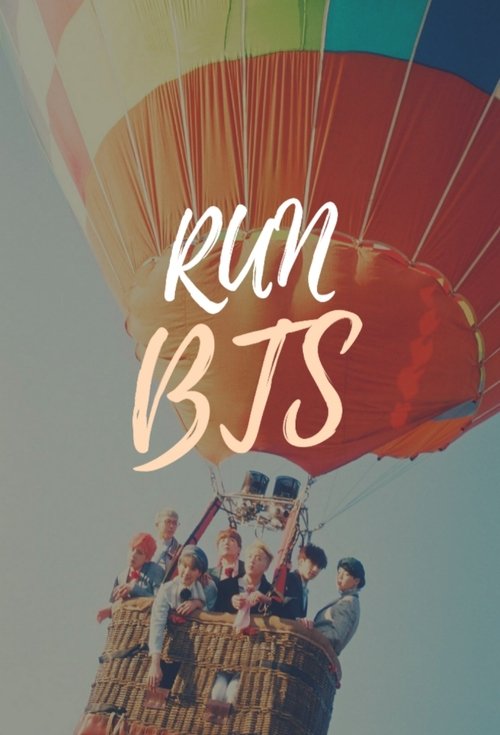
Run BTS! is a long-running South Korean variety web series that stars the seven members of the global music phenomenon BTS. Premiering in 2015, the show was created as a way for the group to relax, spend time together, and connect with their fanbase, known as ARMY, on a more personal level. Each episode features the members—RM, Jin, Suga, j-hope, Jimin, V, and Jungkook—participating in a wide array of games, challenges, and activities. These range from intricate multi-episode spy games and athletic competitions to cooking showdowns, creative workshops, and hilarious debate sessions.
The format is generally non-narrative, with each episode or multi-part arc presenting a new theme and set of rules. The members often split into teams or compete individually to win prizes (which can be as simple as snack coupons) or avoid punishments (like wearing embarrassing outfits to the airport). Overseen by a production team and occasionally MC'd by one of the members, the show's primary appeal lies in the unfiltered chaotic energy and genuine chemistry of the group. It shreds the carefully crafted image typical of K-pop idols, humanizing them as they scheme, betray, and support each other through hilarious and often absurd scenarios.
Core Meaning
At its heart, Run BTS! is a celebration of enduring friendship and the importance of play, even amidst global superstardom. The show was conceived partly because the members needed to spend more quality time together outside of their demanding work schedule. It serves as a testament to their bond, showcasing how seven distinct personalities have grown together over a decade. The core message is that camaraderie, laughter, and shared experiences are essential. It humanizes larger-than-life idols, demonstrating that their foundation is a genuine, chaotic, and deeply loyal friendship. The series reveals the authentic dynamics of the group, proving that their synergy on stage is rooted in a real-life connection that is both relatable and heartwarming for their global audience.
Thematic DNA
Camaraderie and Teamwork
The most central theme is the members' powerful bond. While the show is built on competition, their underlying teamwork and support for one another are always evident. In team-based challenges, they strategize (often poorly, to comedic effect) and celebrate victories together. Even when competing individually, moments of encouragement and shared laughter dominate. The famous 'BTS Picnic' arc (episodes 53-56) culminates in the members reading heartfelt poems to each other, highlighting their deep reliance and affection.
Betrayal and Chaos
A beloved and recurring theme is the members' willingness to betray each other for the sake of a game. Spy missions and Mafia-style games are fan favorites because they showcase the members' cunning and hilariously devious sides. Episodes like the '77 Minute Debate' (131-132) or 'Photo Story' (118-119) are legendary for their shocking twists and the ensuing chaos of accusations and laughter. This playful treachery has become a defining characteristic of the show, proving that their bond is strong enough to withstand any in-game backstabbing.
Authenticity vs. Public Persona
Run BTS! provides a rare, unfiltered glimpse into the members' real personalities, contrasting with their polished on-stage personas. The show peels back the layers of the global 'idol' image, revealing seven young men who are goofy, competitive, and relatable. Viewers see sides of them rarely shown elsewhere: Suga's quiet expertise in the kitchen, Jin's 'king of dad jokes' humor, and j-hope's surprising fear of heights. This authenticity is a key reason for the show's success and the deep connection fans feel with the group.
The Joy of Competition
Whether the prize is a gourmet meal or a set of ramen packets, the members compete with an astonishing level of passion and intensity. This fierce competitiveness, especially from Jungkook, the 'Golden Maknae', drives much of the show's humor. They will fight tooth and nail over the silliest of games, from foot volleyball to challenges in a water park, making their victories and defeats all the more entertaining.
Character Analysis
RM
Kim Namjoon
Motivation
To apply logic and find clever solutions to challenges, but also to simply enjoy the moment and bond with his members, even if it means failing spectacularly.
Character Arc
Initially more of a reserved leader, RM's arc in Run BTS! shows him embracing his clumsy and intellectual side. Known for his high IQ, he often tries to find logical loopholes in games but is equally famous for his 'God of Destruction' trait, accidentally breaking things. Over the series, he becomes more comfortable participating in the chaos rather than just observing it, often to hilarious effect.
Jin
Kim Seokjin
Motivation
To make the members and audience laugh, seize any opportunity to declare his handsomeness, and secure victory through cunning and wit rather than physical prowess.
Character Arc
As the oldest member, Jin quickly establishes his role as the mood-maker and 'Fake Maknae' (youngest). His character arc is less about change and more about the consistent and confident delivery of his 'Worldwide Handsome' persona and an endless supply of dad jokes. He often takes on an MC role and is known for his loud, infectious laugh and cleverly bending rules to his advantage.
Suga
Min Yoongi
Motivation
To win efficiently with minimal effort, dropping truth bombs and insightful commentary along the way. He is surprisingly motivated by prizes and the thrill of a well-played game.
Character Arc
Suga starts the series with a more reserved, seemingly lethargic persona, often wanting to go home. However, his arc reveals a sharp, competitive, and knowledgeable individual who excels in trivia and strategy-based games. He evolves into a secret ace, whose surprising athleticism and vast knowledge often lead his teams to victory. His dry humor and savage commentary become a series staple.
j-hope
Jung Hoseok
Motivation
To maintain a positive and energetic atmosphere, enthusiastically participate in any activity, and overcome his many fears with as much screaming as necessary.
Character Arc
j-hope's persona as the group's 'sunshine' is consistent, but Run BTS! beautifully showcases the comedic contrast of his bright energy with his easily startled nature. His arc is about leaning into this duality. While he is an incredibly charismatic performer, the show highlights his extreme reactions to anything scary (zombies, heights, etc.), which has created some of the most iconic moments. He is the ultimate hype man for others, even when he himself is terrified.
Jimin
Park Jimin
Motivation
To win by any means necessary, often using his charm to manipulate the other members. He is also motivated by a desire to prove his cleverness and get revenge for past betrayals.
Character Arc
Jimin is often portrayed as sweet and caring, but his Run BTS! arc reveals a cunning and competitive player who holds a grudge. He is known for being 'sneaky and sassy' and is a master of subtle cheating and betrayal. His angelic smile often masks a mischievous intent, making him a formidable opponent, especially in games that require bluffing or forming temporary alliances before inevitably breaking them.
V
Kim Taehyung
Motivation
To have fun and approach every challenge in his own unique way. He isn't always driven by winning, but by the joy of the process and the fun of confusing everyone else.
Character Arc
V's character is defined by his unpredictability. He thinks outside the box, often leading to either genius solutions or utter failure, with no in-between. Known as 'Tae-Tae,' his arc shows him consistently approaching challenges from a unique and creative angle that no one else considers. This makes him a wild card in any game, as his teammates and opponents can never guess his next move.
Jungkook
Jeon Jungkook
Motivation
To win. His motivation is pure, unadulterated victory in any and every challenge he faces. He thrives on competition and proving his all-rounder status.
Character Arc
As the 'Golden Maknae,' Jungkook starts and ends the series as the member who is good at everything. His arc isn't about acquiring skills but about learning to channel his hyper-competitive nature. He excels at physical challenges, art, and strategy, making him the one to beat. The show often has to handicap him or have the other six members team up against him just to make things fair, which has become a running gag.
Symbols & Motifs
The Bell
The bell often signifies the start of a chaotic game or a moment of judgment. In quiz-based episodes, members frantically ring it to get a chance to answer, leading to noisy, hilarious mayhem. It represents the thin line between order and the complete pandemonium that the members thrive in.
Used in numerous quiz and game show-themed episodes, such as 'Golden Bell' (Episode 41), where the frantic ringing and shouting to be heard becomes a key part of the comedy.
Water
Water symbolizes both fun and punishment. Many iconic episodes involve the members getting soaking wet, either as a consequence of losing a game or as part of a water-based activity. This recurring element highlights their willingness to abandon their 'idol' image and engage in pure, unadulterated fun.
Featured prominently in the 'Summer Outing' episodes (83-85) at a water park and, most famously, in the '77 Minute Debate' (131-132), where members are blasted with water guns or drenched by a bucket for using forbidden words.
Food/Ramen
Food, especially ramen, often serves as the ultimate prize and motivation. The members' intense desire to win food prizes, no matter how simple, is a running gag that underscores the show's low-stakes, high-entertainment format. It symbolizes a simple, relatable desire that turns these global superstars into fiercely competitive but lovable figures.
Prizes of meat, gift cards, or cooking ingredients are fought over in countless episodes. The willingness to betray a teammate for a better meal is a foundational joke of the series.
Memorable Quotes
Lachimolala
— Jimin
Context:
In Episode 41, during a whisper challenge game, Jimin hilariously mishears the phrase 'Carbonara' and confidently shouts 'Lachimolala,' causing the members to erupt in laughter.
Meaning:
This nonsensical word became one of the most iconic inside jokes in the BTS fandom. It perfectly encapsulates the chaotic, linguistic humor of the show, where a simple mishearing in a game can create a legendary moment that lasts for years.
I know his face, but I don't know his name.
— Jin
Context:
During a quiz in Episode 32 where the members had to identify famous figures, Jin fails to name a celebrity and delivers this iconic line as his excuse, leaving the members and staff in stitches.
Meaning:
A classic Jin moment that highlights his witty and sometimes brazenly confident humor. This quote is often used by fans to describe funny situations of forgetfulness and showcases Jin's talent for turning any situation into a comedic bit.
Jimin, you got no jams.
— RM
Context:
Spoken by RM to Jimin during a flight to Los Angeles in an early Bangtan Bomb vlog, this quote became a legendary inside joke within the fandom, referenced for years to come.
Meaning:
Though not from Run BTS! itself, this is one of the most famous quotes associated with the group's dynamic, originating from their early vlogs but carrying the same playful, teasing energy found in the show. It's a phrase used by RM to tease Jimin, with 'jams' being a pun on the Korean word for 'fun' (jaemi). It symbolizes the members' long-standing history of friendly banter.
Episode Highlights
BTS vs. Zombies
In this legendary episode, the members are sent into a safari park, only to discover it's been overrun by zombies. It's a showcase of their genuine fear, particularly from j-hope and Jin, and their hilarious attempts to solve puzzles while being chased. It perfectly highlights each member's personality under pressure.
This episode is often recommended to new fans as it's a perfect introduction to the group's dynamics and chaotic humor. It generated countless memes and solidified j-hope's 'scaredy-cat' reputation.
BTS Picnic
This four-part arc sees the members go on a camping trip where they shop for groceries, play games like foot volleyball, and sing karaoke. The arc is a blend of chaotic competition and heartwarming bonding.
The finale of this arc, Episode 56, is a major turning point, featuring the members sitting around a campfire reading poems they wrote for each other. It's one of the most emotionally resonant moments in the series, showcasing their deep fraternal bond amidst the usual comedy.
Summer Outing
Taking place at a water park, these episodes feature a variety of water-based games and an iconic race on a massive inflatable obstacle course. It also includes the classic '6 vs. 1' scenario where the members team up to try and defeat the athletically superior Jungkook.
Considered one of the best multi-part episodes by fans, it's peak Run BTS! chaos, fun, and competition. The combination of high-energy games and moments of betrayal makes it a quintessential example of the show's appeal.
Photo Exhibition / Photo Story
In this three-part series, the members are tasked with creating their own outfits and directing photoshoots for each other, with the results displayed in an exhibition. The follow-up episodes (118-119) add a spy mission, where one member must secretly sabotage the photos.
These episodes showcase the members' creativity and give insight into their individual styles. The spy element in Episodes 118-119 leads to one of the most shocking and hilarious betrayal reveals in the show's history, demonstrating the cleverness of the format.
77 Minute Debate
The members engage in a poolside debate on silly topics (e.g., hard vs. soft peaches) where they are drenched with water if they use forbidden words or actions. The debate itself is secondary to the chaos of trying to trick each other into getting soaked.
This two-parter is widely regarded as one of the most hilarious and chaotic episodes ever produced. It perfectly exemplifies the 'betrayal' theme of the show and the members' comedic timing, with Suga noting, 'The debate isn't what's important. The water is more important.'
BTS Village: Joseon Dynasty
A historical drama-themed mystery where the members must find the culprit who stole a valuable army bomb headstone. This multi-episode arc combines role-playing, puzzle-solving, and the classic 'find the spy' format in an elaborate setting.
This arc is praised for its high production value and engaging mystery. It allows the members to fully immerse themselves in their characters, leading to brilliant comedic acting and another classic display of suspicion and betrayal.
Philosophical Questions
Can true authenticity be maintained in the face of global fame?
The series constantly explores the line between public persona and private self. While the members are 'on camera,' their interactions, frustrations, and unfiltered laughter appear genuine. Run BTS! raises the question of whether this is a true representation of their personalities or a well-performed version of their 'authentic selves' for public consumption. The show suggests that even within a produced environment, genuine bonds and spontaneous moments can thrive, offering a complex answer to the question of authenticity under the microscope of celebrity.
What is the role of play and competition in strengthening adult relationships?
The entire premise of Run BTS! revolves around adults engaging in often childish games with fierce competitiveness. The series demonstrates how these games act as a medium for bonding, communication, and stress relief. The cycle of teaming up, competing, betraying, and ultimately laughing together showcases how low-stakes conflict and shared fun can deepen and reaffirm relationships, providing a space for the members to connect on a level beyond their professional collaboration.
Alternative Interpretations
While Run BTS! is primarily a comedy variety show, some interpretations view it through a more analytical lens. One perspective is to see the show as a carefully constructed, yet authentic, branding tool. In this view, the series is a strategic masterclass in humanizing a global brand, designed to foster parasocial relationships by presenting an 'off-duty' version of the members that feels intimate and real, thereby strengthening fan loyalty.
Another interpretation considers the show a subtle commentary on the nature of celebrity. The low-stakes games for trivial prizes (like ramen) can be seen as a way for the members to ground themselves and escape the immense pressures of their real-world success. The constant theme of playful 'betrayal' could be interpreted as a safe space to navigate conflict and competition, a stark contrast to the unified front they must present professionally. The series, then, becomes a therapeutic and necessary outlet for seven young men living under extraordinary circumstances.
Cultural Impact
Run BTS! has had a significant cultural impact, primarily by reshaping the perception of global superstars. In a K-pop industry often characterized by highly polished and controlled public images, the show offers a raw, authentic, and humanizing portrait of its subjects. This has been crucial in building and maintaining the deep, personal connection between BTS and their massive global fanbase, ARMY. The show serves as a shared experience, filled with inside jokes and memorable moments that strengthen the fan community.
The series has become a cornerstone of BTS content, demonstrating a successful model for artist-led variety shows that go beyond simple promotion. Its format has influenced other K-pop groups' content, popularizing long-form, personality-driven reality series. For international fans, it acts as a cultural bridge, introducing them to Korean variety show games, foods, and cultural nuances in an accessible and entertaining way. The show's immense popularity on platforms like V Live and later Weverse and YouTube has also demonstrated the power of direct-to-fan content distribution, allowing artists to bypass traditional media and engage their audience on their own terms. Ultimately, the legacy of Run BTS! is its role in proving that authenticity and chaotic, unscripted fun can be as powerful as any music video in cementing a band's place in the hearts of millions.
Audience Reception
The audience reception for Run BTS! has been overwhelmingly positive since its inception, and it is widely considered a beloved staple by the BTS fandom, ARMY. Viewers consistently praise the show for its genuine humor and the chaotic chemistry between the seven members. Many fans see it as the best way to get to know the members' individual personalities outside of their music. The unscripted nature is often cited as a major strength, allowing for spontaneous and hilarious moments that feel authentic.
Criticism is minimal and often comes from a place of love. Some viewers have noted that certain later episodes can feel more produced or 'scripted' than the earlier seasons, though this is a minority opinion. The show's editing, with its witty captions and sound effects, is almost universally praised as a key element of its comedic success. Overall, Run BTS! is viewed not just as entertainment, but as a source of comfort and joy, a weekly dose of laughter that has strengthened the bond between BTS and their fans for years.
Interesting Facts
- The show premiered on August 1, 2015, and has since released over 156 episodes and numerous specials across three main seasons.
- Due to their frequent use of the game on the show, BTS were named official World RPS (Rock, Paper, Scissors) Association Ambassadors.
- Episodes are often filmed months in advance, leading fans to track the members' hair colors to determine the filming timeline.
- The show was initially created as a way for the group to bond and have fun together, as member Suga noted they didn't socialize much outside of work in their early years.
- While the show has a production crew that plans the concepts, the members' reactions and dialogue are not scripted, allowing their genuine personalities to shine through.
- Initially airing on the V Live platform, all episodes were later made available on Weverse and YouTube.
- The iconic editing style, with its sassy captions and funny sound effects, is considered a key component of the show's humor and is beloved by fans.
Easter Eggs
Censorship using members' faces or other inside jokes.
The editors often censor brands or 'unflattering' moments by covering them with images of the members' faces (especially Jin's), BT21 characters, or other memes from past episodes. This meta-humor rewards long-time viewers who understand the inside jokes.
The 'Lachimolala' legacy.
After the iconic 'lachimolala' moment in Episode 41, the word occasionally reappears in captions or is referenced by the members in later episodes, serving as a running gag and a nod to one of the show's most famous lines.
Callbacks to punishments from previous episodes.
Punishments are often carried out in later episodes. For example, a member who loses a game might have to wear a silly costume (like a sunflower head) during the filming of the next unrelated episode, creating a humorous sense of continuity.
⚠️ Spoiler Analysis
Click to reveal detailed analysis with spoilers
Frequently Asked Questions
Explore More About This Movie
Dive deeper into specific aspects of the movie with our detailed analysis pages
Comments (0)
No comments yet. Be the first to share your thoughts!