Pride
A vibrant historical dramedy where 1980s queer activism meets working-class grit. It pulses with infectious joy and righteous anger, using the visual metaphor of clasped hands to celebrate the unlikely solidarity between two disparate communities fighting a common enemy.
Pride

Pride

"Based on the inspirational true story."

12 September 2014 France 120 min ⭐ 7.7 (1,383)
Director: Matthew Warchus
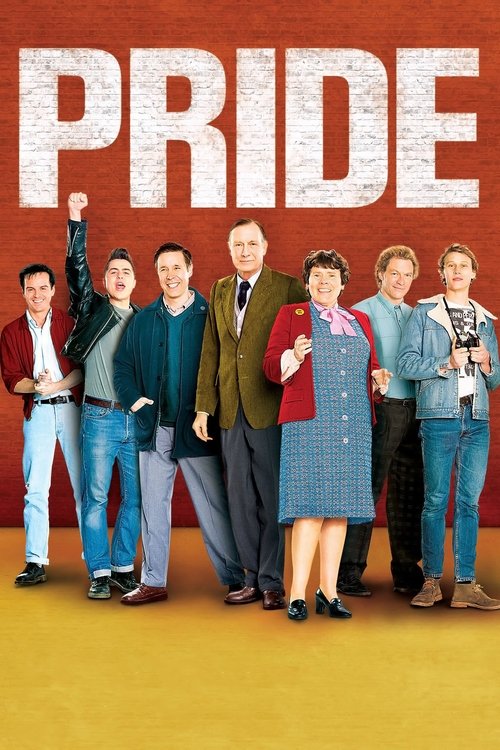
Cast: George MacKay, Ben Schnetzer, Freddie Fox, Bill Nighy, Imelda Staunton
Drama Comedy
Solidarity and Intersectionality Prejudice vs. Dignity Coming of Age and Identity Joy as Resistance
Box Office: $16,700,000

Overview

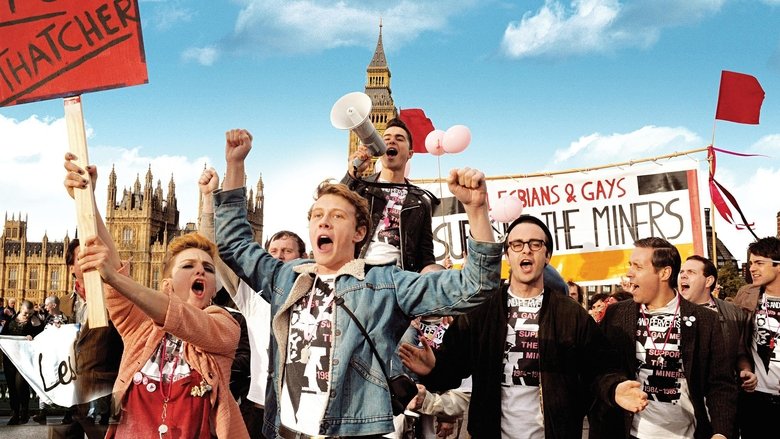
Set in 1984 Britain during the contentious miners' strike, Pride follows a group of gay and lesbian activists in London who realize that they share a common enemy with the striking miners: the police, the tabloid press, and the Thatcher government. Led by the charismatic Mark Ashton, they form 'Lesbians and Gays Support the Miners' (LGSM). When the National Union of Mineworkers rebuffs their support, the group decides to bypass the official channels and take their donations directly to a small, remote mining village in the Dulais Valley of Wales.

The film chronicles the initial culture clash as the flamboyant, colorful activists arrive in the conservative, grey-skied Welsh village. Despite initial skepticism and homophobia from some locals, a bond slowly forms, championed by the open-minded miner Dai Donovan and the village matriarch Hefina. Through shared struggles, dance, and music, the two groups discover that their fight for dignity and livelihood is one and the same. The narrative culminates in a powerful test of this alliance as the strike faces defeat and the activists face their own internal and external battles.

Core Meaning

At its heart, Pride is a testament to the power of intersectionality and solidarity. It argues that oppressed groups, no matter how culturally different, are stronger when they unite against systemic injustice. The director, Matthew Warchus, illustrates that 'pride' is not just about sexual identity, but about self-respect and the refusal to be shamed by those in power. The film posits that empathy can bridge even the widest ideological chasms.

Thematic DNA

Solidarity and Intersectionality 35%
Prejudice vs. Dignity 25%
Coming of Age and Identity 20%
Joy as Resistance 20%

Solidarity and Intersectionality

The central theme is the alliance between the metropolitan LGBTQ+ community and the rural working-class miners. The film demonstrates that shared oppression (by the police and government) creates a stronger bond than cultural differences can divide. This is epitomized when the miners accept the gays not despite their sexuality, but as fellow warriors in a class struggle.

Prejudice vs. Dignity

Both groups face prejudice: the miners are vilified as thugs, and the activists as perverts. The film explores how characters overcome their own internal biases—miners overcoming homophobia and gay activists overcoming class elitism—to find dignity in their shared humanity.

Coming of Age and Identity

Through the character of Joe (Bromley), the film explores the personal journey of coming out. His arc mirrors the political 'coming out' of the miners who learn to stand publicly with an unpopular ally. It highlights the courage required to be visible in a hostile world.

Joy as Resistance

In the face of bleak political realities and the looming shadow of the AIDS crisis, the film uses music, dance, and humor as acts of defiance. The 'Pits and Perverts' concert and Jonathan's dance scene show that joy is a vital tool for sustaining morale during long political struggles.

Character Analysis

Mark Ashton

Ben Schnetzer

Archetype: The Visionary / The Catalyst
Key Trait: Charismatic determination

Motivation

To fight injustice wherever he sees it and to politicize the gay community beyond just partying. He realizes that 'policemen harass us, and now they harass the miners'.

Character Arc

Mark starts as a fiery, impatient activist frustrated by the apathy of his peers. He channels his energy into a seemingly impossible cause. His arc is one of relentless drive, eventually humbled by the genuine connection he forms with the miners, before his tragic off-screen fate is revealed in the epilogue.

Joe 'Bromley' Cooper

George MacKay

Archetype: The Audience Surrogate / The Innocent
Key Trait: Naivety turning into courage

Motivation

To find a place where he belongs and to escape the stifling conformity of his home life.

Character Arc

Joe begins as a timid, closeted suburban boy who accidentally joins the march. Through his involvement with LGSM, he gains the confidence to confront his conservative parents and fully embrace his identity, transitioning from a bystander to an active participant in his own life.

Dai Donovan

Paddy Considine

Archetype: The Mediator / The Diplomat
Key Trait: Quiet integrity

Motivation

To save his community and the strike by accepting help from any willing ally, recognizing the shared humanity in the struggle.

Character Arc

Dai is the open-minded bridge between the two worlds. He risks his standing in his own community to advocate for the alliance. His quiet strength and eloquence help dismantle the miners' prejudices.

Hefina Headon

Imelda Staunton

Archetype: The Matriarch
Key Trait: Ferocious practicality

Motivation

To feed and support the striking families, doing whatever is practical and necessary to survive.

Character Arc

She is the backbone of the mining community's support group. Tough and perceptive, she quickly recognizes the value of the LGSM and fiercely protects them from local bigotry.

Symbols & Motifs

The Clasped Hands

Meaning:

Symbolizes the historic alliance between the labor movement and the gay rights movement.

Context:

The image appears on the miners' banner. Dai Donovan explains its meaning to the LGSM members, transforming an old trade union symbol into a new representation of their specific intersectional alliance.

The LGSM Minibus

Meaning:

Represents the physical and metaphorical journey between two worlds.

Context:

The van transports the activists from the safety of London to the unknown territory of Wales. It becomes a vessel of change, physically bringing color and noise into the muted palette of the mining village.

The Gay's the Word Bookshop

Meaning:

Symbolizes a sanctuary and the intellectual hub of the movement.

Context:

It serves as the headquarters for LGSM. It is where the idea is born and where the group retreats when attacked, representing the safety of community spaces.

Sandwiches and Beer

Meaning:

Communal sharing and the breaking down of social barriers.

Context:

The simple act of the Welsh women making sandwiches for the activists and sharing pints at the welfare hall humanizes the 'other,' facilitating the first real connections between the groups.

Memorable Quotes

When you're in a battle with an enemy that's so much bigger, so much stronger than you, to find out you had a friend you never knew existed, that's the best feeling in the world.

— Dai Donovan

Context:

Dai delivers this speech to a crowded gay bar in London to thank them for their donations, initially facing a skeptical crowd that falls silent as he speaks.

Meaning:

This quote encapsulates the film's core message of solidarity. It moves the gay activists to tears and solidifies the bond between the two groups, articulating the emotional relief of finding allies in a hopeless fight.

It's a support group, not a skiffle band!

— Mark Ashton

Context:

Mark shouting at the group during an organizing meeting when they are trying to come up with a name and direction.

Meaning:

Highlights Mark's seriousness about the cause and his frustration with others not taking the political strategy seriously. It also serves as a comedic beat showcasing his intensity.

Where are my lesbians?

— Gwen

Context:

When the activists first arrive in the welfare hall, the elderly Gwen is eager to meet the women in the group, having never met a lesbian before.

Meaning:

A comedic line that breaks the tension, showing the innocent curiosity of the older Welsh women rather than malice. It signifies the beginning of acceptance.

I don't believe what they write about the miners; why would I believe what they write about the gays?

— Cliff

Context:

Cliff speaking to the group, revealing his quiet understanding and foreshadowing his own coming out.

Meaning:

A profound moment of realization about media manipulation. It shows how the miners realize they have been fed lies about gay people, just as the public is fed lies about miners.

Philosophical Questions

Does solidarity require complete ideological alignment?

The film explores this by showing that the miners and the gay activists disagreed on many things and came from vastly different cultures. It suggests that shared enemies and shared humanity are sufficient grounds for political alliance, challenging the modern notion of ideological purity tests.

What is the value of a 'lost cause'?

The miners lose the strike, yet the film frames the struggle as a victory. It questions the definition of success in activism, suggesting that the relationships built and dignity maintained during the struggle are as valuable as the political outcome itself.

Alternative Interpretations

While largely celebrated as an inspiring story of unity, some critics view the film as a sanitized version of radical politics. They argue that by focusing on the 'feel-good' elements and the personal stories, the film softens the hard-left Communist politics of the real Mark Ashton and the true brutality of the police violence during the strike. Another interpretation suggests the film is a tragedy disguised as a comedy; despite the personal victories, the strike ultimately failed, the unions were crushed, and the AIDS epidemic devastated the community shortly after.

Cultural Impact

Pride played a significant role in educating a new generation about the Lesbians and Gays Support the Miners (LGSM) campaign, a piece of history that had been largely forgotten by the mainstream. Its release reignited interest in the history of intersectional activism in the UK.

Historically, the film highlights how this alliance directly led to the National Union of Mineworkers block-voting to enshrine gay rights in the Labour Party manifesto in 1985, a crucial step toward LGBTQ+ equality in Britain. Culturally, the film was a critical darling, winning the Queer Palm at Cannes and the BAFTA for Outstanding Debut. It is cited as a prime example of 'feel-good' British social realism, following in the footsteps of The Full Monty and Billy Elliot.

Audience Reception

Pride was overwhelmingly well-received by audiences, often described as a 'crowd-pleaser' that balances humor with genuine emotion. Viewers praised the chemistry of the ensemble cast and the film's ability to handle heavy political themes with a light touch.

Critiques: Some minority voices felt the film relied too heavily on stereotypes of 'sassy' gay men and 'dour' working-class people to generate comedy. However, the consensus remains that it is a deeply moving film that earns its emotional beats, with a high 92% rating on Rotten Tomatoes.

Interesting Facts

  • The character of Joe 'Bromley' Cooper is the only fictional main protagonist; he was created to serve as the audience's entry point into the story, while most other characters are based on real people.
  • The 'Pits and Perverts' benefit concert depicted in the film actually happened at the Electric Ballroom in Camden in 1984 and was headlined by Bronski Beat.
  • The US DVD release sparked controversy because the film's synopsis on the back cover removed all references to 'gay' and 'lesbian' characters, describing them simply as 'a group of London-based activists'.
  • Dominic West's character, Jonathan Blake, is based on a real person who was one of the first people in the UK to be diagnosed with HIV and is still alive today, celebrating his 70s.
  • Imelda Staunton had to have her hair permed specifically to match the look of the real Hefina Headon.
  • The real Mark Ashton was a member of the Communist Party of Great Britain, a fact that is present in the film but slightly downplayed to make the story more accessible to a broad audience.

Easter Eggs

Russell Tovey Cameo

Actor Russell Tovey makes a brief uncredited appearance as Tim, Mark Ashton's ex-boyfriend, who warns Mark about the 'new disease' (AIDS). This foreshadows the tragic fate of Mark mentioned in the epilogue.

London Gay Switchboard Number

In one scene, Mark writes a phone number on a wall. It is the real historical number for the London Gay Switchboard. It is placed humorously under posters for Elton John and Soft Cell, implying a 'historical in-joke' about their future coming out.

The Pink Van

The vehicle used in the film is a replica of the actual VW bus used by the real LGSM group. The production team went to great lengths to recreate the specific signage and look of the original vehicle.

⚠️ Spoiler Analysis

Click to reveal detailed analysis with spoilers

Frequently Asked Questions

Explore More About This Movie

Dive deeper into specific aspects of the movie with our detailed analysis pages

Comments (0)

Leave a comment

No comments yet. Be the first to share your thoughts!