Selena
"Discover the true story of one of America's brightest stars... that faded too soon."
Overview
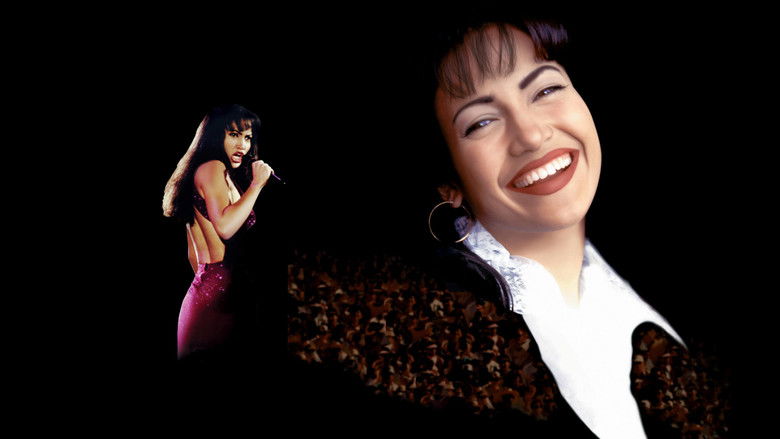
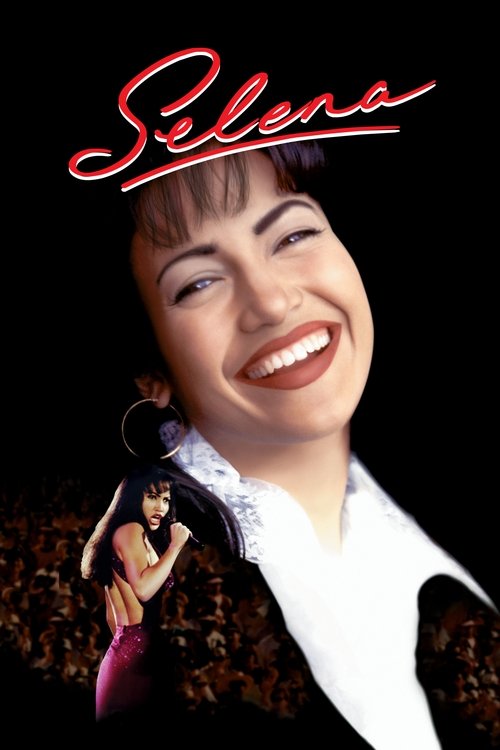
Selena (1997) is a biographical drama that chronicles the meteoric rise and tragic death of Tejano music superstar Selena Quintanilla-Pérez. The story begins with her father, Abraham, discovering her talent at a young age and forming the family band, Selena y Los Dinos. The film follows their grueling journey from playing at empty carnivals and weddings to conquering the male-dominated Tejano music scene, driven by Abraham's relentless ambition and Selena's undeniable charisma.
As Selena matures, the narrative shifts to her struggle for independence, particularly her romance with the band's heavy-metal guitarist, Chris Pérez, which defies her father's strict control. The film highlights her crossover into the English-language market and her growing fashion empire. However, her ascent is shadowed by the introduction of Yolanda Saldívar, the president of her fan club, whose obsession and financial mismanagement lead to a confrontation with fatal consequences.
Core Meaning
At its heart, Selena is a story about the complexities of the American Dream through the lens of the Mexican-American experience. Director Gregory Nava emphasizes that success for a bicultural family requires working "twice as hard" to prove their worth to both nations. The film transcends a typical tragedy by focusing on Selena's radiant spirit and her role as a cultural bridge, suggesting that while her life was cut short, her legacy of unity and pride remains immortal.
Thematic DNA
The Bicultural Identity Struggle
The film vividly portrays the unique pressure faced by Mexican-Americans who must navigate two cultures. This is epitomized in Abraham's famous monologue about having to be "more Mexican than the Mexicans and more American than the Americans," highlighting the exhaustion and pride of the Tejana identity.
Family Unity and Control
The Quintanilla family is presented as an inseparable unit, where success is a collective effort. The film explores the tension between familial loyalty and the individual's need for autonomy, showing how Abraham's protective authoritarianism both fueled Selena's career and stifled her personal growth.
Female Empowerment in a Male World
Selena is depicted breaking barriers in the male-dominated Tejano genre. Her character challenges patriarchal norms not by rejecting femininity but by embracing it—symbolized by her bustiers and bold fashion—proving that a woman can be both strong and soft, business-savvy and kind.
The American Dream
The narrative follows a classic trajectory of humble beginnings to massive success, reinforcing the idea that talent and hard work can overcome socio-economic barriers. It validates the Latino experience as a fundamental part of the American success story.
Character Analysis
Selena Quintanilla-Pérez
Jennifer Lopez
Motivation
To sing, to design fashion, and to bring joy to people while staying true to her family and roots.
Character Arc
She evolves from a precocious child mimicking others to a fully realized artist and fashion icon. Her journey is one of self-discovery, learning to balance her father's expectations with her own desires for love and independence.
Abraham Quintanilla
Edward James Olmos
Motivation
To ensure his family's survival and success; to prove that Mexican-Americans can achieve greatness.
Character Arc
He starts as a failed musician projecting his dreams onto his children. Throughout the film, he struggles to let go of control, ultimately accepting Selena's marriage but failing to protect her from the one threat he didn't foresee.
Chris Pérez
Jon Seda
Motivation
To love Selena for who she is, not just for her fame.
Character Arc
He transforms from a wild, heavy-metal rocker into a devoted partner. His love for Selena grounds him, and he becomes her primary source of emotional support outside the family unit.
Yolanda Saldívar
Lupe Ontiveros
Motivation
Possession and control; a desperate need to be important in Selena's life.
Character Arc
She is introduced as a devoted helper but slowly revealed to be manipulative and unstable. Her arc is a descent from fandom into madness and violence.
Symbols & Motifs
The Bustier
It represents Selena's assertive femininity and her transition from a dutiful daughter to an independent woman. It is a visual declaration of her confidence and willingness to defy traditional expectations.
Used during the montage of her concerts and in the scene where her father initially disapproves of her revealing stage outfits, calling them "bras."
The White Rose
A symbol of purity, tragedy, and fan devotion. It foreshadows her untimely death and represents the lingering grief of her community.
While more prominent in real-life lore, the film visually links flowers to her final moments and the overwhelming tribute of fans at the vigil.
The Ring
Symbolizes commitment and loss. It represents the future she was building with Chris and the fragility of those dreams.
In the tragic climax, the camera focuses on the ring slipping from her lifeless hand, a powerful visual metaphor for her life slipping away.
Big Bertha (The Tour Bus)
Represents the journey and the grind. It is the vessel that contains the family's struggles, arguments, and bonding moments on the road to stardom.
The bus is the primary setting for the band's early years, symbolizing their humble roots before the private jets and limousines.
Memorable Quotes
Anything for Selenas!
— Two Cholos (stopping to help the tour bus)
Context:
Spoken by two men who pull the tour bus out of a ditch, realizing who is on board. It became the film's most iconic catchphrase.
Meaning:
This line encapsulates the unconditional love the community had for her. It highlights her reach across all subcultures of the Latino community.
We have to be more Mexican than the Mexicans and more American than the Americans, both at the same time! It's exhausting!
— Abraham Quintanilla
Context:
Abraham explains to his children why they must learn Spanish perfectly before playing in Mexico, frustrated by the cultural gatekeeping they face.
Meaning:
A defining statement on bicultural identity. It articulates the double standard and the tightrope walk that Mexican-Americans face daily.
I may not be street wise and all that, but at least I know not to be that dumb!
— Selena
Context:
Selena scolds Chris after he and his friends trash a hotel room, asserting her maturity over his rock-star lifestyle.
Meaning:
Shows Selena's grounded nature and her refusal to tolerate disrespect or foolish behavior, even from the man she loves.
I like it if you like it.
— Chris Pérez
Context:
Chris responds to Selena when she compliments his new haircut, which he got specifically to impress her.
Meaning:
Represents Chris's complete devotion and willingness to change for her. It marks the beginning of their romance.
Philosophical Questions
What is the cost of the American Dream?
The film asks whether the relentless pursuit of success, driven by patriarchal ambition, inevitably exacts a price on the individual's freedom and safety. It explores how the family's ascent from poverty exposed them to dangers (like Yolanda) that they were unprepared for.
Does tragedy define a legacy?
The film grapples with the tension between Selena's vibrant life and her violent death. It challenges the viewer to remember her for how she lived—full of joy and bridge-building—rather than just being a victim of a crime, yet the narrative is inevitably framed by the knowledge of the end.
Alternative Interpretations
While primarily a straightforward biopic, some critics view the film as a sanitized family portrait. Since Abraham Quintanilla was an executive producer, the film can be interpreted as his version of events, potentially softening his own controlling nature and erasing darker family conflicts. Another reading focuses on the film as a myth-making vehicle, where Selena is elevated from a pop star to a secular saint, with the film functioning less as a biography and more as a hagiography designed to cement her legend forever.
Cultural Impact
Selena is a watershed moment in Latino cinema. Released just two years after the singer's death, it played a crucial role in processing the collective grief of the Hispanic community. It launched Jennifer Lopez into superstardom, proving to Hollywood that a film with an all-Latino cast could be a box-office hit. Culturally, it validated the Spanglish experience and the unique identity of Tejanos, giving millions of Mexican-Americans seeing themselves represented on screen with dignity and pride. In 2021, the film was selected for preservation in the National Film Registry by the Library of Congress.
Audience Reception
The film was warmly received by audiences, particularly within the Hispanic community, where it holds a cult status. Jennifer Lopez's performance was universally praised as her breakout role, with many feeling she captured the essence and spirit of Selena perfectly. Critics were generally positive but some noted the script's occasional melodrama and simplified storytelling. Despite this, the film holds a high emotional value for fans, often cited as a "tear-jerker" that successfully honors the singer's memory.
Interesting Facts
- Jennifer Lopez became the first Latina actress to earn $1 million for a movie role with this film.
- JLo lip-synced to the real Selena's vocals for all the songs in the movie, as the director felt no one could replicate Selena's unique voice.
- The famous 'washing machine' dance move shown in the film was fictionalized; Selena's sister Suzette confirmed they didn't actually do that, though it became an iconic movie moment.
- About 35,000 extras were used for the stadium concert scene, which was filmed at the Alamodome in San Antonio, not the Astrodome where the real concert took place.
- Edward James Olmos gained 50 pounds to play the role of Abraham Quintanilla.
- Constance Marie, who played Selena's mother, was only four years older than Jennifer Lopez in real life.
- The real Chris Pérez refused to visit the set during the filming of the elopement scene because it was too painful for him to relive that memory.
- Initially, there were protests against casting Jennifer Lopez because she is Puerto Rican, not Mexican-American, but her performance eventually won over the critics and the family.
Easter Eggs
Suzette Quintanilla's Cameo
Selena's real sister, Suzette, reportedly makes a brief background appearance in the film, blurring the line between the cinematic tribute and the real family involved.
The Grammy Dress Replica
The costume department recreated Selena's famous sparkly Grammy dress so perfectly that when Selena's real family saw Jennifer Lopez wearing it, they were moved to tears by the resemblance.
The Bumper Scene
The scene where the bumper is pulled off the car by the energetic crowd is based on a real-life event that happened to the band in Mexico, showcasing the true intensity of 'Selena-mania'.
⚠️ Spoiler Analysis
Click to reveal detailed analysis with spoilers
Frequently Asked Questions
Explore More About This Movie
Dive deeper into specific aspects of the movie with our detailed analysis pages
Comments (0)
No comments yet. Be the first to share your thoughts!