Like Father, Like Son
そして父になる
"At what point does a father truly become a father?"
Overview
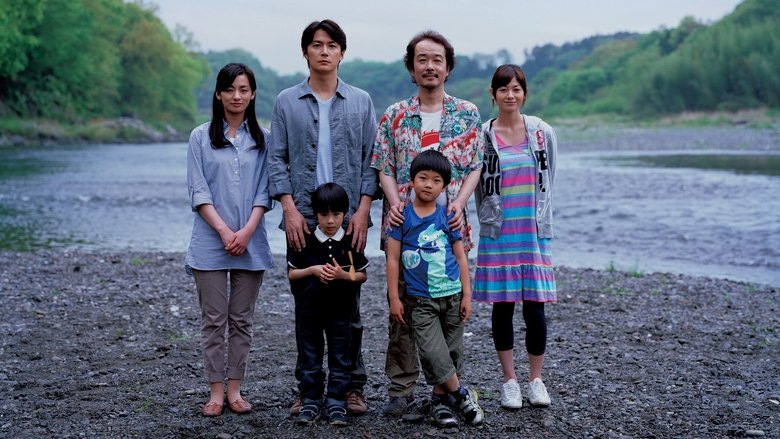
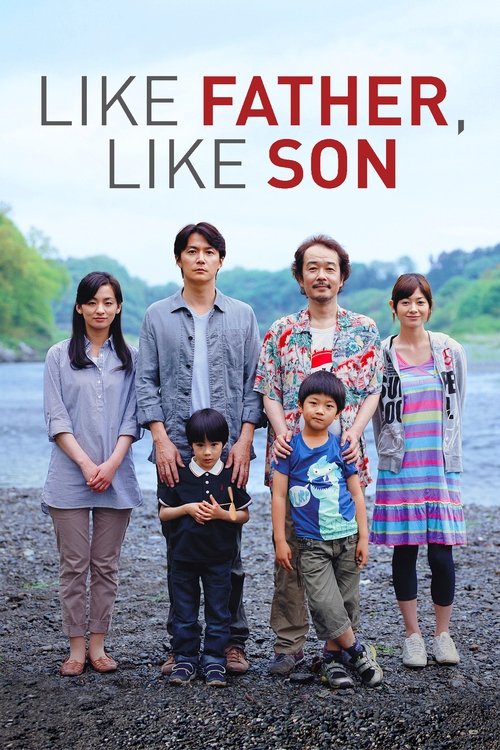
Ryota Nonomiya is a successful, workaholic Tokyo architect who believes his life is perfectly ordered. He and his dutiful wife, Midori, raise their six-year-old son, Keita, in a strict, high-achieving environment. Their world shatters when the hospital where Keita was born calls with devastating news: their biological son was switched at birth with another baby. Keita is not their child.
They meet the other family, the Saikis, who are their polar opposites: a boisterous, working-class shopkeeper family living in a cramped, chaotic home. Yudai Saiki is a playful, laid-back father who prioritizes time with his kids over financial success—everything Ryota is not. The two families are faced with an impossible choice: keep the sons they have raised and loved for six years, or swap them to preserve their bloodlines, as is traditional custom.
As Ryota struggles with the decision, he is forced to confront his own shortcomings as a father and the realization that his biological connection to a child might matter less than the time and affection shared. The film is a poignant journey from rigid pride to humble understanding, questioning what it truly means to be a father.

Core Meaning
At its heart, the film challenges the traditional Japanese (and universal) belief in the supremacy of blood ties (lineage) over shared time and affection. Hirokazu Kore-eda posits that fatherhood is not a biological right but a role earned through presence, patience, and love. The film deconstructs the definition of success, contrasting Ryota's material wealth and emotional absence with Yudai's financial modesty and emotional abundance, ultimately suggesting that time is the most valuable currency in a parent-child relationship.
Thematic DNA
Nature vs. Nurture
The central conflict of the film. Ryota initially believes that 'blood' is the defining factor of potential and character, looking for his own traits in his biological son, Ryusei. The film slowly reveals that the bond formed through nurturing—'six years of time'—is far more profound than genetic connection.
Time vs. Money
Ryota believes his hard work provides for his family, justifying his absence. Yudai counters this by asserting that time spent with children is irreplaceable. The film argues that you cannot buy your way out of parenting; presence is the only true form of engagement.
Class and Social Status
The film sharply contrasts the Nonomiyas' sterile, high-rise, upper-middle-class existence with the Saikis' messy, ground-level, working-class warmth. It critiques the elite's assumption of superiority, showing how emotional richness often resides where material wealth does not.
Forgiveness and Redemption
Ryota's journey is one of redemption—not for a crime, but for his arrogance and coldness. He must learn to forgive the nurse who caused the swap, his own father for his distant upbringing, and himself for his failures, ultimately seeking forgiveness from Keita.
Character Analysis
Ryota Nonomiya
Masaharu Fukuyama
Motivation
To maintain control, achieve perfection, and ensure his legacy/lineage is 'successful' according to societal standards.
Character Arc
Starts as an arrogant, successful architect who views his son Keita as a disappointment for lacking competitive drive. He initially favors the switch to his 'biological' son. Through the film, he is humbled, realizing his definition of fatherhood was hollow. He transforms from a man who provides to a man who connects.
Yudai Saiki
Lily Franky
Motivation
To enjoy life with his family and ensure their happiness through direct engagement and play.
Character Arc
Static character who serves as a foil to Ryota. He appears disheveled and money-hungry at first, but is revealed to be a deeply loving, engaged, and wise father who understands the true value of parenting.
Keita Nonomiya
Keita Ninomiya
Motivation
To please his father and be accepted.
Character Arc
Quietly endures his father's disappointment while maintaining a pure, unconditional love for him. His withdrawal in the final act forces Ryota to chase him, symbolizing the son teaching the father.
Ryusei Saiki
Shogen Hwang
Motivation
To return to the warmth and freedom of his 'real' (raised) family.
Character Arc
Ryota's biological son, who reflects the 'spirit' Ryota wished for but ultimately rejects Ryota's cold home in favor of the warmth he knew with the Saikis.
Symbols & Motifs
The Camera
A symbol of perspective and the 'gaze' of love. Ryota views the world through a lens of judgment, but when he finds the photos Keita took of him (mostly sleeping or working), he finally sees himself through his son's adoring eyes.
Ryota discovers a cache of photos on his camera that Keita took secretly. Seeing these low-angle, candid shots of himself breaks his emotional dam, catalyzing his realization that he was loved despite his distance.
The Two Paths
Visualizes the separation and eventual reconciliation between father and son. It represents the choice between the 'correct' social path (blood) and the emotional path (bond).
In the final scene, Ryota and Keita walk on parallel paths separated by a landscape feature. As Ryota apologizes, the paths converge, allowing them to finally embrace.
Cicadas
A metaphor for the passage of time and the hidden growth that happens beneath the surface. It underscores the idea that relationships, like the cicada's life cycle, require years to mature.
The film references the 15-year life cycle of cicadas, reminding Ryota that the 'work' of raising a child and building a bond is a long, slow process that cannot be rushed or engineered.
The Chewed Straw
Represents Ryota's search for biological 'flaws' or traits. He initially views his biological son's habit as a negative 'nurture' trait from the Saikis, but later questions if it's nature.
Ryota observes his biological son chewing on a drinking straw and visibly disapproves, seeing it as a sign of 'bad' upbringing or a trait he doesn't recognize in himself.
Memorable Quotes
For humans and horses, it's all about blood lines.
— Ryota's Father
Context:
Ryota visits his estranger father, seeking advice. His father coldly dismisses the emotional bond with Keita, reinforcing Ryota's initial inclination to swap the boys.
Meaning:
Encapsulates the traditional, rigid view of family that Ryota has internalized. It serves as the ideological antagonist to the film's core message.
Father is a job.
— Yudai Saiki
Context:
During a tense conversation where Ryota claims he is too busy to spend time with the kids, Yudai corrects him, telling him that no one else can do the job of being a father to his son.
Meaning:
Yudai challenges Ryota's excuse that his work is too important to sacrifice for family time. He redefines fatherhood as the most important 'career' a man can have.
No one can do my job.
— Ryota Nonomiya
Context:
Ryota says this to Yudai to explain why he can't spend time with his son. Yudai retorts, 'No one can be a father to them but you.'
Meaning:
Ryota's defense of his workaholism. He believes he is indispensable at his architecture firm, using this to justify his absence at home.
Whatever happens, I'm your daddy.
— Ryota Nonomiya
Context:
Ryota tries to comfort Ryusei after the swap, attempting to assert authority and connection through verbal declaration rather than shared history.
Meaning:
A heartbreaking lie. Ryota says this to his biological son (Ryusei) while trying to force a bond, but the words ring hollow because he hasn't earned them yet.
Philosophical Questions
Does blood define family?
The film relentlessly tests the 'blood is thicker than water' adage. Ryota initially believes lineage carries competence and identity, but the film proves that the shared history of six years creates a bond that biology cannot replicate.
Can you buy a 'good' childhood?
Ryota provides expensive toys, lessons, and a safe home, but the Saiki children are happier in their cramped, messy home. The film questions the capitalist value of parenting, suggesting that a child's happiness is derived from engagement, not expenditure.
Is fatherhood a biological fact or a social practice?
Yudai's assertion that 'father is a job' suggests it is a practice requiring time and effort. Ryota feels he is a father simply by virtue of insemination and providing money; the film forces him to learn that fatherhood is an active verb, not a passive noun.
Alternative Interpretations
While the ending implies a reconciliation with Keita (the non-biological son), the film leaves the practical future ambiguous. Interpretation A: The families do not swap back permanently but create a blended extended family where both boys interact with all parents. Interpretation B: Ryota accepts Keita as his true son, rejecting the 'blood' imperative entirely, effectively 'adopting' the child he raised. Interpretation C: The film is a tragedy of the biological son, Ryusei, who is rejected by his blood father (Ryota) for not being malleable enough, and returned to the Saikis, while Ryota chooses the son (Keita) who adores him unconditionally.
Cultural Impact
Like Father, Like Son struck a nerve in Japanese society, where the concept of ie (family lineage) and blood ties is traditionally paramount. By suggesting that time and affection (nurture) outweigh blood (nature), Kore-eda challenged deep-seated conservative values. The film was a massive domestic box office hit and cemented Kore-eda's reputation internationally as the heir to Yasujirō Ozu, focusing on the quiet disintegration and reconstruction of the modern Japanese family. It sparked discussions on the work-life balance of the Japanese 'salaryman' and the changing role of fathers in the 21st century.
Audience Reception
The film was universally acclaimed by critics and audiences alike. Praised aspects: The subtle, naturalistic acting (especially the children), the lack of melodrama in a plot ripe for it, and the devastating emotional payoff of the camera scene. Criticisms: Some Western critics felt the dichotomy between the 'cold rich dad' and 'warm poor dad' was slightly caricatured or stereotypical. However, most found the nuance in the performances transcended these archetypes. The ending is frequently cited as one of the most moving in modern cinema.
Interesting Facts
- Steven Spielberg was so impressed by the film at Cannes that he bought the rights for an American remake.
- Director Hirokazu Kore-eda was inspired to make the film after his own young daughter, upon seeing him leave for work again, asked him, 'Please come back again,' treating him like a guest.
- The film received a 10-minute standing ovation at the 2013 Cannes Film Festival and won the Jury Prize.
- Masaharu Fukuyama, who plays Ryota, is a massive pop star in Japan, known for being a 'cool' bachelor; this role deconstructed his public image.
- The cinematographer Mikiya Takimoto is known for his commercial work; this was his first feature film, contributing to its clean, precise visual style.
- Kore-eda often did not give the child actors scripts, instead whispering instructions to them during scenes to capture natural reactions.
Easter Eggs
The Nurse's Motive
It is revealed that the nurse switched the babies not by accident, but out of envy. She saw Midori's 'perfect' wealthy life and wanted to disrupt it because she was miserable with her own step-children. This adds a layer of class commentary and the theme of unhappy parents affecting children.
Keita's Photos
The photos Ryota finds on his camera are not just plot devices; they are actual photos taken by the child actor, providing a genuine 'child's eye view' of the film's world.
Spiderman Reference
In a small dialogue, Keita asks if Spiderman is a spider. Ryota, detached from child culture, replies 'First heard' (or implies he doesn't know), highlighting his disconnection from his son's world compared to Yudai.
⚠️ Spoiler Analysis
Click to reveal detailed analysis with spoilers
Frequently Asked Questions
Explore More About This Movie
Dive deeper into specific aspects of the movie with our detailed analysis pages
Comments (0)
No comments yet. Be the first to share your thoughts!