Note: the beat-by-beat resolution has not been documented in detail in the sources consulted, so the following covers the structural turns that are on the record rather than inventing specifics.
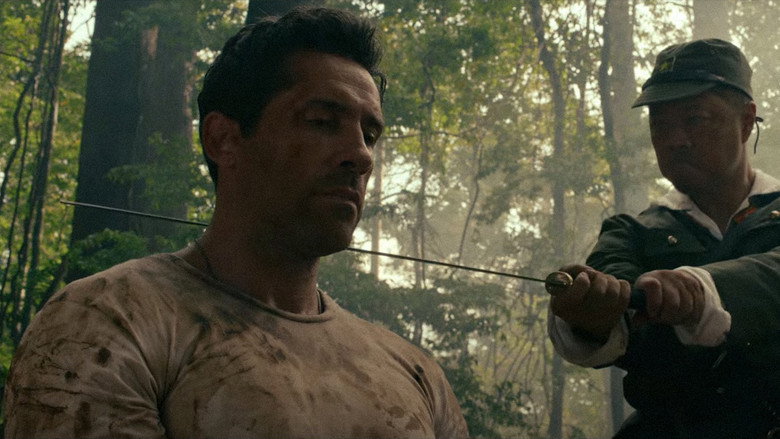
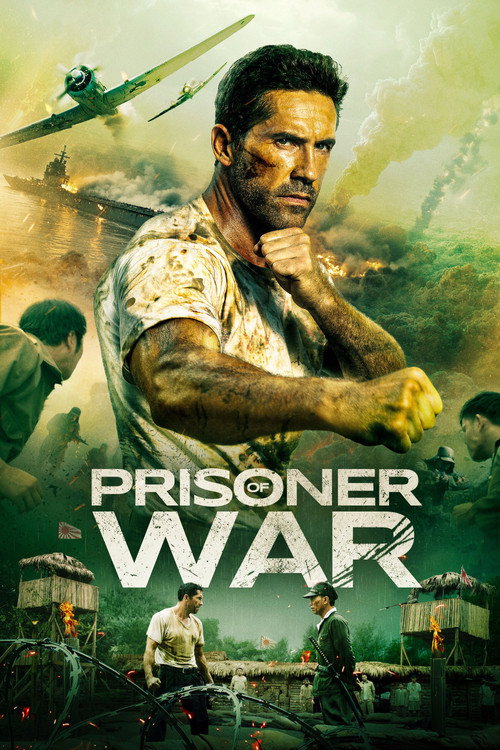
The setup. RAF Wing Commander James Wright is shot down over the Philippines and captured by Japanese forces early in the Pacific war. He is delivered into a prison camp commanded by Lieutenant Colonel Benjiro Ito, where the film's central mechanism is revealed: Ito stages brutal death matches between prisoners as entertainment for his officers. Wright's fighting ability makes him instantly valuable, which is both his protection and his cage.
The moral trap. The middle of the film turns on the compromise this arrangement forces. Wright's survival in the pit is what keeps him and, by extension, his fellow prisoners viable — but it also makes him a functioning part of the machinery of their humiliation. The relationships he builds with Captain Collins, Villanueva, Jonesy and The Beard convert his private endurance into collective responsibility, and it is that shift that makes the escape plan possible.
The turn. The prisoners commit to breaking out of the camp. The escape attempt is the film's third-act engine, and it is deliberately positioned against a historical deadline: the entire prisoner population is destined for the Bataan Death March, the real 1942 atrocity in which thousands of Filipino and American soldiers died. This is the film's most important structural reveal — the camp was never the worst thing coming.
The retrospective meaning. Knowing the march is the endpoint reframes everything that precedes it. Every bout Wright wins, every ration he earns, every day of life he purchases is revealed as a delay rather than a rescue. The death matches, which initially read as the film's central horror, retroactively become the smaller cruelty — a personalised, theatrical violence that at least acknowledged the prisoners as individuals, set against the industrial anonymity of the march that follows. The film's deepest argument emerges only in hindsight: that Wright's fight was never against Ito for survival, but against being erased, and that the act of being remembered as a named man is the only victory the history allowed.