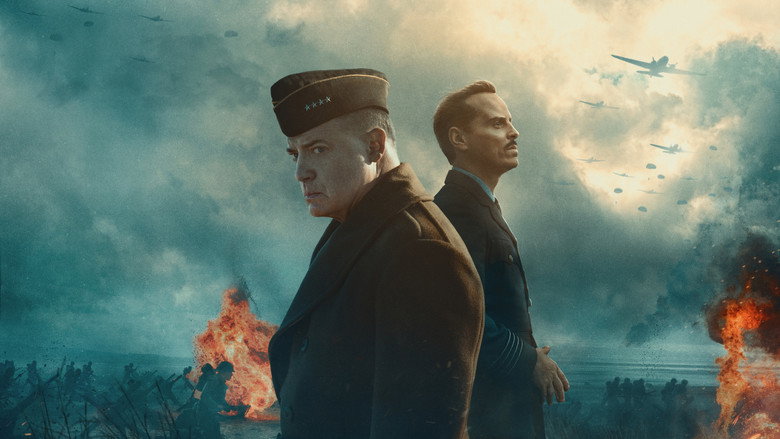
The film begins on June 2, 1944, with the Allied invasion fleet assembled for the planned D-Day launch on June 5. American forecaster Irving Krick insists high pressure over the Azores will guarantee fair skies and smooth sailing. However, across June 3–4, James Stagg discovers three merging low-pressure systems over the North Atlantic, predicting Gale Force 6 winds, heavy surf, and low cloud cover that will ground air support and flip landing craft. Despite ferocious pushback from military commanders, Stagg holds his ground.
Trusting Stagg, Eisenhower orders a 24-hour postponement of the June 5 assault at 04:30 on June 4. Outside, conditions violently deteriorate precisely as Stagg predicted, confirming that launching on June 5 would have resulted in catastrophe. Stagg subsequently identifies a temporary cold-front passage creating a narrow 24-to-36-hour break in the clouds and seas on June 6, followed immediately by renewed storms. If Eisenhower does not launch now, tidal conditions will not align again for two weeks, giving the Germans time to uncover the deception.
Eisenhower delivers his iconic decision: 'OK, let's go'. The film concludes with the armada setting sail into the break. The epilogue reveals that German meteorologists—relying on the same outdated methods as Krick—deemed the weather too poor for an Allied attack, leaving Normandy under-defended and German generals (including Rommel) away on leave.