Skip to content
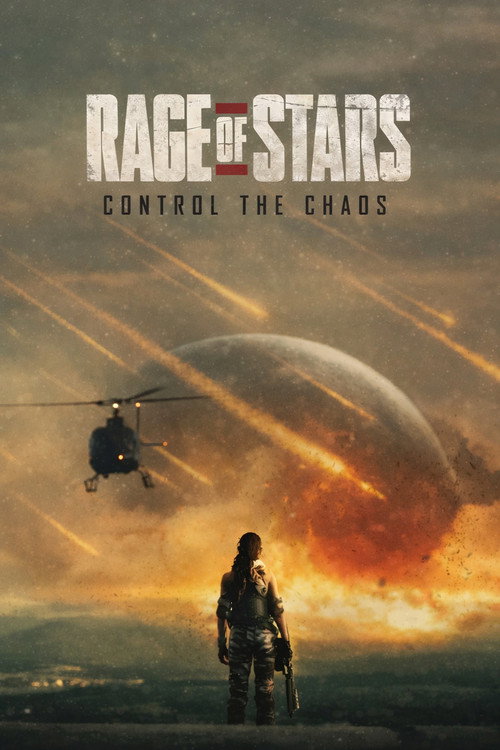
Rage of Stars
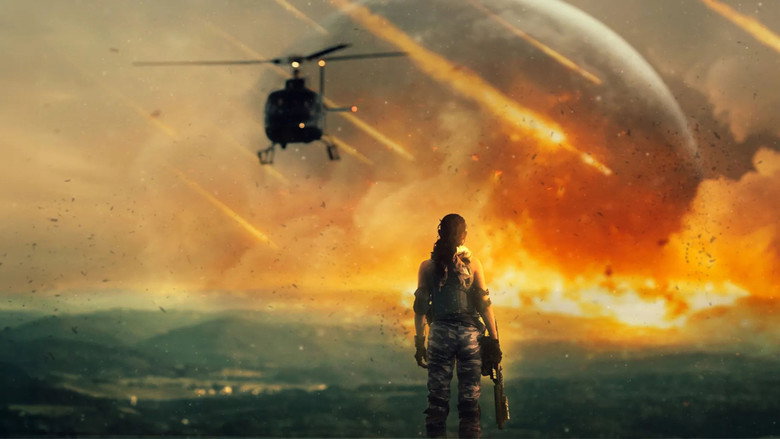
A cold, low-budget cosmic-dread thriller in which a soldier's mind becomes a cracked lens on the end of the world, with scarecrows and dead fields standing in for a sky that is about to fall.
Rage of Stars

Rage of Stars

06 August 2026 Poland 106 min 6.6 (206)

Director: Łukasz Róg

Cast: Andrea Tivadar, Jord Knotter, Jack McEvoy, Elijah Rowen, Małgorzata Klara

Action Thriller Science Fiction Fate versus free will Perception versus madness Distrust and institutional failure Lost children and the fragile future Cosmic insignificance

Overview

Rage of Stars (2026) is an English-language Polish action sci-fi thriller. It is written and directed by Łukasz Róg, and it is his feature debut. It is set in a chaotic near future. Jemma (Andrea Tivadar) is a hardened operator in an international special forces unit, and she is committed to justice. Her hold on reality is weakening because of nightmares and visions she can't classify as dreams, warnings or symptoms.

Children begin to disappear around the world. Jemma's visions turn into a pattern of eerie scarecrows and fields of dead animals, which point toward an ancient apocalyptic prophecy. Her superiors, led by the Commander (Małgorzata Klara), treat the visions as combat stress. Her squad includes Luk (Jord Knotter), the skeptical Kriss (Jack McEvoy) and the blunt Tom (Elijah Rowen). Distrust spreads through the team as unrest grows in the wider world.

The film mixes military-thriller action with cosmic-horror mystery. It asks whether the future is already written or can still be changed. It is based on Róg's award-winning short film No Stars Anymore.
Core Meaning

The film is about the gap between what one person perceives and what institutions are willing to believe. Jemma is trained to trust orders and evidence, but the truth reaches her through a channel that her career and her unit treat as madness. Róg's central question is whether foreknowledge of catastrophe gives the power to prevent it, or whether it only gives the burden of watching it arrive. Reviewers noted that the film asks if the future is a locked cage or a fluid river, and that it doesn't offer easy answers.

Thematic DNA

Perception versus madness 30%
Fate versus free will 25%
Distrust and institutional failure 20%
Lost children and the fragile future 15%
Cosmic insignificance 10%

Perception versus madness

Jemma's visions blur the line between duty and delusion. Her superiors write them off as combat stress, and her career suffers for it.

Fate versus free will

The team tries to change a future that Jemma feels is already written. The film leaves open whether that future is fixed.

Distrust and institutional failure

Distrust grows within her team and in society as unrest escalates. Official structures dismiss the one person who sees the pattern.

Lost children and the fragile future

The worldwide disappearance of children puts a human face on the threat. It also links the survival of the next generation to the end of humanity.

Cosmic insignificance

The stars going dark and an ancient prophecy set human conflicts against a much larger scale.

Character Analysis

Jemma

Andrea Tivadar

Archetype: Haunted hero Key Trait: Steely on the surface and vulnerable underneath

Motivation

To protect the missing children and to stop the catastrophe she foresees.

Character Arc

She moves from a pragmatic, efficient soldier who is dismissed as stressed to a fugitive who accepts that her visions are real. She tries to change a future she feels is already written.

Luk

Jord Knotter

Archetype: Loyal ally with a secret Key Trait: Grizzled and loyal

Motivation

Loyalty to Jemma and to his team.

Character Arc

He leads the squad and shares a quiet, unspoken bond with Jemma. He is described as a loyal friend who is hiding something.
All 5 characters and cast

Symbols & Motifs

Scarecrows

Meaning: Hollow watchers and false guardians. They stand for a warning that people ignore.
Context: They recur in Jemma's visions, accompanied by fields of dead animals, as signs of the ancient prophecy.

Fields of dead animals

Meaning: Nature's early warning of catastrophe. They stand for a world that is already dying.
Context: They are part of the pattern that links the vanished children to the apocalyptic prophecy.

Stars going dark

Meaning: The loss of cosmic order and of hope, and the film's central source of dread.
Context: Jemma's premonitions show cosmic collapse, which gives the film its title.

Missing children

Meaning: Futurelessness, and the innocence that is taken from the world.
Context: The disappearances set the plot moving and give Jemma's visions a concrete purpose.

Philosophical Questions

Is the future fixed or changeable?

The team tries to alter a future Jemma feels is already written. The film does not settle whether she is a witness to fate or a participant who can change it.

Can we trust perceptions that we can't verify?

Jemma's visions are dismissed as stress until one of them saves her squad. The film places a person's inner experience against institutional skepticism.

What do we owe the future?

The disappearing children link the apocalypse to the question of what responsibility the present has for coming generations.

How It Ends

Alternative Interpretations

The film can be read as a literal prophecy story or as a study of trauma. Jemma may be seeing a real, deterministic apocalypse, or her visions may be a psychological response to combat stress that the world's collapse then seems to confirm. Reviewers also described the central confrontation as less a battle than a philosophical debate with the end of the world itself.

Full ending explanation

Cultural Impact

The film is a small independent European production that aims for a Hollywood-scale look. Critics described it as a scrappy, ambitious B-movie, and one compared its visual ambition to Denis Villeneuve's. It has not become a major pop-culture event, and its reception has been modest. Several reviewers said it fits the mid-budget original science fiction that audiences claim to want, though it may not attract a wide audience.

Audience Reception

Reception is mixed to lukewarm. Letterboxd averages around 2.6 out of 5, while TMDB users gave it about 6.4 out of 10. Critics generally praised Andrea Tivadar's committed lead performance and the film's visual ambition for its small budget. They also noted that the action is well staged.

The main complaints concern a vague, convoluted story with pseudo-philosophical dialogue, thin supporting characters and a film that does not explain its own rules. Some viewers felt that little happened until the very end. One said that meteorites only appear in the last minute. Reviews described it as an ambitious but uneven film, a noble failure for some and a wait-for-streaming title for others.

Interesting Facts

  • It is Łukasz Róg's feature directing debut and was made by the independent Polish company Lukra Films, based in Rzeszów.
  • Róg is credited as writer, director, producer, editor and casting director. Wojciech Pawłowski was the cinematographer.
  • The feature is based on a multi-award-winning short film called No Stars Anymore.
  • Filming took place in Poland, in Rzeszów, although the film is in English with a multinational cast.
  • Viewers report that it was made for about $500,000, which is unusually small for its scale.
  • Its release date is 6 August 2026, with a Polish date of 16 October 2026 listed. Sources give runtimes ranging from 98 to 106 minutes.

Frequently Asked Questions

Explore More About This Movie

Dive deeper into specific aspects of the movie with our detailed analysis pages

Comments (0)

Leave a comment

No comments yet. Be the first to share your thoughts!

Similar Movies