Skip to content
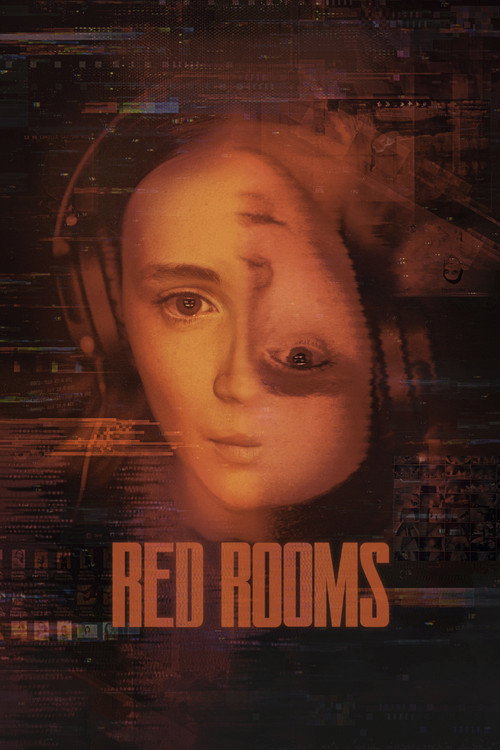
Red Rooms
A chilling, clinical cyber-thriller drenched in quiet dread, where human voyeurism becomes an abyss of digital glass reflecting the monstrous darkness we secretly crave.
Red Rooms

Red Rooms

Les Chambres rouges

"We see you, and you are obscene."

11 August 2023 Canada 118 min 7.1 (526)

Director: Pascal Plante

Cast: Juliette Gariépy, Laurie Babin, Élisabeth Locas, Maxwell McCabe-Lokos, Natalie Tannous

Crime Thriller Voyeurism and the Commodification of True Crime Digital Alienation and Virtual Dissociation Hybristophilia and the Cult of the Accused The Mechanisms of Justice vs. Ambiguous Morality
Box Office: $147,552

Overview

Red Rooms (Les Chambres rouges), written and directed by Quebecois filmmaker Pascal Plante, centers on the high-profile Montreal trial of Ludovic Chevalier. Chevalier is accused of the gruesome kidnapping, torture, and livestreamed murder of three teenage girls on the encrypted dark web inside illicit pay-per-view chatrooms known as 'red rooms'. Although the prosecution possesses recovered videos documenting the slaughter of two victims, the killer wore a balaclava, leaving just enough circumstantial doubt for Chevalier's defense to exploit. Crucially, the snuff footage of the third and youngest victim, 13-year-old Camille Beaulieu, remains undiscovered by law enforcement.

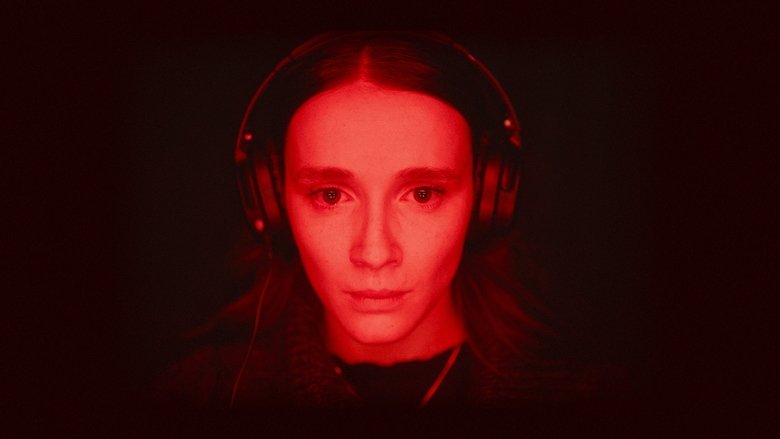
Obsessively drawn to the case is Kelly-Anne, an aloof fashion model, high-stakes online poker player, and adept coder who sleeps on the pavement outside the Palais de justice every night to secure a coveted seat in the gallery. In the courtroom, she crosses paths with Clémentine, a hyper-emotional young woman and Chevalier groupie convinced of the accused man's total innocence. As the trial unfolds, Kelly-Anne takes the naive Clémentine under her wing, inviting her into her sterile, high-rise apartment.

While Clémentine's fixation is loudly personal and emotionally externalized, Kelly-Anne's motives remain completely opaque. Navigating both the rigidly controlled semiotics of the physical courtroom and the underground economy of the dark web, Kelly-Anne embarks on an increasingly dangerous pursuit to track down the missing third video—blurring the line between detached investigative obsession and disturbing psychological immersion.

Core Meaning

Director Pascal Plante conceived Red Rooms as an indictment and psychological examination of society's insatiable appetite for true crime and the macabre. The film deliberately refrains from displaying explicit gore on screen, focusing instead on the spectatorship surrounding atrocity.

The central message explores how modern digital alienation and commodified trauma transform real-life tragedy into detached consumer spectacle. By positioning the protagonist as an ambiguous observer rather than a conventional hero or villain, Plante turns the camera back onto the audience, confronting viewers with their own voyeurism, complicity, and the unsettling psychological gratifications derived from engaging with extreme evil.

Thematic DNA

Voyeurism and the Commodification of True Crime 40%
Digital Alienation and Virtual Dissociation 25%
Hybristophilia and the Cult of the Accused 20%
The Mechanisms of Justice vs. Ambiguous Morality 15%

Voyeurism and the Commodification of True Crime

The film dissects the cultural phenomenon where brutal horrors are consumed as casual entertainment, highlighting the moral rot when human suffering is reduced to media narratives, clicks, or cryptocurrency transactions.

Digital Alienation and Virtual Dissociation

Revealed through Kelly-Anne's screen-dominated life; her impersonal high-rise apartment and algorithmic routines mirror a society disconnected from genuine human empathy, engaging with horrific reality through filtered interfaces.

Hybristophilia and the Cult of the Accused

Explored through the juxtaposition of Clémentine's naive romanticization of Chevalier and Kelly-Anne's far more complex, psychosexual fixation on the predator-victim dynamic.

The Mechanisms of Justice vs. Ambiguous Morality

Revealed through the stark contrast between the bright, procedural, and evidentiary limitations of the legal system and Kelly-Anne's shadowy, extrajudicial dark web investigations.

Character Analysis

Kelly-Anne

Juliette Gariépy

Archetype: The Enigmatic Antihero / Inscrutable Obsessive Key Trait: Hyper-disciplined, mathematically brilliant, emotionally impenetrable.

Motivation

To penetrate the ultimate secret of the killings and possess the definitive missing artifact of the crime.

Character Arc

Moves from a passive, detached courtroom observer to an active, transgressive participant who acquires the snuff film and breaks into the victim's home to deliver justice on her own terms.

Clémentine

Laurie Babin

Archetype: The Naive Groupie / Empathic Foil Key Trait: Emotionally volatile, impressionable, socially vulnerable.

Motivation

To validate her emotional infatuation and prove that Chevalier is an innocent victim of a witch hunt.

Character Arc

Starts as a vocal, delusional defender of Chevalier; is forced into harsh disillusionment when exposed to the undeniable cruelty of the evidence, eventually recanting publicly.

All 4 characters and cast

Symbols & Motifs

The Virtual Assistant 'Guinevere' (Guenièvre)

Meaning:

Symbolizes artificial companionship, total surveillance, and the illusion of connection in modern isolation, while its Arthurian name parallels the underlying quest motifs in Kelly-Anne's compartmentalized life.

Context:

Used systematically inside Kelly-Anne's sterile apartment during her daily routine before she operates her multi-screen dark web command center.

The Balaclava

Meaning:

Represents the erasure of identity, moral disinhibition, and the dark web's shield of unaccountability.

Context:

Worn by the killer during the snuff livestreams and later mirrored in Kelly-Anne's digital anonymity and masked presence.

The Schoolgirl Uniform and Retainer

Meaning:

Symbolizes the macabre blurring of identity, psychological provocation, and the intrusion of the murdered victim's ghost into the physical courtroom.

Context:

Worn by Kelly-Anne when attending trial, mirroring the exact appearance, styling, and orthodontic braces of the murdered 13-year-old Camille Beaulieu.

Online Poker and Cryptocurrencies

Meaning:

Represents Kelly-Anne's cold, calculated detachment, treating life, death, and human agony as probabilistic equations and transaction fees.

Context:

Utilized by Kelly-Anne to generate wealth and win the digital dark web auction for the missing snuff footage.

The Alleyway vs. The Penthouse

Meaning:

Illustrates the extreme, irrational lengths of Kelly-Anne's obsession and her fractured psychological state.

Context:

Contrasts Kelly-Anne sleeping on cardboard on urban pavement outside the courthouse with her return to her minimalist luxury condo.

Memorable Quotes

Au-delà de tout doute raisonnable...
— Defense Attorney Maître Richard Fortin / Courtroom Prosecutor

Context

Spoken during the trial proceedings in the opening sequence to set the procedural stakes of the case.

Meaning

Establishes the stringent legal barrier that the state must overcome due to the killer wearing a mask in the recovered snuff footage.

Il est innocent, c'est évident! C'est une chasse aux sorcières.
— Clémentine

Context

Spoken into media microphones outside the Palais de justice during public protests.

Meaning

Demonstrates her parasocial fixation, deep denial, and the hybristophilic impulse to exonerate a serial predator.

All 4 quotes

Philosophical Questions

Is passive observation of atrocity an act of moral violence?

The film examines whether consuming depictions of extreme human cruelty without intervening renders the spectator complicit in the harm.

Does true-crime media honor victims or exploit their deaths for entertainment?

It investigates how sensational media coverage transforms genuine human grief into consumable narrative puzzles, commodifying trauma.

Can an act be morally righteous if driven by perverse or selfish motives?

Kelly-Anne facilitates ultimate legal justice for the Beaulieu family, yet her underlying impulses and methods remain profoundly disturbing and boundary-violating.

Alternative Interpretations

Critics and viewers interpret the narrative and Kelly-Anne's actions through three main frameworks:

Full ending explanation

Cultural Impact

Released in 2023 and gaining widespread international acclaim, Red Rooms emerged during the peak of mainstream cultural obsession with true-crime podcasts, dramatized serial killer series, and sensationalized legal coverage.

The film achieved critical acclaim at the Karlovy Vary International Film Festival and swept the Fantasia Film Festival, winning the Cheval Noir for Best Feature, Best Screenplay, Best Score, and Best Performance for Juliette Gariépy, alongside a 96% critical score on Rotten Tomatoes. It is widely recognized as a defining modern French-Canadian neo-noir and techno-thriller, showing how disciplined independent cinema can dissect the digital zeitgeist.

Audience Reception

Red Rooms received universal praise from critics and audiences for Juliette Gariépy's commanding, impassive performance, Pascal Plante's surgical direction, Vincent Biron's sleek cinematography, and Dominique Plante's nerve-shredding score. Audiences particularly lauded the decision to generate extreme psychological dread without relying on graphic on-screen violence.

Minor criticisms noted the deliberately cold, slow-burn pacing and questioned specific procedural choices, such as delivering the evidence directly to the mother rather than authorities. The courtroom confrontation where Kelly-Anne cosplays as the murdered victim Camille was widely hailed as one of the most provocative and chilling sequences in modern thriller cinema.

Interesting Facts

  • Principal photography took place on location in Montreal in late 2022 over just 23 shooting days on a modest indie budget.
  • The haunting musical score was composed by Dominique Plante, brother of director Pascal Plante, marking his debut feature film score and winning major festival awards.
  • Pascal Plante wrote the screenplay while listening heavily to avant-garde artists such as Lingua Ignota and Australian industrial artist Uboa (specifically the album The Origin of My Depression).
  • Director Pascal Plante adhered to a strict ethical rule never to display the simulated snuff violence directly on camera, relying entirely on sound design and courtroom reactions.
  • The film opens with a virtuoso, unbroken single-take camera movement through the courtroom establishing all key parties without a single cut.

Easter Eggs

Arthurian Legend (Camelot / Guinevere)

Kelly-Anne's operating environment and AI assistant are named after Guinevere (Guenièvre), framing her solitary quest with subtle Arthurian subtext as a knight pursuing a forbidden Holy Grail artifact in a corrupt world.

Dark Web Mythology

The term 'Red Room' directly references the longstanding internet urban legend originating on Tor and imageboards regarding underground, interactive pay-per-view torture livestreams funded by cryptocurrency.

Cinematic Echoes of Funny Games and Refn

Engages with the ethical spectatorship critique of Michael Haneke's Funny Games alongside the sleek, atmospheric neo-noir stillness associated with Nicolas Winding Refn.

Frequently Asked Questions

Explore More About This Movie

Dive deeper into specific aspects of the movie with our detailed analysis pages

Comments (0)

Leave a comment

No comments yet. Be the first to share your thoughts!

Similar Movies