
Skip to content
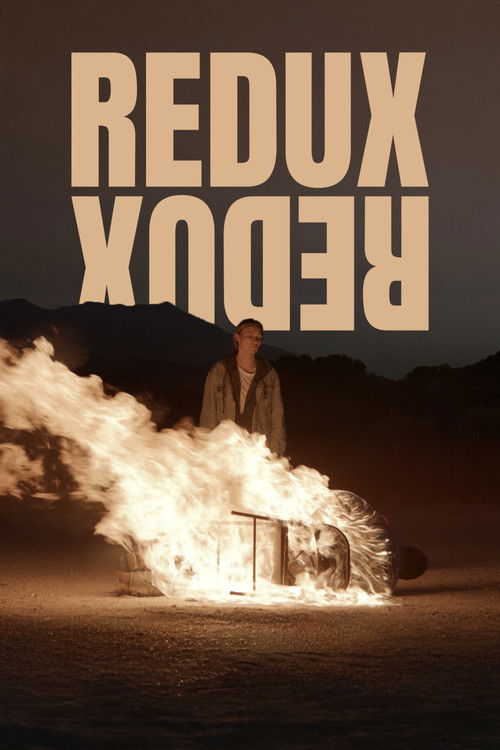
Redux Redux
A grieving mother turns revenge into a ritual, hopping worlds to murder the same man forever — a fluorescent-lit fever dream where love calcifies into an endless, echoing gunshot.
Redux Redux

Redux Redux

"Revenge is a vicious cycle."

28 December 2025 United States of America 109 min 6.7 (225)

Director: Kevin McManus, Matthew McManus

Cast: Michaela McManus, Stella Marcus, Jeremy Holm, Jim Cummings, Taylor Misiak

Crime Thriller Science Fiction Horror Grief as an Endless Loop The Diminishing Returns of Vengeance Inheritance and the Transmission of Violence Motherhood After Loss The Mundane Multiverse

Overview

Redux Redux follows Irene Kelly (Michaela McManus), a mother whose daughter Anna was murdered by a cook named Neville. Armed with a jury-rigged universe-hopping machine, Irene crosses into parallel worlds to find Neville's other selves and kill them, one after another, in a grinding routine of motels, diners, back roads and rest stops. The sci-fi apparatus is deliberately unglamorous: this is a multiverse of laundromats and gas-station coffee rather than cosmic spectacle.

The problem is arithmetic. Each kill delivers a smaller return than the last, and the ritual that once felt like justice has hardened into a compulsion Irene can no longer distinguish from a job. Written and directed by siblings Kevin and Matthew McManus — with their sister Michaela in the lead — the film treats the multiverse less as a playground than as a treadmill, the perfect machine for a person who cannot stop.

Everything shifts when Irene encounters Mia (Stella Marcus), a sharp-witted teenager already marked by the killer and disturbingly eager to follow Irene's example. What began as a lean revenge thriller becomes a question about inheritance: what exactly is being passed down, and to whom. Jeremy Holm plays Neville, with Jim Cummings and Taylor Misiak rounding out the cast.


Core Meaning

The McManus brothers use a low-fi science-fiction premise to make a simple, devastating argument: revenge is not an event but an appetite, and an appetite with infinite supply will eat the person feeding it. Where most revenge films end at the moment of retribution, Redux Redux begins after it and asks what happens on kill number forty.

The multiverse here is not a fantasy of possibility but a diagnosis of grief — the mind of a mourner that replays the same loss and the same imagined correction without ever arriving anywhere new. The machine only externalizes what Irene was already doing internally. The film's final move is to suggest that the only exit from the loop is lateral rather than forward: not a better kill, but another living person to be responsible for. Meaning is not recovered by undoing the loss; it is rebuilt by refusing to pass the loss on.

Thematic DNA

Grief as an Endless Loop 30%
The Diminishing Returns of Vengeance 25%
Inheritance and the Transmission of Violence 20%
Motherhood After Loss 15%
The Mundane Multiverse 10%

Grief as an Endless Loop

Irene's world-hopping is a literalization of bereaved repetition: the same man, the same crime, the same ending, over and over. Critics described the film as rendering grief as an ouroboros — a circle that consumes its own tail. The multiverse device guarantees that her loss can never be resolved, only re-encountered, which is exactly the trap of mourning without ritual or end.

The Diminishing Returns of Vengeance

The film's central mechanism is tolerance, in the pharmacological sense. Each act of vengeance yields less satisfaction than the last, so Irene needs more of it to feel anything at all. Revenge becomes addiction, complete with routine, supply chain and denial, and the film tracks the cost in her steadily eroding humanity rather than in body count.

Inheritance and the Transmission of Violence

Mia is the theme made flesh: a young survivor eager to take up Irene's methods. Watching a teenager idolize her habit forces Irene to see her own behavior from outside, as something teachable and therefore contagious. The question becomes whether she is a protector or a recruiter.

Motherhood After Loss

Irene's identity as a mother has no object left, so it attaches to killing instead. The arrival of Mia — who comes to function as a second daughter — offers the possibility of redirecting that thwarted care toward someone who can actually receive it, reframing the film as a story about parenting rather than punishment.

The Mundane Multiverse

The filmmakers deliberately built a multiverse of ordinary American spaces — kitchens, motels, roadside diners — rather than spectacle. The refusal of wonder is thematic: infinite worlds turn out to be depressingly finite when you only ever visit them to do one thing.

Character Analysis

Irene Kelly

Michaela McManus

Archetype: Antihero / avenging mother Key Trait: Relentless

Motivation

To keep killing the man who murdered her daughter Anna until the act finally feels like enough — and, beneath that, to remain a mother by any means available.

Character Arc

Begins as a mourner with a mission and gradually becomes a professional of violence, her satisfaction shrinking as her competence grows. Encountering Mia cracks the routine open and forces a choice between continuing the cycle and becoming responsible for someone alive.

Mia

Stella Marcus

Archetype: Protégée / surrogate daughter Key Trait: Sharp-witted

Motivation

Survival first, then the same intoxicating promise that hooked Irene: that hurting the man who hurt you will make it stop.

Character Arc

Introduced as a victim discovered in Neville's home, she proves fierce and resourceful, and quickly becomes eager to adopt Irene's methods. Her appetite for vengeance holds a mirror up to Irene and ultimately becomes the film's moral fulcrum.

All 4 characters and cast

Symbols & Motifs

The universe-hopping machine

Meaning:

A homemade contraption that stands for the mechanization of mourning — grief converted into a repeatable process with a power switch.

Context:

Deliberately unglamorous and jury-rigged rather than sleek, it is Irene's tool of trade, the thing she maintains the way an addict maintains a supply.

The doubled title

Meaning:

Redux means brought back, restored; doubling it enacts the film's structure — repetition of a repetition, with no original left to return to.

Context:

The title functions as the movie's thesis in two words, and as a wry nod to the language of endlessly revisited film versions.

Neville's many faces

Meaning:

The killer as an infinitely reproducible object rather than a person: proof that eliminating an individual can never eliminate the harm he represents.

Context:

Jeremy Holm plays Neville across variants, each one a slightly different man leading a slightly different life before Irene arrives.

Mia bound in Neville's house

Meaning:

A mirror of Anna's fate and Irene's one genuine chance to change an outcome instead of merely avenging one — rescue rather than retribution.

Context:

Irene enters a universe intending another kill and finds a living girl who needs help, which redirects the entire film.

Anonymous roadside America

Meaning:

Motels, diners and parking lots as the geography of a person with no home to return to; interchangeable places for an interchangeable act.

Context:

The film's mundane settings recur across universes, so that difference itself becomes unnoticeable.

Philosophical Questions

If you could kill your child's murderer infinitely many times, would justice ever be served?

The film grants its protagonist a resource no real mourner has — unlimited opportunity — and shows that the deficit was never in supply. Each death is complete and each one changes nothing, suggesting that what Irene wants (her daughter back, the world made right) is categorically unavailable through violence.

Is a person who has committed no crime in this world still guilty?

Every Neville Irene kills is, locally, innocent of Anna's murder. The film refuses to let her — or the audience — enjoy the kills without registering that she is executing men for crimes committed by someone else wearing the same face.

Can grief be an identity, and what remains when it is set down?

Irene's mission is the only structure holding her together; ending it is not relief but exposure. The film treats the prospect of stopping as genuinely frightening rather than obviously good.

Does protecting someone justify teaching them to kill?

Mia's mentorship dynamic forces the question of whether passing on survival skills is care or corruption, and whether Irene can give the girl anything that is not shaped by what was done to her own daughter.

If everything that can happen does happen, does any choice matter?

The mundane multiverse strips choice of cosmic weight — every option is being taken somewhere — leaving only the local, personal question of what this Irene does with this girl in this room.

Alternative Interpretations

The redemption reading. Mia's arrival is exactly what it appears to be — a genuine off-ramp. Irene's decision to protect rather than recruit breaks the cycle, and the film ends as a story about the possibility of parenting your way out of despair.

Full ending explanation

Cultural Impact

Redux Redux arrived at a moment of pronounced multiverse fatigue, and much of its reception framed it as a corrective. Critics noted that a scrappy sibling-made indie managed to find genuine emotional stakes in a device that large studio franchises had exhausted — one outlet argued the McManuses' film "puts the MCU to shame." That the script predated the trend by a decade gave the movie an unusual claim to sincerity rather than opportunism.

It also sits pointedly in the lineage of the American revenge film. Reviewers reached back past fifty years of Death Wish descendants to argue that the McManuses had found a legitimately new angle, and compared the result to a hybrid of The Terminator and Terminator 2, Groundhog Day and Prisoners. Its SXSW Midnighters premiere drew rave notices and a 98% Rotten Tomatoes score, and the film subsequently traveled to genre showcases including Sitges before Saban Films gave it a North American release on February 20, 2026.

Its most likely durable influence is as a proof of concept: evidence that the multiverse is available to micro-budget filmmakers as an emotional metaphor rather than a VFX line item.

Audience Reception

Reception was strongly positive. The film premiered to rave reviews in the SXSW Midnighters slot and held a 98% Rotten Tomatoes score coming out of its festival run, while general audience scoring settled more moderately — IMDb users have it in the low-to-mid 6s, a gap that usually signals a film critics find conceptually exciting and casual viewers find demanding.

Praised: Michaela McManus's lead performance, repeatedly singled out as powerful and the film's emotional engine; the originality of the premise, especially the decision to make the multiverse mundane; Alan Gwizdowski's widescreen cinematography and Paul Koch's synth score, which reviewers credited with real atmospheric heft; and the ambition achieved on an evidently small budget.

Criticized: the most common complaint concerns pacing — that the middle stretch loses momentum, a structural hazard for a film about repetition. Some viewers also expected a straighter genre thriller than the grief drama they got.

Verdict: a heartfelt, haunting and genuinely original revenge picture that, in the words of one review, sticks the landing even when the middle sags.

Interesting Facts

  • Kevin and Matthew McManus began writing the script roughly ten years before release — well before the multiverse became a dominant pop-culture trend.
  • The lead, Michaela McManus, is the directors' sister, making the film a three-sibling collaboration.
  • Redux Redux is the first film produced under the McManus brothers' new studio, Mothership Motion Pictures.
  • The brothers produced the film alongside Michael J. McGarry, Nate Cormier and PJ McCabe.
  • The film premiered at the 2025 South by Southwest Film & TV Festival in the Midnighters section.
  • Saban Films released the film in North America on February 20, 2026.
  • The directors have cited The Terminator as a key influence, describing their approach as applying Terminator-style time-travel logic to a multiverse story.
  • Cinematography is by Alan Gwizdowski, working in widescreen compositions praised by critics.
  • The score is a propulsive synth soundtrack by Paul Koch.
  • Kevin and Matthew McManus previously directed episodes of the Netflix series American Vandal.
  • The film played the festival circuit widely after SXSW, including Sitges and Leeds International Film Festival.
  • It held a 98% score on Rotten Tomatoes following its festival run.

Frequently Asked Questions

Explore More About This Movie

Dive deeper into specific aspects of the movie with our detailed analysis pages

Comments (0)

Leave a comment

No comments yet. Be the first to share your thoughts!

Similar Movies