Roman Holiday
A bittersweet romantic comedy that unfolds like a reverse-fairy tale against the sun-drenched backdrop of 1950s Rome, capturing the fleeting magic of freedom and impossible love.
Roman Holiday

Roman Holiday

26 August 1953 United States of America 119 min ⭐ 7.9 (2,170)
Director: William Wyler
Cast: Audrey Hepburn, Gregory Peck, Eddie Albert, Hartley Power, Harcourt Williams
Drama Comedy Romance
Duty vs. Freedom The Nature of Love and Sacrifice Identity and Self-Discovery Deception and Authenticity
Budget: $1,500,000
Box Office: $12,000,000

Overview

"Roman Holiday" tells the charming story of Princess Ann, the young and elegant royal of an unnamed European nation, who is on a highly publicized goodwill tour of Europe. Overwhelmed and exhausted by her restrictive schedule and official duties, she has a breakdown in Rome and secretly escapes the confines of her country's embassy to experience a normal life, if only for a day.

A sedative given to her by her doctor earlier begins to take effect, and she falls asleep on a public bench. She is discovered by Joe Bradley, an American journalist living in Rome, who, not recognizing her, takes her back to his modest apartment out of concern. The next morning, Joe realizes his guest is the missing princess and sees the opportunity for an exclusive, career-making story. Concealing his profession, he offers to show her the sights of Rome. Ann, calling herself "Anya," eagerly accepts, wanting to do all the things she's never been allowed to do.

Together, they embark on a whirlwind tour of the city, creating unforgettable memories as they visit iconic landmarks, get a spontaneous haircut, and recklessly ride a Vespa through the chaotic Roman traffic. Joe's photographer friend, Irving Radovich, secretly tags along, capturing candid photos of the princess's adventure. As the day unfolds, the professional arrangement evolves into a genuine and tender romance, forcing both Ann and Joe to confront the reality of their vastly different worlds and the inevitable end of their brief, enchanting holiday.
Core Meaning

The central message of "Roman Holiday" revolves around the conflict between personal desire and public duty, and the bittersweet nature of cherished memories. The director, William Wyler, explores the idea that true freedom is not about escaping responsibility, but about having the autonomy to make one's own choices, even if those choices lead back to duty. The film suggests that a single day of authentic experience and genuine connection can be more profound and life-altering than a lifetime of prescribed routine. Ultimately, it conveys that some of the most beautiful moments in life are fleeting, and their value lies not in their permanence but in the lasting impact they have on who we become. The ending, where love is sacrificed for duty, underscores a mature and poignant understanding of love and responsibility.

Thematic DNA

Duty vs. Freedom 35%
The Nature of Love and Sacrifice 30%
Identity and Self-Discovery 20%
Deception and Authenticity 15%

Duty vs. Freedom

This is the film's central conflict, embodied by Princess Ann. She feels suffocated by her royal obligations and yearns for the simple freedoms of an ordinary life. Her escape into Rome is a literal and metaphorical journey towards personal liberation. She cuts her hair, tries new foods, and acts on impulse for the first time. However, the film concludes with her mature acceptance of her responsibilities, suggesting that true growth involves integrating personal desires with one's duties, rather than completely abandoning them. Her choice to return is not a defeat, but a conscious decision made from a place of newfound self-awareness.

The Nature of Love and Sacrifice

The romance between Ann and Joe develops organically from a situation of mutual deception into genuine affection. Joe's initial motivation is a big journalistic scoop, but he falls for Ann's spirit and vulnerability. The relationship is ultimately defined by sacrifice. Joe gives up his story to protect her, and Ann gives up a potential life with him to serve her country. Their love story is poignant because it is not about a "happily ever after," but about a profound connection that changes them both, even though it cannot last.

Identity and Self-Discovery

By shedding her royal identity and becoming "Anya," Princess Ann is able to discover who she truly is. Away from the palace, she is no longer just a symbol but a person with her own desires and opinions. This journey of self-discovery is transformative; she returns to her duties not as a rebellious girl, but as a confident and mature woman who has experienced life on her own terms. Similarly, Joe, the cynical reporter, rediscovers his integrity and capacity for selfless love.

Deception and Authenticity

The plot is driven by deception: Ann hides her royal identity, while Joe conceals his profession. This initial dishonesty ironically allows them to form an authentic connection, as they are free from the pretenses of their usual roles. The iconic "Mouth of Truth" scene directly plays with the theme of honesty and lying. The film suggests that moments of genuine emotion and truth can emerge from contrived situations, and ultimately, their final, silent acknowledgments at the press conference are more honest than any of their earlier words.

Character Analysis

Princess Ann ('Anya Smith')

Audrey Hepburn

Archetype: The Innocent
Key Trait: Graceful Rebellion

Motivation

Her primary motivation is to escape the suffocating confines of her royal life and experience personal freedom. She longs for anonymity and the ability to make simple, everyday choices for herself, to feel like a normal young woman rather than a state institution.

Character Arc

Princess Ann begins as a sheltered, dutiful, yet deeply frustrated young royal. Her escape allows her to experience life as an ordinary person, leading to a rapid maturation. Through her day of freedom with Joe, she discovers her own desires, strengths, and capacity for love. She returns to her duties not out of obligation, but with a newfound sense of purpose and self-awareness, transformed from a girl into a poised and wise leader who understands the weight of her choices.

Joe Bradley

Gregory Peck

Archetype: The Cynic with a Heart of Gold
Key Trait: Charming Cynicism

Motivation

Initially, Joe is motivated by money and professional ambition. He sees Princess Ann as an exclusive interview that could be worth a fortune. This motivation shifts as he falls in love with her, and his new goal becomes ensuring her happiness and protecting her privacy.

Character Arc

Joe Bradley starts as an ambitious, somewhat jaded American reporter, eager for a big story to advance his career. Initially, he sees Princess Ann as a meal ticket. However, as he spends the day with her, his cynicism melts away, replaced by genuine affection and admiration. His arc is one of moral transformation: he chooses love and integrity over professional gain, ultimately sacrificing the story of a lifetime to protect the woman he has come to love.

Irving Radovich

Eddie Albert

Archetype: The Sidekick/Comic Relief
Key Trait: Pragmatic Loyalty

Motivation

Irving is motivated by the prospect of capturing exclusive, sensational photographs of the princess's escapade, which would be incredibly valuable. He is driven by a mix of professional opportunism and his friendship with Joe.

Character Arc

Irving is Joe's loyal and opportunistic photographer friend. He serves primarily as comic relief and a practical-minded foil to Joe's growing romanticism. While he is initially just as excited about the potential payday from the secret pictures of the princess, he ultimately shows his loyalty and good heart by siding with Joe and giving the photos to Ann as a memento, demonstrating that he too values their experience over profit.

Symbols & Motifs

Vespa Scooter

Meaning:

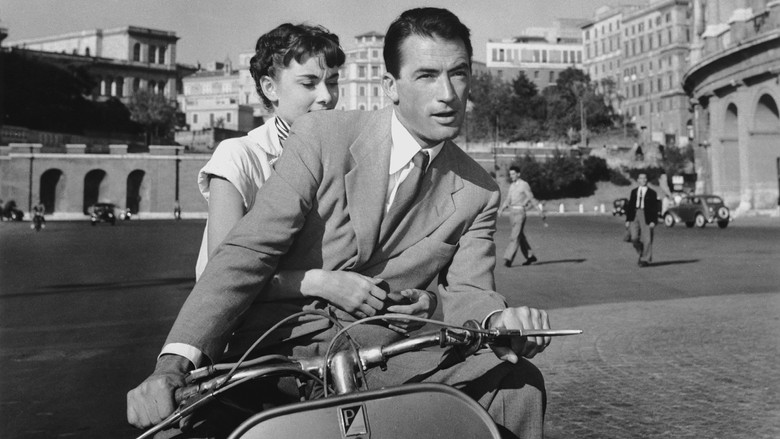
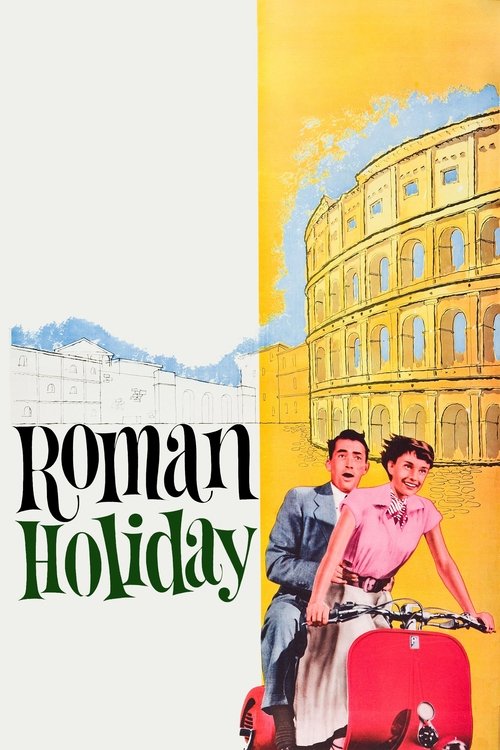
The Vespa represents freedom, spontaneity, and the youthful, carefree spirit of their day in Rome. It allows Ann and Joe to navigate the city on their own terms, weaving through traffic and exploring hidden corners. The image of them on the scooter has become an enduring symbol of Italian romance and the joy of breaking free from constraints.

Context:

During their tour of Rome, Joe rents a Vespa. Ann, in a moment of playful rebellion, takes the handlebars and drives recklessly through the city's streets, leading to a comical chase and a run-in with the police. This scene encapsulates the exhilarating and slightly dangerous nature of her newfound freedom.

The Mouth of Truth (Bocca della Verità)

Meaning:

This ancient stone carving serves as a potent symbol of honesty, trust, and the underlying deception in Ann and Joe's relationship. The legend that it will bite off the hand of a liar directly challenges them both. Joe's playful prank and Ann's genuine fear create a moment of authentic connection, despite their hidden truths. It's a test of their burgeoning feelings and the moment their relationship deepens.

Context:

Joe takes Ann to see the Mouth of Truth and tells her the legend. To test her, he has her put her hand in. When it's his turn, he pretends his hand has been bitten off, eliciting a real scream of terror from Ann, followed by relief and laughter. This iconic scene was famously improvised by Gregory Peck.

Memorable Quotes

I have to leave you now. I'm going to that corner there and turn. You must stay in the car and drive away. Promise not to watch me go beyond the corner. Just drive away and leave me as I leave you.

— Princess Ann

Context:

At the end of their day, Joe drives Ann to a corner near her embassy. Knowing her holiday is over, she gives him these specific, poignant instructions for their final goodbye, trying to make a clean break from the freedom and love she has found.

Meaning:

This quote marks the heartbreaking, yet mature, end of their day together. It encapsulates the bittersweet nature of their romance—a mutual and dignified acceptance that their worlds are too far apart. It is a moment of profound sadness, handled with grace and restraint, highlighting Ann's return to her duties.

Rome! By all means, Rome. I will cherish my visit here in memory as long as I live.

— Princess Ann

Context:

During the formal press conference at the end of the film, a reporter asks Princess Ann which of the cities she visited she enjoyed the most. After a moment of diplomatic hesitation, she breaks protocol to give this heartfelt and meaningful answer, looking towards Joe in the crowd.

Meaning:

Spoken during the final press conference, this line is a coded message directly to Joe. While on the surface she is answering a generic question, the emphasis on "Rome" and the heartfelt delivery convey the profound and lasting impact her day of freedom and her time with him has had on her. It is her way of telling him, and only him, that their time together was real and will never be forgotten.

At midnight, I'll turn into a pumpkin and drive away in my glass slipper.

— Princess Ann

Context:

As the day's adventure is winding down and reality is setting in, Ann makes this remark to Joe. It's a whimsical yet sad acknowledgment that their time together is borrowed and that her "fairy tale" of being an ordinary girl is coming to an end.

Meaning:

This line is a witty and poignant reference to the Cinderella fairy tale, but in reverse. Ann acknowledges the magical, fantasy-like quality of her day of freedom, but also its fleeting nature. She is aware that she must return to her restrictive reality, just as Cinderella's magic had a deadline. It's a moment of bittersweet self-awareness.

Philosophical Questions

Can a single day of freedom fundamentally change a person's life?

The film argues a resounding "yes." Princess Ann's 24 hours of anonymity in Rome are not just a simple escape but a profound journey of self-discovery. The experiences she has—from getting a haircut on a whim to falling in love—allow her to understand herself outside of her rigid royal identity. She returns to her duties fundamentally changed, more mature, confident, and with a deeper understanding of life and her place in it. The film posits that it is the quality and authenticity of experience, not the duration, that shapes us.

Is it nobler to pursue personal happiness or to fulfill one's duty to others?

"Roman Holiday" presents this as its central dilemma without offering an easy answer. The film deeply romanticizes Ann and Joe's brief love affair, making the audience yearn for them to choose personal happiness together. However, it ultimately portrays Ann's decision to return to her duties as a noble and mature sacrifice. The film suggests that responsibility and duty have their own profound value and that true character is shown in honoring one's commitments, even at great personal cost. The poignancy of the ending lies in the fact that both choices—love and duty—are presented as valid and honorable.

Alternative Interpretations

While overwhelmingly viewed as a bittersweet romance, some modern interpretations re-frame "Roman Holiday" through a feminist lens. This perspective sees the film less as a love story and more as a tale of female liberation and self-actualization. In this reading, Joe Bradley is not just a romantic interest but a facilitator for Ann's journey of self-discovery. The primary goal of her "holiday" is not to find a man, but to find herself. The ending, therefore, is not a tragedy but a triumph. Ann doesn't 'lose' Joe; instead, she chooses to integrate her newfound independence and maturity into her public role, returning to her duty on her own terms as a fully realized woman, not as a sheltered girl. Her romance with Joe is a crucial, transformative experience, but not the ultimate prize. The film becomes a story about a woman claiming her own agency in a world that tries to control her.

Cultural Impact

"Roman Holiday" had a profound and lasting cultural impact. Released in the post-war era, it presented a charming, romanticized vision of Europe to American audiences, significantly boosting tourism to Rome and immortalizing landmarks like the Spanish Steps and the Mouth of Truth. The film single-handedly launched Audrey Hepburn into international stardom, and her gamine style—particularly the short haircut and chic, simple outfits designed by Edith Head—created a new, attainable ideal of beauty that was a departure from the more voluptuous Hollywood stars of the era. Hepburn became a fashion icon whose influence endures to this day.

The film's narrative has become a blueprint for the romantic comedy genre, influencing countless movies with its "opposites attract" and "one magical day" tropes. Its bittersweet ending, which defied the conventional "happily ever after" of Hollywood romances, was groundbreaking for its time and is praised for its emotional maturity and realism. The movie also has a significant place in Hollywood history due to its connection to the blacklist; screenwriter Dalton Trumbo secretly penned the Oscar-winning story, a fact that wasn't publicly acknowledged for decades, highlighting the political tensions of the McCarthy era. The image of Hepburn and Peck on a Vespa is one of cinema's most iconic, symbolizing freedom, romance, and the enduring allure of "La Dolce Vita."

Audience Reception

Audiences have overwhelmingly adored "Roman Holiday" since its release, consistently regarding it as a timeless classic and one of the greatest romantic comedies ever made. Viewers praise the undeniable and magical chemistry between Audrey Hepburn and Gregory Peck, which is often cited as the heart of the film's enduring appeal. Audrey Hepburn's radiant, star-making performance is universally celebrated, seen as both charming and deeply moving. The picturesque on-location shooting in Rome is another frequently lauded aspect, with the city itself becoming a beloved character. The film's blend of humor, charm, and heartfelt emotion is considered near-perfect. The main point of discussion, rather than criticism, is the bittersweet ending. While some find it heartbreaking and wish for a traditional happy resolution, most viewers and critics admire its maturity, poignancy, and realism, believing it elevates the film beyond a simple fairy tale.

Interesting Facts

  • The iconic scene at the "Mouth of Truth" was improvised by Gregory Peck. Audrey Hepburn's scream of fright when he pretends his hand was bitten off was genuine, and director William Wyler loved the authentic reaction so much he kept the single take in the film.
  • The role of Princess Ann was originally considered for Elizabeth Taylor and Jean Simmons. Audrey Hepburn, then a relative unknown in Hollywood, won the part after an impressive screen test where the cameraman was secretly told to keep filming after the scene ended, capturing her natural charm.
  • Cary Grant was the first choice for the role of Joe Bradley but turned it down, believing he was too old to be a convincing love interest for Hepburn. A decade later, they would star together in "Charade."
  • Gregory Peck was so impressed with Audrey Hepburn's performance that he insisted she receive equal, above-the-title billing with him, correctly predicting she would win an Academy Award for the role.
  • The film's story was written by Dalton Trumbo, who was on the Hollywood blacklist at the time. Ian McLellan Hunter acted as a front for him, and Trumbo's credit was not officially restored until decades later.
  • "Roman Holiday" was one of the first American films to be shot entirely on location in Italy, a decision insisted upon by director William Wyler. This was partly to use Paramount's frozen assets in the country.
  • Due to the high costs of filming on location, the studio cut the budget, which necessitated filming in black and white instead of Technicolor.
  • Real Italian nobility were cast as extras for the embassy ball scene and donated their salaries to charity.
  • The popularity of the film is credited with a significant boost in tourism to Rome and made the Vespa scooter an iconic symbol of Italian culture.

⚠️ Spoiler Analysis

Click to reveal detailed analysis with spoilers

Frequently Asked Questions

Explore More About This Movie

Dive deeper into specific aspects of the movie with our detailed analysis pages

Comments (0)

Leave a comment

No comments yet. Be the first to share your thoughts!